


This post may contain affiliate links. Please read our disclosure and privacy policy for more information.
Car floor mats look simple. But if you replace them the wrong way, they can bunch up and mess with the pedals. That is not just annoying. It can be dangerous. The good news: Replacing floor mats at home is easy if you follow a clean, careful process.
This guide walks you through picking the right mats, removing the old set, and installing the new ones so they sit flat and stay locked in place.
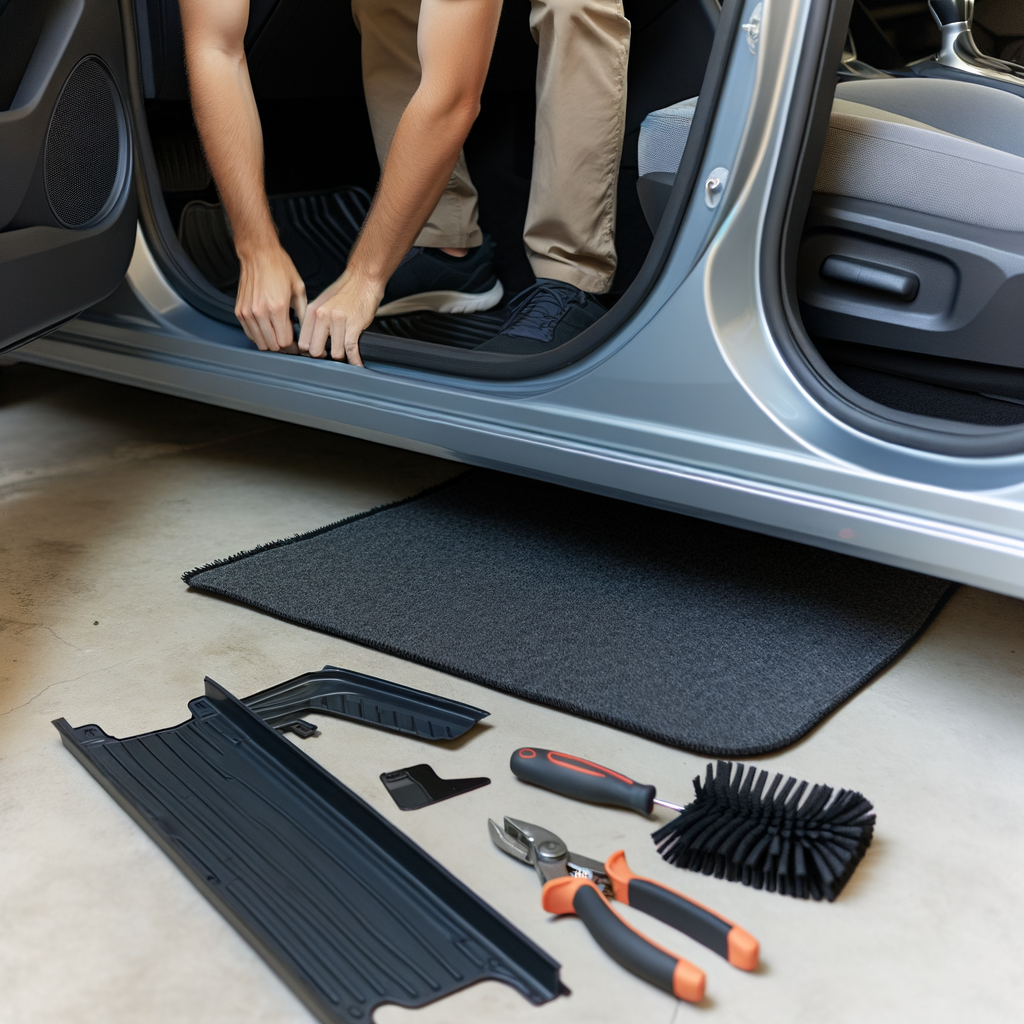
Tools and items needed
- New floor mats (front and rear)
- Vacuum (shop vac is best, but any vacuum works)
- Microfiber towels or clean rags
- Interior cleaner or mild soap and warm water
- Trim brush or old toothbrush (for tight corners)
- Scissors (only if your mats are made to be trimmed)
- Flashlight (helpful for seeing clips and rails)
Safety or legal notes
Driver floor mat fit is a safety issue. A mat that slides forward can trap the gas pedal, rub the brake pedal, or stop a pedal from returning fully. Some cars also have factory retention hooks or posts, and the driver mat must lock onto them.
Also, never stack mats on the driver side. One mat on top of another is a common cause of pedal interference. If your car had a mat recall in the past, follow the updated rules from the manufacturer for mat shape and attachment.
Numbered installation steps
1. Choose the right mats for your car
Before you install anything, confirm what you bought matches your vehicle and your needs.
- Vehicle-specific mats: Best fit. They usually match the floor shape and clip points.
- Universal mats: Cheaper, but they can slide and may need trimming.
- Carpet mats: Softer. They look nice, but they hold stains and moisture.
- Rubber or all-weather mats: Best for rain, snow, beach sand, and muddy shoes.
If you are browsing other small interior upgrades, this list of Budget-friendly car mods has ideas that pair well with new mats.
2. Park safely and clear the floor
Park on a flat surface. Set the parking brake. Turn the car off.
Move the front seats back so you have space to work. Remove anything on the floor: Water bottles, coins, pens, charger cables, and seat covers that hang down.
3. Remove the old mats the correct way
Start with the driver mat. That one is the most important for safety.
- If the mat is clipped to hooks or posts: Twist the mat grommets off gently, or lift straight up depending on the design.
- If the mat is tucked under trim: Pull it back slowly so you do not tear it or snap a plastic edge.
Then remove the passenger mat and rear mats.
4. Inspect the driver footwell and mat retention hardware
Use a flashlight and look at the driver floor area closely.
- Find the retention hooks or posts. Make sure they are not broken.
- Check for missing clips. Some cars use small plastic parts that can pop out.
- Look for loose carpet or a curled edge near the pedals.
If a hook is broken, do not ignore it. The mat can slide. If you cannot fix it right away, it may be safer to drive with no mat than with a loose one.
5. Vacuum and clean the area under the mats
New mats will not sit right on top of dirt and debris. Take five minutes and clean the floor properly.
- Vacuum the carpet. Focus on the corners and under the seat rails.
- Use a brush on packed dirt near the dead pedal and the seat tracks.
- Wipe plastic trim where mud dust collects.
If the interior is due for a bigger refresh, follow a full car interior deep clean first, then install your mats.
6. Test-fit the new mats before locking anything down
Place the mats in position without snapping them to clips yet.
- Driver side: Slide it into place and check that it does not touch the pedals.
- Passenger side: Make sure it does not cover a seat mount bolt or bunch against the console.
- Rear mats: Check they sit flat and do not block rear seat rails if your car has them.
On the driver side, press the gas pedal and brake pedal by hand. Watch the clearance. Nothing should catch, rub, or lift the mat.
7. Attach the driver mat to the retention points
Now lock the driver mat in place. This step matters more than how the mat looks.
- Line up the mat grommets with the floor hooks or posts.
- Press down until it clicks, or twist until it seats fully, depending on your car.
- Tug the mat lightly to confirm it is secured.
If your mats do not have holes for the factory hooks, do not cut random holes. Many universal mats are not safe for cars with retention posts unless they are designed for it.
8. Install the passenger and rear mats
Passenger mats usually do not have retention clips, but some do. Place them so they sit flat and do not bunch up.
For rear mats, make sure they do not overlap in a way that creates a lump. If you have a one-piece rear liner, confirm it does not ride up against the back of the center console.
9. Final check: Seat movement and pedal operation
Move the driver seat forward and backward. The mat should not shift into the pedals area.
Then do a last pedal test with the car off:
- Press the brake pedal fully.
- Press the gas pedal fully.
- Release both and confirm they return freely.
Common mistakes
- Stacking mats: One mat on top of another can trap a pedal.
- Skipping the clips: If your car has retention points, use them.
- Buying the wrong shape: Universal mats can slide and curl at the edges.
- Trimming too much: If trimming is allowed, cut small amounts and test-fit many times.
- Installing over debris: Dirt underneath makes mats move and wear faster.
- Letting the mat touch the gas pedal: Even light contact can become a problem when the mat shifts.
Maintenance tips
Floor mats last much longer with quick, simple care.
- Shake them out every week or two: Less grit means less wear on carpet and mat backing.
- Clean spills fast: Carpet mats can smell if moisture stays in the padding.
- Wash rubber mats with mild soap: Avoid greasy tire shine products on mats. They can get slippery.
- Dry them before reinstalling: Wet mats can trap moisture and fog windows.
- Re-check the driver mat clips: Do a quick tug test after cleaning.
If you are building good habits for simple upgrades and upkeep, Modified car maintenance for beginners is a helpful way to stay consistent without overthinking it.
Is it worth it?
Yes, for most drivers. New floor mats improve comfort, keep the carpet clean, and make the interior feel newer. All-weather mats are especially worth it if you deal with snow, salt, rain, or kids and pets.
It is also one of the few DIY jobs that can improve safety when done right. A properly locked driver mat reduces the risk of pedal interference. That alone makes the small cost and time worth it.
Conclusion
Replacing car floor mats at home is easy, but you need to do it carefully. Clean the floor first. Test-fit the mats. Lock the driver mat to the factory retention points. Then do a final pedal and seat-movement check.
Take your time on the driver side. A mat that stays flat and secure is the whole goal.


