




This post may contain affiliate links. Please read our disclosure and privacy policy for more information.
Power steering that feels hard at low speed is a common complaint, especially when parking or making tight turns. It can start as a mild “heavy wheel” feeling and slowly get worse. The key is to take it seriously early, because low-speed steering is when you most need easy control.
What This Problem Feels Like
You usually notice it most when pulling into a parking space, backing out of a driveway, or making a slow U-turn. The steering wheel takes more effort than normal, and you may feel like you have to “muscle” the car around.
Many drivers say it feels normal once the car is moving faster, then gets heavy again as speed drops. In some cars, the steering may also feel notchy or uneven, like it helps a little in one direction more than the other.
You might also notice related signs like a whining or groaning sound when you turn the wheel, especially near full lock. Those extra symptoms matter, but the core problem here is simple: The steering assist is weak at low speed.
Is It Safe to Drive?
Sometimes it is safe to drive a short distance, but it depends on how sudden and severe the change is.
If the steering just feels a bit heavier than usual, and it has been slowly changing over weeks, you can often drive carefully to a shop. Avoid tight parking maneuvers and give yourself extra space.
If the steering got heavy suddenly, or it becomes very hard to turn at idle or low speed, treat that as unsafe. A sudden loss of assist can lead to a near miss in a parking lot, an intersection, or during an emergency swerve.
If you are unsure, use a simple rule: If you cannot turn the wheel smoothly and confidently with one hand while creeping forward, do not keep driving. If you want a general safety framework for borderline issues, Safe to Keep Driving is a helpful reference point.
Common Causes
Power steering systems come in two main types: Hydraulic (power steering fluid, pump, hoses) and electric (an electric motor and sensors). The “hard at low speed” symptom can happen in either system, but the causes differ.
Low power steering fluid (hydraulic systems)
This is one of the most common causes. When fluid is low, the pump can draw in air, and assist drops most at low engine speed, exactly when you are parking or creeping.
Low fluid usually means there is a leak somewhere. Common leak points include the return hose, pressure hose crimp fittings, pump seals, and the steering rack seals.
Air in the power steering system (hydraulic systems)
If air gets into the fluid, the pump cannot build steady pressure. You may feel jerky assist and hear whining that changes as you turn the wheel. This can happen after a leak, after a parts replacement, or after the fluid got very low.
Worn or weak power steering pump (hydraulic systems)
A pump that is wearing out may still provide some assist at higher rpm, but it struggles at idle. That makes steering heavy at low speed first. Whining that gets louder when turning is common.
Pump problems can also be triggered by old fluid, contamination, or running the system low on fluid.
Drive belt issues (hydraulic systems)
Many hydraulic pumps are belt-driven. If the belt is loose, glazed, or the tensioner is weak, the pump may not spin correctly at idle. Assist drops and you might hear belt squeal when you turn the wheel.
This cause is easy to overlook because the belt may look “fine” at a glance, but still slip under load.
Steering rack or linkage binding
If parts of the steering rack, inner tie rods, or steering column joints bind, the wheel can feel heavy even if the pump or electric motor is working. This is often felt as stiffness, notchy movement, or a tendency to return to center poorly.
Binding can come from internal wear, corrosion, bent parts, or damage from a curb impact.
Electric power steering motor or sensor issues (EPS systems)
On electric systems, assist is controlled by a motor using inputs from torque sensors and steering angle sensors. If the system reduces assist due to an electrical fault, low voltage, or a failing sensor, it often shows up most at low speed because that is when maximum assist is expected.
Some EPS systems will set a warning light, but not always. In certain cars, the assist can fade in and out depending on temperature or electrical load.
Low system voltage or charging problems (EPS systems)
Electric steering motors need strong voltage. A weak battery, corroded battery terminals, or a charging issue can make steering heavy, especially at low speed when the system calls for more current.
You may also notice dim lights at idle or slow cranking, but the steering symptom can be the first thing you feel.
Quick Checks You Can Do at Home
These checks are meant to be safe and simple. If anything looks risky or unclear, stop and have it checked.
Check what type of steering you have
Look in your owner’s manual. If the manual mentions power steering fluid, you likely have a hydraulic system. If there is no fluid reservoir and it mentions EPS, it is electric assist.
If you have hydraulic steering: Check fluid level and condition
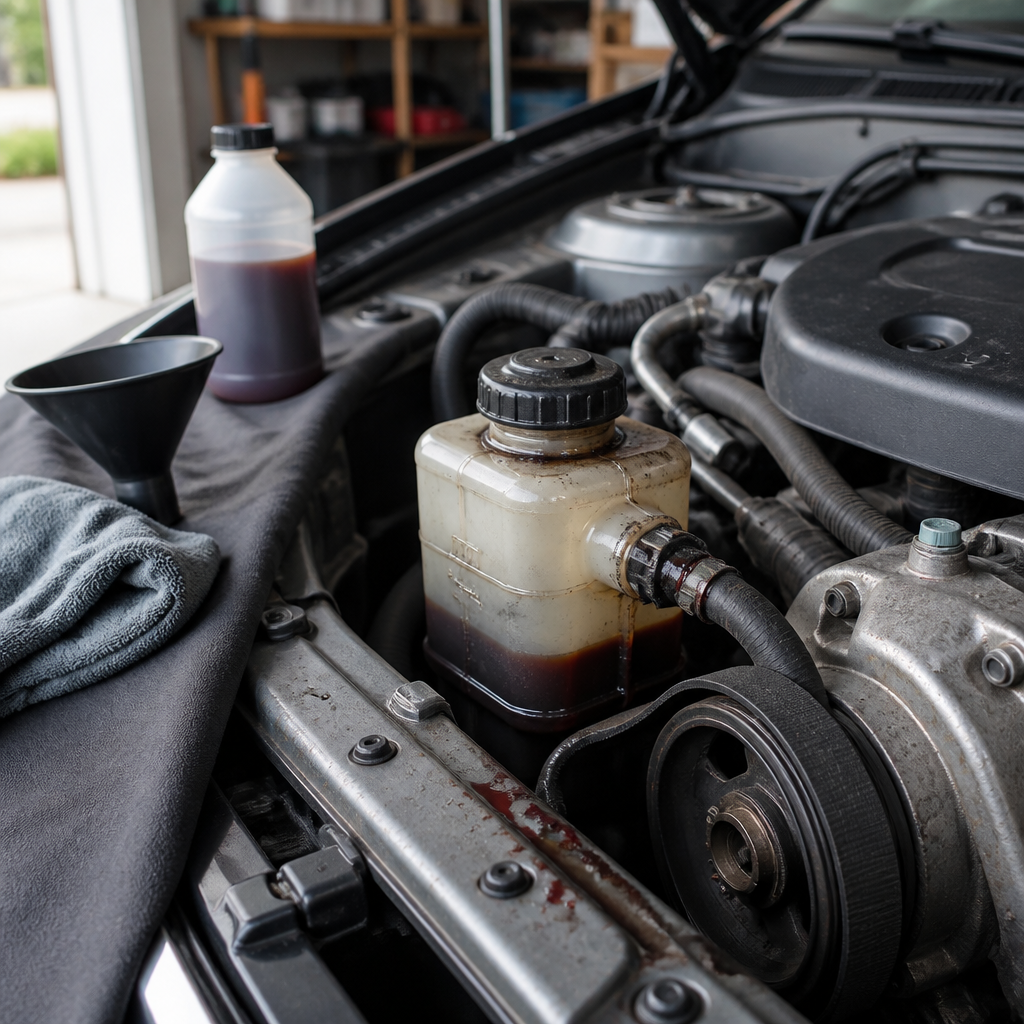
With the engine off and the car on level ground, find the power steering reservoir. Check the level against the markings. Also look at the fluid color.
- Low fluid: A strong hint of a leak or air in the system.
- Foamy fluid: Often means air is mixed in.
- Very dark or burnt smell: Can point to overheating or worn internal parts.
Only use the correct fluid type listed on the cap or manual. Mixing types can cause seal damage and worse steering feel.
Look for obvious leaks (hydraulic steering)
Look under the front of the car after it has been parked. Check for wetness around hoses, the pump area, and the ends of the steering rack boots. A damp, oily area is often easier to spot with a flashlight.
If the fluid is dripping, do not ignore it. Low fluid can quickly turn into no assist and pump damage.
Listen for noise while turning
With the engine running and the car stationary, turn the wheel slowly left and right a small amount. Listen for a whine, groan, or belt squeal. Do not hold the wheel hard against full lock, because that loads the system heavily.
Check the belt condition (if equipped)
If your pump is belt-driven, look for cracks, glazing (shiny surface), fraying, or a belt that seems loose. If the belt rides on an automatic tensioner, a weak tensioner can still cause slip even when the belt looks okay.
If you have electric steering: Check battery connections and charging hints
Look for corrosion on battery terminals and make sure the connections are tight. If you also notice slow cranking, flickering lights at idle, or multiple electrical warnings, low voltage may be contributing.
Electric power steering concerns can overlap with other warning lights. If you also have a check engine light, it is worth understanding what that can indicate in general, but keep the steering issue as the priority for safety. You can reference check engine light common causes separately if needed.
When This Becomes Serious
Hard steering at low speed becomes a serious problem when it affects your ability to control the vehicle in tight areas or sudden maneuvers.
- The steering gets heavy suddenly or changes from normal to very stiff in one drive.
- The wheel is hard to turn even when moving, not just while parking.
- You hear loud whining, grinding, or repeated belt squeal when turning.
- You see fluid dripping under the front of the car (hydraulic systems).
- The steering assist cuts in and out, or the wheel briefly “catches” while turning.
- A power steering or EPS warning light appears and steering feel changes at the same time.
If any of these are happening, avoid highways and crowded areas and have the car checked as soon as possible. If the wheel is extremely hard to turn, tow it. Losing assist in a sudden moment can lead to a crash, even at low speed.
How a Mechanic Fixes It
A professional diagnosis starts by confirming whether your vehicle uses hydraulic or electric assist, then matching that system to your exact symptoms.
Hydraulic systems
The shop will usually:
- Inspect for leaks at hoses, fittings, pump, and steering rack.
- Check fluid level and look for aeration or contamination.
- Test belt condition and tensioner operation if the pump is belt-driven.
- Measure pump pressure and flow if a pump problem is suspected.
- Check for steering rack binding or internal rack issues.
Typical high-level fixes include repairing leaks (hose, seal, or rack replacement), correcting belt or tension problems, flushing contaminated fluid when appropriate, bleeding air from the system, or replacing a weak pump.
Electric power steering systems
The shop will usually:
- Scan for EPS fault codes and look at live data from torque and angle sensors.
- Check battery and charging system voltage under load.
- Inspect wiring, grounds, and connectors for corrosion or looseness.
- Test the EPS motor and module operation based on manufacturer procedures.
High-level fixes often include repairing power or ground issues, replacing a failing sensor, updating software where applicable, or replacing the EPS motor/module assembly if it has failed.
Common Mistakes to Avoid
- Adding the wrong fluid: Some cars require a specific fluid type. Using the wrong one can damage seals and make steering worse.
- Ignoring a small leak: A slow leak still leads to low fluid, air in the system, pump wear, and sudden loss of assist.
- Holding the steering at full lock: This spikes pressure in hydraulic systems and can overheat fluid or stress parts.
- Assuming it is “just tire pressure”: Low tire pressure can make steering feel heavier, but true loss of assist usually feels much more dramatic at low speed.
- Replacing parts without confirming the system type: Electric and hydraulic steering have different failure patterns and tests.
Related Problems to Watch For
Keep an eye out for these, because they often show up alongside hard low-speed steering:
- Power steering whining or groaning during turns.
- Steering that feels jerky or uneven, especially after the fluid got low.
- Fluid spots under the front of the car (usually reddish or amber on many vehicles).
- EPS or battery warning lights, dim lights at idle, or other voltage-related symptoms.
- Steering wheel not returning to center smoothly after a turn.
If tire changes were done recently, steering feel can also change with different tire width and sidewall stiffness, even with a healthy steering system. If that matches your timing, it may help to understand grip with wider tires, but do not use that as an excuse to ignore a real loss of assist.
Final Thoughts
Hard power steering at low speed usually means the system is not providing full assist when you need it most. Start by identifying whether your car uses hydraulic or electric steering, then check the basics that are safe: Fluid level and leaks for hydraulic systems, belt condition where applicable, and battery connections and voltage clues for electric systems.
If the change was sudden, the wheel is very hard to turn, or you see a leak or warning light, treat it as a safety issue and plan for towing. If it has been gradual, schedule service soon and avoid tight, busy driving until the cause is found and fixed.


