




This post may contain affiliate links. Please read our disclosure and privacy policy for more information.
A rear spoiler can change how your car looks in one afternoon. Some spoilers also add light downforce at speed, but the biggest change for most daily drivers is style. The good news is you can install a spoiler at home with basic tools if you take your time and measure carefully.
This guide covers two common types: a stick-on spoiler (tape mount) and a bolt-on spoiler (drill mount). Many spoilers use both. If you can install simple DIY car upgrades at home, you can do this too.
Tools and items needed
For both tape-on and bolt-on
- Microfiber towels
- Car wash soap and water
- Isopropyl alcohol (70% or higher) and a clean cloth
- Masking tape or painter’s tape
- Measuring tape or ruler
- Non-permanent marker or pencil
- Plastic trim tool (optional, for cleaning edges)
Extra items for tape-on spoilers
- Automotive-grade double-sided tape (often pre-installed)
- Adhesion promoter (optional, but helpful on older paint)
- Heat gun or hair dryer (for cool weather)
Extra items for bolt-on spoilers
- Drill
- Drill bits (small pilot bit plus the final size)
- Center punch or sharp nail (to start holes)
- Rust protection or touch-up paint
- Silicone sealant (automotive safe)
- Socket set or wrench set
- Torque wrench (nice to have)
- Painter’s tape to catch drill shavings
- Vacuum
Safety and legal notes
- Work on a flat surface. Set the parking brake.
- Wear eye protection when drilling.
- Do not mount a spoiler that blocks your third brake light, rear camera, or trunk release.
- If your spoiler has a brake light, follow local rules for lighting. Some areas require it to work.
DIY spoiler install steps (beginner friendly)
1) Confirm the spoiler fits your car
Before you peel tape or drill anything, do a test fit. Set the spoiler on the trunk lid and check:
- It sits flat and follows the trunk curve.
- It does not hit the rear glass, wiper, or trunk gap.
- The trunk can open fully.
2) Clean the trunk surface
Wash the trunk lid. Dry it fully. Then wipe the mounting area with isopropyl alcohol. This removes wax and oils that can ruin tape adhesion and can also cause bolt-on seals to leak.
3) Find the center and mark it
Measure the trunk width. Mark the center with a small piece of masking tape. Do the same on the spoiler if it has a center mark. If not, measure it and mark it.
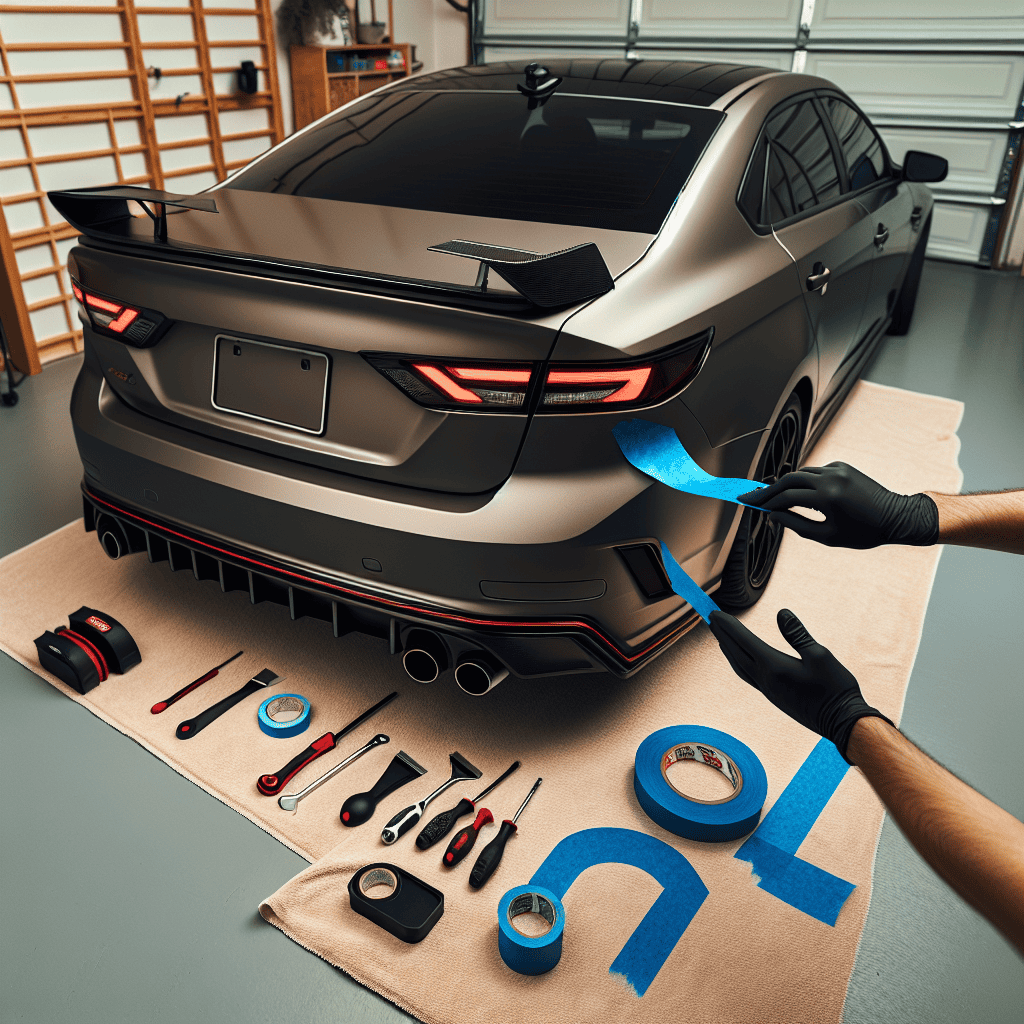
4) Use tape to create guide lines
Put two long strips of masking tape on the trunk to outline where the spoiler will sit. This gives you a clear “parking spot” for the spoiler and helps you align it the same way each time.
5) Decide your mounting method
Check your spoiler hardware and instructions:
- If it is tape-only, you will skip drilling.
- If it is bolt-on, you will mark and drill holes.
- If it uses tape plus bolts, do both. Tape helps seal and holds position while you tighten.
6A) Tape-on install (no drilling)
Do this if your spoiler is designed for adhesive mounting.
- Warm the area if your garage is cold. Tape sticks best when the surface is warm to the touch.
- If you have adhesion promoter, apply it only where the tape will touch.
- Peel a small section of tape backing on each end. Fold the backing outward so you can pull it later.
- Set the spoiler into your guide lines. Press lightly to confirm alignment.
- Hold the spoiler in place and pull the tape backing strips out slowly.
- Press down firmly along the full length for 60 to 90 seconds. Apply steady pressure, not quick taps.
After mounting, do not wash the car or drive in heavy rain for 24 hours if you can. The tape needs time to bond.
6B) Bolt-on install (drilling required)
Do this if your spoiler uses studs, bolts, or nuts under the trunk lid.
- Open the trunk and remove the inner trunk liner near the mounting area. Most liners use clips. A trim tool helps.
- Place painter’s tape on the trunk top where you will drill. This protects paint and makes marks easier to see.
- Set the spoiler in position using your guide lines. Mark the hole locations on the tape.
- Double-check measurements from the trunk edges. Left and right should match.
- Use a center punch to make a small dimple at each mark. This helps the drill bit stay on target.
- Drill a small pilot hole first. Then drill to the final size slowly.
- Vacuum metal shavings right away. Do not rub them into the paint.
- Paint the bare metal edge inside the hole with touch-up paint or rust protection. Let it dry.
- Add a thin bead of silicone around each hole on the top side. This helps prevent water leaks.
- Set the spoiler in place. Install washers and nuts from inside the trunk. Tighten evenly.
Do not over-tighten. You can crack the spoiler or dent the trunk lid. If you have a torque spec from the spoiler maker, use it.
7) Final checks
- Open and close the trunk a few times. Listen for rubbing.
- Look at the spoiler from behind the car. It should be level.
- If your spoiler has a brake light, test it before reinstalling the trunk liner.
If you end up running a wire for a brake light, the same clean cable routing habits used in a DIY dash cam install also apply here. Keep wires away from hinges and sharp edges.
Common mistakes beginners make
- Skipping the alcohol wipe. Wax and polish can make tape fail.
- Not measuring from both sides. Eyeballing alignment often looks off later.
- Pressing tape down before the spoiler is perfectly placed.
- Drilling without checking trunk clearance under the skin. Some trunk lids have supports in the way.
- Over-tightening bolts and cracking plastic or fiberglass.
- Forgetting sealant on bolt holes and getting trunk leaks.
Maintenance tips
- For tape-mounted spoilers, avoid strong pressure washer blasts directly at the edge.
- Wash by hand around the spoiler base. Use a soft mitt.
- Check the edges every few weeks for lifting. Catching it early can save the mount.
- For bolt-on spoilers, re-check nut tightness after a week. Vibration can settle hardware.
- If you see water in the trunk, dry it and re-seal the holes right away.
Is it worth it?
If you want a cleaner rear look, yes. A spoiler is one of the most visible changes you can make without touching the engine. For performance, most street spoilers add only a small difference at legal speeds. If you drive fast on track, a properly designed wing matters more than a small lip spoiler.
In terms of difficulty, tape-on installs are beginner easy. Bolt-on installs are still doable at home, but you need patience and accurate measuring. If drilling into paint makes you nervous, start with a tape-mounted lip or get help for the drilling step.
Conclusion
A DIY spoiler install is a simple weekend project when you work slowly and measure twice. Clean the surface well, line it up with tape guides, and choose the right method for your spoiler. Take extra care with drilling and sealing if you go bolt-on. When you finish, you get a solid fit, a cleaner look, and the satisfaction of doing it yourself.


