


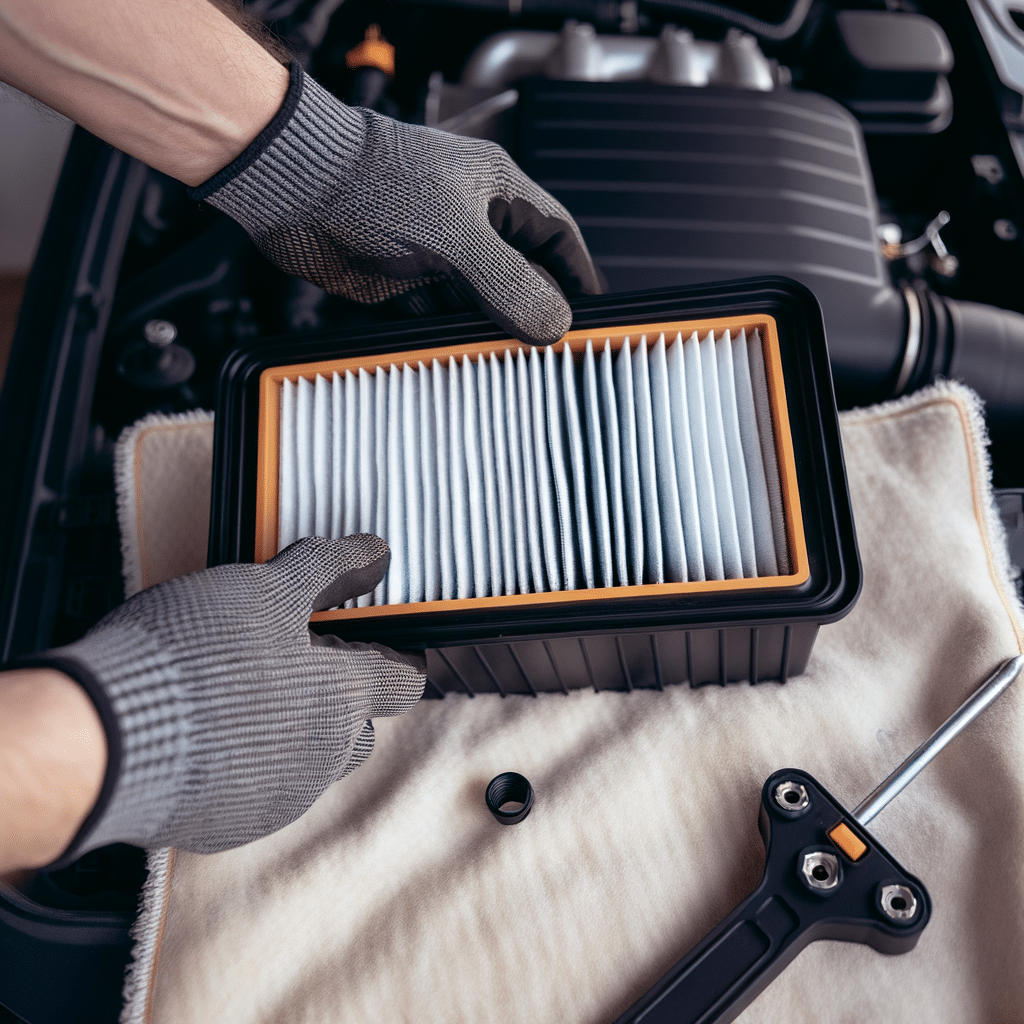
This post may contain affiliate links. Please read our disclosure and privacy policy for more information.
Changing your engine air filter is one of the easiest DIY jobs you can do at home. It takes about 10 to 20 minutes, needs only basic tools, and can help your engine breathe better. A dirty filter can reduce power, hurt fuel economy, and make the engine work harder than it should.
This guide shows you how to swap the filter the right way, even if you have never opened your hood before.
Tools and items needed
- New engine air filter (correct part for your car)
- Flathead screwdriver (sometimes needed)
- Phillips screwdriver (sometimes needed)
- Small socket set (8mm or 10mm is common)
- Clean rag or paper towels
- Handheld vacuum (optional, but nice to have)
- Gloves (optional)
Tip: The engine air filter is not the same as the cabin air filter. The engine air filter feeds air to the engine. The cabin filter cleans air for your A/C and heater.
Safety notes
- Park on a flat surface.
- Turn the engine off.
- Let the engine bay cool for a few minutes if you just drove.
- Keep fingers clear of belts and fans.
- Do not run the engine with the air filter removed.
Step-by-step: Change your engine air filter
1) Buy the correct filter
Use your owner’s manual, the part number on your old filter, or your vehicle’s year, make, model, and engine size to match the right filter. If the filter looks similar but the size is slightly off, do not force it. A poor fit can let dirty air slip past the seal.
2) Open the hood and find the air filter box
Look for a black plastic box near the engine. It usually has a large intake tube coming out of it. On some cars it is on the driver side, on others it is on the passenger side.
If you enjoy easy home upgrades like this, you may also like simple car upgrades you can do without special tools.
3) Check how the box opens (clips, screws, or bolts)
Most air boxes use one of these:
- Metal clips that flip open by hand
- Phillips screws around the edge
- Small bolts (often 8mm or 10mm)
Some cars have clips and screws together. Take a second and look closely so you do not miss one.
4) Open the air box carefully
Undo the clips or fasteners. If the cover does not lift easily, do not yank it. There may be one more clip hidden at the back. On many cars, you can lift the lid enough to slide the filter out without removing the whole lid.
Note: If the intake tube blocks the lid, you may need to loosen the hose clamp a little. Only loosen it enough to move the tube slightly.
5) Remove the old filter
Pull the filter straight out. Look at how it sits in the box. Some filters have a foam edge or rubber seal. That sealing edge matters.
Now take a quick look at the dirty filter:
- If it is dark, dusty, or full of debris, it is ready to replace.
- If it has leaves or bugs, you may also want to clean the air box area.
- If it looks oily, there may be another issue (like an over-oiled aftermarket filter or a breather problem).
6) Clean the inside of the air box
Use a clean rag to wipe out loose dust. A small vacuum helps, but do not push dirt deeper into any openings. Do not spray water or cleaner inside the air box. Keep it dry and simple.
7) Install the new filter the correct way
Place the new filter into the lower half of the box. It should sit flat. The seal should touch all the way around. If the filter has an arrow or “air flow” text, follow it.
Quick fit check: If the filter wobbles, sits crooked, or looks pinched, remove it and try again. The lid may not close right if the filter is not seated.
8) Close the air box and fasten it
Lower the lid back into place. Then reattach clips or tighten screws and bolts. Tighten snug, not overly tight. On plastic housings, over-tightening can crack the box or strip the threads.
If you loosened the intake tube clamp, tighten it back. A loose clamp can cause a rough idle on some cars.
9) Final check and start the engine
Before starting the car, do a quick look around the air box:
- All clips closed or screws installed
- Lid sitting evenly with no gaps
- Intake tube connected and clamp tight
- No tools left in the engine bay
Start the engine and let it idle for 10 to 20 seconds. It should sound normal. If you hear a loud hissing, whistling, or the engine runs rough, shut it off and recheck the air box seal and intake clamp.
Common mistakes to avoid
- Buying the wrong filter. Similar filters can look right but not seal correctly.
- Installing it upside down. Some filters fit both ways, others do not. Match how the old one sat.
- Leaving gaps in the air box. Even a small gap can let unfiltered air into the engine.
- Over-tightening screws. Plastic housings crack easily.
- Cleaning with water or strong spray. Keep the air box dry. Wipe and vacuum only.
Maintenance tips
Most drivers replace the engine air filter every 12,000 to 30,000 miles. The right timing depends on where and how you drive.
- Replace sooner if you drive on dusty roads, do construction area commutes, or follow trucks often.
- Check it more often during allergy season if you see a lot of pollen and debris.
- Do not blow it out with high-pressure air unless the filter brand says it is safe. Some paper filters can tear.
- Write the date and mileage on the filter frame with a marker. It helps later.
Many people do this job at the same time as other easy interior or tech upgrades, like a beginner-friendly dash cam setup or a backup cam install at home.
Is it worth it?
Yes. This is one of the best beginner DIY jobs because it is cheap, fast, and low risk. Shops often charge labor for a task that usually takes a few minutes. Doing it yourself also lets you check the air box, intake tube, and general condition under the hood.
Will a new filter fix every problem? No. But if your filter is dirty, replacing it is smart basic maintenance. It can help restore normal airflow and keep dirt out of the engine.
If you are starting a longer list of changes or upgrades, it helps to follow a sensible order. This Beginner car modding guide can help you keep things simple and avoid wasting money.
Conclusion
Changing your engine air filter at home is quick and beginner-friendly. Open the air box, swap the filter, clean the housing, and close everything back up with no gaps. Do it on a regular schedule, and your engine will thank you with cleaner airflow and steadier running.


