




This post may contain affiliate links. Please read our disclosure and privacy policy for more information.
Cloudy headlights make night driving harder. They also make your car look older than it is. The good news is you can restore most headlights at home with simple tools. You do not need pro equipment. You just need a little time and patience.
This guide covers the common plastic headlight lens that turns yellow or hazy over time. If your lens is cracked, has water inside, or the reflectors are peeling, restoration will not fix that. In that case, replacement is the better move.
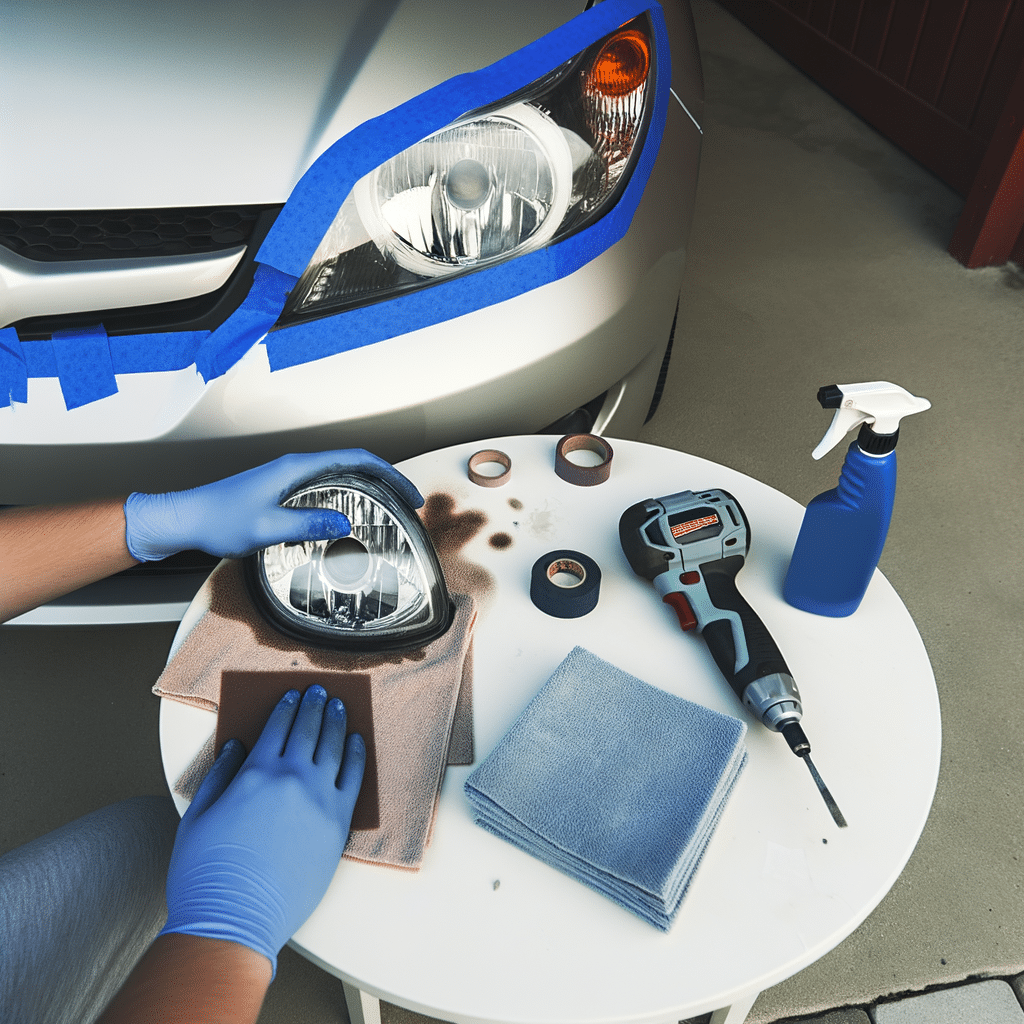
Tools and items needed
- Car wash soap and water
- Microfiber towels (2 to 4)
- Painter’s tape (blue or green)
- Spray bottle with clean water
- Wet/dry sandpaper: 800, 1000, 1500, 2000, 2500 or 3000 grit
- Sanding block or a small foam pad (optional but helpful)
- Plastic polish or rubbing compound
- Applicator pad or microfiber for polishing
- UV protection step: headlight sealant, UV clear coat, or a ceramic/wax made for plastics
- Nitrile gloves (optional)
Optional items that make it faster:
- Drill with a foam polishing pad (low speed)
- Pre-made headlight restoration kit (still follow the same basic steps)
Safety and legal notes
- Work in the shade on cool headlights. Heat dries polish and can make sanding uneven.
- Wear eye protection if you use a drill or spray products.
- Do not sand painted panels. Tape the edges well.
- Some areas have rules about headlight tint. This article is about restoring clear lenses, not darkening them.
DIY headlight restoration: step-by-step
1) Wash the headlight and surrounding area
Start with a normal wash. Clean the headlight lens and the paint around it. Dirt can scratch the lens while you sand.
Dry the lens with a microfiber towel.
2) Tape off the paint and trim
Use painter’s tape around the headlight. Cover the paint edge, rubber trim, and any plastic pieces close to the lens.
Add a second layer of tape on the paint side if the gap is tight. Sandpaper can catch edges.
3) Inspect the lens and pick a starting grit
Look closely at the lens:
- If it is lightly hazy, you can often start at 1000 or 1500 grit.
- If it is yellow, rough, or badly cloudy, start at 800 grit.
Starting too fine can waste time. Starting too rough can leave deep scratches that take longer to remove. When in doubt, start at 1000 and move down only if you see no progress after a minute.
4) Wet sand the lens (first grit)
Spray water on the lens and on your sandpaper. Wet sanding keeps the surface cool and carries away residue.
Sand in straight lines, not circles. Use light to medium pressure. Keep the paper flat. If you use your fingers only, you may create low spots.
- Pass 1: sand left to right for 1 to 2 minutes.
- Wipe and check the surface.
You will see a milky slurry. That is normal. The lens should start to look evenly dull. If you have shiny spots, those areas still have oxidation. Keep sanding lightly until the dull look is even.
5) Switch grit and change sanding direction
Move to the next higher grit. Example: 800 to 1000 to 1500 to 2000 to 2500/3000.
Each time you change grit, change direction. This helps you see if you removed the previous scratches.
- 800 grit: left to right
- 1000 grit: up and down
- 1500 grit: left to right
- 2000 grit: up and down
- 3000 grit: left to right
At higher grits, use less pressure. Let the paper do the work. Keep everything wet. If the paper starts to feel grabby, add more water or switch to a fresh piece.
6) Final rinse and quick check
Rinse the lens and wipe it clean. At this stage, it will still look cloudy. That is normal. What you want is a smooth, even surface with no deep sanding lines.
If you can still see obvious scratches, go back one grit and sand a bit more, then move forward again.
7) Polish until clear
Apply a small amount of plastic polish or rubbing compound to a microfiber or applicator pad.
Work in small sections. Rub firmly in overlapping passes. If you use a drill, keep it on low speed and do not stay in one spot. Heat can haze the plastic.
Wipe clean and repeat if needed. Most lenses need 2 to 4 rounds to get good clarity.
8) Add UV protection (do not skip this)
This is the step many people miss. Sanding removes the damaged layer, but it also removes the factory UV coating. Without a new UV layer, the haze can come back fast.
Pick one UV method:
- Headlight sealant: Wipe or apply a thin coat. Let it cure as the product says.
- UV clear coat spray: Mask wider, spray light coats, and follow cure times.
- Ceramic or wax for plastics: Easy, but usually does not last as long as a true sealant or clear coat.
After the UV step, remove the tape carefully.
9) Final cleaning and night test
Wipe off fingerprints and residue. Then test at night. You should see a sharper beam pattern and better brightness.
If your aim looks off, it may have been off already. Many cars have simple headlight aiming screws. A restored lens makes bad aim more obvious.
Common mistakes to avoid
- Skipping grits: Jumping from 800 to 2000 leaves deep scratches that polishing may not remove.
- Sanding dry: Dry sanding loads the paper and can gouge the lens.
- Too much pressure: This makes uneven spots and takes longer to fix.
- Not taping well: One slip can scuff paint or trim.
- No UV protection: The headlights look good for a short time, then yellow again.
Maintenance tips
- Wash headlights when you wash the car. Bugs and road film bake on and speed up haze.
- Top up protection every few months if you used wax or a light sealant.
- Park in shade when possible. Sun is the main cause of oxidation.
- If haze starts to return, a quick polish and new sealant can bring them back before you need sanding again.
If you like simple weekend jobs, you may also enjoy Wiper blades in 5 minutes. Clear headlights and fresh wipers make night and rain driving feel much safer.
Is it worth it?
Yes, for most cars. Headlight restoration is low cost and gives a real improvement in visibility. It can also make your car look cleaner from the front.
It is not worth it if the lens is cracked, the inside is damaged, or the housing has moisture that keeps coming back. In those cases, new headlight assemblies are the right fix.
If you are thinking about other small upgrades that keep a daily car feeling fresh, simple car upgrades you can do has more beginner-friendly ideas.
Conclusion
Restoring headlights at home is mostly about patience. Clean, tape, wet sand in steps, polish, then protect. Take your time and keep the surface wet. The UV protection step matters as much as the sanding.
When you finish, take the car out for a night drive and look at the beam on a wall. Clear lenses help you see the road better, and that is the point of the whole project.


