




This post may contain affiliate links. Please read our disclosure and privacy policy for more information.
What This Problem Feels Like
You start the car, turn the AC on, and it feels decent for a moment. But once you sit at a stoplight or idle in a parking lot, the air turns warm or just not very cold. As soon as you start moving again, it gets colder.
Many drivers notice the problem more on hot days, in traffic, or after the car has been idling for a few minutes. You might also hear the radiator fan speed up, or you may notice the temperature gauge creeping higher than normal (even if it does not overheat).
This specific symptom usually points to one thing: at idle, the AC system is not getting enough airflow across the condenser, or the system is not able to manage pressures properly when engine speed is low.
Is It Safe to Drive?
Most of the time, this is safe to drive for a short period if the engine temperature stays normal and the car drives normally. The main risk is comfort and visibility. Warm air can fog windows during humid weather, and heat can be a real safety issue for kids, older passengers, and pets.
Stop driving and shut the AC off if you notice any of these:
- The engine temperature gauge climbs higher than usual, especially at idle
- Steam, a hot smell, or coolant smell from the front of the car
- The AC starts blowing hot all the time, not just at idle
- The radiator fans do not run at all with the AC on
If the engine is overheating, that becomes more urgent than the AC problem. Overheating can cause major engine damage quickly.
Common Causes
Below are the most common reasons an AC system blows warm at idle, listed from most common to less common.
Weak or failed radiator/condenser fan
At idle, the car depends on electric fans to pull air through the condenser and radiator. When you are driving, natural airflow helps a lot, so the AC feels colder.
If a fan motor is weak, a fan relay is failing, or a fan resistor module is bad (common on some vehicles), airflow at idle drops. The condenser stays too hot. That raises system pressure and reduces cooling.
Condenser is blocked or dirty
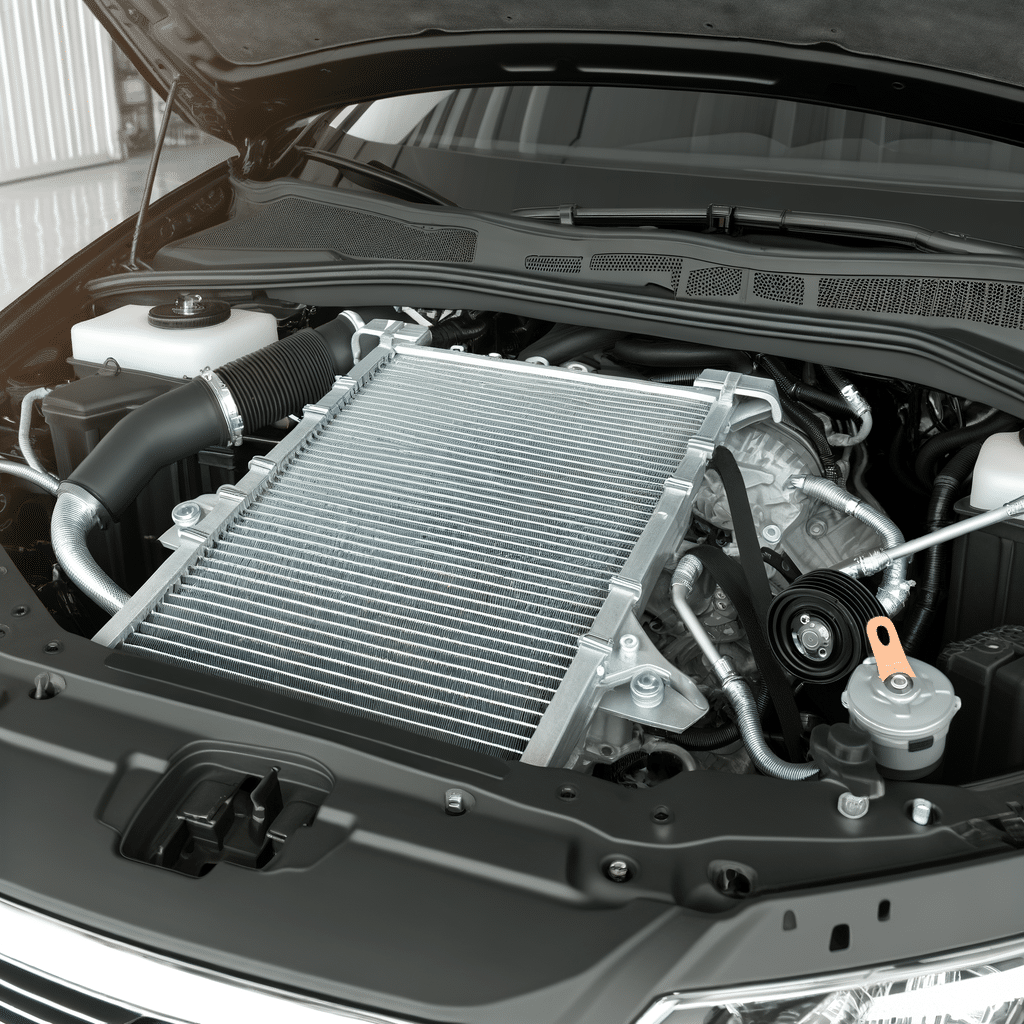
The condenser sits near the front of the car and works like a small radiator for the AC system. If it is packed with bugs, leaves, road dirt, or bent fins, it cannot get rid of heat well. The problem often shows up first at idle because airflow is already lower.
Even a partially blocked condenser can make the AC act fine on the highway but weak in traffic.
Low refrigerant charge
Low refrigerant can cause poor cooling in several ways. One common pattern is weak cooling at idle and better cooling when the engine speed rises. That is because the compressor may perform slightly better at higher RPM, and airflow improves while driving.
Low charge usually means there is a leak. Refrigerant does not get “used up.” A small leak can take months to show up as an idle-only problem, then it gets worse.
Compressor is weak at low RPM or the control valve is sticking
Some compressors wear out so they do not pump as well at idle. Many newer vehicles use variable displacement compressors with a control valve. If that valve sticks or the compressor is failing, cooling can fade at idle and improve while moving.
This is less common than fan problems, but it happens, especially on higher-mile vehicles.
Cooling system running hot at idle
The AC condenser dumps heat right in front of the radiator. If the engine cooling system struggles at idle (low coolant, weak fan, clogged radiator, stuck thermostat), the whole front of the car runs hotter. That raises under-hood temps and makes the AC less effective.
You may not see a full overheat, but the AC can be the first thing you notice.
Overcharge, air in the system, or incorrect refrigerant type
If the system was recently serviced and the charge is wrong, pressures can be off. At idle, the system may build too much high-side pressure and the cooling drops. Air or moisture in the system can also cause unstable performance.
This is more likely if the problem started right after an AC recharge.
If your symptom matches “cooler when driving, warmer at stops,” the pattern is well known. You can compare it with AC cools when driving symptoms to stay focused on the same type of fault.
Quick Checks You Can Do at Home
These checks are meant to be simple and safe. Keep hands, clothing, and tools away from fans and belts. Fans can turn on even with the engine off on some vehicles.
Check if the radiator fans run with the AC on
With the engine running and AC set to MAX or the coldest setting, look through the grille or from above (only if it is safe) and see if the fans are spinning.
- Many cars should run at least one fan any time the AC is on.
- If both fans stay off, that strongly points to a fan control problem, relay, fuse, wiring issue, or a fan motor failure.
- If a fan runs but seems slow, noisy, or starts and stops oddly, it may be weak.
Look for blockage at the front of the condenser
With the engine off, shine a light through the grille. Look for leaves, heavy bug buildup, plastic bags, or bent fins. Some dirt is normal, but thick mats of debris can cause warm air at idle.
Also check that nothing is blocking airflow, like an aftermarket mesh that is too tight, a damaged grille shutter stuck closed, or packed debris between the condenser and radiator.
Watch the air temperature change when RPM rises
While parked, set the parking brake and keep the car in Park or Neutral. Turn the AC on. After it starts blowing warm, lightly raise engine speed to around 1,500 RPM for 10 to 15 seconds.
- If the air quickly turns colder, that often supports an airflow issue (fan weak) or marginal refrigerant/compressor performance.
- If nothing changes, the issue may be more severe or constant, even if you notice it most at idle.
Do not rev the engine repeatedly for long periods. This is only a quick observation.
Check cabin airflow basics
Low airflow through the vents can make the AC feel warmer, especially while sitting still. If the blower seems weaker than normal, the cabin air filter could be clogged.
If you have not changed it in a long time, DIY cabin air filter replacement is one of the safer, easier maintenance items for most cars.
Do a quick visual check for obvious leaks or damage
Without touching hot parts, look around the front of the engine bay for oily residue on AC lines or around fittings. Many refrigerants carry oil, and leaks can leave grime. This does not confirm the cause, but it can support the “low refrigerant due to a leak” direction.
Avoid using DIY recharge cans as a “test.” They often do not measure the charge accurately and can make diagnosis harder.
When This Becomes Serious
This problem becomes urgent when it is tied to fan failure or overheating. The AC and engine cooling system share airflow space at the front of the car. If fans are not working correctly, the engine can overheat when sitting in traffic.
Take it seriously if:
- The temperature gauge rises at idle with the AC on
- The AC turns warm and you hear hissing, squealing, or the engine idle changes sharply
- The AC cycles on and off rapidly at idle
- You see a warning light for engine temperature or a “AC off due to high temp” message
Also treat it as serious if the system was recently serviced and the performance became worse. Incorrect charge or trapped air can lead to high pressures that stress the compressor.
How a Mechanic Fixes It
A shop will usually verify the symptom first: cold while moving, warm at idle. Then they work through the system in a structured way.
They confirm airflow and fan operation
They check fan command and fan speed, not just whether a fan spins. On many cars, fans have multiple speeds and are controlled by modules. A fan that runs but cannot move enough air can still cause warm air at idle.
If needed, they test fuses, relays, wiring, connectors, and the fan module. They also check for damaged fan blades and a slipping fan shroud.
They measure refrigerant pressures and temperatures
Using manifold gauges or an AC service machine, they check high-side and low-side pressures at idle and at a higher RPM. Pressure patterns help point to low charge, airflow restriction, compressor weakness, or an overcharge condition.
If the charge is low, they do not just add refrigerant. They find the leak, then vacuum-test the system, recharge by weight, and confirm vent temperature and pressure stability.
They inspect the condenser and cooling stack
They look for external blockage, bent fins, and airflow issues between the condenser and radiator. On some vehicles, the condenser may be internally restricted, which can also show up as pressure problems at idle.
They verify compressor control and AC sensors
Modern systems use pressure sensors and sometimes temperature sensors to control compressor output. A faulty sensor can cause poor cooling at idle by commanding the compressor to back off too much, or by cycling it incorrectly.
If the compressor is weak or the control valve is sticking, they confirm it with pressure readings and system behavior before replacing parts.
Common Mistakes to Avoid
- Adding refrigerant without confirming the charge. Overcharging can make idle cooling worse and can stress components.
- Ignoring the fans because the AC gets cold while driving. Fan issues often show up only at idle and in slow traffic.
- Spraying water aggressively into the front grille. Light cleaning is fine, but high pressure can bend condenser fins and reduce airflow even more.
- Assuming the compressor is bad first. Compressors do fail, but airflow and charge problems are more common causes of warm air at idle.
- Letting the car idle for long periods with the AC on when the temp gauge is rising. Turn the AC off and address the cooling issue before it becomes an overheat.
Related Problems to Watch For
If the AC is warm at idle, pay attention to these related signs. They can help confirm the direction of the problem without turning it into a guessing game.
- AC cools better at higher speeds: often points to airflow across the condenser, especially fans or blockage. Many owners describe it as AC cools at higher speeds.
- Engine temperature rises while sitting: can point to radiator fan control problems or a weak cooling system.
- Weak airflow from vents: can make the cooling feel worse, sometimes linked to a dirty cabin filter.
- AC cycles on and off quickly at idle: can happen when pressures are unstable due to airflow problems or an incorrect system charge.
Final Thoughts
If your AC blows warm only when you are stopped, start by watching the radiator fans with the AC running and checking for blockage at the front of the condenser. Those are the most common causes and the easiest to spot.
If the fans look wrong, the engine temp rises, or the problem keeps getting worse, do not keep idling in traffic with the AC on. Have a shop check fan operation and measure AC pressures so the system can be charged correctly and any leaks or control issues can be found before they damage the compressor.


