




This post may contain affiliate links. Please read our disclosure and privacy policy for more information.
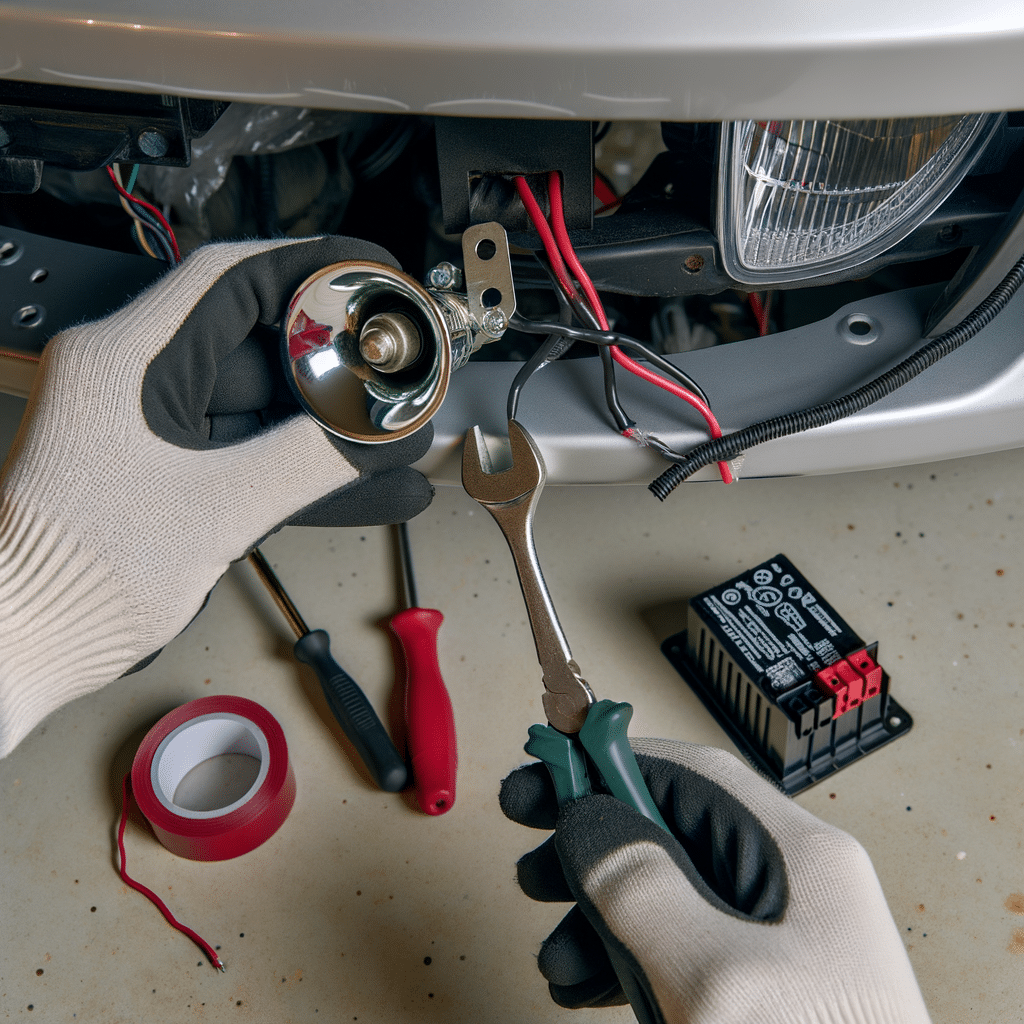
A weak horn is more than annoying. It can be unsafe in traffic. The good news is that a horn upgrade is one of the easiest DIY jobs you can do at home. Most setups are “plug and play.” Some need a relay and a little wiring. I will walk you through both, in simple steps.
Tools and items needed
- New horn (single horn or a dual horn set)
- Basic socket set or wrench set (often 10mm, 12mm, or 13mm)
- Screwdrivers (flat and Phillips)
- Needle-nose pliers (helpful for clips)
- Electrical tape or heat shrink
- Zip ties
- Multimeter or test light (optional, but helpful)
If your new horn kit needs a relay:
- 12V automotive relay (usually included in horn kits)
- Inline fuse holder and fuse (often 10A to 20A, check kit notes)
- Crimp connectors (spade terminals, ring terminals, butt connectors)
- Wire stripper and crimper
- Extra wire (often 14 to 16 gauge)
Safety and legal notes
- Work with the engine off and the key out.
- Disconnect the negative battery cable before touching wiring.
- Let the car cool if you will reach near the radiator area.
- Many places have noise rules. Extremely loud air horns may not be legal for street use.
- Do not mount a horn where it blocks airbags sensors, radiator airflow, or the hood latch.
If you are new to simple car projects, start with an easy job first like Wiper blades in 5 minutes. Then come back to the horn upgrade.
Before you start: pick the right horn type
Option 1: Direct replacement (most beginner friendly)
This is best if you want a stronger “beep” but you do not want wiring work. Many aftermarket horns plug into the factory connector and bolt to the stock bracket.
Option 2: Dual horns (high and low tone)
This gives a fuller sound. Some cars already have two horns. If your car has only one, you may need a splitter harness or a relay kit.
Option 3: Compressor air horn
This can be very loud and needs more mounting space and wiring. I do not recommend it for a first horn project.
Numbered installation steps (basic swap)
These steps work for most direct replacement horns.
1) Park and disconnect the battery
Park on a flat surface. Set the parking brake. Open the hood. Disconnect the negative battery terminal.
2) Find your factory horn
Common locations are behind the front bumper, near the radiator support, or behind a grille area. Some cars make it easy from the top. Others need the front grille or a splash shield removed.
3) Remove any covers (only if needed)
If access is tight, remove plastic push clips or small bolts. Keep clips in a small container so you do not lose them.
4) Unplug the horn connector
Press the release tab and pull the connector off. If it is stuck, wiggle gently. Do not pull on the wires.
5) Unbolt the old horn
Remove the mounting bolt. Keep it, because you may reuse it. Note the horn’s angle before you remove it.
6) Bolt in the new horn
Mount the new horn on the bracket. Point the opening down or slightly to the side. This helps keep water out.
7) Plug in the connector
Connect the factory plug to the new horn. It should click.
8) Test it
Reconnect the battery negative terminal. Press the horn quickly. If it works, reinstall any covers you removed.
Numbered installation steps (with relay for higher power horns)
If your horn kit has a relay, follow this path. A relay lets the horn pull power straight from the battery through a fused wire. The factory horn wire then becomes a trigger signal. This protects the factory wiring and can stop blown fuses.
1) Mount the horns first
Find a solid metal location. Use the provided brackets. Keep the horns away from hot parts and moving parts. Point the openings down.
2) Choose a relay mounting spot
Mount the relay close to the horns if possible. Keep it away from direct water spray. Many relays have a tab for a bolt.
3) Identify the factory horn wire
Unplug the factory horn connector. One side goes to the horn. The other side is the car’s horn power or ground, depending on the car. If you have a multimeter or test light, you can confirm which wire becomes live when you press the horn.
4) Wire the relay (common 4-pin layout)
- Pin 30 (power in): From the battery positive, through an inline fuse.
- Pin 87 (power out): To the positive terminal on the new horn(s).
- Pin 85 (trigger): To the factory horn wire (the wire that signals the horn).
- Pin 86 (trigger ground or power): To a good chassis ground or to a trigger power, depending on how the kit is designed.
Some kits label wires by color, not pin numbers. Use the kit diagram if you have one.
5) Ground the horns
Many horns ground through the bracket if the bracket is bare metal. Some horns have a dedicated ground terminal. If there is any doubt, run a ground wire from the horn ground to a clean chassis bolt.
6) Add the fuse near the battery
Place the inline fuse holder close to the battery. This protects the wire if it ever shorts.
7) Test and tidy up
Reconnect the battery. Tap the horn. If it works, route wires neatly and secure them with zip ties. Keep wires away from the fan, belts, and sharp edges. Reinstall trim panels.
Common mistakes beginners make
- Mounting the horn opening upward. Water gets inside and the horn can die early.
- Skipping the relay on high-power horns. This can blow the factory fuse or melt wiring.
- Bad ground. A weak ground makes the horn sound weak or not work at all.
- Loose mounting bolt. The horn can rattle, and sometimes it will not ground well.
- Poor wire routing. Wires can rub through and short later.
Many wiring problems come from rushed connector work. The same habit causes trouble on other jobs too. If you are starting to modify your car, Car modding mistakes to avoid is a helpful guide to keep you out of common traps.
Maintenance tips
- Once a month, tap the horn quickly. Listen for a strong, clean tone.
- After heavy rain or a car wash, test it again. A weak sound can mean water got inside.
- Check the mounting bolt once in a while. Vibration can loosen it.
- If you used a relay, check that the fuse holder cap is tight and the wires are not rubbing.
Is it worth it?
For most daily drivers, yes. A better horn gives you a clearer warning sound when someone drifts into your lane or backs toward you. It is a small job that can make the car feel more solid and updated.
If you like small upgrades that make a car nicer to live with, you may also enjoy DIY ambient lighting. It is another beginner project with a big comfort payoff.
If you are deciding what to do next on your car, What to upgrade first can help you pick projects in a smart order.
Conclusion
Upgrading your car horn at home is a simple DIY job. In many cars, it is one bolt and one plug. If your new horn needs more power, add a relay and a fused power wire. Take your time with mounting and grounds, and keep the horn opening pointed down. When you are done, you will have a horn that sounds clear and works when you need it.


