




This post may contain affiliate links. Please read our disclosure and privacy policy for more information.
What This Problem Feels Like
You drive for a while, park, and notice a burning smell coming from the engine bay. It may drift into the cabin through the vents, especially if the fan is on. The smell is often strongest right after you stop, when heat soaks into everything under the hood.
The odor can be sharp and oily, like hot oil on a pan. It can also smell like hot rubber, melting plastic, or hot chemicals. Sometimes you see a little smoke or haze from under the hood, but not always.
This symptom usually means something is overheating or dripping onto a hot part like the exhaust manifold, turbo housing, catalytic converter, or a heat shield. Even small leaks can smell strong once they hit high heat.
Is It Safe to Drive?
Sometimes it is, but you need to treat a burning smell as a warning until you know what it is. Some causes are minor, like spilled oil from a recent top-up. Others can lead to a fire, loss of power steering assist, or major engine damage.
Stop driving and shut the engine off if:
- You see smoke coming from the engine bay
- The smell is getting stronger each minute while driving
- You see fluid dripping under the car right after stopping
- The temperature gauge is climbing or a temperature warning comes on
- You smell raw fuel along with the burning smell
- Belts are squealing, steering feels suddenly heavy, or the battery light comes on
If the smell is light, you see no smoke, and the temperature stays normal, you can usually drive a short distance to a safe place or a shop. Keep the drive gentle, avoid heavy load, and turn off the heater and AC until you check things.
Common Causes
These are listed from most common to less common. More than one issue can exist, but a single burning smell usually has one main source.
Oil leaking onto hot exhaust parts
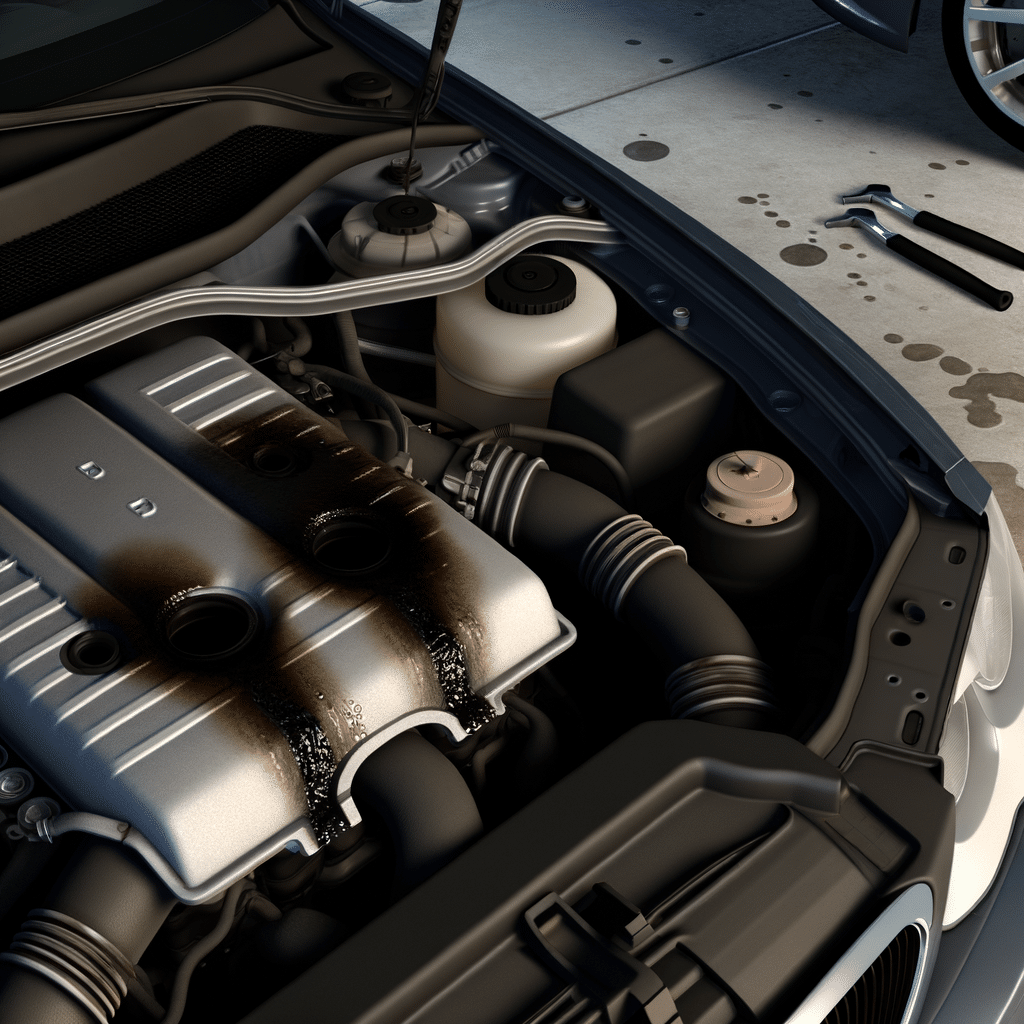
This is one of the most common reasons. A small oil leak from a valve cover gasket, oil cap, oil filter area, or a turbo oil line can drip onto the exhaust and burn off. The smell is usually “hot oil” and can be stronger after highway driving.
Why it happens: rubber gaskets harden with age, oil filters can be slightly loose, drain plugs or sealing washers can seep, and oil can spill during service and pool on a hot shield.
Coolant leak hitting hot surfaces
Coolant can make a sweet, hot chemical smell. If it leaks near the exhaust, it can steam and smell burnt. You may also notice the coolant level dropping over time.
Why it happens: plastic fittings crack, hose clamps loosen, radiators seep at the seams, and small leaks open up more when the engine is fully hot and under pressure.
Serpentine belt slipping or rubbing
A slipping accessory belt can smell like hot rubber. You may hear squealing on startup, during acceleration, or when the steering is turned at idle. If a belt is misaligned or a pulley bearing is failing, the belt can rub and heat up.
Why it happens: worn belt material, weak tensioner, seized pulley, or a belt that was installed slightly off track.
Plastic or wiring touching a hot component
A loose splash shield, wire loom, vacuum line, or plastic cover can land against a hot exhaust part. The smell can be harsh, like melting plastic, and can get worse quickly.
Why it happens: missing clips after prior work, broken retainers, or an undertray that sags and shifts while driving.
Power steering fluid leak on older hydraulic systems
If your car uses hydraulic power steering, a small leak can drip onto hot engine parts. Power steering fluid has a distinct burning oil smell when it gets hot. Some cars will also start to whine when turning.
Why it happens: aging hoses and seals, especially at crimped hose ends and around the pump.
Brake fluid or clutch fluid leak near the firewall (less common, but important)
Brake fluid can smell sharp and acrid if it hits hot surfaces. A leak in that area can also affect braking or clutch operation.
Why it happens: failing master cylinder seals, damp connections, or a line that seeps under pressure.
New parts “burning in”
After certain repairs, you may smell coatings and oils burning off for a short time. This can happen after exhaust work, a new manifold, or a fresh undercoating. It should fade quickly and not get stronger day by day.
Why it happens: protective oils and coatings heat cycle and burn off during the first drives.
Quick Checks You Can Do at Home
Do these checks only when the car is parked on a level surface, the engine is off, and parts have cooled. Keep hands, hair, and clothing away from belts and fans. Do not touch the exhaust until it is fully cool.
Use your nose to narrow it down
- Hot oil smell: often an oil seep onto exhaust parts
- Sweet chemical smell: often coolant
- Burnt rubber smell: often belt slip or something rubbing a belt/pulley
- Melting plastic smell: often a cover, shield, or wiring contacting hot exhaust
Look for obvious signs under the hood
- Wet, shiny areas around the valve cover, oil cap, or oil filter housing
- Coolant residue that looks crusty or chalky around hose joints and the radiator
- A belt that looks glazed, cracked, frayed, or has rubber dust nearby
- Loose plastic undertrays, missing clips, or drooping liners
Check fluid levels (simple but important)
Check the engine oil level and coolant level when the engine is cool. If either is low and you also have a burning smell, stop treating it as “just a smell.” Low fluids can turn into overheating or engine damage fast.
If you recently did service like an DIY oil change at home, spilled oil on a heat shield is very common. A careful wipe-down of accessible areas can help, but do not reach down near the exhaust routing if you cannot clearly see what you’re touching.
Check the area under the car after parking
After a normal drive, park on clean pavement and look for fresh drips. Note the color:
- Brown or black: often oil
- Pink, orange, or green: often coolant (varies by type)
- Red or amber: could be power steering fluid or transmission fluid
Use a flashlight, not your hands
A flashlight inspection can show fresh wetness and also show if something is touching the exhaust. If you see anything that looks melted near the exhaust, do not drive until it’s corrected.
When This Becomes Serious
A burning smell becomes urgent when it is tied to active leaking, overheating, or electrical damage.
Get the car towed or inspected right away if you notice any of the following:
- Visible smoke that continues after you stop
- Any sign of flames, glowing, or dripping fluid onto the exhaust
- Coolant level dropping and the engine running hotter than normal
- Oil level dropping between checks
- Battery warning light, random electrical issues, or a strong “electrical burn” smell
- A belt smell plus squealing, especially with heavy steering or dimming lights
These situations can turn into a roadside breakdown or an engine bay fire. If you must stop on the shoulder, get well away from traffic and do not open the hood if you suspect a fire. Opening the hood can feed it more air.
How a Mechanic Fixes It
A shop will first confirm what is burning and where it is coming from. The main goal is to find the source, not just clean the smell.
Professional diagnosis usually includes:
- Visual inspection with strong lighting and mirrors for leaks onto exhaust parts
- Checking belt alignment, tensioner function, and pulley bearings
- Pressure testing the cooling system to find hot-only coolant leaks
- Looking for melted wire looms, missing clips, and heat shield contact points
- Cleaning suspect areas and rechecking after a short run to see fresh seepage
Fixes depend on the source. Oil leaks are often repaired with new gaskets or seals, plus proper torque and cleanup. Coolant leaks are repaired with hoses, clamps, a radiator, a water outlet, or related seals, then the system is refilled and bled. Belt smells are handled by replacing worn belts and any failing pulleys or tensioners, then verifying alignment. Melted plastic or wiring requires rerouting, replacing damaged pieces, and restoring proper heat protection.
Common Mistakes to Avoid
- Ignoring it because the car “drives fine.” Small leaks can become big leaks quickly once seals heat cycle.
- Spraying flammable cleaners on a hot engine. Let everything cool first and use products meant for engine bays.
- Adding fluids without finding the leak. Topping up can hide the problem until it becomes severe.
- Touching hot parts to “see what’s smoking.” Exhaust parts can burn skin badly even after the engine is off.
- Assuming it’s always spilled oil from service. That happens, but a new burning smell after weeks of normal driving usually means a new leak or a part rubbing.
Related Problems to Watch For
A burning smell from the engine bay is sometimes followed by other clear signs. If any of these show up, treat them as helpful clues and move up your inspection timeline.
- Smoke from under the hood after stopping
- Oil spots on the driveway
- Coolant smell plus a low coolant warning or rising temperature gauge
- Squealing noises that match engine speed (often belt related)
- Hot smell entering the cabin more when the fan is on
If you start chasing a smell and also notice other maintenance is overdue, catching basics early helps. Simple items like an At home engine air filter swap can improve airflow and reduce odd odors in some cases, but it will not fix an actual leak or belt problem.
Final Thoughts
Take a burning smell from the engine bay seriously, even if the car still drives normally. Start by deciding if it smells like oil, coolant, rubber, or melting plastic. Then do a safe, cool-engine inspection for wet spots, drips, belt wear, and anything loose near the exhaust.
If you see smoke, fluid dripping, a rising temperature gauge, or any sign of melting, stop driving and get it inspected. If the smell is light and there are no warning signs, plan a prompt check anyway. Catching the source early is the difference between a small gasket or belt fix and a much bigger problem later.


