




This post may contain affiliate links. Please read our disclosure and privacy policy for more information.
A new license plate frame and plate lights can make the back of your car look cleaner and easier to see at night. This is a simple at-home job. You will remove the old frame, mount the new one, and swap the bulbs or the whole light units if needed.
Most cars take 20 to 45 minutes for this. Take your time. Small screws and plastic trim can break if you rush.
Tools and items needed
- New license plate frame (correct size for your plate)
- Replacement plate light bulbs (or complete plate light housings, if yours are damaged)
- Screwdriver set (Phillips and flat head)
- Small socket set (often 8mm or 10mm) or a nut driver
- Trim tool or plastic pry tool (helps prevent scratches)
- Work gloves (optional)
- Rubbing alcohol and a rag (to clean the area)
- Dielectric grease (optional, helps with bulb socket corrosion)
- Blue threadlocker (optional, for plate screws)
- Flashlight
Safety and legal notes
- Park on a flat surface. Set the parking brake.
- Turn off the car before you touch wiring.
- Use the correct color bulbs. Rear license plate lights are usually white. Blue or other colors can be illegal in many areas.
- The plate must be clearly visible. Some frames block the state name or registration sticker. That can get you pulled over.
- If you must open the trunk and work near interior trim, watch for sharp edges on sheet metal.
Step-by-step: DIY license plate frame and light install
1) Check what type of plate lights you have
Look above the rear plate area. Some cars have two small lights. Some have one. You may also see the lights in the trunk lid or in the rear bumper trim.
Decide what you are replacing:
- Bulb only: common, cheap, and fast.
- Whole housing: best if the lens is cracked, the socket is melted, or water got inside.
2) Remove the license plate and old frame
Use the right screwdriver or socket and remove the two plate screws. Hold the plate with your other hand so it does not drop and scratch the bumper.
Pull the plate and old frame off. If the screws are rusty or the plastic screw inserts spin, go slow. You may need to press the insert from behind if you can access it inside the trunk.
3) Clean the mounting area
Wipe the paint around the plate area with rubbing alcohol and a rag. Dirt trapped behind a frame can rub the paint over time.
If the old frame left sticky foam or tape, remove it now.
4) Test the plate lights before you take anything apart
Turn on your parking lights or headlights and check the license plate lights. If one is out, tap the lens lightly. If it flickers, the bulb or socket may be loose or corroded.
Turn the lights off again before you unplug anything.
5) Access the plate light bulb or housing
This part depends on your car:
- From the outside: some housings have a small tab. You push the tab and slide the light out.
- From inside the trunk: you may need to pull back trunk liner clips to reach the sockets.
Use a trim tool for plastic clips. Do not yank the liner. If you break clips, the liner may rattle later.
6) Remove the bulb or housing
If it is a bulb socket: twist the socket about a quarter turn and pull it out. Then remove the bulb. Some bulbs pull straight out. Others have small metal loops.
If it is a full housing: unplug the connector first. Then release the tabs or remove the screws holding the housing in place.
If you see green crust in the socket, that is corrosion. Clean it gently with a dry rag. A tiny dab of dielectric grease can help keep moisture out.
7) Install the new bulb or housing
Install the new bulb without touching the glass with oily fingers if you are using halogen-style bulbs. For LED bulbs, polarity can matter. If the LED does not light up later, you may need to flip it around.
Reinstall the socket by pushing it in and twisting to lock. If you installed a new housing, snap it in evenly so the lens sits flush.
8) Test the lights again
Turn on the parking lights and look at the plate area. Both sides should be lit evenly. If one stays dark:
- Check that the bulb is seated
- Flip the LED bulb orientation (if LED)
- Check the connector is fully clicked in
If you ever notice a burning smell after driving, treat it as a separate issue. Do not assume it came from plate lights. Plate light wiring is small, but any electrical smell should be checked.
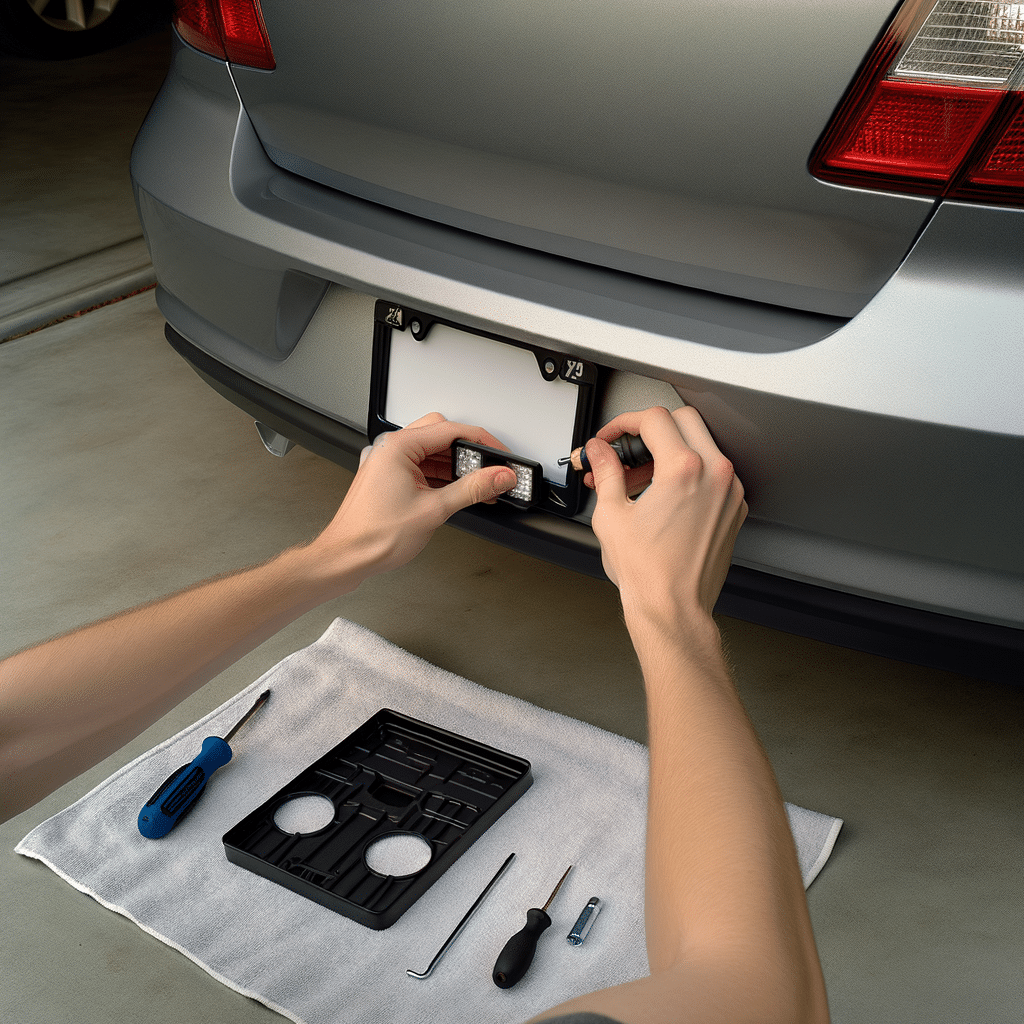
9) Mount the new license plate frame
Place the frame on the car’s mounting area. Then place the plate on top (or behind it, depending on the frame design). Line up the holes.
Start both screws by hand first. This helps prevent cross-threading.
Tighten the screws until snug. Do not crank them down. Overtightening can crack plastic frames and strip the screw inserts.
If your screws regularly loosen from vibration, a tiny drop of blue threadlocker can help. Do not use the red type.
10) Final check
Close the trunk. Wiggle the plate lightly. It should not rattle. Turn on the lights one more time and confirm the plate is clearly lit.
If you like small weekend projects like this, you may also enjoy a Car horn upgrade for beginners or Wiper blades in 5 minutes.
Common mistakes to avoid
- Using the wrong frame size: US plates and some custom plates have different hole spacing. Test-fit before tightening.
- Blocking sticker or state name: even a nice frame can cause legal trouble if it covers required info.
- Overtightening screws: this cracks frames and strips plastic inserts.
- Forgetting the foam pads: some frames include thin pads to stop rattles and protect paint.
- Installing cheap LEDs that scatter light: the plate can look bright in the center and dark on the edges. Pick bulbs made for plate lights, not generic interior bulbs.
- Breaking trunk liner clips: pry carefully and pull straight out.
Maintenance tips
- Check plate screws every few months. A loose plate can rattle and scratch paint.
- After a car wash, glance at the plate lights. Water inside the lens means the seal is not good.
- If you drive in salted winter roads, remove the screws once a year and clean them. Lightly grease the threads to slow rust.
- If your car’s rear lighting is getting cloudy overall, Restore headlights with simple tools can also help your car look fresher.
Is it worth it?
Yes, for most drivers. A good plate frame improves the look of the rear end and can stop plate rattles. Fresh plate lights help visibility at night and can keep you from getting stopped for a burned-out bulb. The job is low cost, low risk, and very beginner friendly.
Conclusion
A license plate frame and light install is one of the easiest upgrades you can do at home. Remove the old frame, swap the bulbs or housings, and tighten everything snug. Test the lights before and after, and keep the plate readable. That is it.


