




This post may contain affiliate links. Please read our disclosure and privacy policy for more information.
- 2004–2006: Funding, ambition, and the first public promise
- 2007–2009: Roadster reality, early pain, and a turning point
- 2010–2012: IPO, the Model S bet, and a new EV template
- 2013–2014: Momentum, identity, and the shape of the Tesla brand
- 2015–2016: Model X, Autopilot debate, and the SolarCity shift
- 2017–2018: Model 3 and the brutal reality of mass production
- 2019–2020: Global expansion, Model Y, and battery ambitions
- 2021–2023: New factories, new cells, and a widening influence
- 2024–2026: An established automaker facing familiar pressures
Tesla’s story begins in the early 2000s, when American car culture still treated electric vehicles as a curiosity. Battery technology was improving, but most major automakers saw EVs as compliance projects, not as the future. In 2003, Tesla Motors was incorporated by Martin Eberhard and Marc Tarpenning, with a simple and ambitious idea: Electric cars could be fast, desirable, and genuinely better to drive.
From the start, the company’s timing mattered. Laptop-style lithium-ion cells were becoming cheaper and more common, and California’s tech world was full of people who believed software could rewrite old industries. Tesla’s earliest bet was that a battery pack made from many small cells could deliver both range and performance, as long as the pack was carefully managed by electronics. That belief shaped almost everything that followed.
2004–2006: Funding, ambition, and the first public promise
In 2004, Elon Musk led Tesla’s Series A funding round and became chairman of the board. The financing did more than keep the lights on. It pushed Tesla toward a bolder identity, less like a small engineering shop and more like a company aiming to challenge the car industry’s assumptions. Even at this stage, the plan was often described as a staircase: Start with a low-volume, expensive vehicle to prove the technology, then move toward more affordable cars as batteries and manufacturing improved.
That plan became real in 2006 when Tesla publicly revealed the Roadster prototype. The message was not subtle. This was an electric sports car that promised strong acceleration and a range that sounded impossible compared to other EV efforts of the time. Tesla wanted attention, because attention made it easier to raise money and recruit talent. But attention also raised expectations that a small startup would struggle to meet.
2007–2009: Roadster reality, early pain, and a turning point
By 2007, the company was under heavy pressure to deliver. Building a car is not like building consumer electronics. Supply chains, crash testing, durability, quality control, and regulatory approvals move slowly and cost massive amounts of money. Tesla’s Roadster program faced delays and cost overruns, and leadership changes followed. The company’s early years became a lesson in how hard it is to turn a promising prototype into an actual production car.
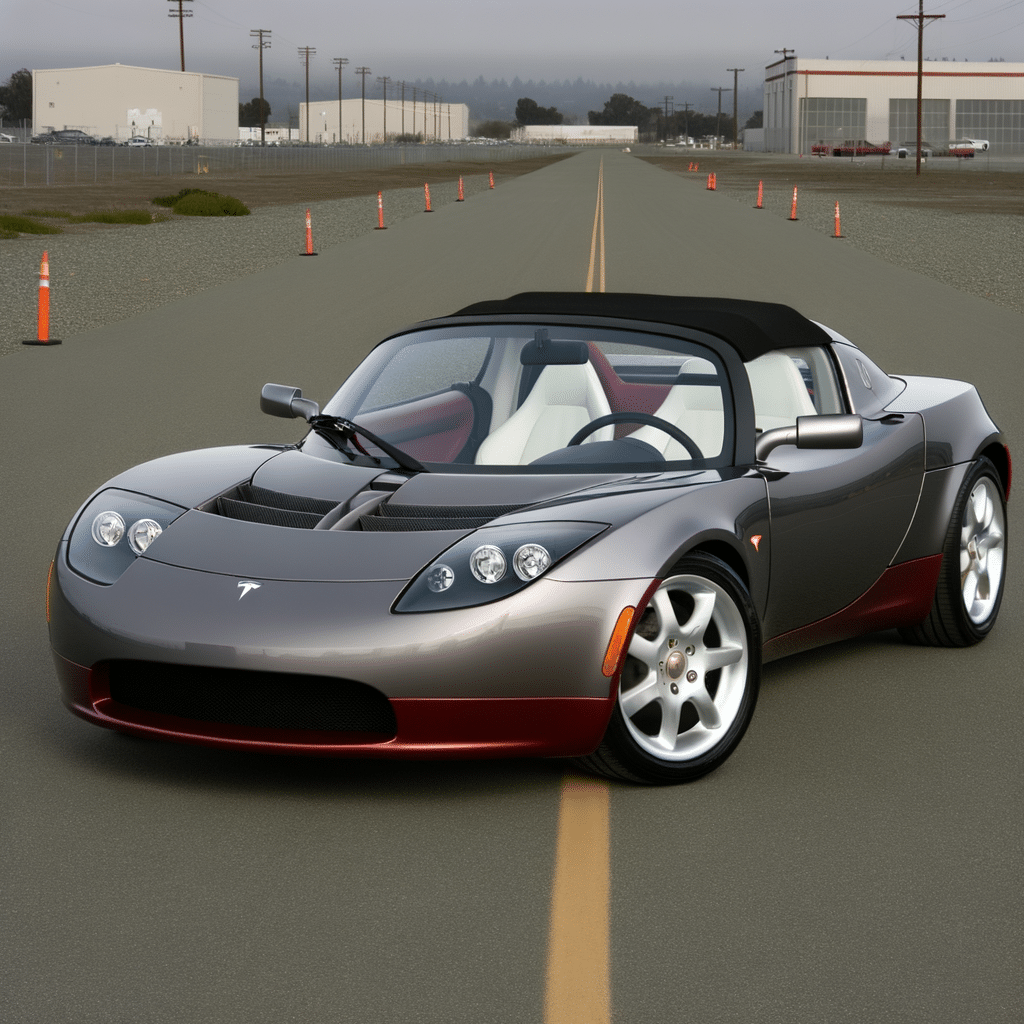
The Tesla Roadster finally entered production in 2008. Underneath, it used a Lotus Elise-based chassis, a practical choice that let Tesla focus on the electric powertrain rather than designing an entire vehicle from scratch. The Roadster’s impact was bigger than its sales volume. It changed what many people thought an EV could be. It also created a new kind of automotive status symbol: The environmentally minded performance car that still felt like a tech product.
⚡ The Tesla Roadster’s impact went beyond sales, reshaping how people viewed electric vehicles.
In 2009, Tesla reached a key survival milestone by closing a partnership with Daimler, which bought a stake in the company and began working with Tesla on battery and powertrain components. It was a quiet but meaningful form of validation. Old-guard engineering culture was taking Tesla seriously enough to collaborate, even if the broader industry remained skeptical.
2010–2012: IPO, the Model S bet, and a new EV template
In 2010, Tesla went public, becoming one of the few American car companies to do so in decades. The IPO did not remove the company’s risks, but it gave Tesla funding and visibility at a scale startups rarely achieve. More importantly, it set the stage for Tesla to attempt something far harder than a niche sports car: A premium sedan designed as an EV from the ground up.
The Model S arrived in 2012, and it quickly became the vehicle that defined Tesla’s early era. The reasons were not limited to speed or range. Tesla packaged the battery into the floor, lowering the center of gravity and opening up interior space. The car also made large-screen software the center of the driving experience, an approach that was still unusual in the early 2010s. Over-the-air updates helped the Model S feel like it could improve after purchase, a big psychological shift in an industry built around fixed model years.
🚀 The Model S introduced software-driven evolution, making cars feel like upgradeable tech products.
At the same time, the Model S made charging infrastructure part of the product, not an afterthought. Tesla’s Supercharger network began rolling out in 2012, targeting long-distance travel. This was a strategic decision driven by anxiety, not marketing. The company knew that range fear could block EV adoption, even for buyers who could afford the car. Fast charging stations on major routes became a promise: An EV could be used like a normal car, not just as a commuter tool.
2013–2014: Momentum, identity, and the shape of the Tesla brand
By 2013, Tesla had momentum, helped by strong interest in the Model S and a growing public fascination with electric performance. The company’s identity was forming clearly. Tesla positioned itself as a technology-led automaker, but also as a reframing of what “premium” could mean: Quiet power, instant response, and software that was always evolving.
During this period, Tesla also leaned harder into vertical integration. Traditional automakers often separate suppliers, dealers, and service networks. Tesla tried to control more of the customer experience directly, from sales to service to charging. It was a risky approach because it required building infrastructure in parallel with manufacturing. But it also let Tesla move faster in some areas, particularly software.
In the bigger history of cars, Tesla’s rise sits alongside earlier moments when companies changed expectations by pairing engineering with a strong story. The automotive world has seen that pattern before, whether in postwar Europe or the supercar era. Readers who enjoy those long arcs often compare Tesla’s disruption thinking to earlier brand transformations documented in pieces like Mercedes-Benz history milestones, even though the technologies and eras are very different.
2015–2016: Model X, Autopilot debate, and the SolarCity shift
Tesla’s next major launch was the Model X in 2015. The SUV market was growing, especially in North America, and Tesla needed a second vehicle to expand its reach. The Model X also showed the company’s tendency to take design risks. Falcon Wing doors created a visual signature and offered practical access in tight parking spaces, but they also introduced complexity. The early Model X rollout brought quality and production challenges that reminded the public that Tesla was still learning some basic manufacturing disciplines.
🚘 Falcon Wing doors became iconic, but also highlighted Tesla’s early production challenges.
In 2015 and 2016, Tesla’s driver assistance systems also became a cultural flashpoint. The “Autopilot” name helped communicate a futuristic feel, but it also created confusion about capability. High-profile crashes became part of the public conversation. Regulators, safety experts, and drivers debated how to talk about partial automation, and what responsibilities belonged to the driver versus the machine. Tesla’s place in car history here is not only technical. It showed how branding and user behavior can become safety issues, especially when software features change faster than laws and public understanding.
In 2016, Tesla acquired SolarCity, a move aimed at linking energy generation, storage, and transportation. The logic was that EV adoption would feel more complete if the energy ecosystem was also clean and locally controlled. The deal was controversial and financially complex, and reactions varied widely. Still, it highlighted Tesla’s long-running theme: The car was never meant to be just a car.
2017–2018: Model 3 and the brutal reality of mass production
Everything Tesla had done up to this point set up one defining test: The Model 3. Announced in 2016 and entering production in 2017, it was meant to bring Tesla’s concept to a much larger audience. The demand was intense, and so was the challenge. Making tens of thousands of vehicles is a different discipline than making a few thousand. Tesla faced what it openly described as “production hell,” with bottlenecks, equipment issues, and rushed fixes.
⚙️ Scaling production exposed real-world manufacturing challenges beyond technology.
The problems were not mysterious. Tesla was trying to scale new battery pack production, new assembly processes, and new supplier relationships at once. It also aimed for high automation, betting that robots could speed up output and reduce costs. In practice, some automation created new failure points, and Tesla had to rebalance with more human labor and updated processes.
By 2018, Model 3 production stabilized enough to change the EV conversation. Competitors could still argue about profit margins or build quality, but it became harder to argue that EVs were doomed to remain niche. Model 3 helped normalize the idea of an electric sedan as a primary household car, not a second vehicle for short trips.
It also influenced what people expected in a modern cabin. The minimal interior design and reliance on a central screen were polarizing, but they pushed other manufacturers to rethink infotainment and software update strategies. Even owners who focused on practical upkeep, from tires to basic service habits, noticed that EVs shifted what maintenance felt like. Some routine tasks still mattered, though, and everyday skills like DIY tire rotation at home stayed relevant because weight and torque can be hard on tires.
2019–2020: Global expansion, Model Y, and battery ambitions
In 2019, Tesla began showing a clearer global manufacturing plan. The company moved beyond its California roots, pushing to build vehicles closer to major markets. Gigafactory Shanghai became a major milestone, signaling that Tesla could scale factory construction and output faster than many expected. It also marked a step toward becoming a global automaker rather than a Silicon Valley outlier with a few standout products.
🌍 Gigafactory Shanghai marked Tesla’s transition into a true global automaker.
The Model Y launched in 2020, timed perfectly for a world that increasingly preferred crossovers. Tesla’s choice to base it heavily on the Model 3 platform was practical. Sharing components simplified production and helped costs, a key factor when scaling. This wasn’t just a new model. It was an example of Tesla slowly learning traditional automaker lessons: Platform sharing, manufacturing efficiency, and clear product segmentation.
Meanwhile, Tesla’s battery messaging grew louder. The company talked about new cell formats and structural battery packs, aiming for lower costs and higher energy density. Some timelines and production ramp details have changed over time, and public information has not always been consistent. What is clear is the direction: Battery cost per kilowatt-hour was treated as the core limiting factor for EV adoption, and Tesla wanted to control more of that process.
2021–2023: New factories, new cells, and a widening influence
By 2021, Tesla was no longer simply fighting for survival. It was shaping the industry’s agenda. New factories in Berlin and Texas represented more than capacity. They showed that Tesla’s manufacturing approach had matured enough to replicate at scale, even if quality debates continued. The industry watched closely because factory design, casting strategies, and supply chain control were becoming competitive advantages, not just operational details.
🏭 Berlin and Texas factories signaled Tesla’s evolution into a scalable global manufacturer.
During these years, Tesla’s cultural impact became harder to separate from its products. Owning a Tesla could imply tech optimism, environmental values, or status, depending on the audience. The brand also became central to online car culture, with debates over panel gaps, software updates, and charging etiquette spreading across social platforms. For younger enthusiasts, Tesla helped make acceleration figures and energy efficiency part of casual conversation, not specialist talk.
The company’s influence also showed up in unexpected places. As more vehicles became software-defined, even small electric issues felt more visible to drivers, like charging behavior, accessory power, and how lighting systems behave under load. Discussions that used to stay in repair shops moved into everyday conversation, including topics like headlights dimming while driving when electrical systems are stressed, even though EV architectures differ from traditional alternator setups.
2024–2026: An established automaker facing familiar pressures
By the mid-2020s, Tesla had become a permanent part of the automotive landscape. The company continued refining manufacturing, expanding charging access, and updating vehicles through software. At the same time, competitive pressure grew. Nearly every major automaker committed to EV platforms, and many began to match Tesla in key areas like range, charging speed, and driver assistance features. The storyline shifted from “Can EVs work?” to “Who can build them well, at scale, with consistent quality?”
⚡ The EV race is no longer about possibility, it is about execution at scale.
Tesla’s own product strategy also faced the classic tension that older automakers know well: Keeping a lineup fresh without overcomplicating production. When changes came, they often arrived as rolling updates rather than clean generation breaks, which made Tesla feel more like a tech company but sometimes confused buyers trying to compare model years.
Its early promise, though, remained visible in the way people now talk about cars. Tesla helped make EVs feel inevitable, not experimental. It also made charging networks, battery sourcing, and software support part of mainstream car conversation. Other brands with long histories had reshaped car culture in their own time, and Tesla’s arc now sits alongside those shifts. For readers who like comparing eras, the way legacy companies once navigated identity and scale can be seen in stories such as Volkswagen impact and legacy, even if Tesla’s challenges are rooted in batteries and code rather than carburetors and steel.
🚗 Tesla helped shift EVs from experimental to inevitable in modern automotive thinking.
Tesla’s early years were defined by risk: Betting on lithium-ion packs, betting on a direct relationship with customers, betting on software as a core feature, and betting that charging could be built quickly enough to support real travel. Those bets were made in specific moments, shaped by the technology and economics of their time. Whether Tesla’s next chapters are remembered for dominance, disruption, or rivalry, its first two decades already secured a place in car history as the company that made the electric car feel like the default future, then forced the rest of the industry to catch up.
And for everyday drivers, that future still connects to practical realities. Modern cars, electric or not, still live in weather, traffic, and real-world wear. Even the way owners personalize vehicles or protect them from heat and cold can change outcomes over years. That broader context matters when talking about today’s enthusiast culture, where ideas like climate effects on car mods sit next to far bigger conversations about batteries, charging, and what the car will become next.


