


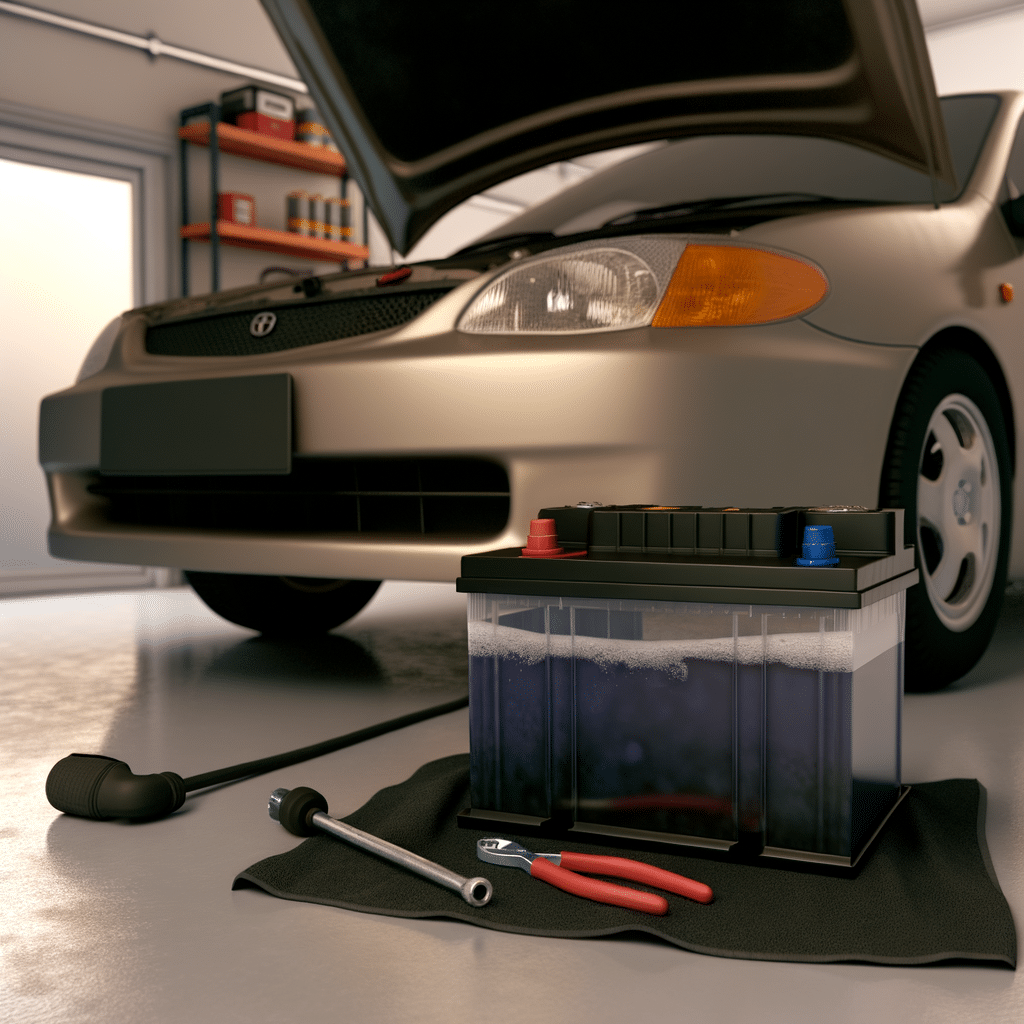
If your car won’t start after sitting for weeks, the two most common areas to look at are the battery and the fuel system. Most of the time, the fix is simple: The battery lost charge while the car sat, or the engine is not getting clean, steady fuel on startup.
What This Problem Feels Like
After weeks of sitting, you turn the key or press the start button and one of a few things happens.
- You hear rapid clicking and the engine does not crank.
- The starter cranks slow, like it is struggling, and the engine won’t catch.
- Dash lights come on, but everything seems weak or resets when you try to start.
- The starter cranks at a normal speed, but the engine never fires up.
- It starts after a jump, but dies soon after you remove the jumper cables.
Those first three usually point to low battery power. The last two can still be battery-related, but they also fit a fuel delivery problem after the car has been parked for a while.
Is It Safe to Drive?
If the car won’t start, the main safety risk is what happens while you are trying. Repeated long cranking can overheat the starter and can drain a weak battery even further.
It is generally safe to drive once it starts and runs smoothly, but only if it stays running reliably and the warning lights behave normally. If it needs frequent jump starts, stalls soon after starting, or the headlights are very dim at idle, treat it as unsafe. You could end up stuck in traffic or in an unsafe location.
Also, do not run the engine in a closed garage. If you get it started, move the car outside right away for any checks that require the engine to run.
Common Causes
Causes below are listed from most common to less common for a car that has sat for weeks.
Battery discharged from normal drain
Even when parked, most cars draw a small amount of power for the clock, security system, radio memory, and computers. Over a few weeks, this can pull a healthy battery down enough that it cannot spin the starter.
Cold weather makes this worse because batteries produce less power when cold.
Old or weak battery that can’t recover
A battery can show 12 volts and still be too weak to crank the engine. As batteries age, they lose capacity. Sitting unused often exposes this because the battery has no regular charging from driving.
Dirty or loose battery connections
Corrosion on the battery terminals adds resistance. That resistance can cause a no-start even if the battery is fairly charged. You may notice a single click, flickering dash lights, or power that comes and goes when you move the cables.
Fuel pressure bleed-down after sitting
Some vehicles lose fuel pressure in the rail while parked. On the first crank after weeks, the engine may need extra time to build pressure again. You might get a normal crank but no start, then a start after a second try.
Stale fuel or water in the fuel
Fuel can degrade over time, especially if the vehicle sat for a long period or the tank was near empty. Moisture can also build up in the tank and contaminate fuel. This is more likely after months, but it can start to show after weeks in humid conditions.
Fuel pump or relay that’s weak when cold
A marginal fuel pump may work fine day to day but struggle after sitting. You may hear the pump sound unusual, or the engine may start and then run rough for a short time.
Quick Checks You Can Do at Home
These checks focus on battery and fuel basics. They are meant to be safe and simple, not a full repair procedure.
Look and listen for a “battery weak” start attempt
- Rapid clicking or a single click: Often low battery or poor cable connection.
- Slow crank: Often low battery or high resistance at the terminals.
- No crank but lights work: Still could be battery, but also a connection issue.
If the crank speed changes a lot from one attempt to the next, that is a common sign the battery is on the edge.
Check the headlights as a quick load test
Turn the headlights on for 30 seconds with the engine off. Then try to start.
- If the headlights are already dim and get much dimmer when you crank: Battery or connections are the top suspects.
- If the headlights stay bright but the engine cranks normally and won’t fire: Fuel becomes more likely.
This is not a perfect test, but it helps point you in the right direction.
Inspect battery terminals for corrosion and looseness
With the key off, inspect the battery posts and clamps. White or green crust is corrosion. Also check that the clamps are tight and do not rotate by hand.
If you see heavy corrosion, it can block current flow. If you are not comfortable working around a battery, stop and have it serviced. Battery acid is harmful, and a short circuit can cause burns.
If you have a multimeter: Check battery voltage
With the car off for at least 10 minutes:
- About 12.6V: Fully charged (roughly).
- About 12.2V: Partly discharged.
- Below 12.0V: Very low and often will not start.
A voltage reading is only part of the picture, but it is a useful first check.
Try a jump start the right way
If the engine cranks slowly or clicks, a jump start can confirm a battery-related problem. If it starts quickly with a jump, the battery is likely discharged or failing, or the terminals are not making good contact.
If it still cranks slowly even with a jump, the issue may be a bad connection or a battery that is severely degraded.
If you want a battery-focused approach, Replace car battery safely covers the safety points that matter most.
If it cranks normally but won’t start: Do a simple fuel prime check
Many cars run the fuel pump for a couple seconds when you switch the key to ON (without cranking). In a quiet area, you may hear a brief hum from the rear of the car.
- No hum does not prove the pump is bad, but it raises suspicion.
- A normal hum with no start points more toward pressure bleed-down, stale fuel, or another fuel delivery issue.
On some vehicles, cycling the key to ON for a few seconds, back to OFF, then ON again can help build pressure after sitting. Keep attempts limited. If it does not improve quickly, stop and move to professional diagnosis.
Think about how much fuel is in the tank
If the tank is very low, the fuel pump may have a harder time picking up fuel after sitting, especially if the car is parked on an incline. Low fuel also gives moisture more room to collect. Adding fresh fuel can help in some cases, but if the car will not start at all, towing to a shop may be the safer choice.
When This Becomes Serious
Stop trying to start the car and get help if any of the following happen:
- You smell strong fuel around the car or under the hood.
- The battery cables or terminals get hot while cranking.
- The starter slows down dramatically after a few attempts, or you hear grinding.
- The car starts with a jump but dies right away or the dash lights flicker heavily.
- You have to crank for a long time to get any sign of firing.
Long cranks can flood the engine on some cars, drain the battery, and overheat the starter. Hot cables can point to a bad connection that can damage wiring.
If the battery keeps dying after short periods of sitting, that suggests a drain problem, not just “it sat too long.” In that case, battery dead after sitting overnight symptoms line up with what many drivers see when a draw is present.
How a Mechanic Fixes It
A shop will usually separate the problem into two paths: Cranking power (battery and cables) and starting fuel delivery.
Battery and charging checks
- Battery load test: Confirms whether the battery can deliver current, not just voltage.
- Terminal and cable inspection: Looks for corrosion, loose clamps, damaged cables, and poor grounds.
- Charging system test: Checks alternator output once the engine is running, since a weak alternator can leave the battery low after every drive.
If the battery fails the load test, replacement is the normal fix. If the cables or terminals are the issue, cleaning or replacing the affected parts restores proper current flow.
Fuel delivery checks
- Fuel pressure test: Verifies pressure at key-on and while cranking.
- Leak-down test: Checks if pressure drops too quickly after the pump stops.
- Fuel pump electrical checks: Confirms the pump is getting power and ground.
Depending on results, the fix may involve addressing a weak pump, a failing check valve, a leaking injector, or another part that lets pressure fall while the car sits. If fuel quality is the issue, the shop may recommend draining old fuel and refilling with fresh fuel.
Common Mistakes to Avoid
- Cranking nonstop for long periods: Short attempts with breaks are easier on the starter and wiring.
- Ignoring corrosion: A small amount can stop a car from starting, even with a decent battery.
- Assuming a jump start solves it: If it only starts with a jump, the battery or charging system still needs attention.
- Revving hard right after it starts: Let it idle calmly for a minute so it can stabilize.
- Letting the car sit again right after a jump start: A brief idle may not put much charge back into the battery.
If you notice weak lighting once it is running, headlights dimming while driving can be a clue that the charging system is not keeping up.
Related Problems to Watch For
Keep these in mind, but don’t let them distract you from the main issue of a no-start after weeks of sitting.
- Battery warning light after it starts: Can point to a charging problem.
- Rough running for the first minute: Can happen if fuel pressure was low at first.
- Repeated dead battery after parking: Often caused by an electrical draw or an aging battery.
- Fuel smell or hard start after refueling: Sometimes linked to EVAP issues. If you suspect a simple cap problem, DIY fuel cap replacement covers the basic idea.
Final Thoughts
When a car won’t start after sitting for weeks, start by treating it like a battery problem until proven otherwise: Listen to how it cranks, check lights, and look closely at the battery terminals. If a jump start brings it to life quickly, plan on testing the battery and charging system soon, not later.
If the engine cranks normally but will not fire, shift your focus to fuel: Listen for the fuel pump prime and think about how long the fuel has been sitting and how low the tank was. If you smell fuel, see hot battery cables, or the car starts and then dies, stop trying and have it towed for diagnosis.


