


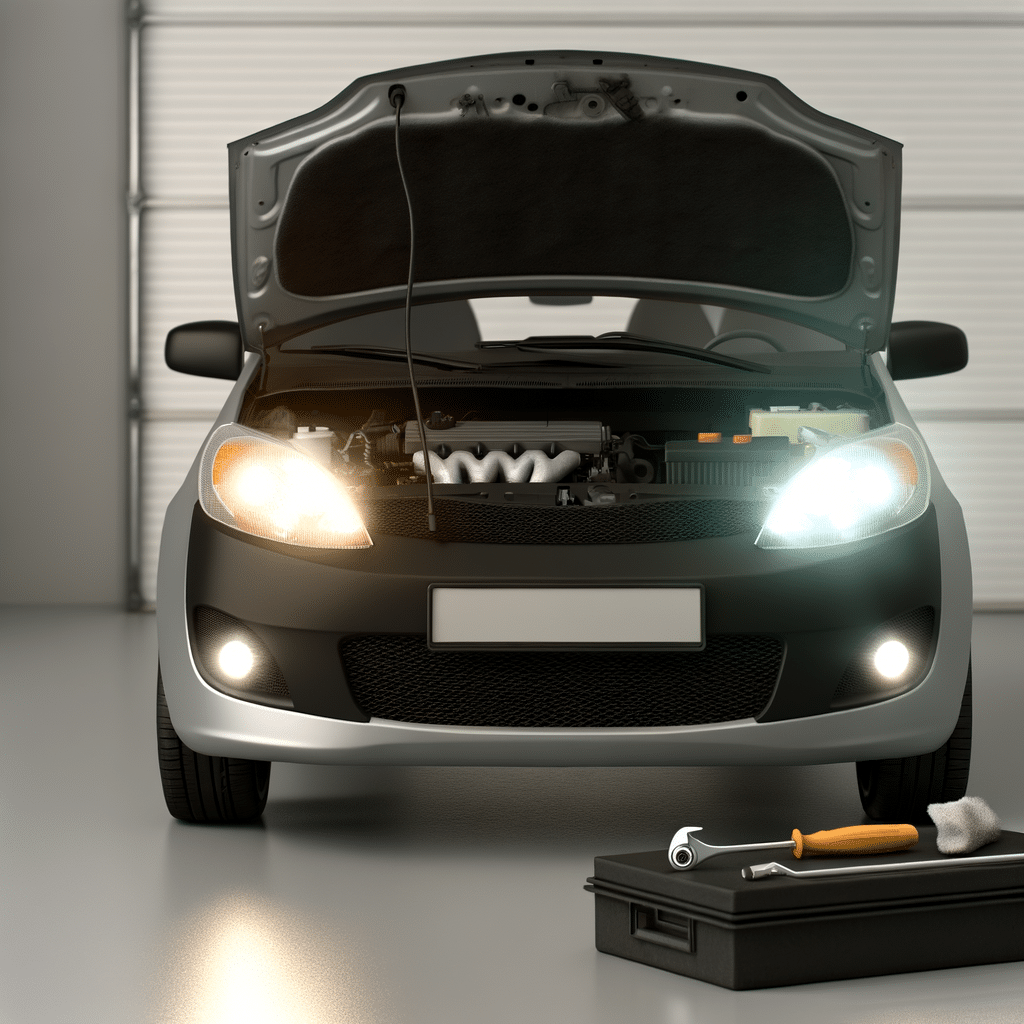
Headlights that dim while you’re driving usually point to a voltage problem. Your car’s electrical system should keep the lights bright and steady, even when you use other accessories. When the headlights pulse, fade at stops, or get noticeably weaker on the road, it’s time to take it seriously.
What This Problem Feels Like
Most drivers notice the headlights get dimmer at certain moments, then brighten again. It may happen:
- At idle, like at a stoplight, then the lights get brighter when you start moving
- When you turn on high electrical loads like the blower fan, rear defroster, heated seats, or wipers
- As a slow pulsing or flicker, especially noticeable on dark roads
- More on one side than the other (less common, but it happens)
You might also notice the dash lights dim at the same time. That usually means the whole system voltage is dropping, not just one headlight.
If your headlights are simply dim all the time, that is a different pattern. Constantly dim lights often relate to cloudy lenses or weak bulbs. For haze and yellowing, DIY headlight restoration can help with light output, but it won’t fix a charging problem that makes lights dim while driving.
Is It Safe to Drive?
It depends on how severe the dimming is and when it happens.
Usually okay for a short trip: Slight dimming at idle that improves when you raise RPM, with no warning lights and no other symptoms. Still, you should plan to diagnose it soon.
Not safe to keep driving: Headlights go very dim, lights pulse heavily, or the car also shows signs of low voltage like power steering changes, flickering gauges, or warning lights. Night driving becomes risky because your visibility and how well others see you can change without warning.
Stop driving and get help: The battery light comes on, the car starts losing electrical power, or the engine stumbles and threatens to stall. At that point, you may be running only on the battery, and the car can shut off while moving.
Common Causes
These are listed from most common to less common. More than one can be present at the same time.
Weak alternator output (charging system not keeping up)
The alternator powers the car while the engine runs and keeps the battery charged. If it’s weak, system voltage drops under load, and the headlights dim. This may show up first at idle and during heavy accessory use.
Why it happens: Internal wear, a failing voltage regulator, worn brushes (on some designs), or heat damage. Some alternators still “sort of work” but can’t provide steady voltage, so the lights pulse.
Loose or slipping serpentine belt
The alternator is driven by a belt. If that belt is loose, worn, or contaminated (oil/coolant), the alternator may spin slower than it should, especially at idle or when you turn on loads.
Why it happens: Belt age, weak tensioner, misaligned pulley, or fluid leaks. A brief chirp or squeal when starting the car or turning on accessories can be a clue.
Battery getting weak or damaged
A healthy battery stabilizes voltage changes. A weak battery can make headlights dim or flicker because it can’t buffer the system when loads change.
Why it happens: Age, sulfation, internal cell failure, or repeated deep discharge. If you’ve also dealt with a battery that won’t hold a charge, problems like battery dead after sitting overnight can push the battery into a weak state even if the alternator is okay.
Bad battery terminals or poor ground connections
High resistance at the battery terminals or ground cables can choke the electrical system. When current demand increases, voltage drops across the bad connection, and the lights dim.
Why it happens: Corrosion, loose clamps, damaged cables, or a loose engine-to-body ground strap. This is very common and often overlooked.
Voltage regulator problems (standalone or built into the alternator)
The voltage regulator controls alternator output. If it responds slowly or erratically, you can get pulsing brightness. Some cars keep the voltage lower on purpose under certain conditions, but it should still be stable, not visibly flickering.
Why it happens: Heat, age, and internal electronic failure.
High electrical load at idle (normal load becomes too much)
At idle, the alternator produces less output. If you’re running headlights, high blower, rear defroster, seat heaters, and charging devices all at once, a marginal charging system will show its weakness.
Related symptom: You may notice other systems react, like AC blows warm at idle, because the engine and fans are managing load and idle speed.
Headlight circuit issues (less common for both lights dimming together)
If only one headlight dims or flickers, the issue may be more local: A poor bulb connection, worn socket, damaged wiring, or a failing headlight module on some vehicles. If both headlights and the dash lights dim together, focus first on charging and main connections.
Quick Checks You Can Do at Home
These checks are beginner-friendly and don’t require disassembly beyond basic access. If anything feels unsafe, stop and have a shop handle it.
Look for patterns
- Do the headlights dim mainly at idle and improve when driving?
- Does dimming happen when you turn on the blower, defroster, or wipers?
- Does it happen randomly, even with no accessories on?
Patterns help separate a weak alternator/belt issue from a bad connection or regulator problem.
Check the battery warning light
If the battery light is on while driving, treat it as a charging system warning. It does not always mean the battery is bad. It often means the alternator output is not matching what the car expects.
Inspect battery terminals and cables (engine off)
With the engine off, open the hood and look closely at the battery terminals:
- White/blue powdery buildup (corrosion)
- Loose clamps that can twist by hand
- Frayed or swollen cable ends
Also look at the ground cable where it bolts to the body and engine. A loose or rusty ground point can cause dimming.
Listen for belt noise and check belt condition
With the engine running, listen for squealing or chirping when you turn on headlights and the blower. With the engine off, look at the serpentine belt for:
- Cracks across the ribs
- Glossy, shiny sections (slip)
- Wet spots from oil or coolant
If you see fluid on the belt, that’s a sign the belt may slip, and the leak should be addressed.
Do a simple voltage check with a multimeter (optional)
If you have a basic digital multimeter, you can get a quick idea of what’s happening. Measure at the battery posts (not the clamps):
- Engine off: Many cars sit around 12.4 to 12.7 volts when the battery is healthy
- Engine running: Many cars charge roughly in the mid 13s to mid 14s
If voltage stays close to battery-only numbers while running, or drops when you turn on loads, the alternator, belt drive, or wiring may not be doing its job. If voltage jumps around noticeably, the regulator or connection quality may be the issue.
When This Becomes Serious
Headlights dimming is not just a lighting issue. It can be the first sign that the car is running out of electrical reserve.
Take it as urgent if you notice any of these at the same time:
- Battery light on, even if the car still drives normally
- Dimming plus stalling, rough idle, or hard starting
- Power windows slow down or the radio resets
- Headlights go very dim suddenly, not just a slight change
If the alternator quits completely, the engine may keep running only until the battery drains. When voltage gets too low, the fuel system and ignition can stop working and the car can stall in traffic.
How a Mechanic Fixes It
A shop will usually confirm the problem quickly with charging system tests, then focus on the most likely failure points.
Charging system testing
A mechanic checks alternator output under load, checks for AC ripple (a sign of internal alternator diode issues), and verifies the voltage regulator is behaving normally. They also look at scan data on newer cars where charging is computer-controlled.
Cable and connection checks
They will inspect and voltage-drop test the battery cables and grounds. This finds hidden resistance that a simple voltage reading may miss. Corroded terminals may be cleaned or replaced, and damaged cables or ground straps are replaced.
Belt and tensioner service
If the belt is slipping or the tensioner is weak, the fix may be a belt and tensioner replacement, plus addressing any fluid leak that contaminated the belt.
Alternator or regulator replacement (if needed)
If the alternator fails testing, it may be replaced as an assembly. On some vehicles, the regulator can be serviced separately, but many modern alternators are replaced as a unit. Afterward, the shop confirms steady charging voltage and checks that the battery is still healthy.
Common Mistakes to Avoid
- Replacing the battery first without testing: A bad alternator can kill a new battery, and a weak battery can hide an alternator problem.
- Ignoring corroded terminals: A small amount of corrosion can cause big voltage drop under load.
- Assuming it’s “just the bulbs” when everything dims: If the dash lights also dim, think charging and connections first.
- Driving at night hoping it holds together: If the lights are pulsing or dropping hard, your risk goes up fast.
- Overloading the system while testing: Running every accessory at once can speed up a failure if the charging system is already weak.
Related Problems to Watch For
Headlight dimming can show up with other signs of electrical strain. Keep an eye out for:
- Slow cranking or clicking on startup
- Battery light or other warning lights flickering
- Random resets of the radio or screens
- A hot, sharp smell after driving, especially near the engine bay (sometimes wiring or belt-related). If that happens, see burning smell after driving.
If your car’s engine temperature also rises at idle along with electrical dimming, it may be because fans and idle control are struggling with low voltage. That combination should be checked soon. For that separate symptom, idle engine overheating causes are worth knowing.
Final Thoughts
If your headlights dim while driving, treat it as a signal that system voltage is dropping or unstable. Start with the basics: Note when it happens, look for corrosion or loose battery connections, and check belt condition. If the battery light is on, or the dimming is strong, avoid night driving and get the charging system tested soon. Fixing a weak alternator, a slipping belt, or a bad connection early is safer and helps prevent a no-start or roadside stall later.


