


- The 1920s and 1930s: Beating Ford with six cylinders and new thinking
- The 1940s: War work and a reset for American life
- The 1950s: Small-block V8s, style, and the birth of icons
- The 1960s: Muscle, pony cars, and a growing performance reputation
- The 1970s: Regulations, fuel shocks, and the end of an era
- The 1980s: Electronics arrive and the front-wheel-drive future takes hold
- The 1990s: Trucks and SUVs rise, and small-block tradition evolves
- The 2000s: Modern performance returns and the SS badge gains new meaning
- The 2010s: Efficiency, connectivity, and electrification becomes real
- The 2020s: Mid-engine Corvette, Ultium EVs, and a brand stretching across eras
Chevrolet’s story begins before the bowtie badge became a symbol. In the early 1910s, the American car market was changing fast. Henry Ford had already proven that inexpensive, mass-produced cars could reshape daily life. William C. Durant, a driving force behind General Motors, wanted a strong brand that could compete in that new world. He found a partner in Swiss-born racer and engineer Louis Chevrolet, whose name carried performance credibility at a time when “speed” helped sell even ordinary cars.
In 1911, the Chevrolet Motor Company was formed. Its first model, the 1912 Classic Six, was not a cheap people’s car at all. It was a larger, more expensive six-cylinder machine, and that mismatch mattered. Durant was aiming for volume and broad appeal. Louis Chevrolet favored power and prestige. That tension pushed Chevrolet toward a more accessible strategy, because the future clearly belonged to cars that more Americans could actually buy and run.
By 1914 and 1915, Chevrolet was pivoting to simpler, less costly models like the Baby Grand and the L Series. These cars helped build momentum, but the real turning point came with the 1915 Chevrolet 490, named for its price. The 490 was positioned directly against the Model T. Chevrolet wasn’t trying to out-Ford Ford on production tactics, at least not immediately. Instead, it leaned on a mix of value, comfort, and features to win shoppers who wanted affordability without feeling like they were compromising on everything else.
By 1918, Chevrolet became a core pillar within General Motors. That mattered because GM’s strategy was to offer “a car for every purse and purpose.” Chevrolet sat at the entry point, but it also had room to grow drivers upward through the GM family. That business structure helped Chevrolet survive economic shocks and shifting tastes, because it could share parts, ideas, and manufacturing muscle across the larger corporation.
The 1920s and 1930s: Beating Ford with six cylinders and new thinking
In the 1920s, the rivalry with Ford intensified. Ford still had scale, but Chevrolet began to chip away with product choices that felt more modern. In 1929, Chevrolet introduced its “Stovebolt” inline-six. Offering a six-cylinder at a price point ordinary buyers could reach wasn’t just a technical change. It was a statement that smoothness and power didn’t have to be reserved for expensive cars. That choice helped Chevrolet overtake Ford in annual sales around 1931, a milestone tied as much to psychology as mechanics: Buyers liked feeling they were getting “more car” for the money.
The Great Depression forced every automaker to adapt. Chevrolet’s job was to stay desirable while staying attainable. Styling became more important, and so did practical durability. GM’s ability to spread development costs across its divisions helped Chevrolet keep updating its lineup even when the economy made big risks dangerous.
The 1940s: War work and a reset for American life
World War II halted civilian car production, and Chevrolet, like the rest of the industry, turned to military manufacturing. When Americans returned to peacetime in the late 1940s, demand for new cars surged. People wanted transportation, but they also wanted a symbol of normal life returning. Chevrolet entered that postwar boom with a reputation for sensible cars, and it quickly reconnected with buyers who were ready to move again, start families, and spread into new suburbs.
The 1950s: Small-block V8s, style, and the birth of icons
If Chevrolet had a decade where it became deeply woven into American culture, the 1950s made a strong case. Families were growing, highways were expanding, and car design was becoming a form of public personality. Chevrolet responded with cars that looked optimistic and felt modern.
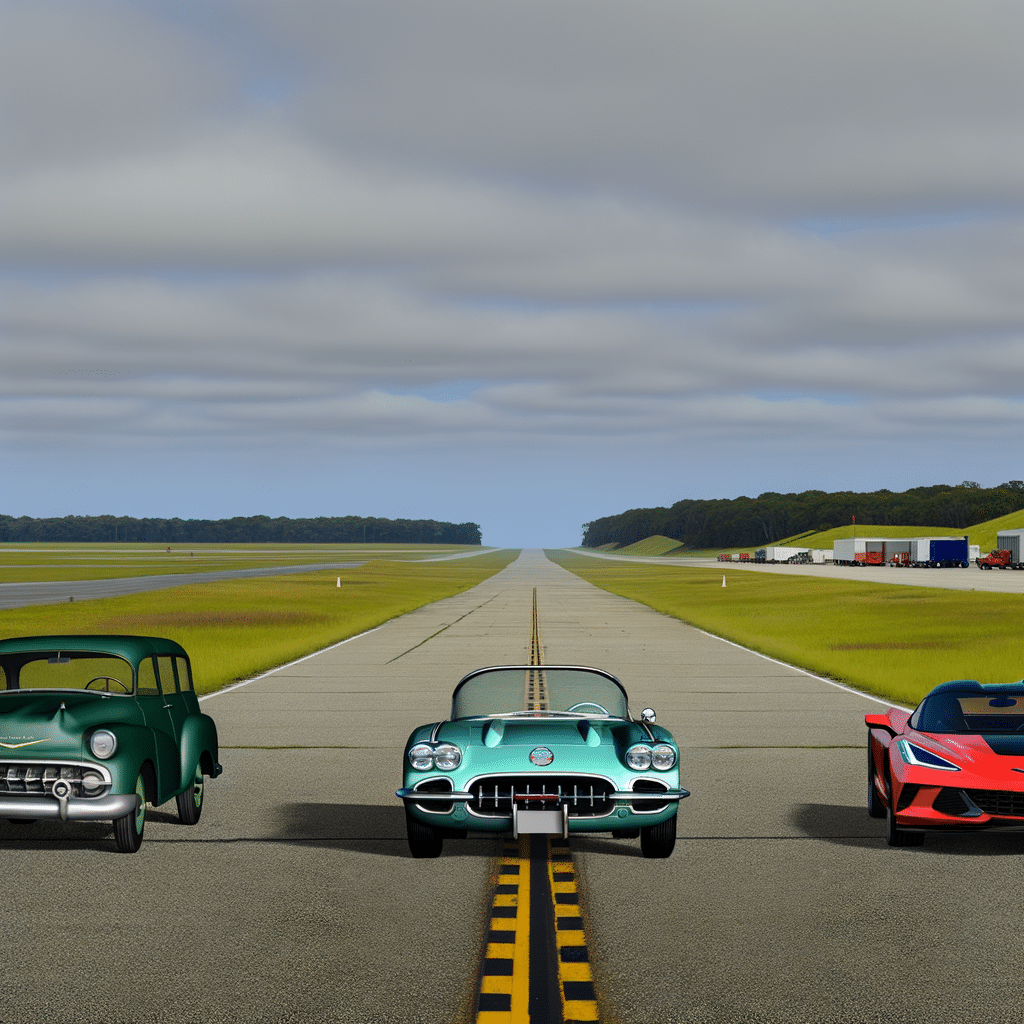
The 1953 Corvette was Chevrolet’s big emotional swing. It started as a stylish halo car, and its early six-cylinder setup showed that Chevrolet was still figuring out what the Corvette should be. The crucial step came in 1955, when the Corvette gained the small-block V8. That engine, introduced in 1955, became a defining Chevrolet technology. The small-block wasn’t just powerful for its size; it was compact, adaptable, and suited to everything from family cars to racing. Chevrolet’s performance identity started to solidify around that flexible V8 architecture.
At the same time, the 1955 Chevrolet lineup, especially the Bel Air, captured public attention with clean styling, bright trim, and a sense of fun. The so-called “Tri-Five” cars of 1955 to 1957 became long-term symbols of 1950s America. They also hinted at Chevrolet’s future: Even mainstream models could be tuned into something personal, fast, and expressive.
The 1960s: Muscle, pony cars, and a growing performance reputation
The 1960s brought a younger car culture into the spotlight. Drag strips, hot-rodding, and street racing were part of the era’s image, and automakers responded. Chevrolet’s lineup expanded in both directions: Practical compacts arrived, but so did more purposeful performance machines.
The 1960 Corvair took an unusual path with its rear-engine layout and air-cooled flat-six. Chevrolet was responding to interest in smaller, more efficient cars, including imports. The Corvair’s history later became complicated by safety controversy and public debate that reshaped how Americans talked about car design. It also helped push the industry toward more visible safety priorities and testing discipline over time.
Then came Chevrolet’s answer to the pony car movement. The Camaro debuted for 1967 as a direct rival to the Ford Mustang. This wasn’t only about speed. It was about identity. The Camaro gave younger drivers a car that could be everyday transportation and a weekend statement, with a wide range of trims and engines that let buyers define what “their” Camaro meant.
Chevrolet’s full-size performance also rose. The Impala remained a sales powerhouse, and in high-performance forms it became part of the era’s big-engine folklore. Meanwhile, the Corvette matured into a serious sports car. The 1963 Sting Ray introduced a new design direction and more sophisticated engineering. Over the decade, Corvette performance and handling grew alongside racing ambitions and buyer expectations.
Across the wider car world, brand identities were being forged in different ways. When enthusiasts compare how companies evolved through the 20th century, it can help to see the contrasts in other timelines like Mercedes-Benz design shifts, where luxury and engineering priorities shaped very different milestones.
The 1970s: Regulations, fuel shocks, and the end of an era
The early 1970s still carried the muscle era’s momentum, but the decade quickly changed the rules. Emissions standards tightened, safety requirements expanded, and the oil crises of 1973 and 1979 forced buyers to think about fuel use in a way many had not before. Chevrolet had to react, and that reaction often meant lower compression engines, detuned performance, and new compromises between power and compliance.
The Corvette, for example, remained a symbol, but its performance output in the mid-1970s reflected the era’s constraints rather than a lack of ambition. Camaro also faced shifting regulations, and horsepower figures became less meaningful as measurement standards changed and engines were tuned for emissions. Chevrolet’s challenge was to keep cars appealing while the broader environment made traditional performance formulas harder to justify.
Chevrolet also moved deeper into small cars as imports and fuel concern reshaped the market. The Vega (introduced for 1971) represented an attempt to build a modern compact domestically, but quality and durability problems hurt its reputation. Those issues mattered because the 1970s were when consumer expectations began to harden around reliability, and negative experiences could push shoppers toward Japanese brands for decades.
The 1980s: Electronics arrive and the front-wheel-drive future takes hold
By the 1980s, the technology inside cars began changing in a way drivers could feel. Carburetors gradually gave way to fuel injection, engine controls became computerized, and emissions systems grew more complex. Chevrolet, like the rest of GM, worked through a transition where some early systems were still learning to be seamless and durable in everyday use.
At the same time, front-wheel drive became the dominant layout for many mainstream cars because it packaged well, saved weight, and supported efficiency goals. Models such as the Cavalier became common sights, representing Chevrolet’s effort to provide straightforward transportation in a decade that increasingly valued economy and practicality. Performance still existed, but it was less central to the brand’s mainstream image than it had been in the 1960s.
For many owners in later decades, the growing complexity of drivetrains and controls also meant new kinds of symptoms when something was off. A modern driver noticing 1st to 2nd shift jerks is often experiencing issues tied to electronic control, sensors, or transmission behavior that barely existed in early Chevrolet history.
The 1990s: Trucks and SUVs rise, and small-block tradition evolves
The 1990s were pivotal because American tastes leaned harder toward trucks and SUVs. Chevrolet benefited from that shift through its full-size pickups and the Tahoe, introduced in 1995. These vehicles became central to family life in many regions, especially as suburbs spread and people wanted space, towing ability, and a higher driving position.
Chevrolet’s V8 story also continued to evolve. In 1997, the fifth-generation Corvette introduced the LS1, marking a major new chapter in small-block design. The LS architecture built on the spirit of the 1955 small-block, but it was engineered for a new era with improvements in breathing, strength, and efficiency. This was not just a performance upgrade. It was Chevrolet aligning its heritage with modern expectations, proving that a classic idea could be reworked into something competitive again.
In broader enthusiast culture, that LS era later fed an entire movement of engine swaps and power builds across many platforms. Those conversations often drift into questions about displacement and compatibility, which intersects with resources like Upgrades for your motor when people start thinking about what “more engine” really means in practical terms.
The 2000s: Modern performance returns and the SS badge gains new meaning
As the 2000s unfolded, Chevrolet leaned into heritage without becoming trapped by it. The Corvette gained refinements in handling, structural stiffness, and engine output, and it remained the brand’s performance flagship. Camaro, after ending its fourth-generation run in 2002, later returned for the 2010 model year with retro-inspired styling that connected directly to late-1960s cues. The timing made sense. Nostalgia was strong, and modern engineering could now deliver the looks people remembered with safety and comfort that older cars could not.
Meanwhile, the market kept rewarding trucks and crossovers. Chevrolet balanced its identity between practical vehicles that paid the bills and enthusiast cars that sustained the brand’s emotional pull. That dual role has been part of Chevrolet’s DNA since the early days, when it had to be both accessible and aspirational to thrive within GM.
The 2010s: Efficiency, connectivity, and electrification becomes real
The 2010s forced every automaker to take technology seriously in new ways. Safety tech expanded, infotainment screens became expected, and fuel economy targets pushed sophisticated engine management and transmissions with more gears. Chevrolet’s lineup reflected those shifts, even when the changes were subtle from the outside.
Electrification moved from experiment to mainstream conversation. The 2011 Chevrolet Volt, a plug-in hybrid with range-extending capability, arrived as a response to rising fuel prices, tightening emissions expectations, and the sense that the industry needed an on-ramp to a more electric future. The 2017 Chevrolet Bolt EV went further, offering a fully electric hatchback aimed at everyday usability. These were major milestones because they signaled Chevrolet’s willingness to build electric cars in real numbers, not just as a limited science project.
Comparing electric brand journeys can be useful here. Chevrolet’s path was shaped by being a large legacy manufacturer with broad needs, which looks different next to narratives like Tesla’s early years, where the company began with EVs as its entire identity.
At the same time, the Chevrolet truck and SUV world kept evolving with better ride quality, stronger towing tech, and more refined interiors. This was partly driven by competition, and partly by the reality that many buyers were using trucks as daily family vehicles. The modern Chevrolet buyer often expects one vehicle to do everything, and the product had to follow that expectation.
The 2020s: Mid-engine Corvette, Ultium EVs, and a brand stretching across eras
Few Chevrolet moments feel as dramatic as the 2020 Corvette Stingray, the first mid-engine Corvette sold to the public. Chevrolet had studied the idea for decades, but it took until the C8 generation to make the leap. The reason was not a sudden change of heart. It was the long-term pressure of global sports car performance benchmarks. To keep the Corvette competitive as a true high-performance machine, Chevrolet needed the traction, balance, and packaging advantages that mid-engine layouts provide.
That change also showed how Chevrolet manages tradition. The Corvette name stayed, the V8 stayed, and the everyday usability remained a priority, but the engineering layout finally shifted to match the modern supercar conversation. It was a rare case where a historic American icon adopted an architecture associated with European exotics, yet still tried to feel approachable.
Electrification also accelerated. GM’s Ultium platform underpinned new electric Chevrolets, including the Silverado EV and Blazer EV, reflecting the industry’s push toward battery power across segments. The reasons were layered. Regulations and emissions targets played a role, but so did battery improvements and consumer curiosity. Chevrolet’s challenge in the 2020s has been to meet new expectations without losing the familiarity that long-time buyers associate with the badge.
Even small details of car ownership have changed in this era, with more drivers customizing appearance and convenience features in simple ways. Something as basic as fuel cap styling tips reflects how modern car culture often mixes history, personal expression, and everyday usability rather than treating cars as purely appliance or purely collectible.
From its early struggle to find the right price and identity, Chevrolet grew into a brand built on broad reach. Over more than a century, it moved with American life, sometimes steering it and sometimes following it. Six-cylinder value in the 1920s, V8 performance in the 1950s, youth culture in the 1960s, survival through regulation in the 1970s, electronics and packaging changes in the 1980s, truck dominance in the 1990s, revived icons in the 2000s, and real electrification debates in the 2010s and 2020s all show a company adapting to forces bigger than any single model.
Chevrolet’s milestones are not just a chain of famous cars. They are a timeline of why cars changed at all: Because buyers changed, laws changed, roads changed, and technology opened doors that earlier engineers could only sketch on paper. That is what makes Chevrolet’s history feel alive. It is a brand that keeps rewriting what “everyday American car” can mean, one era at a time.


