


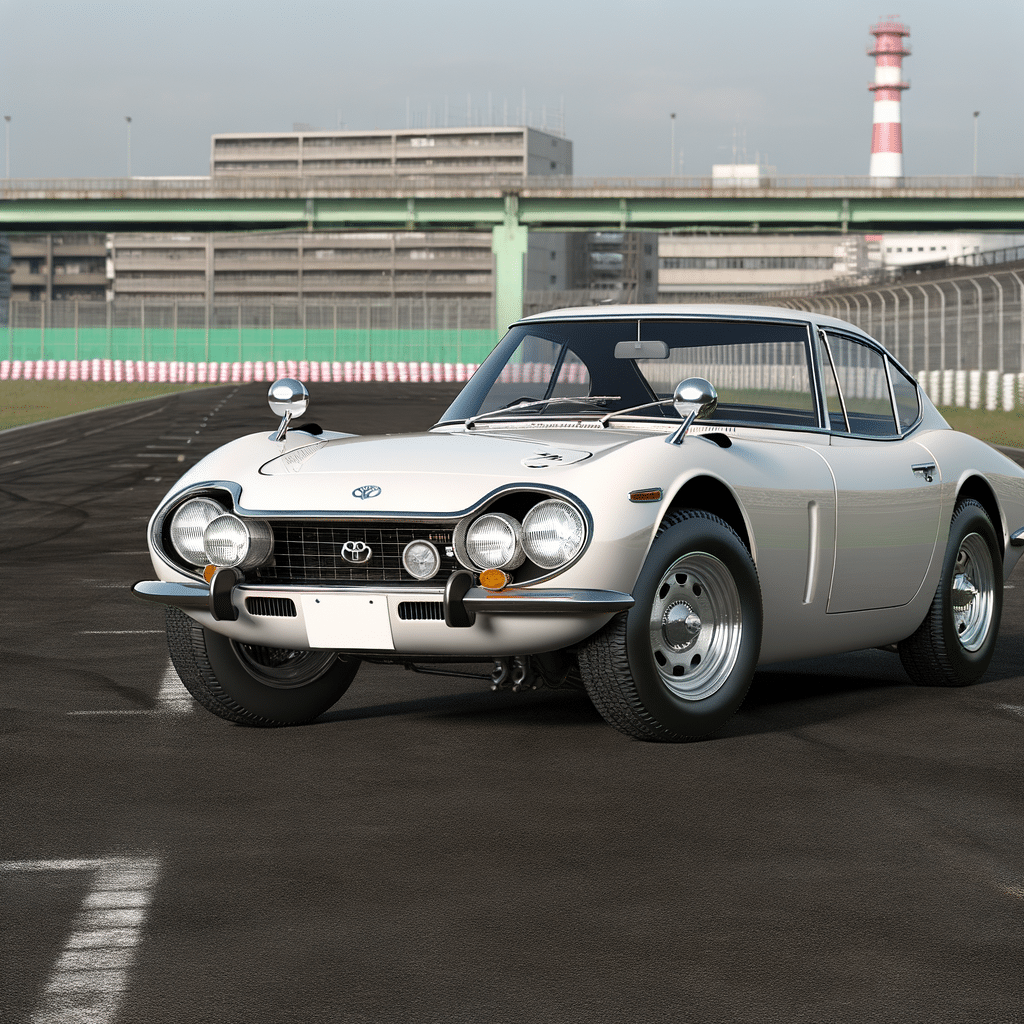
- From looms to engines: The roots of Toyota
- The first cars and the pressure of the 1930s
- Rebuilding after World War II and finding a direction
- Crossing oceans: Toyota enters the United States
- The 1960s: The people’s car era begins
- The 1970s: Oil shocks and Toyota’s reputation for efficiency
- The 1980s: Global manufacturing and the birth of Lexus
- The 1990s: Performance icons and the hybrid turning point
- The 2000s: Hybrids go mainstream and trucks become global symbols
- The 2010s: Safety tech, sharper design, and a new performance voice
- The 2020s: Electrification choices and the meaning of “global icon”
From looms to engines: The roots of Toyota
Toyota’s story begins far from the open road. In the late 1800s and early 1900s, Sakichi Toyoda built a reputation in Japan for inventing textile looms. His work mattered because it trained a young company to value practical engineering and factory discipline. That mindset later shaped how Toyota would approach cars: not as luxury objects first, but as machines that had to work every day.
In 1929, Sakichi Toyoda sold the patent rights to one of his automatic looms to a British company. The money from that deal helped fund a new direction. His son, Kiichiro Toyoda, had become fascinated by automobiles after traveling in Europe and the United States. Japan was modernizing quickly, and the government wanted domestic industry to reduce reliance on imports. Kiichiro saw cars as both a business opportunity and a national priority.
In 1933, an automobile department formed inside Toyoda Automatic Loom Works. It was not yet “Toyota” in the modern sense, but the shift was real. The team began by studying and adapting foreign designs because Japan’s supply chain and materials knowledge for cars were still developing.
The first cars and the pressure of the 1930s
Toyota’s earliest prototypes arrived under intense expectations. In 1935, the company produced the A1 passenger car prototype and the G1 truck. Trucks were especially important because Japan needed commercial vehicles for infrastructure and industry. In 1936, Toyota introduced the AA sedan, a car that looked familiar to American eyes because it reflected the influence of U.S. designs of the era. That resemblance was not about copying for style; it was a way to reach workable reliability quickly while local engineering skills caught up.
In 1937, Toyota Motor Co., Ltd. became a separate company. Not long after, the world moved toward war. During the early 1940s, production priorities shifted away from civilian passenger cars. Material rationing and government directives pushed Toyota toward military trucks and simplified designs. Many manufacturers faced similar pressures, but Toyota’s experience in building under constraint planted an early lesson: simplify parts, reduce waste, and keep vehicles serviceable.
Rebuilding after World War II and finding a direction
Japan’s postwar years forced Toyota to reinvent itself under severe shortages. Civilian transportation needs were huge, but so were economic limits. Toyota resumed vehicle production with basic trucks and small runs of passenger cars. The company also faced labor challenges, including a major dispute in 1950 that ended with restructuring and a clearer separation between manufacturing and sales operations. This period was difficult, but it helped shape the management practices that later became famous.
By 1951, Toyota introduced what many enthusiasts remember as an early symbol of rugged Toyota character: the BJ, a Jeep-like vehicle created for tough conditions. It was developed in part because Japan needed capable utility vehicles for police and government use, and because Toyota needed exports and institutional customers to survive. The BJ would evolve into the Land Cruiser line, beginning with the 20 Series in 1955, a model aimed more directly at civilian buyers.
Crossing oceans: Toyota enters the United States
Toyota’s first serious attempt at the U.S. market came in 1957 with the Toyopet Crown. It was a bold move, but the Crown struggled on American highways. Speeds were higher, distances were longer, and customers expected stronger performance. The lesson was blunt: a car that works well in Japan would not automatically succeed abroad.
Instead of retreating, Toyota adapted. Through the 1960s, the company improved engineering standards and developed products with export markets in mind. In 1965, the Toyota Corona became a more successful U.S. entry because it better matched American driving conditions. The change was not only about power; it was about durability, cooling capacity, and the way the car felt over long trips.
Behind the scenes, Toyota was also refining what the world later called the Toyota Production System. Ideas like just-in-time inventory and built-in quality checks were responses to postwar scarcity and to the need to compete with larger, richer automakers. The point was never theoretical. Toyota needed quality without waste, or it would lose.
The 1960s: The people’s car era begins
As Japan’s economy grew, so did demand for affordable family cars. Toyota met that demand with practical models that became cultural fixtures. The most influential arrived in 1966: the Corolla. It was simple, efficient, and priced for young families. Timing mattered. The mid-1960s were full of rising middle-class confidence in Japan, and export markets were expanding. Corolla fit the moment and kept evolving across generations, gradually adding comfort, safety, and better emissions control without abandoning the core idea of approachable transportation.
During this same decade, Toyota also began building a broader identity. It was not only a maker of small cars. With the Crown and later the Century (first introduced in 1967 for Japan), Toyota showed it could build upscale vehicles too. Even when those models were not global best-sellers, they helped develop engineering depth.
The 1970s: Oil shocks and Toyota’s reputation for efficiency
The 1970s reshaped the car world. The 1973 oil crisis made fuel economy a central issue in many countries, especially the United States. Toyota benefited because it already specialized in compact, efficient cars. Models like Corolla and Corona suddenly looked like smart choices rather than compromises.
Toyota also faced tightening emissions regulations, particularly in the U.S. and Japan. Meeting these rules required better engine management, cleaner combustion, and stronger quality control. This era pushed Japanese automakers to improve not just mechanical reliability, but also consistency. Toyota’s growing reputation for starting every morning and lasting for years became a defining part of its global image.
By the late 1970s, Toyota was expanding its lineup to cover more lifestyles. In 1978, the Celica Supra arrived as a longer, more performance-oriented offshoot of the Celica. It hinted at a future where Toyota would not rely only on economy cars to win attention.
The 1980s: Global manufacturing and the birth of Lexus
In the 1980s, Toyota became more international in how it built cars, not just in where it sold them. Trade tensions and currency shifts made it risky to export everything from Japan. Local production became a strategy for stability and for closer market fit. A major milestone came in 1984 with NUMMI in California, a joint venture with General Motors. The partnership was complicated, but it served as a testing ground for Toyota’s manufacturing methods in an American factory environment.
The decade also brought an identity shift. Toyota had built quality and value, but it wanted true premium credibility. In 1989, Lexus launched with the LS 400. It arrived with quiet refinement, careful assembly, and a customer experience designed to challenge established luxury brands. Lexus mattered because it changed how many buyers viewed Japanese engineering. It was no longer just practical. It could be aspirational.
The 1990s: Performance icons and the hybrid turning point
The 1990s were unusually diverse for Toyota. On one side were enthusiast cars that became legends. The fourth-generation Supra (A80) launched in 1993 with strong performance potential and a long-lasting cultural footprint, especially after its visibility in late-1990s and early-2000s street racing media. The third-generation MR2, arriving in 1999, took a different approach, emphasizing light weight and agility over raw power.
On the other side was a technological bet that would define Toyota’s future. In 1997, Toyota introduced the Prius in Japan as a mass-produced hybrid. The reason was not a single event, but a combination of rising environmental concern, fuel efficiency goals, and Toyota’s desire to lead rather than follow on powertrain technology. Early hybrids were not fast, and they were not cheap to develop. But the Prius proved that electrification could be marketed as normal transportation, not an experiment.
As Toyota’s lineup grew, so did the need to keep track of evolving design and engineering eras. Many of those step-by-step shifts are captured through Toyota history milestones, where model timelines show how quickly Toyota’s priorities changed from decade to decade.
The 2000s: Hybrids go mainstream and trucks become global symbols
In the 2000s, Toyota’s hybrid system matured and spread to more vehicles. The second-generation Prius, released for 2003, became a recognizable shape on roads around the world. It landed at a time when fuel prices were volatile and climate conversations were becoming mainstream. The Prius turned into a cultural marker, especially in North America, where it signaled both practicality and environmental awareness.
Toyota also continued to deepen its truck and SUV identity. The Land Cruiser remained a long-running symbol of durability, while the Tacoma and Tundra helped Toyota compete in truck markets with deeply rooted loyalties. The underlying shift was that Toyota was no longer simply participating in these segments. In many regions, it was setting expectations for resale value and long-term ownership.
Reliability also shaped owner behavior. Toyota drivers often keep their cars long enough to handle routine maintenance themselves. For owners who want a basic starting point, DIY oil change at home reflects the kind of hands-on care that pairs naturally with long-lived engines.
The 2010s: Safety tech, sharper design, and a new performance voice
By the 2010s, Toyota faced a different challenge: many buyers respected the brand but wanted more excitement. Toyota responded in design and in driving feel. Bolder styling appeared across the lineup, and platform engineering improved handling without sacrificing comfort. At the same time, the company expanded safety technology, including broader availability of advanced driver assistance features later grouped under Toyota Safety Sense.
In 2012, Toyota and Subaru introduced the 86/FR-S/BRZ twins, lightweight rear-wheel-drive coupes created to bring affordable fun back into showrooms. The car’s purpose was clear: remind younger drivers that Toyota could still build something playful. The 2010s also saw the rise of Gazoo Racing as a more visible performance sub-brand, culminating in road cars like the GR Supra (introduced for 2020 model year, developed with BMW) and hot hatches that leaned into enthusiast culture.
As daily driving technology changed, Toyota interiors and electronics began catching up to the smartphone era. Owners of older cars sometimes add modern features without changing the car’s character, and projects like DIY dash cam install fit that modern reality of always-on driving documentation.
The 2020s: Electrification choices and the meaning of “global icon”
Toyota entered the 2020s with a unique reputation: trusted, widespread, and sometimes underestimated. The company continued to expand hybrid availability across core models, making electrified powertrains feel routine rather than special. It also began pushing further into battery-electric vehicles under the bZ naming strategy, with the bZ4X arriving in the early 2020s as a key global EV step. Toyota’s EV approach has often seemed more cautious than some rivals, influenced by its long-term belief in multiple powertrain paths, including hybrids, plug-in hybrids, EVs, and hydrogen fuel cells.
That caution is not only corporate temperament. It reflects real constraints Toyota has spoken about over time: battery supply, charging infrastructure differences by region, and the need to serve buyers in markets where EV adoption moves at different speeds. Even so, pressure from regulations and competitors has made electrification a faster-moving priority than it was a decade earlier.
Meanwhile, Toyota’s cultural impact stayed broad. Corolla remained a default choice for first-time buyers and commuters. Prius remained a symbol with a newer, more stylish generation introduced for 2023. Trucks and SUVs continued to define outdoor and work identities, while GR models kept enthusiast attention alive. Toyota’s “global icon” status came from that range. It learned to be many things at once, changing with the times without losing the core habit of building cars meant to last.
For beginners who want to keep a Toyota running smoothly over years of commuting and road trips, simple maintenance steps still matter more than trends. Something as basic as a Change engine air filter can reflect the same practical thinking that shaped Toyota from the start: small improvements, repeated over time, add up to long-term dependability.


