


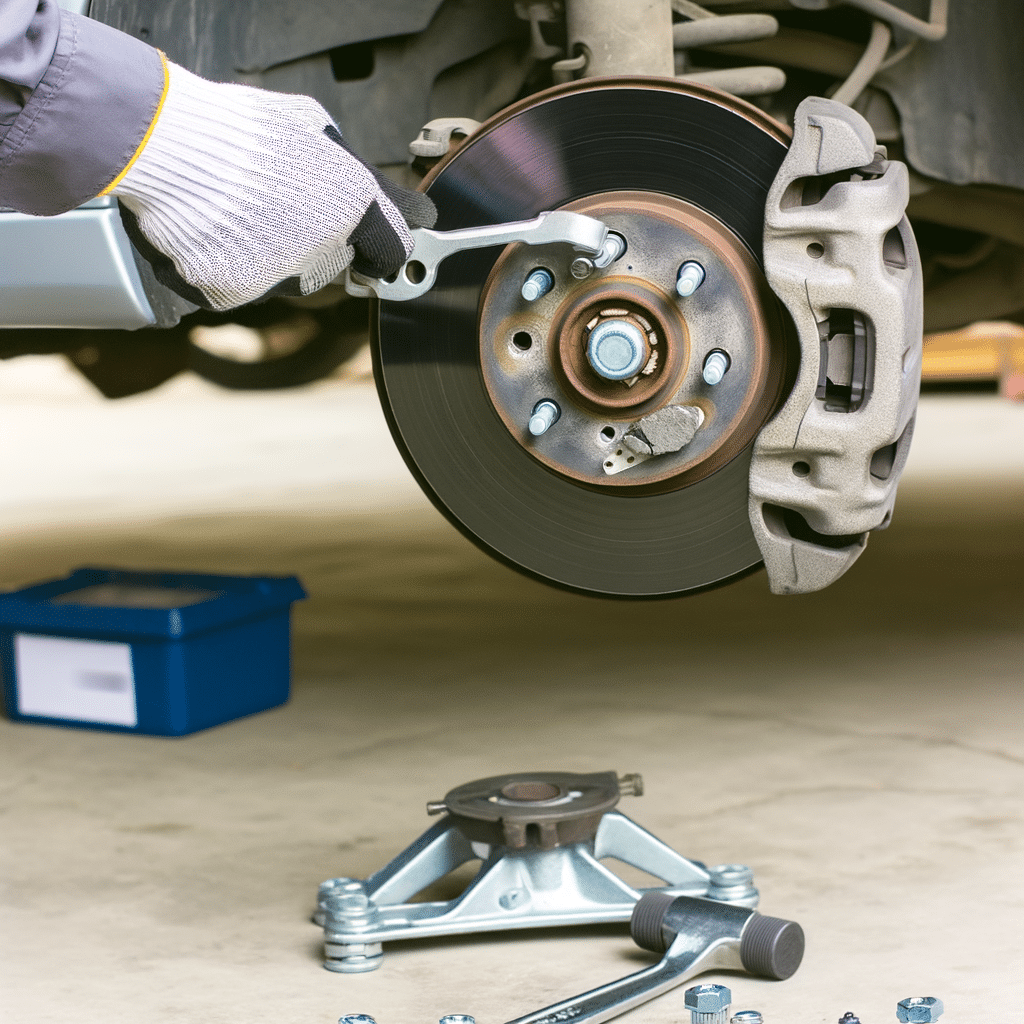
Changing brake pads at home is one of the best beginner DIY jobs. It saves money, and it teaches you how your brakes work. If you can lift the car safely and follow steps, you can do it. This guide is for a normal daily driver with disc brakes. The exact details can vary by car, so always follow your owner’s manual for torque specs and jack points.
Tools and items needed
- New brake pads (correct for your car and axle)
- Jack and jack stands (never work with only a jack)
- Wheel chocks
- Lug wrench or impact gun (optional)
- Socket set and ratchet (often 12mm to 19mm)
- Torque wrench (recommended)
- C-clamp or brake piston tool (rear calipers may need a wind-back tool)
- Brake cleaner spray
- Wire brush (small)
- Brake grease (silicone-based for slider pins and pad contact points)
- Bungee cord or strong zip ties (to hang the caliper)
- Gloves and safety glasses
- Paper towels or shop rags
If you like simple DIY jobs, start with something small first, like Replace wiper blades at home. Brake pads are still beginner-friendly, but they carry more risk if done wrong.
Safety and legal notes
- Work on a flat surface. No slopes.
- Use wheel chocks on the wheels staying on the ground.
- Support the car on jack stands at proper lift points.
- Do not breathe brake dust. Use brake cleaner and avoid compressed air.
- Do not let the caliper hang by the brake hose.
- After the job, test brakes at very low speed in a safe area.
If you find damaged hoses, leaking fluid, cracked rotors, or a stuck caliper, stop and get help. Brakes are not the place to guess.
DIY brake pad replacement step-by-step
1) Confirm you have the right pads
Open the pad box and compare the shapes to your old pads. Check any included hardware like shims or clips. Some pads come with wear indicators. Pay attention to left and right orientation if your pads have them.
2) Loosen lug nuts before lifting
With the car on the ground, break the lug nuts loose about a quarter turn. Do not remove them yet. This helps stop the wheel from spinning while you loosen them.
3) Lift the car and remove the wheel
Chock the opposite wheels. Jack up the car at the correct point, then set it down on a jack stand. Give the car a gentle shake to confirm it is stable. Remove the lug nuts fully and pull the wheel off.
4) Locate the caliper and inspect everything
You will see the rotor (disc) and the caliper gripping it. Look for:
- Pad thickness (thin pads look almost flush with the metal backing)
- Rotor grooves, heavy rust, cracks, or blue heat spots
- Fluid leaks around the caliper
5) Remove the caliper bolts
Most floating calipers use two small bolts that hold the caliper to the slider pins. Remove these bolts. If the slider pin spins, hold it with a wrench. Then wiggle the caliper off the rotor.
Hang the caliper with a bungee cord from the spring or a solid suspension part. Do not pull on the brake hose.
6) Remove old pads and hardware
Slide the pads out of the bracket. Take note of how the wear indicator is positioned. Remove the pad clips from the bracket if your car uses them. Spray brake cleaner and wipe the bracket clean. If the clips sit in rusty grooves, use a wire brush lightly.
7) Check and service the slider pins
Pull the slider pins out (one at a time). They should move smoothly and have grease on them. Wipe old grease off, then apply fresh brake grease. Reinstall them and confirm smooth movement.
Stuck pins can cause uneven pad wear and pulling to one side.
8) Compress the caliper piston
Before pushing the piston in, open the hood and check the brake fluid reservoir. If it is already full, fluid may rise and overflow when you compress the piston. You can remove a little fluid if needed.
Use a C-clamp or piston tool to slowly push the piston back into the caliper. Go slow and keep it straight. If you are doing rear brakes on many cars, the piston may need to twist while pushing. That needs a special wind-back tool.
9) Install new pad clips and pads
Install the new clips if included. Then place the new pads in the bracket. They should slide freely, but not be loose. If they bind, clean the bracket more and confirm the clips are seated.
Use a tiny amount of brake grease only on the pad ears where they contact the clips, and on shim contact points if your pads use shims. Do not get grease on the friction material or rotor.
10) Reinstall the caliper and torque bolts
Lower the caliper over the new pads. Line up the bolt holes and reinstall the caliper bolts. Tighten them to the correct torque spec for your car. Do not guess.
If you removed the caliper bracket (some cars require it), torque those larger bracket bolts as well.
11) Put the wheel back on
Mount the wheel and hand-thread the lug nuts. Lower the car until the tire touches the ground lightly, then torque the lug nuts in a star pattern.
12) Pump the brake pedal before moving
This step matters. Press the brake pedal slowly several times until it feels firm. This seats the pads against the rotor. Then re-check brake fluid level and top off if needed.
13) Do a careful test drive and bed-in
Start with a very slow roll in your driveway or parking area. Confirm the car stops normally and the pedal feels firm. For the first 100 to 200 miles, avoid hard stops unless needed. Many pad brands have a specific bed-in process on the box. Follow it.
While you are doing basic upkeep, pairing this with a simple service like DIY oil change at home can help you stay on top of maintenance.
Common mistakes beginners make
- Not using jack stands, or lifting from the wrong point
- Letting the caliper hang by the hose
- Forgetting to pump the brake pedal before driving
- Grease on the pad surface or rotor
- Not cleaning and greasing slider pins
- Mixing up inner and outer pads, or installing wear indicators on the wrong side
- Overtightening bolts or lug nuts without a torque wrench
- Ignoring rotor condition and blaming new pads for noise
Maintenance tips after new pads
- Listen for new noises. Light sound can be normal at first, but grinding is not.
- Check for pulling left or right during braking. That can point to a stuck caliper or uneven pad movement.
- After a few days, look at the brake fluid level again.
- Re-torque lug nuts after 50 to 100 miles if your manual recommends it.
If you like working on your car at home, keep your projects simple and realistic. A list like simple car upgrades you can do can help you pick jobs that match your tools and time.
Is it worth it?
For most daily drivers, yes. Pads are usually a straightforward job, and labor cost at a shop can be more than the parts. The trade-off is responsibility. If you rush, use the wrong torque, or skip steps, your braking can suffer.
If you want to keep your spending under control, it helps to set a simple parts budget and stick to it. The Car mod budget basics approach also works for DIY maintenance.
Conclusion
DIY brake pad replacement is a solid beginner project if you work safely and take your time. Use jack stands, keep everything clean, service the slider pins, and torque bolts correctly. Pump the brake pedal before driving, then do a careful test drive. If anything feels wrong, stop and re-check your work.


