


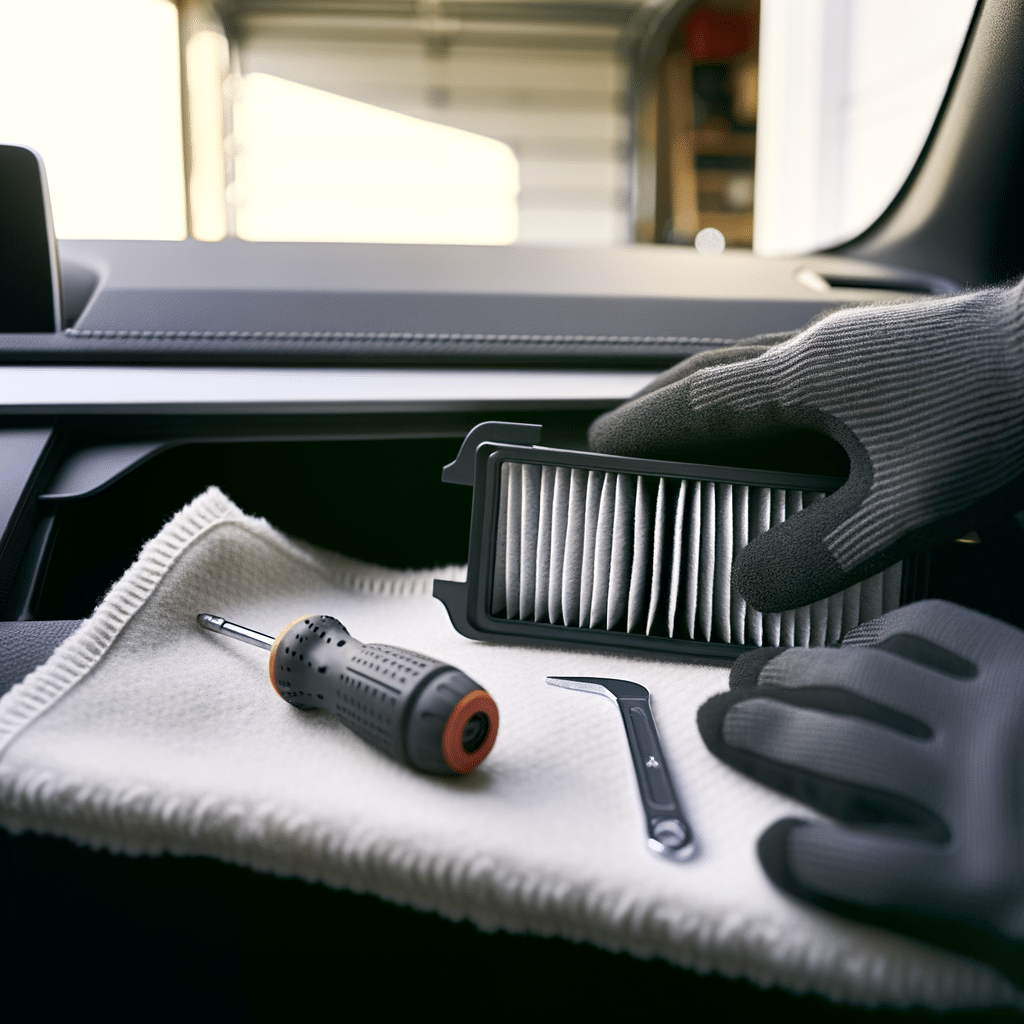
DIY Cabin Air Filter Replacement At Home for Beginners
If your car’s AC smells musty, the airflow feels weak, or your windows fog up fast, your cabin air filter may be clogged. This filter cleans the air that comes through your vents. It catches dust, pollen, leaves, and road grime.
The good news is that cabin air filter replacement is one of the easiest DIY jobs. Most cars take 10 to 20 minutes. No special skills needed.
Tools and Items Needed
- New cabin air filter (match your exact year, make, model, and trim)
- Flashlight or phone light
- Clean rag or paper towels
- Small vacuum (optional but helpful)
- Small flat screwdriver or trim tool (only if your cover uses clips)
Tip: Do not guess the filter. Many cars have two different filter shapes depending on trim level or HVAC option.
Safety Notes
- Park on a level surface. Turn the engine off. Set the parking brake.
- If your filter is behind the glove box, remove items first so nothing falls into the dash.
- If your car has a glove box light or airbag switch wiring, move slowly. Do not yank on the glove box.
- Wear a simple dust mask if you are sensitive to pollen or dust. Old filters can be nasty.
Where the Cabin Air Filter Is Located
Most cabin air filters are in one of these spots:
- Behind the glove box (most common)
- Under the passenger-side dash, near the center console
- At the base of the windshield under the plastic cowl (less common)
If you cannot find it in 2 minutes, check your owner’s manual index for “cabin air filter” or “pollen filter.” Some cars do not have one, but most modern cars do.
Step-by-Step Cabin Air Filter Replacement
1) Buy the correct filter
Get the right filter type for your needs:
- Standard (paper): cheapest, works fine for most drivers
- Charcoal or carbon: better for smells and exhaust odors
- HEPA-style: great filtration, but can reduce airflow more if it gets dirty fast
If you also want to freshen up the air coming into the car, pairing this job with a Change engine air filter can help overall HVAC performance feel more consistent, since both filters often get neglected.
2) Open the access area
For the glove box style (most common):
- Open the glove box.
- Remove everything inside.
- Look for a small “damper” arm on one side. It often clips off by hand.
- Press in the glove box sides to clear the stops, then let the glove box swing down.
For the under-dash style:
- Move the passenger seat back.
- Look under the dash for a rectangular cover or a small door.
- Remove any plastic push pins or small screws if present.
3) Remove the filter cover
You will see a plastic cover over the filter slot. It usually has tabs on the sides.
- Press the tabs and pull the cover straight out.
- If it is tight, use a trim tool carefully. Do not break the tabs.
4) Slide the old filter out
Pull the old filter out slowly.
- Keep it level. Dirt and leaves can spill.
- Watch how it sits in the slot. Take a quick photo so you remember the direction.
If the filter is very full of debris, stop and pull it out in small steps. This keeps junk from falling into the blower fan area.
5) Clean the filter housing (quickly)
Look inside the filter tray area.
- Wipe the edges with a rag.
- Vacuum loose dirt if you can reach it.
- Do not push debris deeper into the duct.
If you see dampness or signs of water, check the cowl drains near the windshield later. A wet cabin filter often means the drain path is clogged.
6) Install the new cabin air filter in the correct direction
This part matters. Most filters have an arrow that says:
- “Air Flow” (direction of airflow)
- Or “UP” (which way should face upward)
Common glove box setups have airflow going downward, but not always. Match the arrow to what the old filter showed or what the housing label says.
Slide the new filter in smoothly. If you have to force it, it is either crooked or the wrong part.
7) Reinstall the cover and glove box
- Snap the filter cover back into place.
- Lift the glove box back up.
- Press the sides in again to get past the stops.
- Reconnect the damper arm if your car has one.
Close the glove box and check that it opens and closes normally.
8) Test the HVAC
Start the car and run the fan at different speeds.
- Listen for rubbing or ticking sounds. That can mean the filter is not seated.
- Check for stronger airflow at the vents.
- If there was a smell, it may improve right away, but strong odors can take a few drives to fade.
Common Mistakes Beginners Make
- Installing the filter backward. This can reduce airflow and make the filter load up faster.
- Buying the wrong filter. Many cars have two similar sizes. Confirm with your manual or parts lookup.
- Breaking glove box clips. Do not force it. Look for side stops and the damper arm.
- Dropping debris into the blower area. Pull the old filter out slowly and keep it level.
- Forgetting the cover. A missing or loose cover can cause whistling noises or allow air to bypass the filter.
Maintenance Tips
Most cabin air filters should be replaced every 12,000 to 20,000 miles, or once a year. Replace sooner if you:
- Drive on dusty roads
- Park under trees (lots of leaves and pollen)
- Have allergies
- Use the fan and AC every day in city traffic
Signs it is time:
- Weak airflow even on high fan speed
- Musty smell when you first turn on the AC
- More dust inside the cabin
- Windows fog more than usual
If your windshield wipers also smear and the glass seems to haze up fast, do a quick refresh there too. Wiper blades in 5 minutes is another easy job that helps visibility and comfort.
Is It Worth It?
Yes, for most drivers. The filter is usually cheap, and the job is simple. You get cleaner air, better airflow, and less strain on the blower motor. It also helps your AC and heater feel more responsive.
DIY is worth it because many shops charge labor for a part that is often right behind the glove box.
Conclusion
Replacing a cabin air filter at home is a beginner-friendly win. Find the access panel, remove the old filter carefully, clean the area, and install the new filter in the correct direction. Then run the fan to confirm everything feels normal.
Once you do it once, it becomes a quick routine you can repeat every year, like other simple DIY tasks such as Oil change for beginners or Headlight restoration at home.


