


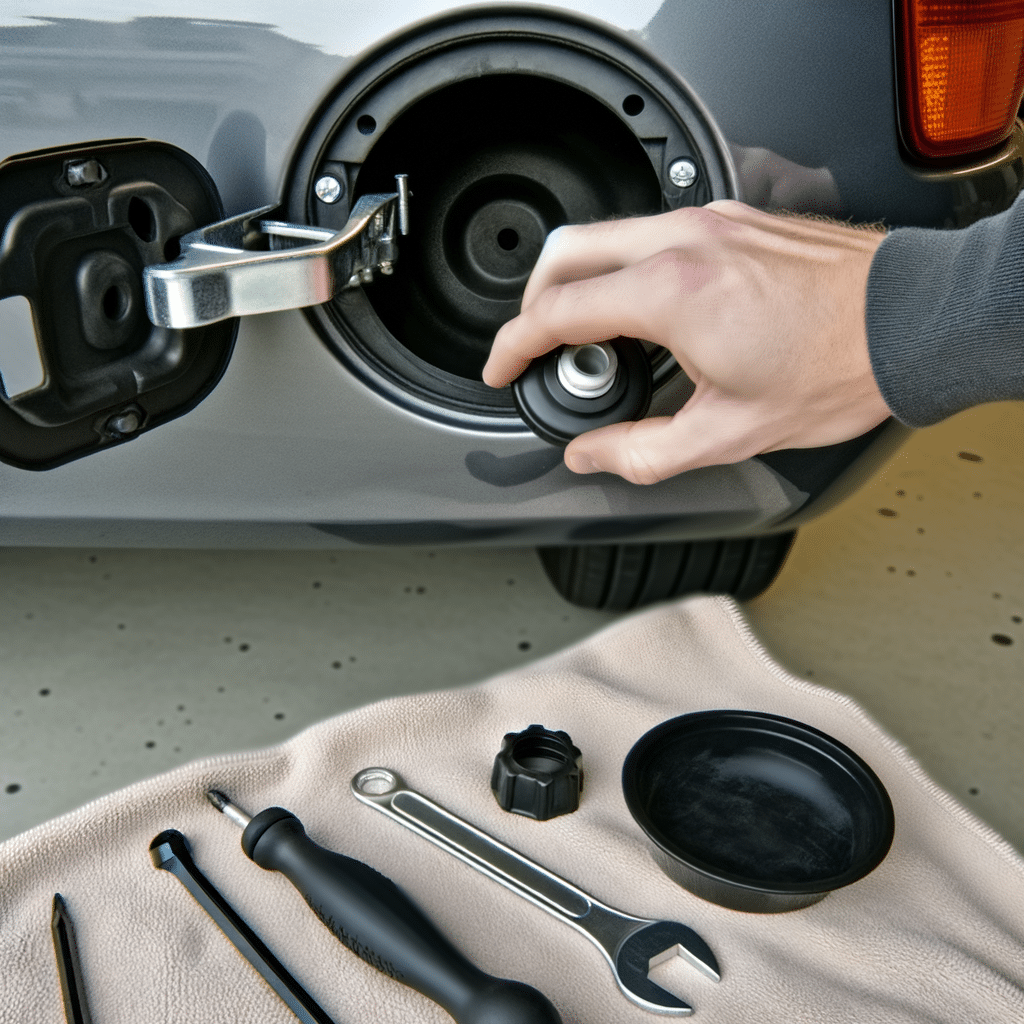
A fuel cap looks like a small part. But it matters. It keeps fuel vapors inside the tank. It helps stop dirt and water from getting in. And on many cars, a bad cap can even turn on the check engine light.
The good news: Fuel cap replacement is one of the easiest DIY jobs you can do at home. You can also add simple styling without making the car look overdone.
Tools and items needed
- New fuel cap (OEM type or a direct-fit aftermarket cap)
- Clean microfiber cloth or shop towel
- Mild soap and water (for cleaning the area)
- Small nylon brush or old toothbrush
- Silicone grease (optional, for some rubber seals)
- Rubbing alcohol (optional, for sticker or adhesive cleanup)
- Styling item (optional): Fuel cap cover, vinyl wrap piece, or matching trim ring made for your car
Safety or legal notes
- Work in a well-ventilated area. Fuel vapors can build up in closed garages.
- Do not smoke or use open flames near the fuel filler area.
- Turn the engine off before opening the fuel door.
- If you live in an emissions-testing area, use a cap that seals correctly. A “universal” cap can fail testing.
- If your car has a capless fuel system, do not try to force a cap-style part onto it. Only use parts made for that setup.
Numbered installation steps
1) Confirm the right fuel cap type
Before you buy anything, check what your car needs. Some caps twist on. Others use a tether. Some lock with a key. Many modern caps have a built-in seal and pressure relief.
Use your owner’s manual, parts website lookup, or the part number printed on the old cap. If your check engine light is on, a wrong cap can keep the problem going.
2) Relieve pressure the normal way
Most cars safely vent pressure when you loosen the cap. Slowly turn the cap left until you hear a small hiss, then keep loosening. If the cap feels stuck, do not use pliers. Wiggle gently and try again.
3) Remove the old cap and inspect it
Take the cap off and look closely at the rubber gasket. If the seal is cracked, flat, or missing chunks, the cap is done. Also check the plastic threads. If they are worn or cross-threaded, it may not tighten correctly anymore.
If you see fuel stains around the filler neck, that can be another sign the cap was not sealing well.
4) Clean the filler neck and sealing surface
This step makes the new cap work better.
- Wipe the rim of the filler neck with a clean cloth.
- Use mild soap and water on the cloth if there is dirt buildup.
- Use a nylon brush for dust stuck in the grooves.
- Dry the area fully.
Do not push dirt into the opening. Keep the cloth and brush on the outer rim and the sealing surface only.
5) Check the tether and fuel door area
If your old cap has a tether, make sure it is not tangled or cracked. A broken tether is not a big problem, but a loose tether can keep hitting the paint.
Also check the fuel door hinge area. If the door does not open smoothly, clean it and remove grime. If you like simple DIY add-ons, small exterior upgrades like a DIY license plate frame install can match the “freshened up” look.
6) Install the new fuel cap
Line up the cap and turn it to the right. Keep it straight. You should feel smooth threading right away. If it feels rough, stop and restart.
Most caps are “click type.” Turn until you hear three clicks, or until the clicks stop. If the cap does not click, tighten it until it is snug. Do not over-tighten.
7) Optional: Add simple styling
Fuel cap styling is easy to overdo. Simple usually looks best. If you want your car to look clean and not messy, think about small changes and avoid stacking too many pieces.
If you are new to clean mods, Avoid over-modding your car is a good mindset for this kind of detail work.
- Fuel cap cover: This goes over the cap and changes the look when the fuel door is open. Buy a direct-fit cover made for your car’s cap size.
- Vinyl wrap on the cap face: Clean the cap face with rubbing alcohol, apply a small circle of vinyl, and trim carefully. Do not wrap over the seal or threads.
- Trim ring for the filler area: Some cars have a plain plastic look around the filler neck. A trim ring can add a neat finish. Make sure it does not interfere with the fuel door closing.
Keep styling parts away from the gasket and threads. That is the sealing zone.
8) Test for a good seal
Close the fuel door. Start the car. If you had a loose-cap warning or check engine light, it may take a few drive cycles to clear. Some cars clear it on their own. Others need a scan tool.
If you still smell fuel outside the car after driving, stop and recheck the cap and the filler neck area.
Common mistakes
- Buying a universal cap: Many do not seal as well as a direct-fit cap.
- Cross-threading: If the cap is not straight, it can damage the threads on the filler neck.
- Not tightening until it clicks: A click-type cap needs the clicks to seal correctly.
- Ignoring the filler neck dirt: Even a new cap will leak vapors if the sealing surface is gritty.
- Using grease on the wrong seal: Some seals are fine dry. If you use silicone grease, use a tiny amount and only on the rubber gasket, not on threads unless the manual says so.
Maintenance tips
- Wipe the filler neck rim every few months, especially if you drive on dusty roads.
- If your cap clicks, always tighten it until it clicks after fueling.
- Replace the cap if the gasket looks cracked or if it no longer clicks.
- If you have other small DIY projects planned, group them on a calm weekend. Something simple like a DIY trunk organizer setup is a good follow-up job with the same easy skill level.
If you notice strong fuel smell, do not ignore it. A cap is only one possible cause. If the smell continues, inspect for leaks or get the car checked. For other under-hood odor clues, engine bay burning smell symptoms are different, but it is another sign you should not shrug off.
Is it worth it?
Yes, for most drivers. A new fuel cap is cheap, fast to install, and can fix small but annoying problems like a loose-cap message. It can also help prevent evaporative emissions issues. Styling is also worth it if you keep it simple and functional.
If your fuel door area is damaged, or the filler neck is rusty or bent, a cap replacement alone may not help. In that case, you may need a repair on the filler neck or door housing.
Conclusion
DIY fuel cap replacement is a quick home job that helps your car seal fuel vapors correctly and keeps the filler area clean. Pick a direct-fit cap, clean the sealing surface, tighten it the right way, and keep any styling add-ons away from the gasket and threads. Small details like this can make your car feel better cared for without making it complicated.


