


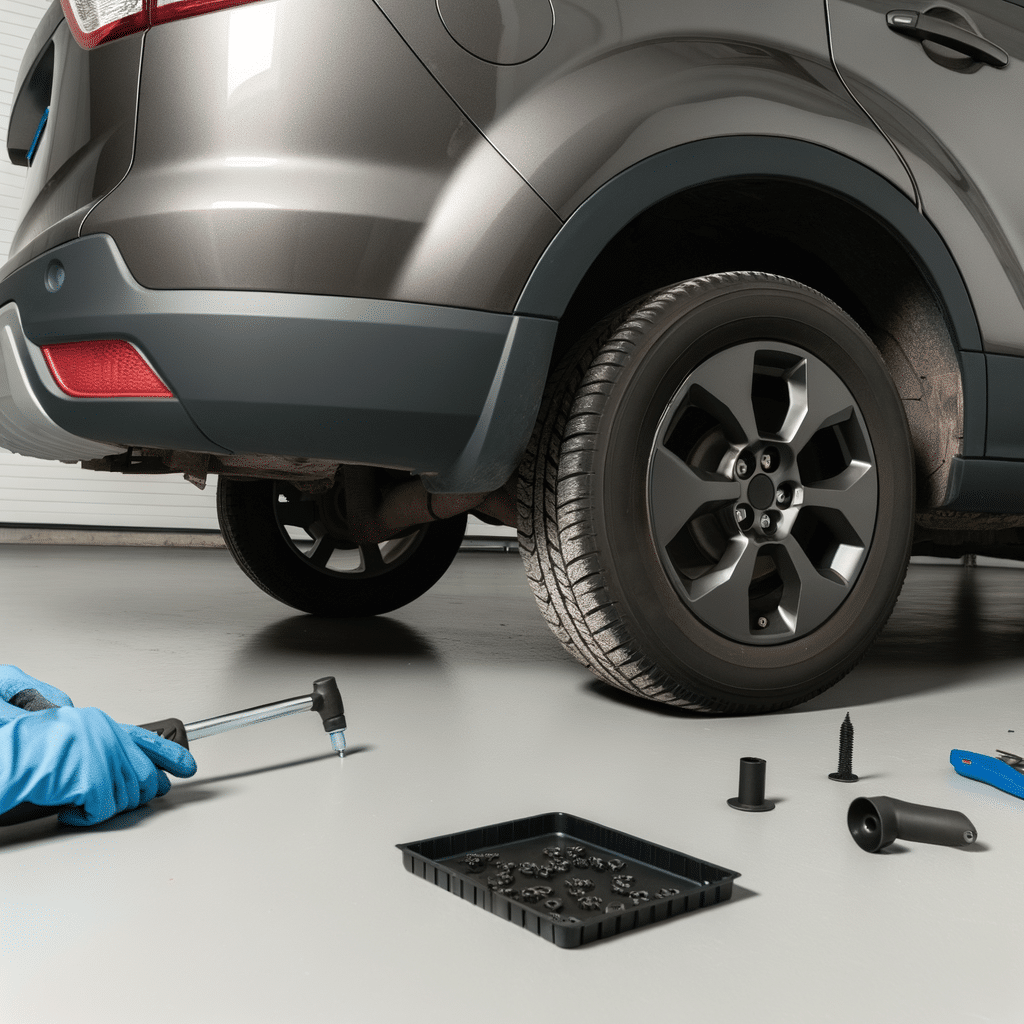
Mud flaps are simple guards that sit behind your wheels. They block rocks, salt, and wet road grime. They also help keep your paint cleaner. If you drive on gravel roads, in snow, or in heavy rain, they can make a big difference.
The good news: Many mud flap kits are made for beginners. You can do this at home with basic tools and a little patience.
Tools and items needed
- Mud flap kit made for your car (front, rear, or full set)
- Socket set or nut driver (common sizes: 8 mm, 10 mm)
- Phillips and flathead screwdriver
- Trim clip tool or plastic pry tool (helpful)
- Tape measure or ruler
- Marker or painter’s tape for alignment marks
- Drill with small bits (only if the kit requires holes)
- Torque wrench (nice to have, not required)
- Floor jack and jack stands, or ramps (optional)
- Work gloves and safety glasses
- Car wash soap, rag, and rubbing alcohol for cleaning
Safety or legal notes
Work on a flat surface. Set the parking brake. If you lift the car, use jack stands. Do not rely on the jack alone.
Check your local rules. Some areas have limits on how low a mud flap can hang, and some require tire coverage. This matters most if your car is lowered or has wide tires. If you are doing other changes too, keep it simple. A good reference for beginners is Avoid over-modding your car.
Numbered installation steps
1. Confirm the kit fits your car
Before you remove anything, check the part number and the instructions. Many kits are side-specific. They may be labeled LF (left front), RF, LR, RR. Lay them on the ground in the order you will install them.
2. Clean the wheel well area
Turn the steering wheel to give yourself space on the front wheels. Spray the wheel well and wipe it down. Dirt trapped behind the flap can rub paint over time. Finish with rubbing alcohol where the flap will touch the body.
3. Do a quick test fit
Hold the flap up to the wheel well. Look for factory holes and clips. Many vehicle-specific kits reuse factory screws. If your kit has a bracket, hold that up too. You want to see how it “wants” to sit before you remove clips.
4. Remove only the fasteners you need
Most mud flaps attach to the plastic fender liner. You may remove:
- Phillips screws
- Small 10 mm bolts
- Plastic push clips
Use a trim clip tool to pop the center pin up, then pull the whole clip out. If a clip breaks, replace it. Loose liners can cause annoying rubbing later.
5. Install the flap on one corner (start with front)
Front flaps are usually easier to reach. Hold the flap in place and start each screw by hand. Do not tighten fully yet. Just get the threads started so the flap can still move a little for alignment.
If the kit uses a bracket: Bolt the bracket first, then bolt the flap to the bracket. Follow the order in the instructions.
6. Align the flap so it sits straight
Step back and look at it from the side and from the front. Use a tape measure if needed. The flap should be vertical and even with the edge of the wheel opening. Small alignment changes now can prevent rubbing later.
Once it looks right, tighten the fasteners. Snug is usually enough. Over-tightening can crack plastic and strip clips.
7. Check tire clearance with the wheel turned
Turn the steering wheel fully left and right. Watch the gap between the tire and the flap. Also look at the fender liner edge. If you hear a scrape, stop and adjust.
If you already have a DIY tire rotation at home habit, this is a great time to check your tires and wheel wells while you are down there.
8. Repeat for the other front corner
Do the same steps on the other side. Try to match the height and angle. If one side is higher, it will look off and may block less spray.
9. Install the rear mud flaps
Rear flaps can be tighter to work on. You may need to remove one or two liner clips and one screw. Some cars also have a small lip or rocker trim near the flap. Take your time and do not force it.
Test fit, start the screws by hand, align, then tighten. If the kit uses a clip-on “U” nut, make sure it is seated straight before you run the screw in.
10. Drill only if the instructions require it
Some universal kits need one or two small holes. If so:
- Mark the hole location with the flap held in place
- Move the liner away from the metal body if possible
- Start with a small pilot hole
- Use rust protection if you drill into metal (many kits drill plastic only)
If you are not sure what you are drilling into, stop and double-check. You do not want to hit wiring or a hidden clip.
11. Final check and short test drive
With all four flaps installed, do one last look for even spacing. Push on each flap. It should not wobble much. Then take a short drive on a quiet road. Listen for rubbing when turning and when going over bumps.
If you hear a new noise from one wheel area after the job, check for a loose liner or clip. A rubbing liner can sound similar to front wheel grinding when turning, but it is usually lighter and changes when you push on the plastic.
Common mistakes
- Buying a universal kit for a tricky wheel well: Vehicle-specific kits fit better and need fewer holes.
- Tightening screws before alignment: Start all screws first, then align, then tighten.
- Over-tightening: This can crack the flap or strip the clip. Snug is enough.
- Forgetting to clean the area: Dirt behind the flap can rub paint and hold moisture.
- Not checking full steering lock: A flap that clears straight ahead may rub when turning.
- Ignoring a loose fender liner: Flapping plastic can rub the tire and make noise.
Maintenance tips
Mud flaps are low maintenance, but a quick check helps them last.
- After the first week, re-check screw tightness. Plastic can settle.
- Wash behind the flaps when you wash the car. Salt and sand build up there.
- In winter, knock off packed snow so it does not pull on the flap.
- If you drive in heavy rain often, keep up with daily car cleaning basics so grime does not harden around the mounts.
- Replace broken clips fast. A loose flap can catch wind and crack.
Is it worth it?
For many drivers: Yes. Mud flaps help reduce rock chips on the lower doors and rear bumper area. They also cut down on slush spray in bad weather. If you drive gravel roads, they are one of the simplest protection mods you can do.
If you mostly drive in dry city conditions, you may notice less benefit. But you will still get easier cleaning and less road spray on the sides of the car.
Conclusion
A mud flap install is a beginner-friendly project you can do at home in about an hour or two. Clean the wheel wells, test fit first, and start all fasteners by hand before tightening. After installation, check clearance at full steering lock and re-check the screws after a few days. Done right, mud flaps help protect your paint and keep your car cleaner with very little upkeep.


