


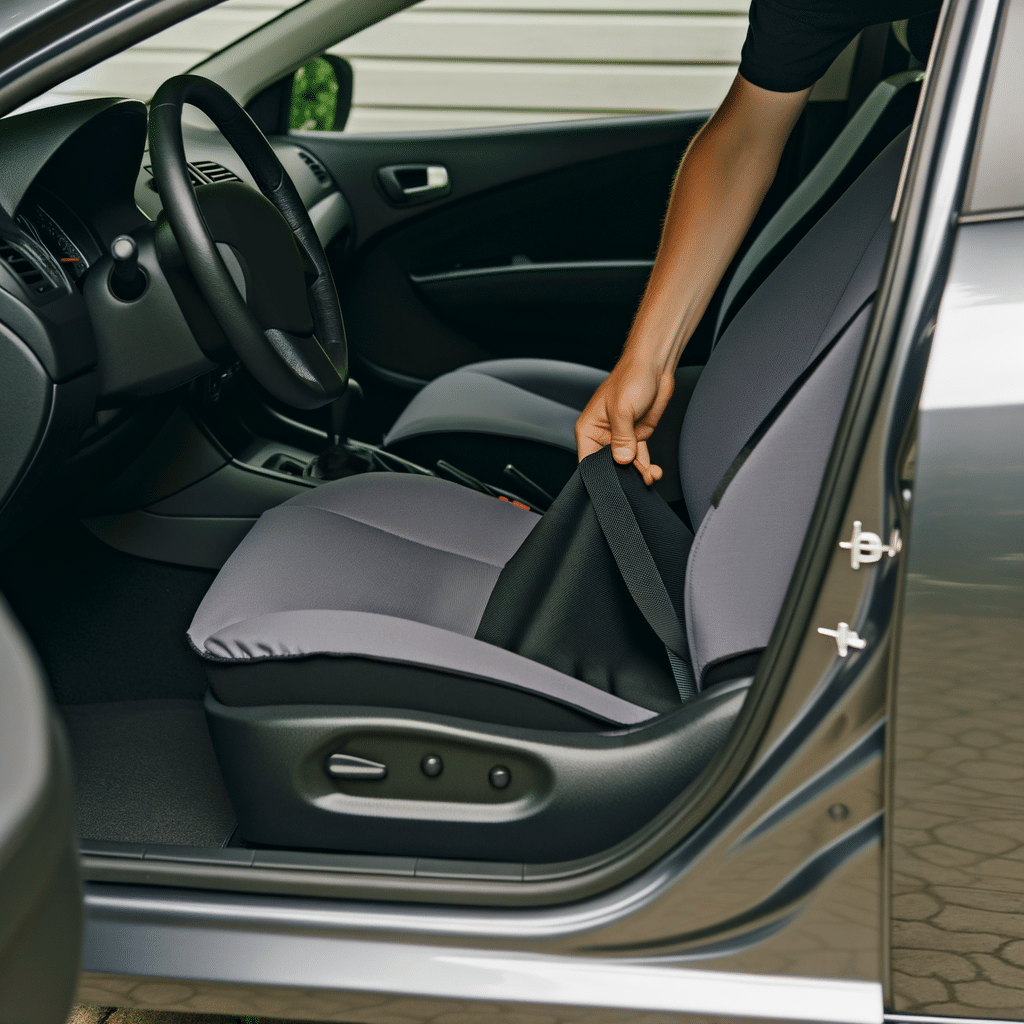
New seat covers can make your car feel cleaner and newer fast. The good news: You can install most slip-on seat covers at home without tools. You just need a little patience and the right order. This guide walks you through a simple, no-stress install that works for most cars, SUVs, and trucks.
Tools and items needed
- Your seat cover set (front and rear, if included)
- Owner’s manual (to check airbag locations and seat removal rules)
- Microfiber cloth or clean rag
- Small handheld vacuum or brush (optional, but helpful)
- Good lighting (phone flashlight is fine)
- Patience and clean hands
If the car interior is dusty, do a quick wipe first. If you like keeping the cabin tidy, follow these daily car cleaning basics before you start. Dirt under a cover can rub and leave marks over time.
Safety or legal notes
Seat covers are simple, but there are a few real safety details.
- Side airbags: Many cars have airbags inside the outer side of the front seatbacks. Only use covers marked “airbag compatible” if your seats have side airbags. Do not block the airbag seam.
- Seat belts: Do not cover or pinch belt buckles. The buckle must click in and release normally.
- Head restraints: Keep them installed and adjusted. They are safety parts, not decoration.
- Heated or cooled seats: Some thick covers reduce heating or cooling. That is normal.
- Power seats: Do not force covers into moving tracks. Keep fabric away from gears and rails.
Numbered installation steps
1) Park, power off, and make space
Park on level ground. Turn off the car and remove the key. Slide the front seats forward and backward to see where straps could catch. Open both front doors so you can work from either side.
2) Identify each cover before you start
Lay the covers out on the ground or a clean blanket. Match them to the seat shape:
- Front bottom cushion cover
- Front seatback cover
- Headrest covers
- Rear bench bottom cover (if included)
- Rear backrest cover (if included)
Look for tags like “Driver,” “Passenger,” “Front,” or “Back.” If there are zippers or openings for armrests, decide which side they belong on now. This saves you from reinstalling later.
3) Clean the seat quickly
Vacuum crumbs from seams and wipe the seat with a dry or slightly damp cloth. Focus on the cracks where covers tuck in. If the seat is wet, let it dry before installing the cover.
4) Install the front seatback cover first
Start with the driver seat so you learn once and repeat on the passenger side.
- Pull the seatback cover over the top like a shirt.
- Line up the middle seam of the cover with the center of the seat.
- Work it down evenly on both sides. Use your hands to smooth wrinkles as you go.
- If there are hooks or straps, route them behind the seatback. Most slip between the backrest and the bottom cushion.
Tip: If your seat has a plastic rear panel, do not yank hard. Feed straps carefully around edges.
5) Tuck and secure the seatback
Push excess fabric into the gap between the seatback and the seat bottom. Use your fingers to tuck, not sharp objects. Then clip or tie the straps under the seatback area as the cover design allows.
If a strap wants to sit across a side airbag area, stop and reposition. The outer side of the seatback must stay clear where the airbag deploys.
6) Install the front bottom cushion cover
Place the bottom cover on the seat and align it with the corners. Pull it tight from the back and sides. Then:
- Find the straps and route them under the seat.
- Connect buckles or hooks to the other side as directed.
- Keep straps away from seat sliders and power motors.
Slide the seat all the way back to reach the front straps, then slide it forward to reach the rear straps. Take your time here. A tight bottom cover is what makes the job look “factory.”
7) Install headrest covers the easy way
Remove the headrest if your car allows it. Many headrests lift out after pressing a small release button near the post. If it does not release easily, check the manual and do not force it.
- Put the cover on the headrest off the seat.
- Zip or Velcro it closed.
- Reinstall the headrest and set it to your normal height.
8) Repeat for the passenger seat
The passenger side usually goes faster. Keep checking fit around seat controls, seatback pockets, and any side airbag seam.
9) Rear seat covers: Start with the backrest
Rear seats vary a lot. Some rear bottom cushions pull up and out, but many covers are made to install without removing anything.
- Fold the rear seatbacks down if they fold.
- Slide the backrest cover down from the top.
- Cutouts for seat belts must line up. Do not trap belts behind fabric.
If your rear seat has a split (like 60/40), make sure you put each cover on the correct side before you attach straps.
10) Rear bottom cover: Align first, then tighten
Set the cover on the bench and align seams with the seat shape. Then tuck the front edge into the crack between the seat bottom and the seatback. Route straps under the bench where possible and connect them. If your cover uses elastic loops, hook them around safe areas under the seat, not around wiring.
11) Final check: Belts, buckles, and movement
Sit in each seat. Buckle each seat belt and unbuckle it. Slide the front seats through their full range. Adjust the recline. Nothing should bind, rub, or pull tight like a rope.
If you are doing other simple interior upgrades later, something like a Steering wheel cover installation pairs nicely with new seat covers for a cleaner feel.
Common mistakes
- Covering a side airbag area: This is the biggest one. If your seat has side airbags, buy the correct cover and keep that seam clear.
- Not centering the cover first: If you start off crooked, it stays crooked. Align the middle seam early.
- Straps in the seat tracks: Loose straps can get chewed up or jam the seat. Route and tuck them away from moving parts.
- Trapping seat belts: Belts must move freely and lie flat.
- Over-tightening one side: Pull both sides evenly to avoid wrinkles and twisted fabric.
Maintenance tips
Seat covers last longer with simple care.
- Vacuum them weekly, especially in seams.
- Blot spills fast. Do not rub hard since it pushes stains deeper.
- Wash only as the tag says. Some covers are machine washable, others are not.
- Re-tighten straps after one week. Fabric relaxes after a few drives.
- If your car starts to smell odd after a long drive, do not blame the covers right away. Check basics like burning smell after driving causes if you notice it from the engine area.
Is it worth it?
Yes, for most daily drivers. Seat covers protect original upholstery from spills, pet hair, sun damage, and jeans dye. They also hide existing wear. The trade-offs are small: Some covers shift a bit over time, and cheaper sets can look loose.
If your seats are already torn foam or broken frames, covers will not fix that. They only cover the surface. Still, for comfort and looks, this is one of the easiest DIY upgrades you can do at home. If you like simple projects like this, What to upgrade first can help you pick your next easy win.
Conclusion
Installing seat covers without tools is mostly about order and fit. Start with the front seatbacks, then the bottoms, then headrests, and finish with the rear seats. Keep seat belts and airbag areas clear, tuck fabric gently, and re-tighten straps after a week. With a careful install, your interior will look cleaner and stay protected for the long run.


