


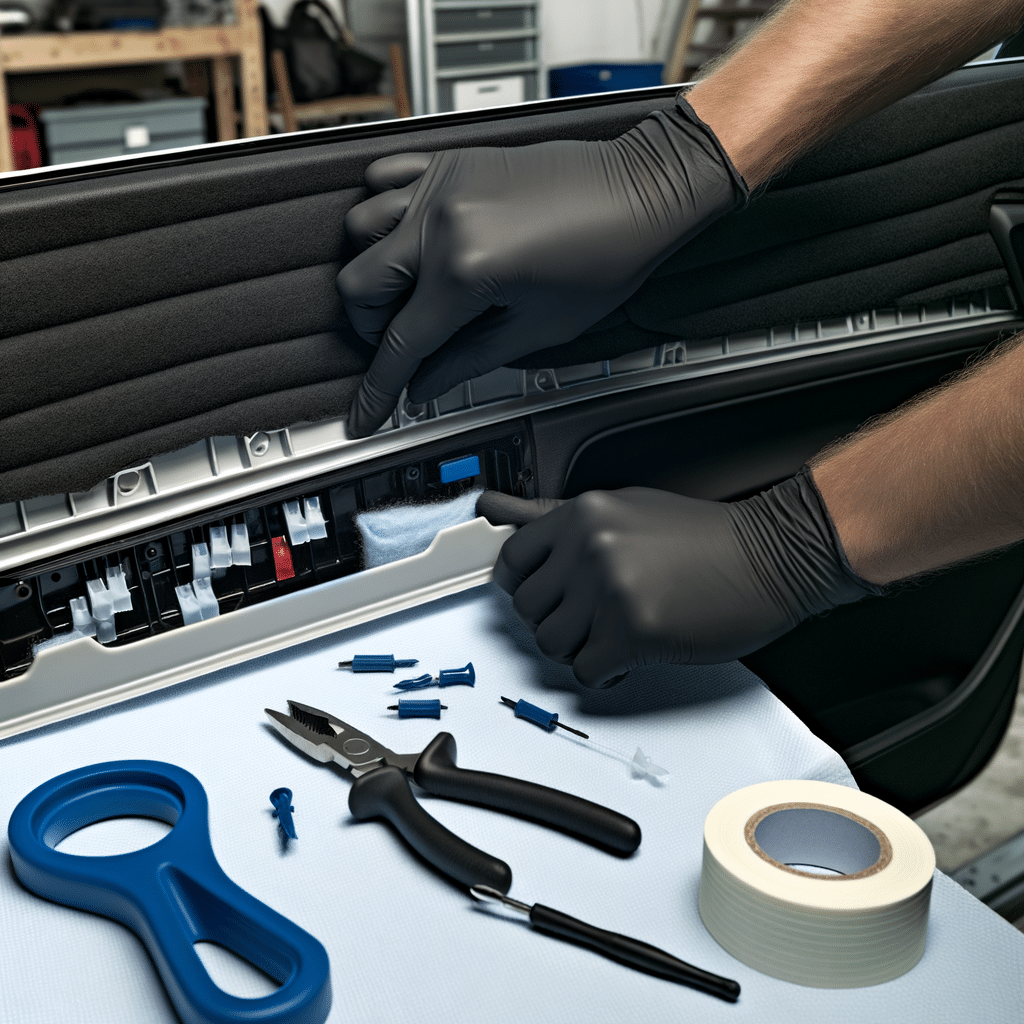
Loose interior panels are annoying. You hear rattles. You feel trim move when you touch it. The good news: Most loose trim is held on with simple clips and a few screws. You can fix it at home in about an hour with basic tools.
This guide covers door panels, dash trim, center console pieces, and most pillar trims. We will do it in 5 simple steps.
Tools and Items Needed
- Plastic trim removal tools (a small kit is best)
- Phillips screwdriver and a small flat screwdriver
- Torx bits (common sizes: T20, T25, T30)
- 10 mm socket and ratchet (very common inside cars)
- Flashlight
- Microfiber cloth
- Rubbing alcohol or interior-safe cleaner
- Felt tape (anti-rattle tape) or foam tape
- Replacement trim clips (optional but helpful)
- Small magnetic tray or zip bags for screws
If you are adding accessories while you are there, you might also like Install car phone mount. It is a good time to route cables cleanly.
Safety and Legal Notes
Most interior trim is safe to remove, but a few areas need extra care.
- Airbags: A-pillars, steering wheel area, and some dash trims may be near airbags. Do not probe with metal tools. If you see a yellow connector or “SRS” label, stop and work carefully.
- Battery: If you will unplug any electrical connectors (window switches, seat controls, airbag-related plugs), disconnect the negative battery terminal and wait 10 minutes before you unplug anything.
- Sharp edges: Some metal brackets behind trim can be sharp. Move slowly and wear thin gloves if you want.
- Local rules: Do not drive with missing trim pieces that could interfere with pedals, steering, or visibility.
Fix Loose Interior Panels in 5 Steps
1) Find Where the Panel Is Loose and What Type It Is
Do not start pulling right away. First, figure out what is moving.
- Press around the panel with your fingers. Listen for clicks or squeaks.
- Try to move the panel in different directions. Clips usually pop straight out. Screwed-on pieces feel loose but do not “pop.”
- Look for gaps that are bigger on one side. That often means a clip is not seated.
- Check nearby parts. Sometimes the piece that rattles is not the piece you think. A loose glove box damper, door pocket, or console side panel can make noise that travels.
Quick tip: Put a small piece of painter’s tape near the noisy spot so you remember the exact area once the panel is off.
2) Remove the Panel the Right Way (Slow and Gentle)
Most panels come off in this order: Remove covers, remove screws, then release clips.
- Look for hidden screws behind small plastic caps, inside door pulls, under rubber mats in storage pockets, or behind trim strips.
- Use plastic trim tools, not a metal screwdriver, to pry. Start at an edge and work across.
- When a clip releases, move to the next clip. Do not bend the panel hard. Bending can crack it or stress the mounting tabs.
- If the panel will not move after two or three clips, stop and search for another screw.
For door panels, unplug switches after the panel is loose. Support the panel with one hand so wires do not get pulled tight.
If your loose panels are around the dash and you are tempted to cover them with add-on trim, it helps to understand OEM+ style explained first. A clean fit starts with solid factory trim.
3) Inspect Clips, Tabs, Screws, and Mounting Points
Now you can see the real problem. Most loose panels are caused by one of these:
- Broken or missing clip: The clip stays in the car body, or it falls out in pieces.
- Bent metal spring clip: Common on dash and console trim. It loses tension.
- Missing screw: Someone worked there before and forgot it.
- Cracked plastic tab: The tab that holds a clip splits and can no longer grip.
- Loose mounting bracket: A bracket behind the trim may be loose and needs tightening.
Check each clip point one by one. Compare them. If one side has a clip and the other side is empty, you found your issue.
Also check wiring. A loose wiring harness can slap plastic and sound like a loose panel. Look for loose connectors, and check if wires are rubbing on sharp edges.
4) Clean Contact Areas and Add Anti-Rattle Tape Where It Helps
Even with good clips, plastic-on-plastic contact can squeak. This step is what makes the fix feel “factory” again.
- Wipe clip seats, edges, and contact points with rubbing alcohol or interior-safe cleaner.
- Let it dry fully.
- Add felt tape where two hard surfaces touch, like trim edges, bracket contact points, and around clip receivers.
- Use thin foam tape only where there is enough space. Too much foam can push the panel out and make gaps worse.
Good places for felt tape: The backside of dash trim near metal brackets, around glove box bumpers, and along console side panels where they rub.
5) Replace Bad Clips, Reinstall, and Test Before Final Tightening
Replace anything that is clearly damaged. Clips are cheap, and they matter.
- Move any clips that stayed in the car body back onto the panel. Many clips are meant to be on the panel first.
- Line the panel up with all clip holes before you press. If you press while misaligned, clips can bend or snap.
- Press near each clip location with your palm. You should feel or hear a firm “click.”
- Reinstall screws by hand first. Then snug them. Do not over-tighten. Over-tightening can strip plastic.
- If you unplugged wiring, reconnect it and test functions before you fully button up. Check windows, locks, lights, and switches.
After it is back together, take a short drive on a rough road. If you still hear a rattle, press lightly on the trim while driving. If the noise changes, you now know where to add a small strip of felt.
Common Mistakes
- Using metal tools on visible trim: This makes permanent scratches and gouges.
- Pulling too hard in one spot: Panels release clip by clip. Yanking can crack tabs.
- Forgetting hidden screws: If it will not move, there is usually a screw you missed.
- Adding too much foam tape: It can create panel gaps or make the panel sit crooked.
- Mixing screws up: Some screws are different lengths. A long screw in the wrong spot can poke through plastic.
- Ignoring loose items: Coins in a door pocket or a loose bottle in the console can sound like bad trim.
Maintenance Tips
Once the panel is tight again, a few habits help keep it that way.
- Do not slam storage lids and glove boxes. Close them with a firm push.
- Keep door pockets and consoles clear of heavy loose items that bang around.
- When you clean the interior, do not flood seams with liquid. It can soften some adhesives and attract dirt.
- If you do other DIY work later, keep a small bag of spare clips. You will use them.
Also, if you are doing several small DIYs, it helps to follow a simple care routine like Modified car maintenance for beginners. Even stock cars benefit from the same mindset.
Is It Worth It?
Yes, most of the time. Loose interior panels are usually a clip or screw problem, not a big repair.
- Cost: Often under $20 if you only need clips and felt tape.
- Time: About 30 to 90 minutes for one area.
- Result: Less noise, better feel, and fewer future breaks from movement.
Pay a shop if the trim is near airbags and you are not comfortable, or if the mounting points are broken and need plastic repair work.
Conclusion
Fixing loose interior panels is a simple at-home job. Find the loose spot, remove the trim carefully, inspect clips and screws, add felt tape to stop rubbing, then reinstall and test. Take your time, keep track of hardware, and replace any damaged clips. A quiet, solid interior makes every drive better.


