


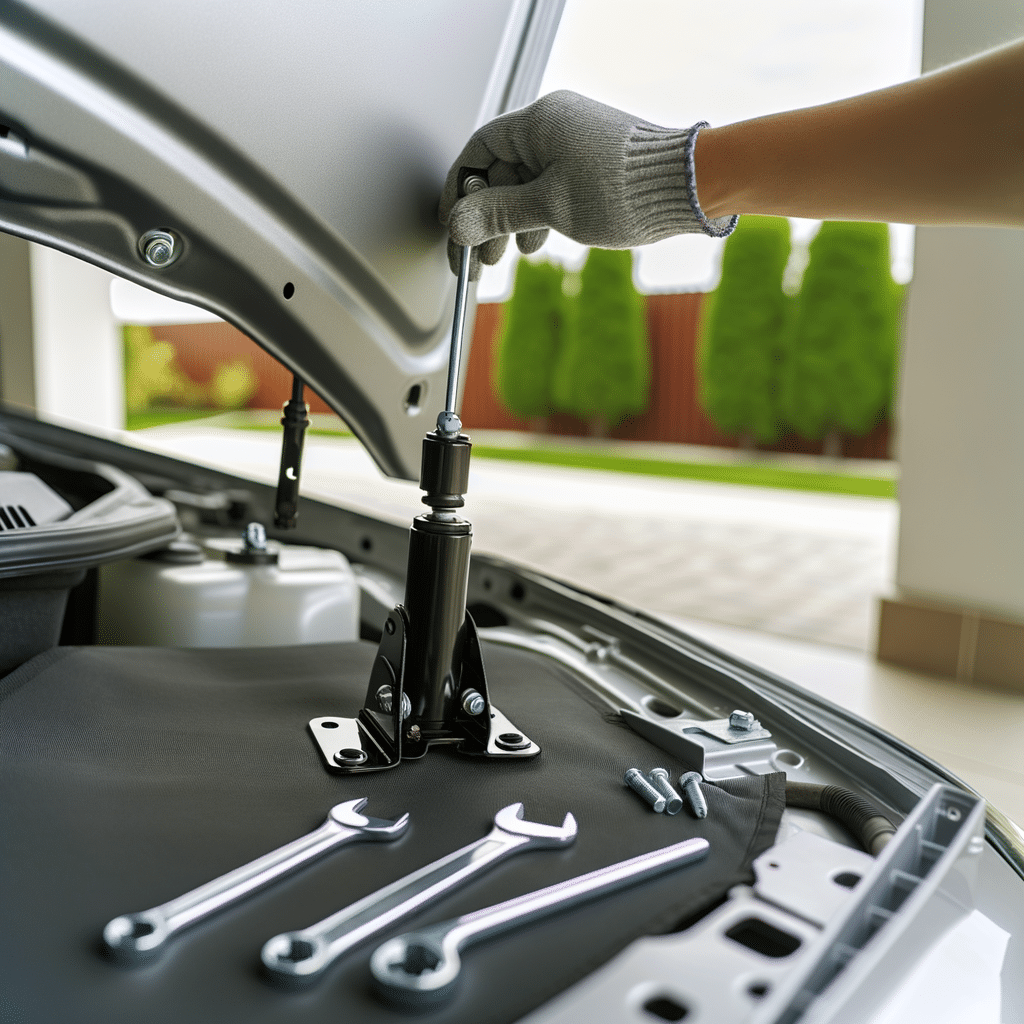
DIY At Home: Install Hood Struts Yourself in 5 Steps
If your hood will not stay up, your hood struts are likely worn out. That can turn a simple fluid check into a stressful job. The good news is that hood struts are quick to replace at home. Most cars use simple clips or bolts. You do not need special skills. You just need to work safely and support the hood the right way.
Tools and items needed
- New hood struts (a matched left and right pair for your exact car)
- A sturdy prop to hold the hood (a wooden 2×4, broom handle, or hood prop rod)
- Small flathead screwdriver or pick tool (for retaining clips)
- Socket set or spanners (some cars use bolts instead of clips)
- Needle-nose pliers (optional, helps with stubborn clips)
- Shop rag
- Gloves and safety glasses
Tip: Many struts look similar but have different force ratings and end fittings. Match the part number and mounting style. If your new struts have different ends, do not force them on.
Safety notes
- Support the hood before you start. Old struts can fail without warning. A falling hood can hurt your hands, head, and shoulders.
- Work on level ground. Wind can move the hood. If it is windy, choose the garage or wait.
- Replace struts as a pair. One new and one old strut can twist the hood and stress hinges.
- Do not pry on the windshield or fenders. Use only the clip area or the strut end.
Before you start: confirm what you have
Open the hood and look at the struts. Most hood struts have a cylinder body and a thin rod. The ends are often ball sockets with a small metal retaining clip. Some cars use bolts at one or both ends.
Also check how your hood is held up from the factory. Some cars have a backup prop rod even with struts, but many do not. If you do not have a prop rod, your temporary support is not optional. It is required.
Installation in 5 steps
1) Support the hood like it could drop at any time
Open the hood fully. Place your prop under a strong point. A safe spot is usually near the hood latch area or the inner hood frame, not on thin outer skin.
Give the hood a gentle push down and up to confirm the prop is stable. If it slips, reposition it. Keep your face and fingers out of pinch points while you test.
2) Remove the first strut (start on one side)
Work on one strut at a time. That keeps the hood aligned and reduces risk.
If your strut uses ball sockets with clips, you will see a small metal spring clip at the end. Use a small flathead screwdriver to lift the clip slightly. You usually only need to lift it a few millimeters. Do not pull it all the way off unless the design requires it. Once the clip is loose, pull the socket off the ball stud.
If your strut uses bolts, support the strut with your hand and remove the bolts with the correct socket. Put the bolts somewhere safe. If there are washers or spacers, keep them in order.
Repeat for the other end of the same strut and remove it from the car.
3) Compare the old and new struts before installing
Set the old strut next to the new one on the ground. Compare these points:
- Overall length
- End fitting type (ball socket or eyelet)
- Angle of the ends
- Any brackets or offset shapes
If something does not match, stop and re-check the part number. Installing the wrong strut can cause hood fit problems or damage.
4) Install the new strut with the correct orientation
Most hood struts should be installed with the cylinder body up and the rod down. This helps keep the internal seal lubricated. Some cars may be different, so follow any markings or instructions that came with the struts.
Push the socket end onto the ball stud until it clicks. You should feel it seat fully. If there is a clip, it should sit in its groove when the socket is seated. If your strut uses bolts, start bolts by hand first so you do not cross-thread. Then snug them down. Do not over-tighten small bolts into thin metal.
Install the top end and the bottom end. Order does not matter, but top-first often gives better access.
5) Repeat on the other side, then test slowly
Replace the second strut the same way. Keep the hood propped until both struts are installed.
Now remove the prop and test the hood slowly. Lower it halfway, then raise it again. It should rise smoothly and stay up at full open. Close the hood gently and confirm it latches normally.
If you are doing other simple under-hood work, this is a good time to handle it while access feels easy. For quick basics, see Change engine air filter and DIY oil change at home.
Common mistakes (and how to avoid them)
- Not supporting the hood. Even “mostly working” struts can fail. Always prop the hood.
- Prying the clip too far. Many clips are meant to lift slightly, not come off. If it flies away, you may be stuck.
- Mixing old and new struts. Replace both. A single new strut can twist the hood and wear hinges.
- Installing upside down. Rod-down is common. If your new struts came with a diagram, follow it.
- Buying the wrong struts. Similar-looking parts can have different force. If the hood shoots up too hard or will not lift, the rating may be wrong.
- Letting the hood hang on one strut. Keep your prop in place until both sides are done.
Maintenance tips
- Keep the rod clean. Wipe dust off with a dry rag. Dirt can damage the seal over time.
- Do not grease the rod. Oil and grease can attract grit and shorten strut life.
- Watch for early signs. If the hood starts dropping in cold weather, the struts are getting weak.
- Check the ball studs and brackets. If a stud is loose, tighten it carefully. A loose mount can mimic a bad strut.
If you like easy, high-impact DIY jobs like this, you might also enjoy Replace wiper blades at home or Headlight restoration at home.
Is it worth it?
Yes, for most owners. Hood struts are a comfort and safety item. Replacing them takes little time, and the results are immediate. You get a hood that stays up without a fight. You also reduce the risk of the hood dropping on you while you work.
If your hood hinges are bent, your hood sits uneven, or the mounting points are damaged, fix those issues first. Struts will not solve alignment problems. But on a normal car with worn struts, this is one of the easiest DIY upgrades you can do.
Conclusion
Installing hood struts at home is a simple project you can finish in one short session. Support the hood, swap one side at a time, and confirm the new struts match the originals. Once done, your hood should lift smoothly and stay open like it should. That makes every under-hood job safer and less annoying.


