


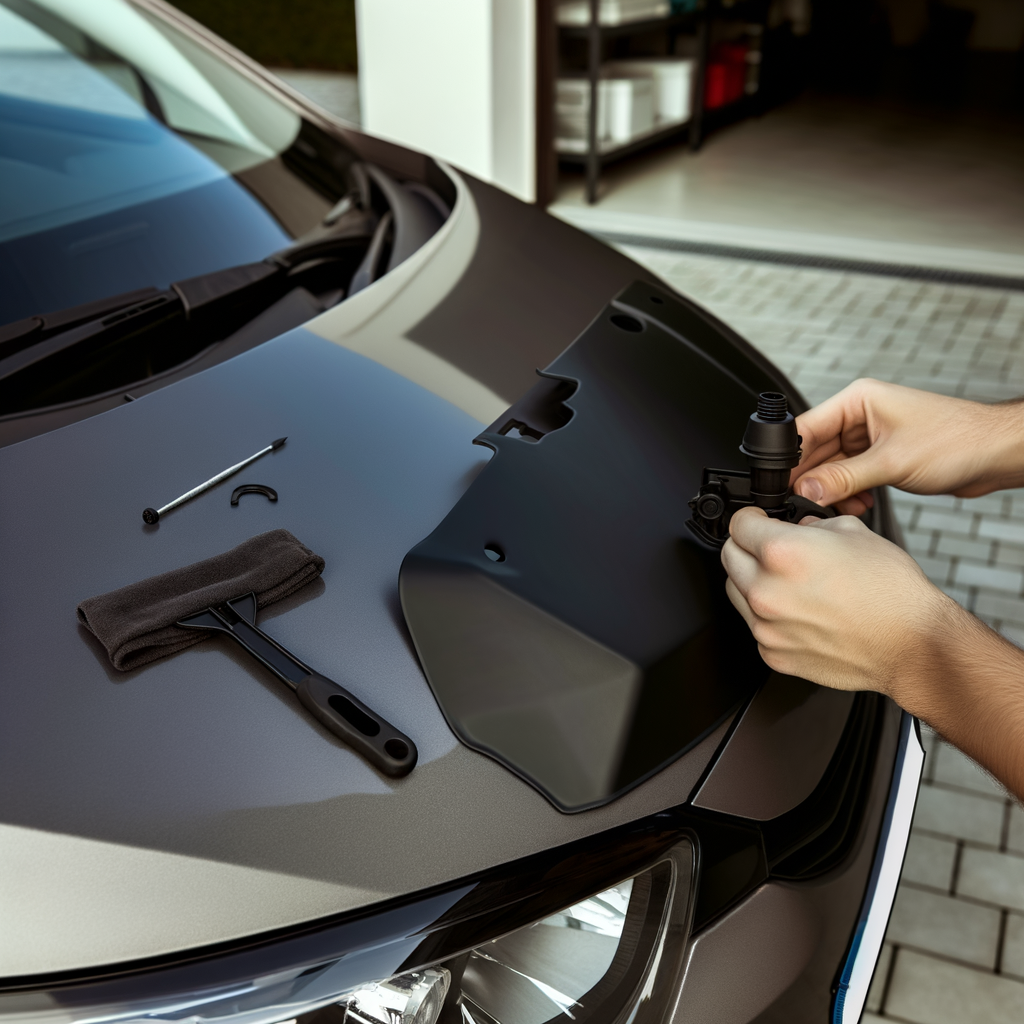
If your windshield washer spray is weak, crooked, or not coming out at all, the nozzles are a common reason. The good news: Most washer nozzle problems are simple. You can fix them at home with basic tools and a little patience.
This guide covers the easy checks first, then the deeper fixes. You will learn how to clean, aim, and replace a washer nozzle like a beginner.
Tools and Items Needed
- Washer fluid (not plain water)
- Clean rags or paper towels
- Safety glasses
- Sewing needle or thin pin (for aiming and light cleaning)
- Toothbrush
- Small cup of warm water
- Compressed air (optional)
- Small flat screwdriver or plastic trim tool (for some nozzle styles)
- Pliers (optional, for clamps)
- Replacement washer nozzle (if yours is cracked or clogged beyond help)
- Replacement washer hose or small connector (optional, if the hose is split)
Safety or Legal Notes
Washer fluid can irritate eyes and skin. Wear safety glasses and wipe spills right away. Keep washer fluid away from kids and pets.
Do not drive if you cannot clean the windshield. In many places, working washers are required for road safety, especially in rain, slush, or bug season.
Numbered Installation Steps
1. Confirm the Problem
Turn the key to ON and try the washers. Listen near the hood for the pump sound.
- If you hear the pump but get no spray: The nozzle may be clogged, the hose may be off, or the nozzle may be frozen.
- If you do not hear the pump: It could be a fuse, pump, switch, or wiring issue. This article focuses on the nozzle, but you should still check the basics.
2. Check Washer Fluid Level and Type
Open the hood and find the washer fluid reservoir. Fill it with proper washer fluid.
- If the tank is empty, air can get into the lines. It may take a few seconds of spraying to prime again.
- If it is freezing outside and you used water, the lines and nozzles can freeze. Bring the car into a warmer place if possible.
3. Clean the Nozzle Area First
Dirt and wax around the nozzle can block the tiny spray hole. Use a damp rag and a toothbrush.
- Scrub around the nozzle opening.
- Wipe away wax buildup. This is common after a wash or wax.
4. Clear a Light Clog in the Spray Hole
Take a thin pin or sewing needle. Gently insert it into the nozzle opening. Move it slightly to break the clog. Do not force it deep.
- Spray the washers again.
- If the stream improves, you may be done.
- If the nozzle sprays in a strange direction after this, you will aim it in a later step.
5. Back-Flush the Nozzle (Best Home Method)
Many clogs are stuck inside the nozzle. It helps to push the dirt out backward.
On many cars, the nozzles are on the hood. Open the hood and look under the nozzle area. You should see a small hose connected to the nozzle.
- Pull the washer hose off the nozzle. Twist gently while pulling.
- Spray a short burst from the washer switch with the hose aimed into a rag or cup. This confirms the hose and pump are working.
- Now flush the nozzle: Use a small straw, syringe, or compressed air from the hose side of the nozzle (backward through the nozzle).
- Reconnect the hose and test.
If you have a hood with insulation, you may need to pull it down a little to reach the hose. Work slowly so you do not tear clips.
6. Check for Hose Leaks, Kinks, or Loose Fits
If the spray is weak even after cleaning, the nozzle may not be the main problem. Look for these signs:
- Washer fluid dripping under the hood when you spray
- A hose that is kinked or pinched
- A hose that has popped off a connector
Fixes are simple:
- Re-seat a loose hose and push it fully onto the nozzle barb.
- Cut off a stretched hose end and reattach it if you have enough slack.
- Replace cracked hose sections or add a small connector.
7. Aim the Nozzle
If the nozzle sprays but hits the roof, hood, or far off to one side, it needs aiming.
Many nozzles have a small ball inside. You can adjust it with a pin.
- Park on level ground.
- With the hood closed, spray the washer at the windshield.
- Insert the pin into the nozzle and move the ball slightly in the direction you want the stream to go.
- Test again. Small moves make a big difference.
A good target is the upper-middle area of the windshield. At speed, the wind pushes the spray down.
8. Replace a Damaged or Permanently Clogged Nozzle
If the plastic is cracked, the nozzle is broken loose, or it will not unclog, replacement is the clean fix.
In many cars, the nozzle is held by clips under the hood.
- Open the hood and locate the nozzle and its retaining clips.
- Disconnect the washer hose.
- Press the retaining tabs and push the nozzle up and out.
- Install the new nozzle from the top. It should click in place.
- Reconnect the hose and test for spray and leaks.
- Aim the new nozzle if needed.
If you are buying a new nozzle, an aftermarket parts guide mindset helps. Match the shape, connector style, and spray pattern to your car.
Common Mistakes
- Using plain water: It grows algae, clogs systems, and freezes in winter.
- Pushing a needle too hard: You can damage the nozzle or enlarge the hole and ruin the spray pattern.
- Skipping the hose test: If the hose has no pressure, the nozzle is not the main issue.
- Aiming too high: It looks good parked, but it misses at highway speed.
- Forgetting the one-way check valve (if equipped): Some cars have a small valve in the line. If installed backward, flow will be weak or blocked.
Maintenance Tips
- Use quality washer fluid year-round. Bug remover fluid helps in summer.
- Spray the washers for a second every week. This keeps lines from drying out.
- After waxing, wipe the nozzles and test them. Wax is a common cause of a sudden clog.
- In freezing weather, do not keep holding the washer switch if nothing comes out. You can burn out the pump.
- If your car also has odd behavior at stop lights, that is a separate issue. Here is a helpful guide on car vibrates at idle.
Is It Worth It?
Yes, in most cases. Cleaning and aiming takes 10 to 30 minutes and costs almost nothing. Replacing a nozzle is usually cheap and still easy. It is one of the best beginner DIY fixes because the risk is low and the results are immediate.
If you do not hear the pump, or you keep blowing a washer fuse, the problem may be electrical or the pump may be failing. That is no longer a nozzle-only fix.
Conclusion
A windshield washer nozzle fix is usually simple: Clean the nozzle, back-flush it, check the hose, then aim the spray. If the nozzle is cracked or will not unclog, replace it. After the repair, test the washers at idle and again after a short drive to confirm the spray still hits the right spot.


