


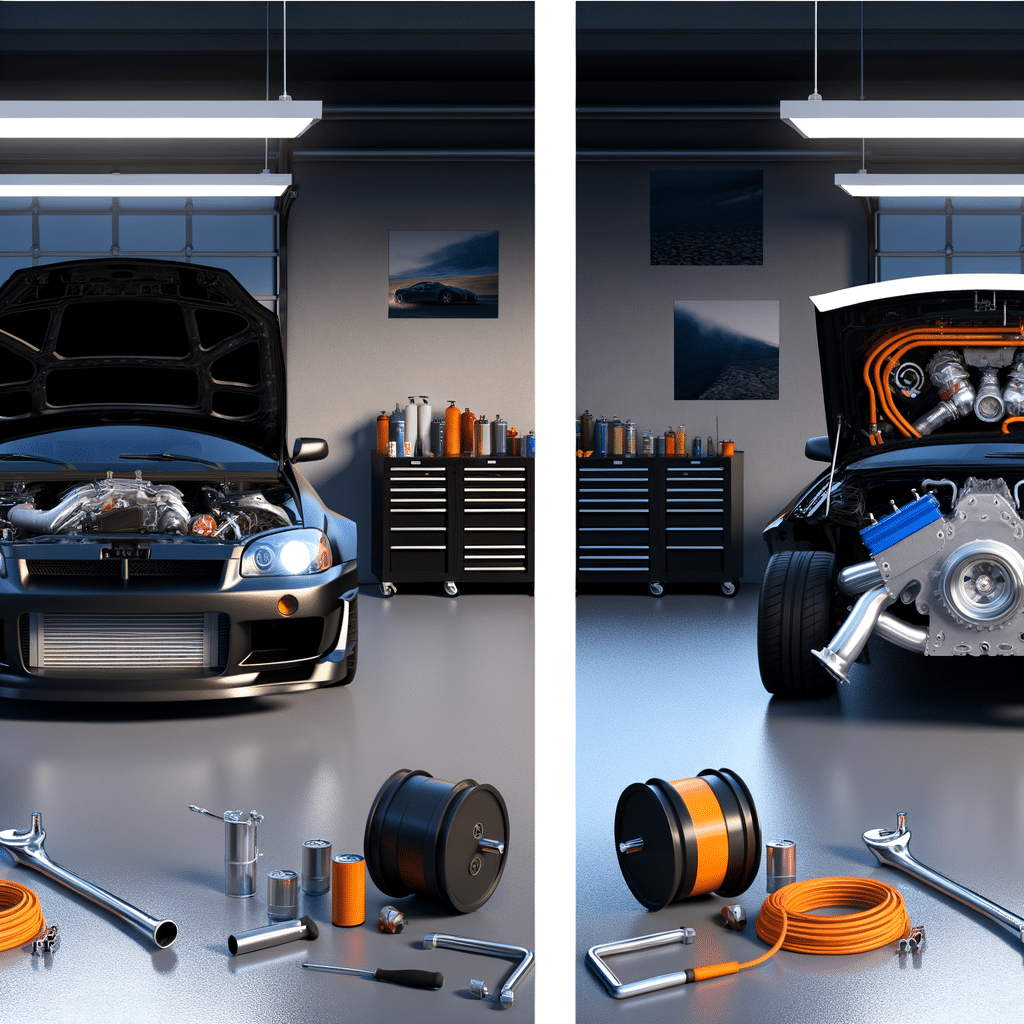
Electric cars and gas cars can both be modified, but they are modified in very different ways. Gas cars usually get mechanical performance parts like intake, exhaust, and engine tuning. Electric cars often get software changes, cooling upgrades, and chassis changes. The best choice depends on what kind of mods you want, what tools you have, and how much risk you are willing to take with reliability and warranty.
What the modification or concept is
Modifying a car means changing parts or settings to improve looks, handling, comfort, sound, or speed. When comparing electric vs gas cars, the main concept is: The power system is different, so the mod options and limits are different.
Gas cars use an engine, fuel system, exhaust, and transmission with many bolt-on parts available. Many upgrades are mechanical and can be installed in a garage.
Electric cars use a battery pack, inverter, electric motor(s), and high-voltage wiring. Many changes are electronic and software-controlled. Some upgrades are simple, like wheels and suspension. Others are advanced, like power tuning or battery cooling.
Why people do it
People modify gas and electric cars for similar goals, but the path to those goals is not the same.
- More speed: Gas cars often gain power through airflow and fuel changes. Electric cars can gain power through software tuning, but heat limits can quickly reduce power.
- Better handling: Both types can use tires, alignment, suspension, and brakes.
- Different look: Both can use wheels, lighting, wraps, and interior upgrades.
- Better daily driving: Ride quality, noise, and comfort mods work on both, but EVs focus more on tire noise and efficiency.
- Learning and hobby: Many people enjoy working on a car and understanding how it reacts to changes.
If you are mixing looks and performance upgrades, it helps to think about priorities first. Balancing looks and performance mods is important because some changes help style but can hurt range, comfort, or traction.
Things to know before starting
EV mods have high-voltage limits
EV battery systems can be 400V or 800V. That voltage is dangerous. Many EV power upgrades require access to systems that should only be touched by trained people. Even some “simple” EV tasks can expose you to risk if you open the wrong panel or damage a cable.
Warranty risk is usually higher on EV power mods
On many EVs, software changes and powertrain changes can affect warranty coverage. Gas cars can also lose warranty coverage with tuning, but EV makers often log data and detect changes more easily.
Heat control matters more than many beginners expect
EVs can make strong power, but heat can limit it quickly. On repeated pulls, track driving, or long uphill runs, the car may reduce power to protect the battery and motor. Gas cars also heat soak, but EV power drop can feel more sudden.
Range is part of EV “performance”
Heavy wheels, sticky tires, roof racks, and lift kits can cut range. On a gas car, you may accept worse mpg. On an EV, reduced range can change how you use the car day to day.
Parts availability is different
Gas cars have decades of aftermarket support. EV aftermarket support is growing, but it can be model-specific, more software-based, and sometimes limited.
Plan your upgrade order
Many problems come from modding in a random order. Starting with tires, brakes, and handling often gives the biggest real-world improvement. A simple framework like What to upgrade first helps you avoid wasting time and money.
Step-by-step explanation
Use these steps to decide whether an electric or gas car is better for the kind of mods you want.
1) Pick your main goal: Speed, handling, looks, or comfort
Write down one main goal and one secondary goal. Example: “Better handling” first, “sportier look” second. This prevents you from chasing power mods that your tires and brakes cannot handle.
2) Choose the mod types that match your car type
Common gas car mod paths:
- Intake, exhaust, and ECU tuning for more power
- Cooling upgrades for track use
- Suspension and alignment changes for grip
- Brake pads, fluid, and rotors for stopping power
- Sound and feel changes, like exhaust note and shifting response
Common EV mod paths:
- Wheels and tires that balance grip and range
- Lowering springs or coilovers and better alignment
- Brake pads and fluid for repeated stops, plus regen settings where available
- Software changes where supported, with careful attention to heat and warranty
- Aero changes, but only if you accept range changes
3) Start with the contact points: Tires, alignment, and brakes
Tires and alignment change the car more than many power mods. This is true for both EV and gas cars. EVs are heavy and make instant torque, so good tires matter even more. If you are new to handling setup, using a beginner-friendly foundation like suspension setup basics helps you pick spring rates and alignment goals that fit real roads.
4) Control heat before chasing more power
On gas cars, more power often means more heat, so intercoolers, radiators, and oil cooling can become important. On EVs, battery and motor temperature can limit power. If you track an EV, heat management is often the main limitation, not motor strength.
5) Decide how “reversible” you want your mods to be
Beginner-friendly mods are usually reversible: Wheels, tires, suspension, seat covers, and bolt-on parts you can remove later. Hard-to-reverse mods include heavy cutting, major wiring changes, and power tuning that leaves a trace in logs.
6) Verify fitment, load rating, and clearance
EVs often need higher load-rated tires because of weight. Brake clearance can be tighter with bigger calipers. On both car types, wrong wheel offset can cause rubbing, poor steering feel, and bearing wear.
7) Test changes one at a time
After each mod, drive the car and listen for new noises, vibration, pulling, or warning lights. One change at a time makes it easier to find the cause if something feels wrong.
Common mistakes to avoid
- Chasing power first: More speed without tires and brakes can make the car harder to control.
- Ignoring range impact on EVs: Wide sticky tires and heavy wheels can noticeably cut range and add road noise.
- Assuming EV tuning is simple: Software power changes can raise heat, stress components, and trigger limp modes.
- Using the wrong tire type: Some tires are loud, wear fast, or have weak wet grip. Start with a balanced tire unless the car is track-only.
- Skipping alignment after suspension work: Lowering changes camber and toe. Bad toe can destroy tires quickly.
- Not thinking about climate: Cold reduces EV range and can change tire grip. Hot weather can increase heat limits during hard driving. climate effects on car mods can help you match parts to your real driving conditions.
Safety and legal considerations
High-voltage EV safety: Do not open battery, inverter, or orange high-voltage cable areas unless you are trained and have the right protective equipment. A mistake can cause serious injury, fire, or damage.
Brake and tire safety: After brake work, bed pads correctly and check for leaks. Use wheel torque specs and re-check after a short drive.
Emissions and noise laws for gas cars: Exhaust and catalytic converter changes can be illegal for street use in many places. Loud exhaust can also lead to tickets.
Inspection and insurance: Some mods affect roadworthiness inspections. Tell your insurance company if required in your area, especially for major performance changes.
Track use: Track rules may require brake fluid ratings, helmet rules, and battery safety checks for EVs. Follow the event rules closely.
Final practical advice
Gas cars are usually easier to modify for engine power because the aftermarket is large and the work is mostly mechanical. Electric cars are often easier to modify for smooth daily speed and handling, but power mods can be limited by heat, software controls, and warranty risk.
If you want hands-on engine work, sound changes, and lots of part choices, a gas car is often the simpler platform. If you want instant response, quiet speed, and strong real-world acceleration with fewer moving parts, an EV can be a good platform, especially if you focus on tires, suspension, and braking.
For most beginners, start with reversible upgrades: Good tires, a quality alignment, brake pads and fluid, and mild suspension changes. After that, decide if the car still needs more power, or if better grip and control already meet your goal.


