


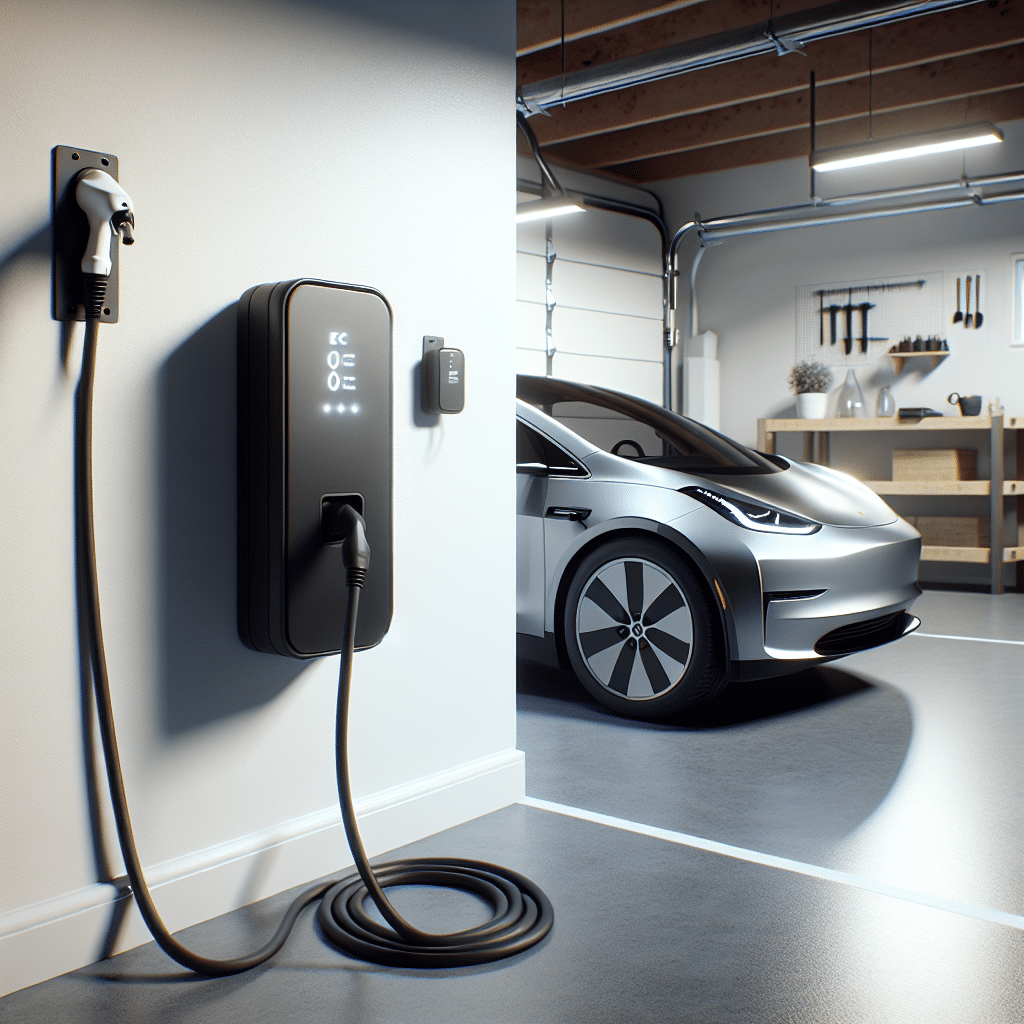
Charging at home is one of the biggest reasons many people enjoy owning an EV. You plug in, walk away, and the car is ready later. But home charging can feel confusing at first because there are different charger types, power levels, and installation choices. Once you understand the basics, choosing the right setup is simple.
What the concept is
A home EV charger is the equipment that supplies electricity to your electric vehicle where you park, usually in a garage or driveway. People often say “charger,” but most home units are actually EVSE (Electric Vehicle Supply Equipment). The real charger is inside the car. The EVSE mainly controls power flow and adds safety features, like checking for faults and stopping power if something goes wrong.
Home charging is usually split into two levels:
- Level 1: Uses a standard household outlet (typically 120V in North America). It is slow but simple.
- Level 2: Uses a higher-voltage circuit (typically 240V). It is much faster and often needs an electrician.
Public fast charging (often called DC fast charging) is different. It uses special high-power equipment, and it is not installed in typical homes.
Why people do it
Most drivers choose home charging for practical reasons:
- Convenience: Charging happens while you sleep or work from home.
- Time savings: Level 2 charging can add a lot of range in a few hours.
- More predictable routine: You start the day with the range you planned for.
- Better battery habits: Frequent smaller charges can be easier than waiting until the battery is very low.
For many households, Level 1 is enough if daily driving is low. For longer commutes or multiple EVs, Level 2 usually fits better.
Things to know before starting
Before choosing equipment, focus on a few key points. These decide what will work at your home and how fast charging can be.
How much charging speed you really need
Look at your typical daily miles and how many hours the car sits parked at home. Level 1 charging is often around 3 to 5 miles of range per hour of charging (varies by car and conditions). Level 2 can add far more, often 20 to 35 miles of range per hour, depending on the charger and the vehicle’s onboard charger.
Your electrical panel and available capacity
A Level 2 charger needs a 240V circuit and enough spare capacity in the main electrical panel. Some homes are already near their limit, especially with electric dryers, ovens, heat pumps, or hot tubs. An electrician can check:
- Panel rating (like 100A, 150A, 200A)
- Spare breaker spaces
- Load calculation for the home
Plug-in vs hardwired
Many Level 2 units can be installed two ways:
- Plug-in: Uses a dedicated 240V outlet. Easier to replace later.
- Hardwired: Wired directly into the electrical system. Often cleaner, sometimes required for higher power, and can reduce issues from a worn outlet.
Connector type and car compatibility
Most EVs use a common connector for Level 2 charging. Some vehicles use a different standard or an adapter. Confirm what your car uses, and whether you want a charger with a built-in cable that matches your port. Also think about cable length so it reaches the charge port without strain.
Where the charger will go
Measure the distance from your panel to the install location, and picture how you will park. Longer wire runs can raise install complexity. Choose a spot where the cable will not cross a walkway or get pinched by a garage door.
If you also like small DIY upgrades, the same “plan the route first” thinking helps with projects like installing a dash cam at home.
Step-by-step explanation
1) Map your driving and parking routine
Write down your average daily miles and how many hours you can charge at home on most days. If the car is home for 10 to 12 hours overnight, even a slower setup can be enough for many drivers.
2) Decide between Level 1 and Level 2
Use simple rules:
- Level 1 works if you drive lightly and can plug in most nights.
- Level 2 is better if you have a longer commute, want faster top-ups, or have more than one EV.
3) Pick a charging power that matches your car and home
Level 2 chargers are rated by amperage, like 16A, 32A, 40A, or 48A. More amps can charge faster, but only if:
- Your car can accept that much power on Level 2
- Your electrical system can support the circuit size
A common setup is a 32A or 40A charger on a dedicated circuit. Going bigger is not always useful if the car cannot take the extra power.
4) Choose plug-in or hardwired based on your needs
Plug-in can be handy if you might move soon or want easy replacement. Hardwired can be a good choice for higher power and long-term stability. Local electrical rules may affect what is allowed.
5) Decide if you want “smart” features
Some home chargers connect to Wi-Fi and offer features like scheduling, energy tracking, and power sharing if you have two chargers. These can be useful, but not required. Many drivers are fine with a simple charger and scheduling from the car itself.
6) Plan the installation details
Think about:
- Indoor vs outdoor rated equipment
- Cable reach to the charge port
- Mounting height and protection from bumps
- Keeping the cord off the ground to reduce wear
It can help to treat it like other home car projects where the layout matters, similar to simple car upgrades you can do in a garage space.
7) Get the right professional help
For Level 2, a licensed electrician is the normal path. They can confirm panel capacity, install the correct breaker, use the right wire size, and set up safe grounding and protection. If a panel upgrade is needed, it is better to find out early.
Common mistakes to avoid
- Buying the highest power charger without checking the car: The car may charge at a lower rate anyway.
- Using extension cords for Level 1 charging: Many are not rated for continuous load and can overheat.
- Installing a 240V outlet with the wrong parts: Cheap outlets can wear out if used often. Heat damage can start at loose connections.
- Mounting the charger where the cable gets stressed: Repeated sharp bends and pulling can damage the cable and connector.
- Ignoring future needs: A second EV, a bigger battery EV, or a new parking setup can change what makes sense.
Also avoid treating charging gear like a “mod” where you can improvise. If you enjoy mods, it helps to separate electrical work from typical upgrades covered in a beginner car modification tips style approach.
Safety and legal considerations
Home EV charging involves continuous high electrical load, so safety and local rules matter.
- Use a dedicated circuit for Level 2: Do not share it with other large appliances.
- Follow local permits and inspections: Many areas require a permit for a new 240V circuit or hardwired EVSE.
- Use correct breaker and wire sizing: EV charging counts as a continuous load, so the circuit is sized with that in mind.
- Avoid damaged outlets or loose plugs: Warmth at the plug or outlet is a warning sign. Stop using it and have it checked.
- Weather protection matters: Outdoor installs need equipment rated for the environment and proper sealing at entry points.
Final practical advice
Start with your daily miles and how long the car sits at home. Many owners do well with Level 1 for a while, then move to Level 2 only if life proves it is needed. If you go Level 2, prioritize a safe electrical setup and a mounting location that makes plugging in easy every day.
Pick a charger power level your car can actually use, and that your home can support without strain. If you are not sure about panel capacity or outlet quality, ask an electrician before buying equipment. A simple, reliable setup that fits your routine is better than a complicated one that creates daily friction.


