




This post may contain affiliate links. Please read our disclosure and privacy policy for more information.
- The first Porsche: 356 and the idea of lightweight performance
- 1963 to 1973: The 911 arrives and a philosophy hardens
- 1974 to 1989: Turbocharging, transaxles, and a company testing its own boundaries
- 1989 to 1998: The 964 and 993 modernize the 911 without breaking it
- 1996 to 2005: Boxster, 996, and the controversial but necessary water-cooled era
- 2002 to the 2010s: Cayenne, Carrera GT, and Porsche becomes bigger without becoming generic
- 2010 to the present: Hybrid lessons, the 918 Spyder, and electrification with the Taycan
- Related Resources
Porsche did not begin as a car company chasing fame. It began as an engineering mind at work in the messy, fast-changing early 20th century, when electricity, gasoline, and new forms of manufacturing were all fighting for the future. Ferdinand Porsche built his reputation before the brand name ever appeared on a hood badge, and that early DNA, solving problems with clever design, stayed with Porsche through every decade that followed.
In 1931, Ferdinand Porsche founded Dr. Ing. h.c. F. Porsche GmbH in Stuttgart as a design and consulting office. The timing mattered. Germany’s auto industry needed technical talent, and Porsche’s firm took on a wide range of projects, from engines to full vehicle layouts. The company’s work for Auto Union Grand Prix cars in the mid-1930s showed how serious its engineering ambition was. Those V16 and V12 machines pushed aerodynamics, suspension ideas, and packaging in ways that influenced racing engineering across Europe.
The most historically complicated step came soon after. Porsche’s office contributed to the development of the “people’s car” concept that became the Volkswagen Beetle. The basic rear-engine, air-cooled layout later echoed in Porsche’s own cars, even if the reason was practical rather than romantic: It was compact, mechanically simple for its time, and made good use of limited space. The Second World War then disrupted everything. After the war, Ferdinand Porsche was imprisoned in France for a period, and his son Ferry Porsche took the lead. The family and the business relocated to Gmünd, Austria, where the first true Porsche-badged car would be born out of necessity.
The first Porsche: 356 and the idea of lightweight performance
In 1948, the Porsche 356 appeared, often described as the moment Porsche became “Porsche.” It was not a clean-sheet luxury project, and that is part of the point. Early 356s used Volkswagen-based components because that was what could be sourced and supported in post-war Europe. But Ferry Porsche focused on weight and balance rather than raw power. With a small, rear-mounted, air-cooled flat-four, the 356 delivered speed through efficiency. The car’s shape was smooth, with fenders integrated into the body at a time when many cars still looked like separate pieces bolted together.
The 356 migrated from Gmünd back to Stuttgart in 1950, and the model evolved quickly. Porsche began moving away from shared parts toward in-house engineering, with stronger engines, better brakes, and more refined bodies. By the mid-1950s, Porsche was winning in motorsport, which mattered because racing was both a test lab and a proving ground for credibility. The 550 Spyder in 1953, with its mid-engine layout and low weight, showed another Porsche instinct: If a design offered an advantage, tradition was optional.
That same instinct explains why Porsche’s brand identity formed around a certain kind of performance. Porsche was not trying to overpower rivals with huge engines. It was trying to out-think them, and it taught a generation of enthusiasts that handling, braking, and driver feedback could be as exciting as horsepower.
1963 to 1973: The 911 arrives and a philosophy hardens
By the early 1960s, Porsche needed a successor to the 356 that could meet changing expectations for space, comfort, and speed. In 1963, Porsche revealed the 901, soon renamed 911 due to a naming dispute. The 911’s basic formula was bold and slightly stubborn: A rear-mounted, air-cooled flat-six with a 2+2 body that looked sleek but purposeful. It introduced a new level of refinement while keeping the core idea of compact packaging and a low-slung driving position.
From the start, the 911’s rear-engine layout shaped both its strengths and its challenges. Traction was excellent, especially under acceleration, but weight distribution could punish the unprepared. Porsche did not abandon the layout because it was difficult. Instead, it developed the chassis and suspension around it. That is a major theme in Porsche history: Rather than changing the identity to fit the easiest engineering path, Porsche often engineered its way through the consequences of its own choices.
In 1965, the 912 offered a cheaper entry point, using a four-cylinder engine. It was a business decision driven by market reality: Not everyone could afford the 911, and Porsche needed volume. Yet even the “basic” Porsche still felt like a sports car, which helped protect the brand’s meaning as it grew.
In 1972 and 1973, the Carrera RS 2.7, with its ducktail spoiler, became a landmark. Aerodynamics were becoming a real performance tool, not just shape for style. Homologation rules pushed manufacturers to build road-legal versions of race-ready cars, and Porsche used that to bring motorsport hardware into the street car world. The RS also reinforced a Porsche lesson: Reducing weight and improving airflow could feel like adding power.
1974 to 1989: Turbocharging, transaxles, and a company testing its own boundaries
In 1974, Porsche introduced the 911 Turbo (930). Turbocharging was not new in the world, but applying it to a road car in a way that created a new kind of performance drama was. The early 3.0-liter turbo cars were fast and demanding. Turbo lag could arrive like a switch, and the rear weight bias made the consequences serious. Still, the Turbo became a cultural object, a symbol of late-1970s and 1980s excess and ambition. Porsche did not only sell speed. It sold a specific, intense experience.
While the 911 was building legend, Porsche was also questioning whether that legend could survive regulations and market trends. That is why the company explored transaxle cars, which placed the engine up front and the transmission at the rear to improve balance. The 924 arrived in 1976, followed by the 944 in 1982 and the 928 in 1977. These cars were not side quests. They were a serious attempt to modernize Porsche’s engineering story, with water-cooled engines and more predictable handling.
The 928, in particular, was envisioned at times as a potential 911 successor. It used a V8 and presented a grand touring personality that aimed at a different audience. The fact that Porsche even considered replacing the 911 tells how uncertain the future looked in the 1970s and 1980s, with emissions rules and fuel worries reshaping the whole industry.
Racing technology kept feeding the road cars. Porsche’s experience with turbocharging and endurance racing supported more robust cooling, stronger drivetrains, and better materials. It is also the era when owners began personalizing cars more boldly, and the broader car scene started treating modifications as identity. That culture is bigger than Porsche alone, but Porsche was often at the center of it, especially as 1980s tuner style grew. For readers who think about how modifications change a car’s character, the tension between originality and personalization is familiar, and it shows up in modern conversations about Avoid over-modding your car without losing what made it special in the first place.
1989 to 1998: The 964 and 993 modernize the 911 without breaking it
By the late 1980s, the 911 needed to evolve. The 964 generation arrived in 1989, looking similar at first glance but carrying major changes underneath. Power steering and ABS became available, and coil springs replaced torsion bars, signaling a shift toward more modern ride and handling tuning. All-wheel drive appeared in the 911 Carrera 4, influenced by technology proven in the 959 supercar of the mid-1980s. The reason for these moves was straightforward: Sports cars were becoming faster and heavier, and buyers expected safer, more controllable performance.
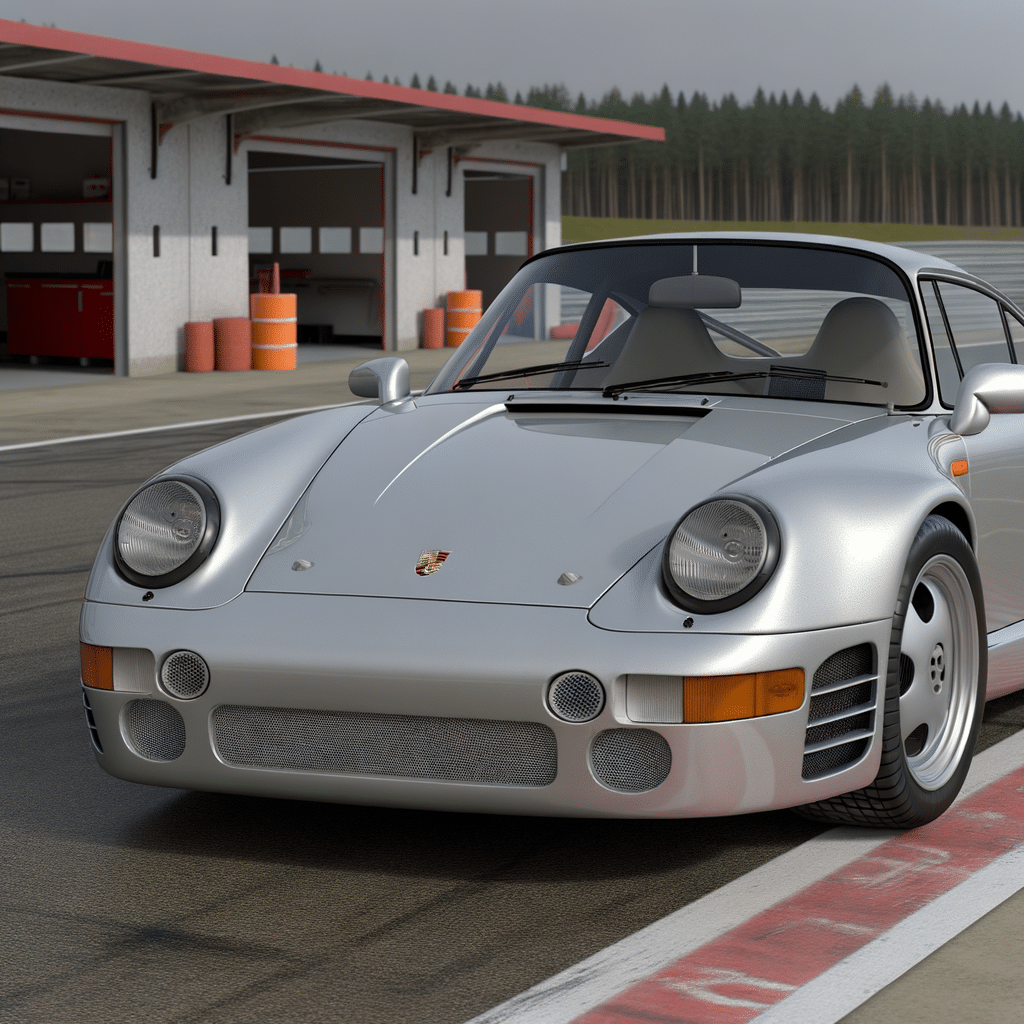
The 993 generation followed in 1993 and is often remembered as the final air-cooled 911. It introduced a multi-link rear suspension that helped tame the rear-engine behavior while improving stability. The 993 also showed how Porsche could update the design language without losing the silhouette that made the 911 instantly recognizable. When air-cooled production ended in 1998, it was not because Porsche stopped loving the idea. It was because meeting future emissions and noise standards with air cooling was increasingly difficult without compromising performance and reliability.
1996 to 2005: Boxster, 996, and the controversial but necessary water-cooled era
Porsche’s business reality in the early 1990s was tense. Costs were high, and the lineup was not delivering enough volume. The Boxster concept debuted in 1993, and the production 986 Boxster arrived in 1996. It was mid-engined, balanced, and positioned as a more accessible Porsche. It also shared key components with the next 911. That was not laziness. It was survival through smarter manufacturing.
The 996 generation 911 launched in 1997 and marked the biggest technical shift in the model’s history: Water cooling. Many purists disliked the change, and the “fried egg” headlights became a design flashpoint. But water cooling allowed tighter emissions control, better noise management, and more consistent thermal performance. It also unlocked power gains that would have been much harder to achieve with air cooling. This was an example of Porsche adapting to modern constraints while trying to keep the driving feel intact.
At the same time, Porsche began leaning more into electronic systems that were becoming normal across the industry, including stability management. These systems were sometimes criticized for filtering the experience, yet they also made high-performance cars more approachable. That shift matters for younger enthusiasts, because it reshaped who could enjoy performance without years of practice. It is a similar tradeoff seen in many brands, and anyone comparing different engineering paths across Germany might connect it with Audi through the decades as technology changed the driver’s relationship with speed.
2002 to the 2010s: Cayenne, Carrera GT, and Porsche becomes bigger without becoming generic
In 2002, the Cayenne launched, and it changed Porsche’s trajectory. An SUV from a sports car company was controversial, but the reasoning was clear: The market wanted premium SUVs, and Porsche needed a strong financial base to keep building sports cars. The Cayenne brought engineering credibility too, with strong on-road dynamics and serious power. Sales success helped stabilize the company and funded future performance projects.
Then came the Carrera GT, produced from 2003 to 2006. It was a halo car with a V10 and a carbon-fiber structure, reflecting lessons from racing and advanced materials. The Carrera GT also showed Porsche’s willingness to build something raw and demanding even in an era moving toward electronic safety nets. It became a symbol of early-2000s supercar ambition, and it kept Porsche’s image anchored in engineering excellence, not just profitable product planning.
During the same period, Porsche’s approach to ownership and modification was also changing as more cars became daily-driven, with more complex electronics and tighter tolerances. The conversation around how far to go with changes became more practical: Comfort, durability, and drivability mattered more when cars were used every day. That broader thinking sits behind ideas like Modding for comfort vs speed, a debate that fits modern Porsche culture as much as any other enthusiast scene.
2010 to the present: Hybrid lessons, the 918 Spyder, and electrification with the Taycan
Porsche entered the 2010s facing the same pressure as every performance brand: How to deliver speed with fewer emissions. Hybrids became a bridge, and Porsche’s experience in endurance racing with hybrid systems informed what came next. The 918 Spyder arrived in 2013 as a plug-in hybrid hypercar, pairing a high-revving V8 with electric motors to deliver both performance and efficiency gains. It was not only about lowering emissions. It was about using electrification to add torque, improve response, and widen the performance envelope in ways that traditional powertrains could not.
That logic carried into the Taycan, unveiled in 2019, Porsche’s first series-production battery electric vehicle. The Taycan was important because it treated EV performance as a repeatable, sustained thing, not just a single launch number. Thermal management, charging architecture, and consistent power delivery mattered. Porsche’s reputation depends on how a car performs after a hard drive, not only in a promotional moment.
As the brand moved into software-driven systems, the enthusiast experience also shifted. Steering feel, brake blending, and chassis tuning became as much about calibration as mechanical parts. For a new generation raised around tech updates, that can feel normal. For longtime purists, it can feel like distance. Porsche has tried to keep the connection through strong chassis engineering and clear model identities, even as the tools change.
The cultural impact remains unusually broad for a company that once built small sports cars in a post-war workshop. The 911 became a shape that even non-car people recognize, while the Cayenne and Macan brought Porsche into neighborhoods and garages that did not previously consider sports cars. At the same time, Porsche’s motorsport image stayed active, keeping the brand tied to real competition rather than nostalgia alone.
Today, Porsche’s history reads like a long argument between tradition and necessity. Air cooling gave way to water cooling not because Porsche forgot its roots, but because the world changed. Turbocharging returned again and again because it solved the problem of power under constraints. Hybrids and EVs arrived not as a sudden fashion move, but as the next chapter in a company that has always treated engineering as the main character.
For enthusiasts watching the next milestones form in real time, it helps to remember that Porsche has rarely moved in a straight line. It has adapted, doubled back, and experimented, sometimes upsetting its own fans. Yet the throughline has stayed remarkably stable: A Porsche is expected to feel focused, to turn technical decisions into driving personality, and to make the driver feel like the machine has a point of view.
There is also a practical side to that story: As cars became more complex, ownership became more hands-on in new ways, from maintenance choices to small upgrades that affect feel. Even something as ordinary as selecting components can shape the experience, and some owners end up learning the basics through resources like choosing quality parts when they start maintaining older performance cars or refreshing a well-used daily.
Porsche’s key milestones, from the 356’s lightweight simplicity to the 911’s long evolution, from turbocharged drama to hybrid strategy, show a company repeatedly responding to pressure. Regulations, racing, buyer expectations, and economic survival all pushed the design and tech forward. The result is not a single invention but a timeline of decisions, each one leaving a mark on what people think a Porsche should be.


