


This post may contain affiliate links. Please read our disclosure and privacy policy for more information.
- The Origins
- Early Development: Building Trust Before Chasing Style
- Safety Becomes the Brand’s Core Mission
- Wagons, Families, and a Different Kind of Performance
- Major Turning Points: The 240 Era and Safety as Public Expectation
- Technology Evolution: From Strong Structures to Active Safety
- Design Evolution: From Boxy Honesty to Swedish Minimalism
- Challenges and Competition in a Global Industry
- Consumer Reception: Why People Bought Volvos, and Why That Changed
- Motorsport Influence: A Safety Brand Goes Racing
- Modern Evolution: Electrification, Software, and the New Safety Debate
- Influence on the Industry
- Legacy and Lasting Influence
Volvo’s story is often told through one word: Safety. But that reputation was not built by slogans. It came from Sweden’s geography, its engineering culture, and decades of problem-solving in the real world. Over time, Volvo added other strengths, especially a clean, practical kind of Scandinavian design that matched changing tastes. The result is a brand that evolved with society’s expectations, from basic durability to advanced safety systems and modern Swedish restraint.
The Origins
Volvo was founded in 1927 in Gothenburg by Assar Gabrielsson and Gustaf Larson. Sweden in the 1920s was not an obvious place for a car company. The market was small, winters were harsh, roads could be rough, and imported cars often struggled with durability.
That context shaped Volvo’s earliest priorities. The first model, the ÖV4, was built with sturdiness in mind and quickly followed by the PV4. These were not radical cars, but they were designed around local conditions. Early Volvo engineering favored strong structures, straightforward mechanics, and an approach that treated reliability as a safety issue. If a car survived the climate and the roads, it was less likely to fail when drivers needed it most.
In the early years, Volvo also built trucks and buses, which mattered more than it may sound. Commercial vehicles forced Volvo to think about long service life, load-bearing structures, and predictable handling. Those lessons later flowed into passenger cars, reinforcing the brand’s conservative, durability-first approach.
Early Development: Building Trust Before Chasing Style
By the 1930s and 1940s, Volvo had to solve a basic problem: How to convince buyers to choose a Swedish car instead of larger foreign brands. The answer was to become a “trust” company. Volvo focused on vehicles that were easy to maintain, built for long use, and suited to real transport needs.
After World War II, Europe’s economies rebuilt, and consumers demanded affordable, dependable cars. Volvo’s PV444, introduced in 1944 and reaching customers later in the decade, fit that moment. It was smaller and more modern than earlier Volvos, and it helped establish the company as a serious passenger-car maker. The PV444 also signaled something important: Volvo was willing to modernize, but only in ways that clearly improved everyday ownership.
This cautious evolution was a competitive strategy. While some European makers chased performance or dramatic styling, Volvo aimed for stable handling, solid construction, and predictable behavior. It was less exciting on paper, but for families and long-distance drivers, it created loyalty.
Safety Becomes the Brand’s Core Mission
Volvo’s safety reputation did not appear overnight. It grew as traffic increased and car ownership spread in the 1950s and 1960s. More cars on the road meant more crashes, and the public began to demand better protection. Governments also started paying closer attention to vehicle safety, setting the stage for future regulation.
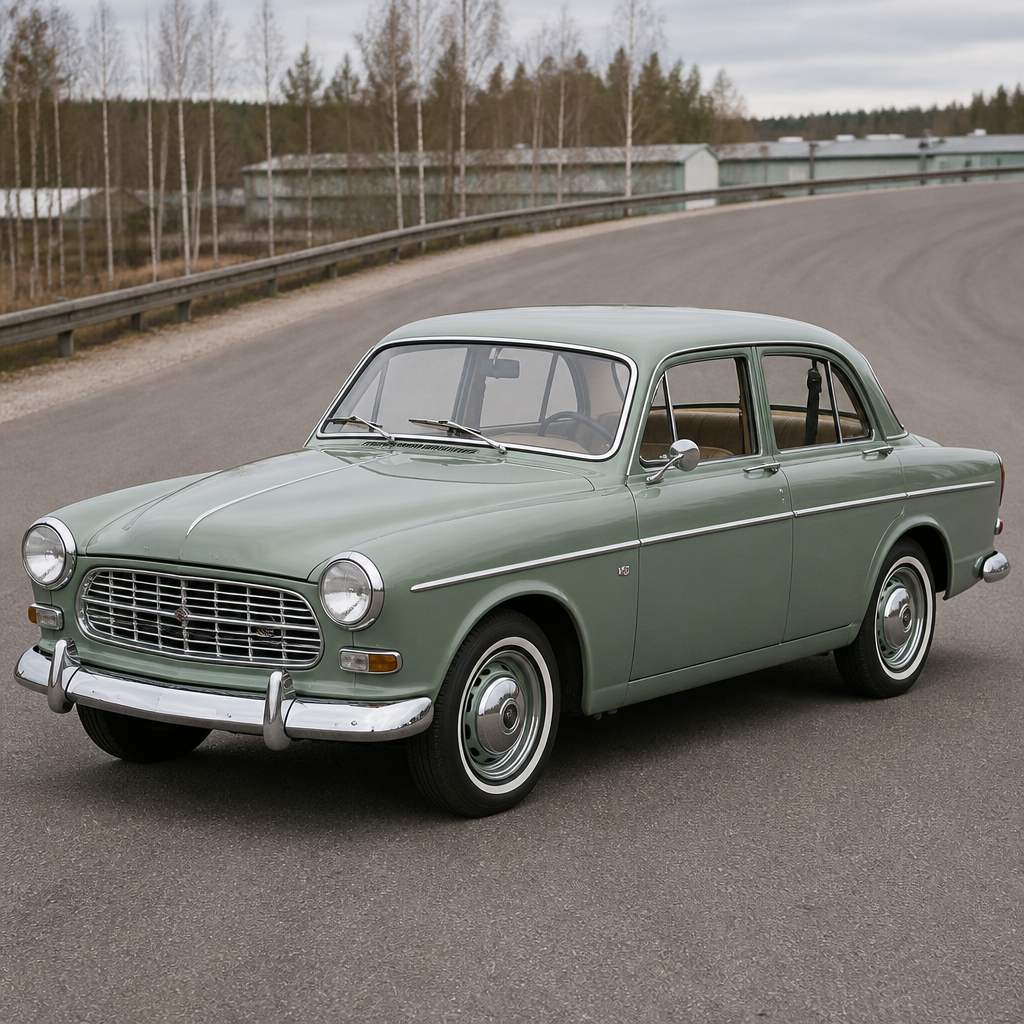
One of Volvo’s most influential milestones came in 1959 with the introduction of the three-point seatbelt in the PV544 and the Amazon (120 Series). The key point was not only the invention, but the decision to make it broadly available. Volvo allowed the design to be used widely, which helped accelerate adoption across the industry.
Why did that matter? Because it reframed safety from a personal preference into a standard expectation. Seatbelts were not universally accepted in the early years, and some motorists resisted them. But once a clear, practical design existed and more manufacturers adopted it, attitudes shifted. Over time, the three-point belt became one of the most effective, life-saving features in automotive history.
Volvo continued to link engineering choices to injury reduction. This was also the era when Volvo began to treat crash research as a core capability, not a side project. The company collected data, studied crash dynamics, and built a culture where preventing harm was treated like an engineering target.
Wagons, Families, and a Different Kind of Performance
As the postwar middle class expanded, buyers wanted cars that worked for commuting, holidays, and growing families. Volvo’s wagons became central to its identity, especially in export markets. In places like the United States, Volvo’s practical estates offered a convincing alternative to larger domestic wagons: Easier to park, steady on the highway, and built to last.
Models such as the 140 Series, launched in 1966, advanced Volvo’s approach to occupant protection with improved structures and thoughtful interior designs. Volvo’s cars were often described as “boxy,” but that shape was not only a style choice. It also reflected packaging priorities: Good visibility, usable cargo space, and predictable ergonomics.
Volvo’s definition of performance in this period was not about lap times. It was about stability at speed, confident braking, and strong heating and ventilation in winter climates. These details sound ordinary, but they were exactly what many owners valued in daily life.
Major Turning Points: The 240 Era and Safety as Public Expectation
In 1974, Volvo introduced the 240 and 260 series. The 240 became one of the brand’s most recognizable models and stayed in production for many years. It arrived at a time when the industry faced overlapping pressures: The oil crises, emerging emissions rules, and a growing public focus on road deaths.
Volvo responded with a car that looked conservative but was engineered for real-world protection. The 240’s reputation for crashworthiness helped make safety a buying reason, not just a nice-to-have. Consumers, especially families, began to compare brands using safety language, and Volvo benefited because it already had credibility.
Competitors responded in different ways. Some improved structures and restraints but did not make safety central to their identity. Others matched Volvo’s engineering but marketed different strengths. Volvo’s long-term advantage was consistency: The company treated safety as a continuing program, not a single feature.
The 240 years also mattered culturally. In many markets, a Volvo wagon became a symbol of a careful, practical household. It was not a glamorous image, but it was powerful because it looked responsible. That identity helped Volvo withstand fashion shifts that hurt brands tied too closely to trends.
Technology Evolution: From Strong Structures to Active Safety
By the 1980s and 1990s, the safety conversation expanded. It was no longer only about surviving a crash. It became about avoiding crashes in the first place. That change was driven by better electronics, improved sensors, and growing expectations from regulators and insurers.
Volvo followed this path with features that improved stability and control. Systems like anti-lock brakes became widespread across the industry, and stability control later followed. Volvo’s role was not always to introduce a technology first, but to integrate it with a safety-centered philosophy: Calibrations that favored stability, warning systems that were clear, and designs that aimed to reduce driver overload.
At the same time, Volvo advanced side-impact protection. Side crashes are especially dangerous because there is less space between the occupant and the impact. Volvo addressed this with strengthened structures and later with side airbags and curtain airbags. These developments reflected a pattern: Find a real injury problem, collect data, then engineer a layered solution.
Ownership realities shaped technology decisions as well. Safety equipment had to work reliably year after year. Volvo’s conservative approach to new systems often frustrated enthusiasts who wanted the latest features immediately, but it appealed to buyers who valued proven function over novelty.
Design Evolution: From Boxy Honesty to Swedish Minimalism
Volvo’s design story is sometimes misunderstood. The brand did not avoid design. It simply treated design as something that must serve the user first. Early Volvo forms emphasized visibility, simple controls, and space. This created an honest, functional look that became part of the brand’s identity.
By the 1990s, Volvo’s customer base was changing, and so was the premium market. Buyers still wanted safety and practicality, but they also expected comfort, refinement, and styling that felt modern. Volvo’s designs began to soften while keeping the brand’s functional roots.
The 850, introduced in 1991, captured this transition. It kept Volvo’s practical packaging, including wagon variants, but delivered a more contemporary driving feel. The 850 also helped Volvo show that practicality and modern engineering could coexist without abandoning the brand’s identity.
Over the following decades, Volvo’s interiors became a key part of its Swedish design signal: Calm layouts, clear graphics, and materials chosen for a restrained, natural feel. This shift aligned with broader cultural trends toward minimalism and away from overly busy dashboards. Volvo’s approach also made the driving experience feel less stressful, which fits the brand’s safety story in a subtle way.
Challenges and Competition in a Global Industry
Volvo’s path was not smooth. Like many smaller automakers, it faced the scale problem. Engineering safe cars with high-quality materials can be expensive, and competing globally requires major investment in new platforms, powertrains, and electronics.
In the late 1990s, consolidation was reshaping the industry. Volvo’s passenger-car business was acquired by Ford in 1999. This era brought access to broader resources and shared components, but it also created the challenge of keeping Volvo’s identity distinct while fitting into a larger corporate strategy.
In 2010, Volvo Cars was sold to Geely. For some observers, the big question was whether a Swedish safety brand could remain authentic under new ownership. Over time, the results showed that the new structure could fund major platform development while maintaining a Swedish design and engineering center. Like other global automakers, Volvo had to balance heritage with financial realities, and modern Volvo is shaped by that balance.
Consumer Reception: Why People Bought Volvos, and Why That Changed
For much of the late 20th century, Volvo buyers often had a similar profile: Safety-minded families, professionals who valued durability, and drivers who wanted a car that felt solid on long trips. Many were repeat customers. Volvo’s products rewarded long-term ownership, which built trust in an era when some cars rusted quickly or wore out sooner.
In used-car markets, that reputation helped residual values, but it also raised expectations. A Volvo was supposed to feel safe even when it was old. That mindset influenced buyers who shopped for older wagons and sedans, especially in regions where winter driving was common.
Over time, expectations broadened. Buyers wanted Volvo-level safety plus modern infotainment, better fuel economy, and lower total cost of ownership. The used market also became more cautious as vehicles became more complex. Paperwork and history became more important with advanced electronics and expensive safety systems. That is why tools like a used car accident check became part of normal shopping habits, particularly for brands whose safety reputation makes crash history a sensitive issue.
Economic pressures also mattered. As cars grew more sophisticated, repair costs increased across the industry. Buyers started comparing not just purchase price, but long-term expenses and resale behavior. Topics like car depreciation explained fit naturally into the Volvo discussion because the brand’s value has long been tied to perceived durability and safety, not just features at launch.
Motorsport Influence: A Safety Brand Goes Racing
Motorsport was never Volvo’s main identity, but it played a strategic role at key times. Racing offered a way to test durability and promote performance credibility without abandoning the brand’s core message.
The Volvo 850’s appearance in the British Touring Car Championship in the 1990s, including the famous wagon entry, helped shift perceptions. It showed that a practical family car platform could still be competitive when engineered well. The point was not that buyers wanted race cars. It was that motorsport validated underlying engineering, especially chassis balance, braking, and cooling under stress.
In broader industry terms, this mattered because it challenged stereotypes. Volvo could be safe and sensible, but not dull. That helped the brand as premium competition increased and buyers demanded both personality and responsibility from their cars.
Modern Evolution: Electrification, Software, and the New Safety Debate
In the 2010s and 2020s, Volvo moved into a new era shaped by climate policy, urbanization, and fast-moving consumer technology. Safety still mattered, but the challenge changed. The modern problem is no longer only crash survival. It is managing driver attention, reducing speed-related harm, and integrating assistance systems without confusing the person behind the wheel.
Volvo expanded advanced driver assistance systems such as automatic emergency braking and lane support, following industry trends while emphasizing clarity and conservative behavior. These features depend on camera and radar sensing, faster computing, and software updates. The shift also raised new questions: How much should a system intervene, and how should it communicate with the driver? Volvo’s history of prioritizing human outcomes positioned it well for this debate, even as the entire industry learns what works best in everyday use.
Electrification also changed what “Swedish design” could mean. EV packaging allows different proportions and more interior space, and minimalist interiors became easier to justify when physical controls moved into screens. Some consumers welcomed the calm simplicity, while others missed traditional buttons. This tension is not unique to Volvo, but it highlights a modern reality: Design is now as much about interface choices as it is about shape and materials.
Practical ownership remained part of Volvo culture too. As cabins became more sealed and filtration improved, comfort expectations rose. People notice small issues more, including odors from HVAC systems in any modern car. Conversations around things like Why car AC smells musty reflect how today’s buyers judge refinement, not only performance and safety.
Influence on the Industry
Volvo’s biggest impact is how it helped shift safety from optional to expected. The three-point seatbelt is the most famous example, but the deeper influence is cultural. Volvo helped make it normal for a buyer to ask: How does this car protect me and my family in real crashes?
That question pushed competitors to respond. Over decades, safety became a measurable category, with crash tests, ratings, and marketing claims across the industry. Regulators raised standards, and automakers built dedicated safety engineering teams. Volvo was not the only driver of this change, but it was one of the most persistent.
The brand also influenced design thinking. Volvo showed that practical shapes and restrained interiors could be premium when executed with quality and care. As the market matured, many brands adopted cleaner styling, better visibility, and calmer cabin layouts. What once looked conservative later came to look thoughtful.
Legacy and Lasting Influence
Volvo’s evolution makes the most sense when you see it as a response to real problems. Rough roads and harsh winters encouraged durability. Rising traffic and injury rates made safety a defining mission. Growing families and long commutes made wagons and practical packaging valuable. Later, global competition pushed Volvo toward premium refinement and modern Swedish design language.
Today, the company’s core lesson still holds: Technology matters most when it solves human problems. Whether the topic is crash protection, driver assistance, or the calming effect of a well-designed interior, Volvo’s history shows how a brand can stay recognizable while still changing with the world around it.


