


This post may contain affiliate links. Please read our disclosure and privacy policy for more information.
- The Origins
- Early Development: Japan’s Small-Car Reality
- Building a Reputation in Compact Cars
- Major Turning Point: The Jimny and the Idea of “Small 4x4”
- Technology Evolution: How Suzuki Made 4x4 Practical
- Design Evolution: From Utilitarian to Everyday-Friendly
- Challenges and Competition
- Consumer Reception: Why People Kept Buying Suzuki 4x4s
- Motorsport Influence and Off-Road Culture
- Influence on the Industry
- Modern Evolution: Global Shifts and the Return of Simple Capability
- Legacy and Lasting Influence
Suzuki’s place in automotive history is unusual. It is a company built on small machines for everyday people, yet it became one of the names most closely associated with compact four-wheel-drive vehicles. That shift did not happen by accident. It came from Japan’s postwar economy, strict vehicle regulations, and a clear understanding of what many drivers actually needed: Affordable transport that could survive narrow streets, rough roads, and tight budgets.
The Origins
Suzuki began in 1909 as Suzuki Loom Works in Hamamatsu, Japan. Michio Suzuki built weaving looms for a growing textile industry. The story matters because it explains the company’s later habits: Practical engineering, efficient production, and a focus on devices that did one job reliably.
Japan’s economy changed sharply in the 1930s and 1940s. Like many manufacturers, Suzuki explored new directions, including early attempts at small cars, but the Second World War and material limits made large-scale passenger car production unrealistic.
After the war, Japan needed affordable transportation, and fuel was scarce. In 1952 Suzuki entered the motorized bicycle market with the Power Free, a simple auxiliary engine that could assist pedaling. This was not just a side project. It taught Suzuki about lightweight powertrains, mass production of small engines, and the kind of cost-sensitive buyers who would later shape its car business.
Early Development: Japan’s Small-Car Reality
In the early 1950s, Japan’s government promoted small, efficient vehicles through the kei car category. Kei rules changed over time, but the idea was consistent: Keep external dimensions and engine displacement low so ordinary people could afford cars and cities could handle traffic. For manufacturers, kei cars became both a constraint and a test of engineering skill.
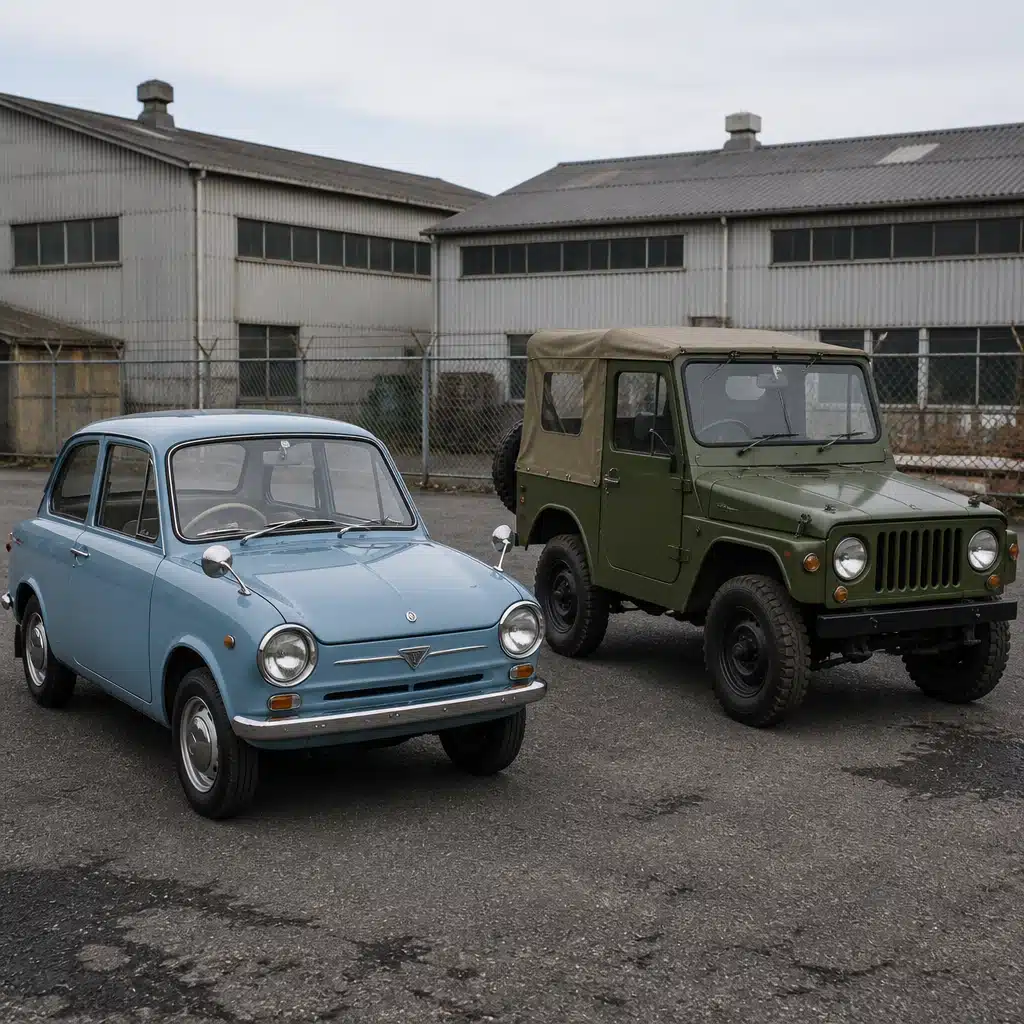
Suzuki’s first production car arrived in 1955: The Suzulight. It was a small front-wheel-drive car at a time when many inexpensive vehicles still used rear-engine or rear-wheel-drive layouts. The Suzulight also used independent suspension, showing Suzuki’s willingness to adopt layouts that improved comfort and control even in budget vehicles.
This early phase shaped Suzuki’s identity. The company learned to extract usable space from tiny footprints and deliver acceptable performance from modest engines. That same thinking would later influence how Suzuki approached four-wheel drive: Not as luxury or excess, but as a tool to solve a real access problem.
Building a Reputation in Compact Cars
Through the 1960s and 1970s, Suzuki expanded its small-car lineup and grew its dealer network. It also bought time to learn what it could not do yet. Competing against larger Japanese automakers required careful choices about scale, tooling costs, and export strategy.
Suzuki also became closely linked to motorcycles globally, and that mattered for the car division in two ways. First, it supported engine development and a culture of mechanical efficiency. Second, it helped Suzuki build international distribution channels, which would later make it easier to sell small cars and 4x4s outside Japan.
By the late 1970s, Suzuki was ready for a product that could separate it from the growing field of kei specialists. The answer came from a different need than city commuting.
Major Turning Point: The Jimny and the Idea of “Small 4×4”
Suzuki’s most influential automotive decision arrived in 1970 with the LJ10 Jimny. Rather than building a large off-road vehicle like the Land Cruiser, Suzuki focused on a true four-wheel-drive vehicle in a mini format. It was a response to market reality. Rural Japan, mountainous regions, and industries like forestry needed practical access on poor roads, but not everyone could afford or even fit a full-size 4×4.
The Jimny’s early buyers were often people who needed capability more than comfort. A small ladder-frame 4×4 could climb where cars could not, and it could do it with a tiny engine. That was the problem Suzuki solved: Off-road access without the cost, fuel use, or physical size of traditional 4x4s.
As the Jimny evolved through the LJ series in the 1970s, it also had to respond to export opportunities. Markets such as Australia and parts of Europe had demand for compact off-roaders, but they also had different speed expectations and safety requirements. Suzuki’s approach became a balancing act: Keep the vehicle simple, light, and durable, while adapting power outputs and equipment for buyers who used highways as much as trails.
In 1981, the SJ410 arrived, followed by the SJ413. These models helped define Suzuki’s global compact 4×4 identity. They were still small and relatively basic, but they felt more complete as everyday vehicles. Over time, competitors and consumers started to recognize that “small 4×4” was not a compromise for everyone. For many owners, it was exactly enough.
When people compare the cultural footprints of off-road brands, Suzuki’s influence sits alongside larger legends, even if the scale is different. It is also useful context to understand how other off-road icons were shaped by their own origins, like Jeep history and evolution, where military needs pushed the category in another direction.
Technology Evolution: How Suzuki Made 4×4 Practical
Suzuki’s 4×4 reputation did not come from horsepower. It came from packaging and mechanical choices that worked together. A body-on-frame structure, low-range gearing in many versions, and tight dimensions made these vehicles effective in low-speed, high-traction-demand driving.
Another part of the formula was weight. Lightweight vehicles place less demand on brakes, tires, and engines, and they can perform surprisingly well in mud or snow simply because they do not sink as easily. Suzuki’s focus on compact design aligned with the physics of off-road travel. If you want a broader explanation of why mass matters beyond off-road use, the basic principles behind weight reduction and fuel use apply here too.
In the 1980s, Suzuki also broadened the idea of “practical capability.” The company introduced the Vitara (called Escudo in Japan) in 1988. It was a key shift. The Vitara kept real off-road hardware, but it was designed to be easier to live with every day. That meant friendlier styling, more comfort features, and a driving position that appealed to a broader audience.
The Vitara arrived as global tastes were changing. Buyers wanted vehicles that could handle bad weather and weekend recreation, but they did not necessarily want a large truck. The Vitara landed early in what would later become a much larger trend toward compact SUVs. It showed that four-wheel drive could be sold as everyday confidence, not just worksite necessity.
Design Evolution: From Utilitarian to Everyday-Friendly
Suzuki’s design path followed its customer base. Early Jimny models were upright and functional because they had to be. Simple body panels were cheaper to stamp and easier to repair. Interiors were minimal because price and durability mattered more than appearance.
As exports grew and more owners used these vehicles as daily transport, expectations changed. Noise levels, seating comfort, ventilation, and corrosion resistance started to matter more. Suzuki answered with incremental improvements rather than radical leaps, partly because its small-car business depended on controlling costs.
By the 1990s and 2000s, Suzuki’s lineup showed two parallel design ideas:
- True mini 4×4 utility: The Jimny continued to serve buyers who valued maneuverability and mechanical simplicity.
- Compact family-friendly SUVs: The Vitara and later Grand Vitara aimed at broader use, including longer-road trips and higher-speed stability.
This split was important because it kept Suzuki from losing its identity. Many manufacturers grew their SUVs until they stopped being “small.” Suzuki, by contrast, continued to treat compact size as a feature rather than a limitation.
Challenges and Competition
Suzuki’s biggest challenge was scale. The global auto industry rewards enormous production volumes, especially when regulations push expensive safety and emissions technology into every car. For Suzuki, selling small cars meant its profit margin could be thin, and adding new technology could be financially painful.
Competition also intensified. By the 1990s, compact SUVs and small 4x4s were no longer niche. Large automakers could spread development costs across many models, while Suzuki had fewer high-volume vehicles to subsidize specialty products like the Jimny.
Another challenge came from changing consumer preferences. In many markets, buyers moved toward larger crossovers with car-like ride quality, automatic transmissions, and more power. These vehicles were often all-wheel drive rather than traditional part-time 4×4. That shift placed Suzuki’s simpler off-road approach in a narrower lane. Still, the Jimny and similar designs kept a loyal audience because they offered something crossovers typically did not: Low-range gearing and compact off-road geometry.
Consumer Reception: Why People Kept Buying Suzuki 4x4s
Suzuki’s compact 4x4s earned their following in ways that do not always show up in brochures. Owners valued them because they were approachable. The vehicles were small enough to park easily, light enough to recover when stuck, and simple enough to maintain without specialized tools in many cases.
In rural areas and developing markets, that simplicity was not nostalgia. It was practicality. Repairs needed to be affordable. Fuel economy mattered. Tight roads demanded smaller dimensions. Suzuki often fit those requirements better than heavier, more complex alternatives.
In urban markets, the appeal was different. People liked the upright view, the sense of toughness, and the ability to handle snow, dirt roads, and weekend trails. Over time, the Jimny especially became a style statement in some regions, but the base reason for its existence remained unchanged: Provide real capability in a small footprint.
Motorsport Influence and Off-Road Culture
Suzuki is not defined by headline-grabbing global racing in the same way as some performance brands, but off-road events still mattered to its image and development. Rally-raids and regional off-road competition provided a proving ground, and they also provided stories owners could relate to. A vehicle designed for rough ground looks more credible when it survives harsh events, even if most buyers will never replicate those conditions.
Off-road culture also influenced aftermarket support. Compact Suzukis became popular platforms for modifications because they responded well to small changes: Tires, gearing, suspension lifts, and protection equipment. That ecosystem helped keep older vehicles relevant, which in turn reinforced Suzuki’s reputation for durability and long service life.
Influence on the Industry
Suzuki’s biggest industry impact was proving that 4×4 did not have to be large or expensive to be legitimate. Before Suzuki’s rise in this space, many people associated off-road capability with heavy-duty trucks. Suzuki normalized a different idea: A small vehicle can be a serious tool if the engineering priorities are correct.
This influence showed up in two ways. First, it pushed competitors to take compact off-roaders seriously, particularly in markets where narrow roads and fuel costs shaped demand. Second, it helped lay groundwork for the broader acceptance of compact SUVs, even if many later SUVs moved away from true off-road hardware.
It also highlighted a strategic lesson. Specialization can work when it aligns with real-world constraints. Suzuki did not try to out-muscle bigger manufacturers in size or luxury. It focused on packaging, weight, and cost control, and it found customers who valued those traits.
Modern Evolution: Global Shifts and the Return of Simple Capability
In the 2000s and 2010s, Suzuki’s global strategy varied by region, and in some markets it reduced its passenger-car presence. The reasons were mostly structural: Tightening emissions and safety rules increased costs, and competition in mainstream segments became brutal. Suzuki remained strong in areas where small cars and compact utility vehicles fit local needs, and where partnerships and local production supported pricing.
The Jimny’s continued development showed how durable the original concept was. When the fourth-generation Jimny debuted in 2018, it emphasized classic off-road fundamentals rather than trying to imitate crossovers. That decision made sense. Many buyers who wanted a Jimny were specifically looking for a compact, honest 4×4, not a softened lifestyle vehicle.
Modern regulations also changed the conversation around ownership costs and long-term value. Small, durable vehicles often attract buyers who keep them longer, especially when they remain useful for work or recreation. For anyone shopping the used market, paperwork and vehicle history matter as much as reputation, which is why tools like a Used car documents checklist can be as practical as knowing a model’s story.
At the same time, modern buyers expect more refinement. Features like better sound insulation, improved crash structures, and updated driver aids require engineering investment. Suzuki’s ongoing challenge is familiar across the industry: How to keep the straightforward character that made its vehicles popular while meeting modern expectations and legal requirements.
Legacy and Lasting Influence
Suzuki’s history is not just a timeline of models. It is a case study in how constraints can produce distinctive products. Kei regulations, postwar economics, and the realities of rural mobility pushed Suzuki toward compactness and efficiency. Those same traits later made it a natural builder of small 4x4s.
Today, Suzuki’s global 4×4 influence is clear in how people talk about capability. Many drivers now understand that off-road performance is not only about engine size or ground clearance. It is also about low weight, compact dimensions, gearing, and durability. That perspective owes a lot to Suzuki’s long-running commitment to building vehicles that fit the world as it is, not just the roads that appear in advertising photos.
And while the company’s mainstream car lineup has risen and fallen in different regions, the central idea remains consistent. Suzuki succeeded when it listened to practical needs first, then engineered smart solutions within strict limits. That is a lesson that still matters as the industry faces new constraints, from emissions targets to crowded cities, and the ongoing demand for vehicles that are simple, efficient, and genuinely useful.


