




This post may contain affiliate links. Please read our disclosure and privacy policy for more information.
A coolant level that keeps dropping is a warning sign that the cooling system is losing fluid somewhere. Coolant is not supposed to “get used up.” If you keep topping it off and the level keeps going down, treat it as a leak or an overheating risk until proven otherwise.
What This Problem Feels Like
Most drivers notice the coolant reservoir level is below the “MIN” line again a few days later, even after topping it off. Sometimes you only catch it because a low coolant warning pops up on the dash.
You may also notice one or more of these signs, even if the car still drives normally:
- A sweet smell around the front of the car after parking
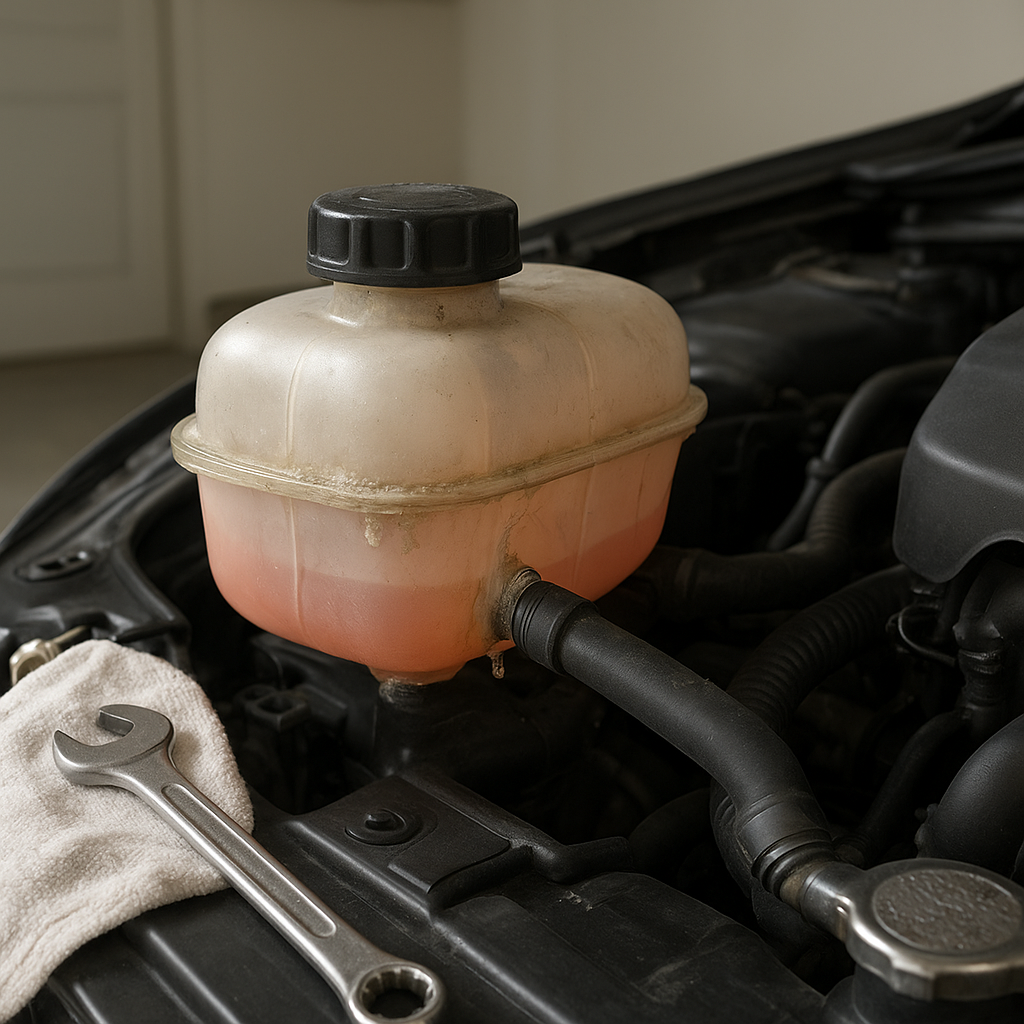
- Dried crusty residue (often white, pink, orange, or green) near hoses or the radiator
- A small wet spot under the front of the car after it sits
- The heater works on some days and blows cooler air on others
If the coolant is dropping faster than normal, the temperature gauge may run hotter than usual or climb in traffic.
Is It Safe to Drive?
It depends on how fast the level drops and whether the engine temperature stays normal.
Usually okay for a short trip: The coolant is only slightly low, the temperature gauge stays steady in its normal range, and you are driving a short distance to get it checked.
Not safe to drive: The temperature gauge rises above normal, you see a temperature warning light, steam comes from the hood, or the heater suddenly blows cold while the engine is hot. These are signs the engine may be overheating or starting to form air pockets.
Overheating can cause expensive damage quickly. If the temp warning comes on while driving, pull over as soon as it is safe, shut the engine off, and let it cool down. Do not open the radiator cap on a hot engine.
Common Causes
These are the most common reasons coolant level drops, listed from most common to less common.
Small external leak from a hose, clamp, or plastic connector
Cooling hoses age and soften, clamps lose tension, and plastic fittings can crack. Many leaks only happen when the system is hot and pressurized, then dry up when the engine cools. That is why you may not always see a puddle.
Radiator leak (seam, core, or plastic end tank)
Radiators often fail at the plastic end tanks or the crimped seams where plastic meets metal. A tiny seep can leave dried coolant residue without dripping much.
Coolant reservoir or reservoir cap problem
The overflow reservoir can crack, or the cap can fail to hold the correct pressure. A weak cap can let coolant vent out as vapor or push coolant out of the overflow path more easily. This can look like “mystery loss” with little evidence on the ground.
Water pump seep or leak
Many water pumps have a small “weep hole.” When the internal seal starts to fail, coolant can drip from that area. It may land on the engine or splash onto the belt, so it can be hard to spot. Sometimes you will see dried coolant trails on the front of the engine.
Heater core leak
The heater core is like a small radiator inside the dash. If it leaks, you might smell sweet coolant inside the cabin, see fogging film on the windshield, or feel damp carpet on the passenger side. Some leaks only show up when the heat is on.
Internal engine leak (head gasket or related issue)
If coolant is getting into the combustion chambers or into the oil, the level can drop with no obvious external leak. This is less common than hoses or radiators, but it is the most serious. You might notice persistent white exhaust smoke after warm-up, repeated overheating, or pressure building in the cooling system quickly after a cold start.
Recent service issue or trapped air after coolant work
If coolant was recently replaced, air may have been trapped and then worked its way out over a few heat cycles. That can make the reservoir level drop once or twice. If it keeps dropping after that, assume there is a leak or another problem.
Quick Checks You Can Do at Home
These checks are simple and low-risk. Do them with the engine cool. If anything is hot, wait.
Check the level correctly and mark it
With the engine cold, look at the coolant reservoir and note where the level sits between “MIN” and “MAX.” If your reservoir has no markings, use a piece of tape to mark the level. Re-check at the same time of day for a few days. This helps you tell “normal change” from a real loss.
Look for dried residue and wet spots
Use a flashlight and look around:
- Radiator end tanks and seams
- Upper and lower radiator hoses
- Small coolant hoses near the throttle body or firewall
- Thermostat housing area
- Around the reservoir and its hose
Dried coolant often looks crusty or chalky. Fresh coolant looks wet and slick and may collect dust into a muddy-looking patch.
Check under the car after it sits
Park on clean pavement or place cardboard under the front of the car overnight. In the morning, look for spots. Coolant usually feels slippery between your fingers and has a sweet smell. If you see a puddle, note its location relative to the engine bay.
Check the reservoir cap and hose condition
Inspect the reservoir cap seal for cracks, flattening, or missing pieces. Look at the small hose that runs from the radiator neck to the reservoir (if equipped). A split hose can leak only under pressure.
Check for heater core clues inside the cabin
With the car parked, sniff for a sweet smell inside, especially after using the heater. Feel the passenger-side carpet for dampness. If the windshield keeps fogging with a slightly greasy film, that can also point to coolant vapor.
Watch the temperature gauge and heater behavior
On a normal drive, the temp gauge should reach its usual spot and stay steady. If the cabin heat goes cold at idle or on hills, coolant may be low or there may be air in the system. If you want a basic emergency-prep reminder for roadside situations, DIY emergency car kit can help you think through what to keep in the car without turning it into a repair job.
When This Becomes Serious
A dropping coolant level becomes urgent when it starts affecting temperature control or points to an internal leak.
Stop driving and get help if you notice any of the following:
- Temperature gauge rising above normal or fluctuating
- Steam or a strong coolant smell from the engine bay
- Low coolant light returning quickly after topping off
- Coolant pushed out of the reservoir or bubbling in the reservoir
- Milky-looking oil on the dipstick or oil cap
- Misfiring, rough running, or a check engine light after coolant loss
Overheating can warp cylinder heads, damage head gaskets, and harm the catalytic converter. If you have to add coolant repeatedly, the risk of overheating goes up every time air enters the system.
How a Mechanic Fixes It
A professional fix starts with confirming where the coolant is going, not guesswork.
Pressure test of the cooling system
This is one of the most useful tests. The shop pressurizes the cooling system with the engine off and looks for leaks. Small leaks that do not drip when cold often show up during the test.
UV dye inspection (when needed)
If the leak is hard to find, dye can be added to the coolant. After driving, the mechanic uses a UV light to spot even tiny seepage.
Component replacement and system refill
Once the leak source is identified, the usual repair is replacing the failed part:
- Hose, clamp, or plastic connector
- Radiator
- Reservoir or cap
- Water pump
- Thermostat housing gasket or related seal
- Heater core (more labor due to dash work)
After parts are replaced, the system is refilled with the correct coolant type and bled of air. The mechanic then re-checks for leaks and confirms stable operating temperature.
Internal leak confirmation
If no external leaks are found, the shop may check for combustion gases in the coolant and look for other signs of an internal issue. If confirmed, the repair plan depends on the engine and the failure point, but it is handled as an engine sealing problem, not a simple cooling system seep.
Common Mistakes to Avoid
- Opening the radiator cap when hot: Hot coolant can spray out and cause serious burns.
- Ignoring a small drop because the car “still runs fine”: Cooling system problems often get worse quickly.
- Mixing random coolant types: Some coolants do not mix well and can form sludge. If you must top off in a pinch, use distilled water and correct it soon after.
- Overfilling the reservoir: Coolant expands when hot. Overfilling can cause overflow that looks like a leak.
- Relying on stop-leak as a normal fix: It can clog small passages in the radiator or heater core and make diagnosis harder.
Related Problems to Watch For
These do not change the main issue, but they can show up along with coolant loss:
- Overheating in traffic: Low coolant reduces heat transfer and can create air pockets.
- Weak cabin heat: The heater core needs proper coolant level and flow.
- Coolant smell after shutdown: Often points to a small external leak that only happens hot.
- Battery warning or charging issues after a leak: Coolant can spray onto belts and pulleys. If you are working under the hood, clean and solid electrical connections matter too, like in DIY battery terminal cleaning.
Final Thoughts
If your coolant level keeps dropping, treat it like an active leak until you find proof otherwise. Start by checking the level cold, marking it, and looking for residue or wet spots around hoses, the radiator, the reservoir, and the water pump area.
If the temperature gauge rises, the heater goes cold while the engine is hot, or you see steam, stop driving and get the car towed. For anything more than a small, slow loss with stable temperature, schedule a cooling system pressure test. Finding a small leak early is far safer than dealing with an overheated engine later.


