




This post may contain affiliate links. Please read our disclosure and privacy policy for more information.
Mitsubishi’s car story is often told through two lenses: Innovation that helped the company punch above its size, and rallying success that forced its road cars to get tougher, faster, and more sophisticated. The interesting part is how closely those two tracks overlapped. When Mitsubishi found itself short on time, money, or market power, it frequently solved the problem with engineering ideas and motorsport testing rather than sheer scale.
The Origins
Mitsubishi began as a shipping and industrial group in the late 1800s, growing into a large, diversified Japanese conglomerate. Like several Japanese industrial houses, it entered vehicles through heavy industry first, then gradually moved toward passenger cars. That background mattered. Mitsubishi’s early strength was not showroom glamour, but engineering disciplines like metallurgy, machinery, and later aircraft and engines. Those skills shaped a company that often approached carmaking as a technical challenge to solve.
Mitsubishi produced Japan’s first series production passenger car in 1917: The Mitsubishi Model A. It was hand-built, expensive, and produced in very small numbers. The Model A did not create a lasting passenger-car business, but it signaled a long-term ambition. The larger lesson was economic. Japan’s early car market was small, and mass production was difficult without volume. Mitsubishi, like other domestic makers, focused more on commercial vehicles and industrial work where demand was steadier.
Early Development
After World War II, Japan’s industrial structure was reorganized, and Mitsubishi’s businesses were reshaped into separate companies. In the 1950s and early 1960s, as Japan’s economy expanded, the need for affordable personal transportation grew quickly. This was the environment in which Mitsubishi returned to passenger cars. The company’s approach was practical: Offer small, reliable cars for a market that valued efficiency and durability over prestige.
A key moment came in 1970 with the formation of Mitsubishi Motors Corporation, separating automotive operations into a more focused organization. That timing aligned with major global shifts. Emissions and safety standards tightened in multiple markets, oil prices became more volatile, and buyers increasingly expected efficiency without giving up everyday usability. Mitsubishi needed technical solutions that scaled across small cars and bigger exports.
Major Turning Points
Quiet shaft and the problem of refinement
One of Mitsubishi’s early signature technologies was “Silent Shaft,” introduced in the mid-1970s on its 2.6-liter four-cylinder engines. Big inline-fours can suffer from vibrations, and in that era many buyers still associated smoothness with larger six-cylinder engines. Mitsubishi’s balance-shaft system reduced NVH dramatically, letting the company offer larger four-cylinders that felt more refined without the cost and fuel use of a bigger engine.
The business significance was straightforward: Mitsubishi could compete in segments where buyers wanted comfort but still cared about operating costs. The technology also had wider influence. Variations of balance-shaft systems became common across the industry. In Mitsubishi’s case, it was a “do more with less” answer to consumer expectations that were rising quickly in the 1970s and 1980s.
Turbocharging as a tool, not a gimmick
Mitsubishi also leaned into turbocharging early, using it to deliver performance from smaller engines. This fit global conditions. The oil crises nudged manufacturers toward downsized engines, while enthusiasts still demanded speed. Turbocharging was a way to square that circle. Mitsubishi’s later development and supply of turbochargers through Mitsubishi Heavy Industries also made it part of the broader turbo era, not only as an automaker but as a technology contributor.
On the street, turbo Mitsubishis helped shape the brand’s image in the 1980s and 1990s. They could feel exotic for the price, but they also brought challenges: Heat management, long-term durability under boost, and the need for careful tuning. As emissions controls improved and engine management became smarter, Mitsubishi’s turbos became more usable for average drivers, not just enthusiasts.
Motorsport Influence
Mitsubishi’s rally story is where innovation and competition were forced into the same box. Rallying punishes weak parts because the surface is never consistent and the car is constantly loaded and unloaded. What survives rallies tends to survive real-world abuse: Bad roads, hard launches, overheated drivetrains, and repeated impacts.
From rough roads to global stages
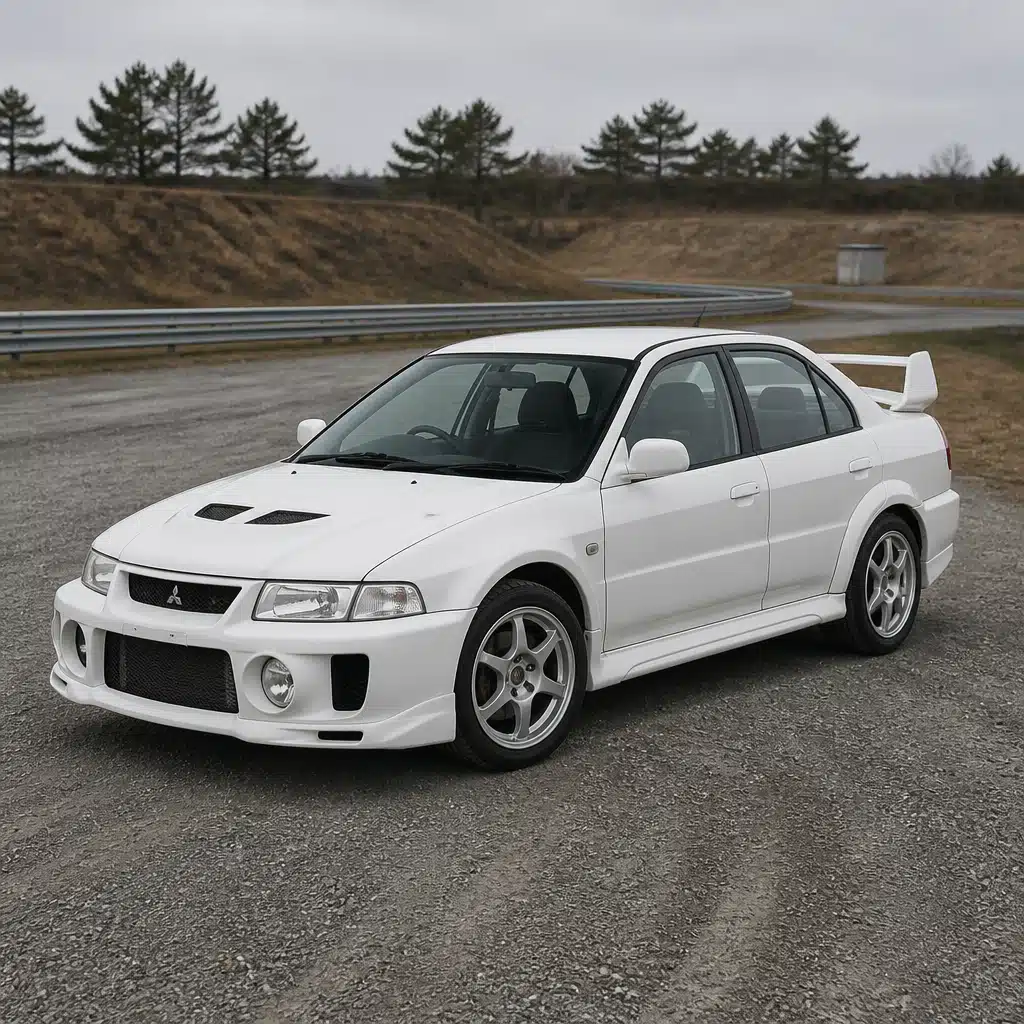
Mitsubishi’s international reputation in rallying grew over decades, but the modern identity is tightly linked to the Lancer Evolution era. Beginning in 1992 with the first Lancer Evolution, Mitsubishi built a series of homologation-focused sedans that steadily evolved in power delivery, driveline control, and chassis tuning. The goal was not simply to sell a fast road car. It was to build a platform competitive in the World Rally Championship’s Group A rules environment, where road-going versions were part of the equation.
Consumer response was immediate and unusually loyal. Buyers were not only purchasing speed. They were buying credibility, because the hardware felt purposeful. The tradeoff was that these cars could be noisy, stiff, and demanding compared with mainstream compacts. Mitsubishi accepted that compromise because it differentiated the brand in a crowded market.
All-wheel drive as a brand signature
Mitsubishi’s rallying led to a deeper investment in all-wheel-drive systems for road cars. The company had already built 4WD credibility in off-road and endurance settings, notably with the Pajero (Montero in many markets), which became a dominant force in the Dakar Rally over many years. Dakar success mattered because it validated durability and traction systems over extreme distances, not just short bursts.
In passenger cars, Mitsubishi developed increasingly advanced AWD control strategies. Later Evolutions used systems such as Active Center Differential (ACD) and Active Yaw Control (AYC) to manage torque distribution and yaw behavior. The problem being solved was traction and stability at the limit, especially on uneven surfaces. The long-term impact is seen across the industry. Today’s performance cars routinely use electronic torque management to make high power usable, and Mitsubishi was among the early mainstream-nameplates to make that feel normal on a compact sedan.
Technology Evolution
Mitsubishi’s most interesting engineering was often about making a small or mid-priced car behave like something more expensive or more specialized. This shows up in engines, drivetrains, and chassis electronics, but also in the company’s approach to packaging, weight control, and cooling.
From mechanical grip to electronic control
Early performance Mitsubishis relied heavily on mechanical solutions: Strong gearsets, robust differentials, suspension travel, and brakes sized for abuse. As sensors and computing became cheaper in the 1990s and 2000s, Mitsubishi moved toward electronic control layered on top of strong mechanical foundations. In the Evolution line, electronic yaw and center differential controls were not there to replace driver skill. They were there to widen the safe operating window and make the car faster in more conditions.
The industry context mattered. Competitors were also moving to multi-mode stability systems, but Mitsubishi’s systems were often calibrated with rally surfaces in mind, not only smooth pavement. That helped create a distinct driving feel: Agile on turn-in, willing to rotate, and confident putting power down early.
Efficiency pressures and the everyday Mitsubishi
Not every Mitsubishi was a rally replica. Through the 1980s and 1990s, the company also competed in the global small-car market, where fuel economy rules and price sensitivity shaped product decisions. The same engineering mindset showed up here in different ways: Compact packaging, efficient engines, and shared components across models to control cost.
As cars became more complex, maintenance and ownership experience mattered more to buyers. When drivers feel something is off, they often start with the basics, from vibrations to warning lights. A shake at speed, for example, can come from wheels, tires, or worn components, and it affects driver confidence quickly. Even performance-oriented Mitsubishis were not immune to ordinary problems like steering wheel shakes, which can be amplified by stiff suspensions and aggressive tire setups.
Design Evolution
Mitsubishi design has swung between conservative and aggressive depending on era and market. In the 1970s and 1980s, the styling often leaned functional, with clean lines suited to mass production and global export tastes. By the 1990s, the brand had clearer visual identities: The Lancer’s purposeful shape, the Eclipse’s sporty proportions, and the Pajero’s upright strength. These designs were not only aesthetic choices. They reflected manufacturing realities and customer needs, such as interior space, visibility, and aerodynamic efficiency.
Performance variants also changed how buyers viewed everyday models. When a base Lancer shared a showroom with an Evolution, the whole line gained a sense of seriousness. That “halo” effect was something Mitsubishi benefited from, especially when competing against larger companies with more advertising power.
Challenges and Competition
Mitsubishi’s history also includes periods where market forces were difficult to overcome. The company did not have the scale of Toyota or Volkswagen, and it faced intense competition in the segments where it traditionally played. In the 1990s and 2000s, buyers increasingly expected not only performance and reliability, but also top-tier interiors, strong resale value, and rapid model updates. That pushed development costs up across the industry.
At the same time, performance regulations tightened. Emissions rules, noise limits, and fuel economy targets made it harder to build raw, rally-like street cars. The Lancer Evolution ended after the tenth generation, with the final Evolution X era running from 2007 into the mid-2010s depending on market. The end of the Evo was not only a product decision. It reflected changing consumer demand, regulatory pressures, and the high cost of keeping a niche performance sedan fresh in a world moving toward crossovers.
In enthusiast circles, modifications also became more common as owners tried to keep older cars competitive or personalize them. That can create a second set of problems. Added power and grip often expose weaknesses in cooling, fueling, and driveline parts. Mitsubishi’s turbo cars built a strong tuning culture, but the reality of horsepower gains from engine mods is that reliable performance usually requires supporting upgrades and careful calibration, not just a single part.
Consumer Reception
Mitsubishi has had a split identity in the minds of consumers. For some, it is the maker of rally-bred sedans, tough SUVs, and clever engineering. For others, it is associated with value-focused commuter cars and a smaller dealership footprint than bigger rivals. Those two views can exist at the same time because the product range shifted with economic cycles and regional strategy.
When Mitsubishi’s performance models were at their peak, the reception was passionate. An Evolution or a turbocharged Eclipse could offer speed and capability that felt out of reach for the price. Owners often accepted compromises like road noise or firm ride because they were buying a specific experience: Control, traction, and that rally connection.
In the used market, these cars also gained a reputation for being difficult to evaluate. Many were modified, driven hard, or repaired after incidents. A careful used car accident check matters more with high-performance models, because poor structural repairs or hidden damage can affect alignment, handling, and safety in ways that are not obvious on a short test drive.
Cultural Impact
Mitsubishi’s cultural footprint is closely tied to the 1990s and early 2000s import performance boom. The Lancer Evolution became a symbol of attainable, real-world speed: Four doors, a turbo engine, and all-wheel drive that made fast driving feel accessible. In many regions, the Evolution developed a reputation as a car that could embarrass more expensive machinery on a twisty road or in poor weather.
The Eclipse, particularly in earlier turbocharged AWD forms, helped build Mitsubishi’s sport-compact image in North America. Even as later generations changed direction and market tastes shifted, the name remained linked to a time when Japanese makers experimented with affordable performance coupes.
This era also changed how people interacted with cars. Owners learned about boost control, intercoolers, and differential behavior. They also learned that small setup changes, like tire size or wheel position, can transform how a car drives. On AWD performance cars especially, wheel offset and backspacing can be the difference between clean steering feel and unwanted rubbing or tramlining.
Modern Evolution
In the 2010s and 2020s, Mitsubishi shifted toward crossovers and broader mass-market needs. This mirrored industry trends. Global buyers moved away from small sedans and coupes, and regulatory pressure pushed manufacturers to prioritize fleet efficiency and emissions reductions. Mitsubishi’s lineup in many markets became simpler, focusing on practicality and cost control.
The company also entered a new corporate chapter through its alliance relationships, which shaped platform sharing and regional product planning. While this reduced development burden, it also made it harder for Mitsubishi to maintain a distinct engineering identity on every model. The rally-bred narrative did not disappear, but it became less central to what most customers encountered in showrooms.
Even so, Mitsubishi’s older innovations still influence the ownership experience today. Many drivers of used cars, especially turbo models, face age-related issues like sensors, ignition wear, or vacuum leaks. When warning lights appear, accessible explanations of check engine light common causes often become part of the modern Mitsubishi story, because these cars are now in the hands of second, third, or fourth owners keeping them alive.
Legacy and Lasting Influence
Mitsubishi’s lasting importance comes from how it used engineering and rallying to solve real problems. When the company needed refinement without cost, it created solutions like balance shafts that spread beyond its own lineup. When it needed traction and durability, rallying forced it to build drivetrains and control systems that made speed usable on imperfect roads. When buyers demanded excitement on a budget, Mitsubishi offered turbocharged, tuneable platforms that shaped an entire enthusiast generation.
The brand’s trajectory also shows how quickly the car world changes. Regulations, safety expectations, and consumer taste can rewrite the rules faster than a small maker can reinvent its lineup. Yet Mitsubishi’s best years left a clear record. Innovation was not a side story. It was the method. And rallying was not just a trophy cabinet. It was a development tool that made everyday cars stronger, faster, and smarter than their price suggested.


