


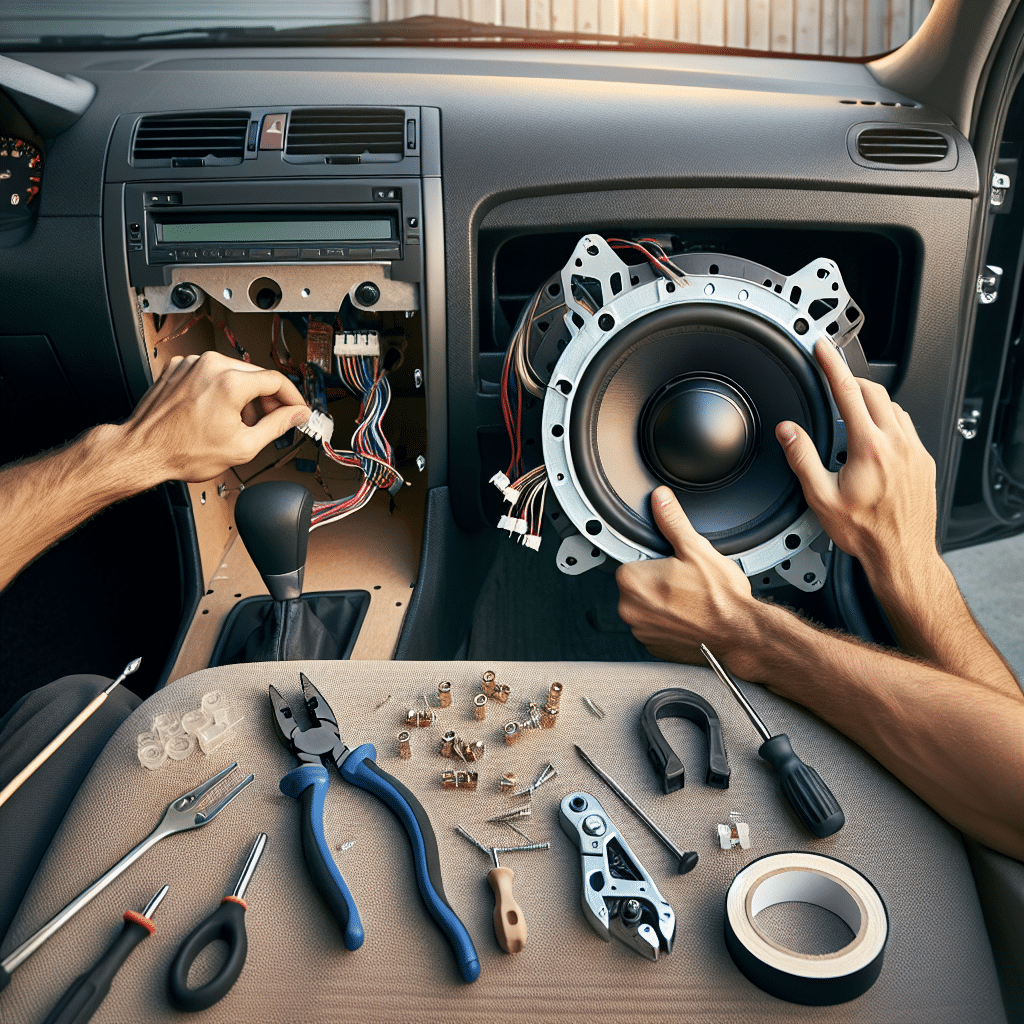
A better car sound system does not always mean a full custom build. You can make a big change at home with beginner parts and basic tools. This guide focuses on clean sound and simple steps. You will learn how to swap speakers, add a small amp (optional), and improve bass with a compact sub (optional).
If you like simple weekend projects, you may also enjoy DIY car upgrades at home.
Tools and items needed
Basic tools
- Plastic trim tools (panel poppers)
- Phillips and flat screwdrivers
- Socket set (common sizes: 7mm, 8mm, 10mm)
- Wire stripper and crimper
- Heat shrink or electrical tape
- Utility knife
- Flashlight
- Small magnet tray or cup to hold screws
Parts (beginner friendly)
- New speakers (match your car size and location)
- Speaker wiring adapters (optional but nice)
- Speaker mounting adapters (often needed for door speakers)
- Foam speaker gasket tape (helps seal and reduce rattle)
- Sound deadening sheets (small pack is enough for front doors)
- Butt connectors or solder sleeves
Optional upgrades
- Compact powered subwoofer (easy bass upgrade)
- 4-channel amplifier (cleaner sound at higher volume)
- Amp wiring kit (correct gauge for your amp)
- Line output converter (LOC) if you keep the factory radio and need RCA outputs
Tip: Start with speakers first. Many people stop there and feel happy with the upgrade.
Safety or legal notes
- Disconnect the negative battery terminal before touching radio, door wiring, or running power wire.
- Do not work near airbag connectors. Door panels can have side airbags on some cars. If you see yellow plugs or looms, leave them alone.
- Route power wire away from pedals, steering parts, and sharp metal.
- Keep volume at a safe level. Very loud sound can damage hearing and can be unsafe while driving.
Numbered installation steps
1) Pick a simple upgrade path
Choose one of these beginner paths:
- Path A (simple): Replace front door speakers. Add a little sound deadening.
- Path B (balanced): Replace front and rear speakers.
- Path C (full but still DIY): Speakers + compact powered subwoofer.
If you also plan to modernize your head unit experience, an apple carplay add on can pair well with a sound upgrade.
2) Confirm speaker size and depth
Check your owner forums, a fit guide, or measure your old speaker. Door speakers often look like 6.5 inch, but the mounting shape matters. Depth matters too. A deep magnet can hit the window track.
Before ordering, confirm:
- Speaker diameter and mounting points
- Mounting depth
- Connector type (adapter helps avoid cutting factory wires)
3) Disconnect the battery
Open the hood. Use a 10mm socket on many cars. Remove the negative terminal and move it aside. This reduces the risk of short circuits.
4) Remove the door panel
Most door panels come off in this basic order:
- Remove trim caps hiding screws (handle area, armrest pocket, mirror trim)
- Remove screws
- Use a trim tool to pop the clips around the edge
- Lift the panel up and off the window ledge
- Unplug switches and courtesy light connectors
Work slow. If a clip will not pop, look for a missed screw.
5) Remove the old speaker
Factory speakers can be held by screws, bolts, or rivets.
- If screws: remove them and unplug the connector.
- If rivets: drill the rivet head until it releases. Wear eye protection. Vacuum metal shavings.
Keep the speaker opening clean. Check for water shield plastic. Do not rip it.
6) Add a little sound deadening (quick method)
This step helps more than most beginners expect. You do not need to cover the whole door.
- Clean the metal with rubbing alcohol.
- Apply one or two sheets to the outer door skin (through the service holes).
- Add a ring of foam gasket tape around the speaker mount.
This reduces buzz and gives the speaker a better “box” to play in.
7) Install the new speaker
Use a mounting adapter if needed. Connect using a wiring adapter if possible. If you must splice:
- Strip a small section of wire.
- Crimp butt connectors tightly.
- Seal with heat shrink or tape.
Match polarity. If your bass sounds weak or “hollow,” one speaker may be wired backward.
8) Test before you reinstall the panel
Reconnect the battery for a quick test. Turn on the radio at low volume.
- Check the speaker plays cleanly.
- Check window goes up and down without hitting the speaker.
- Listen for rattles. Tighten screws if needed.
Then disconnect the battery again before final reassembly.
9) Reinstall the door panel
Plug connectors back in. Hang the panel on the top edge first. Press clips in around the edges. Reinstall screws and trim pieces.
10) Optional: add a compact powered subwoofer
A compact powered sub is the simplest bass upgrade. It has an amp built in.
- Mount it under a seat or in the trunk (follow the manual clearance rules).
- Run power wire through the firewall grommet to the battery. Add the fuse near the battery, not in the cabin.
- Ground to bare metal on the chassis. Keep the ground short.
- For signal: use RCA from an aftermarket head unit, or use speaker-level inputs, or use a LOC if needed.
- Run a remote turn-on wire (or use auto turn-on if the sub supports it).
Set gain low at first. Raise it until bass blends with the speakers, not overpowers them.
Common mistakes
- Buying speakers that do not fit the door depth, so the window hits them.
- Skipping the battery disconnect, then blowing a fuse or creating a short.
- Loose grounds for amps or powered subs. This causes noise and weak output.
- Setting amp or sub gain too high. This causes distortion and can damage speakers.
- Forgetting foam gasket tape, then chasing door rattles later.
- Breaking door clips by yanking instead of finding hidden screws.
Maintenance tips
- After one week, recheck door panel screws. Some can loosen after vibrations.
- If you add an amp or powered sub, check the fuse holder near the battery for corrosion and tightness twice a year.
- Keep wiring away from seat tracks and hinges. If you hear a new rattle, inspect wire routing.
- Do not wash the interior with heavy water near the door switches. Moisture can cause speaker crackle.
Is it worth it?
Yes, for most beginners. A speaker swap improves clarity fast. Vocals sound cleaner. You can hear details at lower volume. Adding light sound deadening reduces rattles and makes the doors feel more solid.
A compact powered sub is worth it if you want bass without a large box. A separate amp is worth it if you like higher volume with less harsh sound, but it adds wiring and setup time.
Conclusion
A home sound system upgrade can be simple. Start with front speakers and foam gasket tape. Add a little sound deadening. Test before you put everything back together. If you still want more, add a compact powered sub next. Take your time, keep wiring tidy, and you will get a big improvement without turning the car into a full audio project.
If you enjoy hands-on installs, DIY dash cam install is another beginner job you can do with the same trim tools and patience.


