


This post may contain affiliate links. Please read our disclosure and privacy policy for more information.
A stall that happens as you slow down or coast is usually tied to how the engine controls idle when your foot comes off the gas. It can feel random, but it often follows a pattern. The good news is that many causes are common and fixable, and there are a few safe checks you can do before booking a repair.
What This Problem Feels Like
You are driving normally, then as you brake for a stop, roll up to a light, or coast down a hill, the engine suddenly dies. The dash lights may come on like it is in “key on” mode, and you lose power steering assist and power brake assist. The engine may restart right away, or it may crank longer than usual before it catches.
Many people notice it happens more when the engine is warm, when the A/C is on, or when making a turn into a parking lot. Some cars will stumble first, with the RPM dropping below normal idle, then it cuts off.
You may also notice small hints right before it stalls: A shaky idle at stops, a low idle when you shift into Drive, or occasional surging. If your idle speed hunts up and down at stoplights, that points to the same “idle control” area. If that sounds familiar, RPM fluctuates at idle often shares root causes with stalling on decel.
Is It Safe to Drive?
It depends on how often it happens and where it happens.
If the engine stalls even once in traffic, treat it as a safety issue. When the engine dies, steering gets heavy and braking effort increases. You can still steer and stop, but it takes more force and more distance. That is a real risk in city traffic, on busy roads, and when turning across lanes.
It may be acceptable to drive a short distance to a safe place or a repair shop if all of these are true:
- The stall is rare and you can restart immediately
- No red warning lights stay on after restarting
- The car does not stall when you are pressing the gas
- You can avoid highways and heavy traffic
Do not keep driving if it stalls repeatedly, stalls when turning, or the engine will not restart right away. If you must move the car, take back roads, leave extra stopping distance, and avoid left turns across traffic.
Common Causes
Stalling while slowing down or coasting is usually about the engine not catching and holding a stable idle when the throttle closes. These are the most common causes, from most likely to less likely.
Dirty throttle body (common)
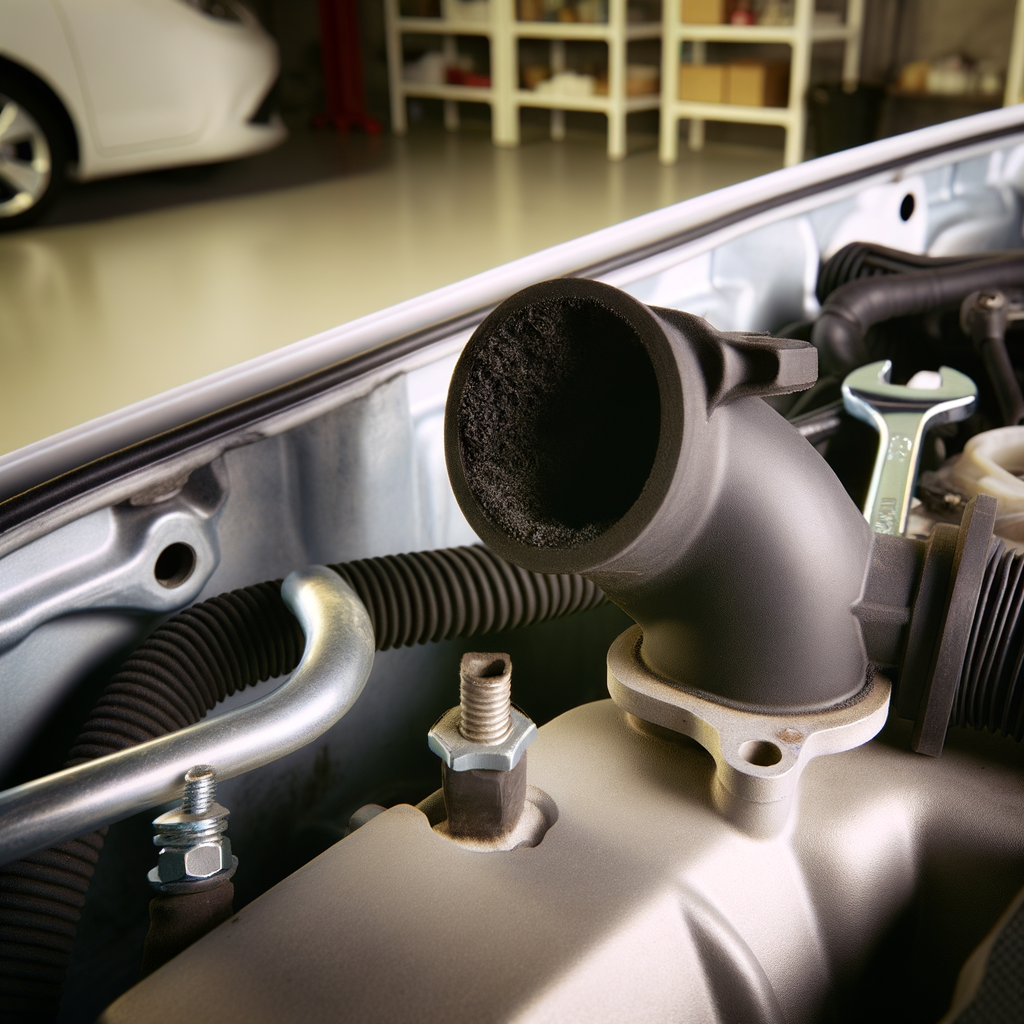
As you lift off the gas, the throttle closes and the engine must breathe through a very small opening to idle smoothly. Over time, carbon builds up around the throttle plate and bore. That buildup can restrict airflow right when the car is trying to settle into idle, so RPM drops too far and it stalls.
This is especially common on higher-mileage cars and on vehicles that do a lot of short trips.
Idle air control problem or electronic throttle adaptation issue
Some cars use an idle air control valve. Others use an electronic throttle body that “learns” how to hold idle. If the idle control valve sticks, or if the throttle system loses its learned settings after a battery disconnect or low voltage event, the engine may not add enough air to prevent a stall when you coast down.
Vacuum leak (unmetered air)
A split intake hose, a cracked vacuum line, or a leaking gasket can let extra air into the engine that the computer did not measure. At higher RPM that may not be obvious, but at idle and on decel it can make the mixture unstable. The RPM drops, the engine stumbles, and it can die as you come to a stop.
Weak fuel delivery at idle
Low fuel pressure from a tired fuel pump, a restricted fuel filter (if your vehicle has a serviceable one), or a faulty fuel pressure regulator can show up first at idle or during a quick transition from throttle to idle. The engine needs a steady, predictable fuel supply to recover from decel and hold idle.
Torque converter clutch not releasing (automatic transmission)
On an automatic, the torque converter clutch should unlock as you slow down. If it stays locked, it can feel like a manual transmission car that you stopped without pushing the clutch in. The car may shudder and then stall right before the stop. This is less common than airflow and idle control issues, but it is a classic pattern.
Electrical power or charging issues
Low system voltage can make sensors and actuators react slowly, and it can reduce spark energy at idle. You might notice the problem more with headlights, blower motor, and rear defrost on. If you also see dim lights, headlights dimming while driving can be a related clue.
Quick Checks You Can Do at Home
These checks are meant to be safe and simple. Do them with the car parked, in a ventilated area, and away from traffic.
Note the pattern
Write down what is happening in plain terms:
- Does it stall only when warm, only when cold, or both?
- Does it happen with the A/C on?
- Does it happen during turns into a driveway or parking spot?
- Does it restart instantly, or does it crank longer?
This information helps a mechanic narrow it down faster.
Look for obvious intake and vacuum hose problems
With the engine off and cool, inspect the air intake tube from the air box to the throttle body. Look for cracked rubber, loose clamps, or hoses that popped off. Check any small vacuum lines you can easily see for splits or disconnections. If something is clearly loose or broken, that is worth fixing first.
Check for warning lights and scan codes if you can
If the check engine light is on, or if it came on after the stall, a basic code scan can point you in the right direction. Even if the light is off, some cars store “pending” codes. The codes do not guarantee the exact bad part, but they can confirm whether the issue is idle control, air metering, misfire, or transmission-related.
Check battery connections and basic charging signs
Open the hood and look at the battery terminals. They should be tight and free of heavy corrosion. A loose terminal can cause voltage dips when you brake and the engine returns to idle. If you recently replaced or disconnected the battery, that can also explain a sudden change in idle behavior.
If you suspect the battery is weak and the car sometimes struggles after sitting, car won’t start after sitting covers basic battery and fuel checks that overlap with stalling complaints.
Pay attention to the tachometer at the moment it tries to idle
If you can do so safely, watch the RPM as you come to a stop. A normal idle is usually steady. If RPM drops very low and then dies, that supports a throttle body, idle control, or vacuum leak direction. If it shudders like the drivetrain is still “connected” while braking, that leans more toward a torque converter clutch issue.
When This Becomes Serious
This problem becomes urgent when it turns into a predictable stall in situations where you need control of the car.
Stop driving and have it towed if any of the following happen:
- The engine stalls in the middle of an intersection or while turning
- The engine stalls and will not restart quickly
- You lose braking assist and nearly cannot stop in time
- The stall is getting more frequent over a few days
- The check engine light flashes, or the engine runs very rough afterward
A repeated stall can also strain the starter and battery because of frequent restarts. If it stalls once and then “acts fine,” do not assume it is gone. Many idle-related problems come and go until they fail fully.
How a Mechanic Fixes It
A shop will usually start by verifying the symptom, scanning for codes, and looking at live data at idle and during decel. They are watching airflow, throttle angle, fuel trims, and whether the transmission is commanding torque converter lockup correctly.
Common professional fixes include:
- Cleaning the throttle body and confirming the idle strategy works after cleaning
- Performing an idle relearn or throttle adaptation procedure if the vehicle requires it
- Smoke testing the intake system to find vacuum leaks you cannot see
- Testing fuel pressure and fuel delivery under the conditions that cause the stall
- Checking torque converter clutch operation and related solenoids on automatics
- Load testing the battery and checking alternator output and voltage drop at connections
The main goal is to restore a stable idle catch when the throttle closes, and to confirm fuel and spark stay steady during that transition.
Common Mistakes to Avoid
- Ignoring it because the car restarts: A stall can come back at the worst time.
- Replacing random parts first: Idle stalling can have several causes, and guessing gets expensive fast.
- Cleaning the throttle body and then driving off without the proper relearn: Some cars will idle worse until the computer recalibrates.
- Adjusting the throttle stop screw (if equipped): This can create new problems and is rarely the right move.
- Overlooking a simple loose intake clamp or hose: Small air leaks matter most at idle.
Related Problems to Watch For
These symptoms can show up alongside stalling on decel, and they help point toward the same systems:
- Jerking or harsh feel during low-speed changes: Sometimes tied to how the transmission and engine manage decel, similar to shifting jerks causes and fixes.
- Hesitation when you get back on the gas after coasting: Can be related if the throttle and fueling are slow to respond, like car hesitates when accelerating.
- Idle that dips when you turn the steering wheel or switch on the A/C: Often points back to idle control and airflow management.
If you notice these at the same time, mention them when you book service. They help narrow the test plan.
Final Thoughts
If your car stalls when slowing down or coasting, treat it as an idle control problem until proven otherwise. Start by avoiding heavy traffic, then look for simple issues like loose intake hoses, vacuum line problems, and weak battery connections. If it stalls more than once, or it stalls during turns or in traffic, stop driving and schedule a diagnostic. A proper scan, intake leak test, and throttle and fuel checks usually find the cause without guesswork.


