


This post may contain affiliate links. Please read our disclosure and privacy policy for more information.
If your engine cooling fan keeps running after you shut the car off, it can be confusing and a little worrying. Sometimes it is normal for a short time. Other times it points to a cooling-system or electrical control problem that needs attention.
What This Problem Feels Like
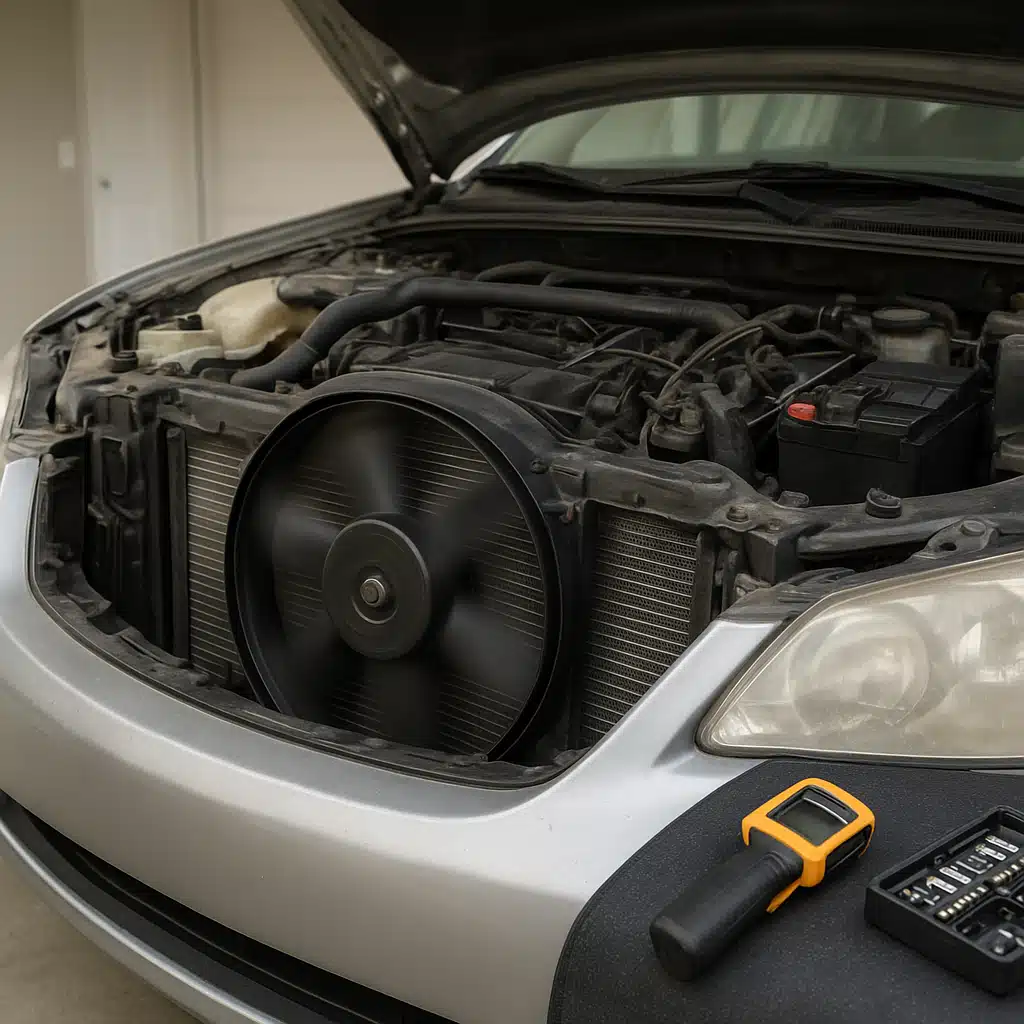
You turn the key off or press the start/stop button, step out, and you can still hear the radiator fan running under the hood. It may run for 30 seconds, a few minutes, or in bad cases it can seem like it will not stop at all.
You might notice one or more of these things along with it:
- The fan is loud and runs at high speed after parking.
- You smell hot air near the front of the car.
- The fan shuts off, then turns back on again while the car is parked.
- The battery seems weak the next time you try to start the car.
A short “after-run” can be normal on many modern cars, especially after highway driving, towing, hot weather, or heavy stop-and-go traffic. The fan is trying to pull heat out of the radiator and engine bay after coolant flow slows down.
Is It Safe to Drive?
If the fan runs for a short time, then shuts off normally, it is usually safe to drive. Keep an eye on your temperature gauge and watch for warning lights.
It becomes a safety issue when the fan runs for a long time, keeps cycling on and off for 10 to 20 minutes, or runs until it kills the battery. It can also be a warning sign that the engine is running hotter than it should.
Do not keep driving if you see an overheating warning, the temperature gauge climbs higher than normal, or you notice coolant smell or steam. If the engine is actually overheating, driving can cause serious damage quickly.
Common Causes
Here are the most common reasons a cooling fan keeps running after shutoff, starting with the ones mechanics see most often.
Normal heat soak and fan after-run
When you shut the engine off, coolant stops circulating as strongly as it does while running. Heat trapped in the engine and exhaust area can raise under-hood temps for a few minutes. Many cars are designed to run the fan during this time to prevent hot spots and protect parts like plastic tanks, hoses, wiring, and sensors.
This is more likely after:
- Long drives at higher speed
- Hot days
- Climbing hills or towing
- Parking right after hard driving
Engine temperature sensor or coolant temperature reading is wrong
The fan is commanded on based on temperature information. If the coolant temperature sensor (or its wiring) sends a reading that looks too hot, the fan can run longer than it should, even if the engine is not actually overheating.
This can happen because the sensor is failing, the connector is corroded, or wiring insulation is damaged. It can also happen if the ground connection is poor.
Low coolant level or trapped air in the cooling system
When coolant is low, the temperature near the sensor can spike or swing around because the sensor may not be fully covered in coolant. Air pockets can also cause uneven coolant flow and hot spots. The fan may run longer after shutoff because the system is struggling to stabilize temperature.
If you keep finding the coolant level low, that is a separate problem that should not be ignored. For extra context on what that can mean, see coolant level dropping causes.
Stuck cooling fan relay or fan control module fault
Most cars use a relay or an electronic fan control module to power the fan. If the relay contacts stick closed, the fan can keep running even when it is not being commanded on. Some fan control modules can also fail in a way that leaves the fan powered.
This often shows up as a fan that runs at the same speed every time and does not behave normally with temperature changes.
A/C system request keeping the fan on longer
On many vehicles, the radiator fan also helps cool the A/C condenser. If the A/C pressure sensor or control logic “thinks” the A/C side needs cooling, the fan can stay on longer. This is more common in hot weather or after you have been using the A/C heavily.
Usually this still stops after a short time. If it does not, it points back to a sensor or control issue.
Wiring short or control signal problem
Less common, but important: Damaged wiring can feed power to the fan circuit when it should be off. Rodent damage, previous repair work, and rubbed-through harnesses near the radiator support are typical causes.
Quick Checks You Can Do at Home
These checks are meant to be simple and safe. Avoid reaching into the engine bay while the fan is running, since it can start unexpectedly and the blades can cut you.
Time how long the fan runs
Use your phone timer. If it runs for 30 seconds to a few minutes and then shuts off, that can be normal. If it runs for 10 minutes or longer, or never stops, it is not normal.
Look at the temperature gauge and warning lights
Before you shut the car off, note where the temperature gauge sits. If it has been running higher than usual, the fan may be reacting to real heat. If the gauge is normal but the fan runs forever, a relay or sensor issue becomes more likely.
Check coolant level when the engine is fully cold
Only check coolant when the engine is cold. Look at the coolant reservoir level against the “MIN” and “MAX” lines. If it is low, do not ignore it. Low coolant can lead to overheating and can also make the fan behave oddly.
If you are not used to checking fluids, start with simple coolant level checks and track the level over a few days.
Listen for fan behavior patterns
Pay attention to whether the fan runs at one steady speed, or if it changes speeds and cycles. A steady, never-ending run can point to a stuck relay or a control module problem. Cycling can happen with normal after-run, but if it keeps cycling for a long time it can also mean the engine bay is staying too hot.
Watch for a weak battery after parking
If the fan runs long enough, it can drain the battery, especially on an older battery. If you notice slow cranking in the morning after the fan ran at night, take it seriously. A drained battery can strand you in unsafe places.
If you see heavy corrosion on the battery posts, that can make battery problems worse. Simple maintenance like battery terminal cleaning for beginners can help with starting issues, but it will not fix a fan that is being powered when it should not.
When This Becomes Serious
This problem is more than an annoyance when any of the following is true:
- The fan does not shut off after 10 to 20 minutes.
- The fan runs even when the engine is cold, such as first thing in the morning right after start, or right after shutoff from a short drive.
- The battery goes dead or the car struggles to start.
- The temperature gauge runs hot, you get an overheating warning, or you smell coolant.
If the engine is actually overheating, driving can damage the head gasket, warp engine parts, or cause leaks. If the fan is running due to a stuck relay or control module, the biggest risk is a dead battery, which can leave you stranded.
How a Mechanic Fixes It
A shop will usually diagnose this in a consistent order, because the fan is controlled by a mix of sensors and power circuits.
Verify whether after-run is normal
The mechanic will check how long the fan runs, the temperature at shutoff, and whether the vehicle is designed for fan after-run. Some models do it often, especially turbocharged cars and vehicles with tight engine bays.
Scan for trouble codes and check live data
Even if there is no check engine light, stored codes and live temperature readings can point to a coolant temperature sensor problem, A/C pressure sensor issue, or control module fault.
Test the fan relay and power circuit
If the fan keeps running when it should not, the relay is a common suspect. The technician may test whether the relay is sticking or if the control side is being commanded on when it should be off. On vehicles with a fan control module, they will test module inputs and outputs.
Confirm coolant level and cooling system condition
If coolant is low or there is evidence of air in the system, they will pressure-test the cooling system, look for leaks, and check that the system holds pressure. They will also check radiator cap performance where applicable.
Inspect wiring and connectors
If the electrical tests do not match normal behavior, the next step is checking wiring near the fan, relay box, sensor connectors, and grounds for corrosion, damage, or poor contact.
Common Mistakes to Avoid
- Assuming it is always normal: A brief run can be normal, but a fan that runs too long can be your only early warning.
- Opening the coolant cap when hot: Hot cooling systems are pressurized. Opening the cap can spray hot coolant and cause burns.
- Putting hands near the fan: The fan can turn on without warning, even with the engine off.
- Disconnecting the battery as a “fix”: It can stop the fan, but it does not solve the cause. You can also lose radio codes and reset vehicle systems.
- Ignoring repeat dead-battery events: If the fan drains the battery, you can end up stranded and dealing with battery damage.
Related Problems to Watch For
Keep this section simple: These are not the same problem, but they often show up around the same time.
- Temperature gauge higher than normal: This points more toward a cooling system problem than an electrical relay issue.
- Coolant smell or wet spots under the front of the car: A leak can lead to low coolant and extra fan run time.
- A/C performance changes: Weak A/C at idle can happen when the fan is not being controlled correctly, even if it runs at the wrong times.
- Battery going weak: Long fan run time can drain it, and a weak battery makes the next start harder.
Final Thoughts
If your fan runs for a couple of minutes after shutoff and then stops, treat it as normal behavior and just keep an eye on the temperature gauge. If it runs for a long time, cycles repeatedly, or drains the battery, stop treating it as a quirk. Check the coolant level when cold and pay attention to any overheating signs. If the behavior repeats, have the fan relay, control module, and temperature sensor data checked before you end up with an overheated engine or a dead battery.


