




This post may contain affiliate links. Please read our disclosure and privacy policy for more information.
A Tire Pressure Monitoring System (TPMS) helps warn you when a tire is low. It is a safety feature, but it is not perfect. Sensors can be slow, weather can change tire pressure, and some systems do not show exact PSI. The good news is you can do a simple TPMS and tire pressure check at home in about 10 to 20 minutes.
Tools and items needed
- Tire pressure gauge (digital or pencil style)
- Air source: Portable inflator, garage compressor, or gas station pump
- Small flashlight (helpful for reading the tire sidewall)
- Spray bottle with soapy water (optional for finding slow leaks)
- Valve stem caps (replace cracked or missing ones). A Valve stem caps upgrade is a quick beginner job
- Pen and paper or notes app (to write down PSI)
Safety and legal notes
Work on a flat surface. Park the car, set the parking brake, and put the car in Park (or in gear for a manual). Avoid checking pressure right after highway driving. Heat makes pressure read higher and can confuse your results.
Do not bleed air from hot tires to “fix” pressure. When the tire cools, it will end up underinflated.
Follow the pressure on the driver door jamb sticker. Do not use the big PSI number on the tire sidewall. That number is the maximum for the tire, not your car’s recommended pressure.
Numbered check steps
1. Find the correct tire pressure for your car
Open the driver door and look for the tire label on the door jamb. It lists the recommended PSI for front and rear tires. Some cars have different front and rear pressures.
If your car has a full-size spare, the label may list that too. If you have a compact spare, it usually has a much higher PSI number printed on it.
2. Do the check when tires are cold
Cold means the car has been parked for at least 3 hours, or you have driven less than 1 mile at low speed. This gives you the most accurate reading.
3. Look at the tires first
Before using a gauge, walk around the car slowly.
- Look for a tire that appears lower than the others
- Check for nails or screws in the tread
- Look for cracks, bulges, or damaged sidewalls
- Check that each valve stem has a cap
If one tire looks noticeably low, measure it first.
4. Measure tire pressure with a gauge
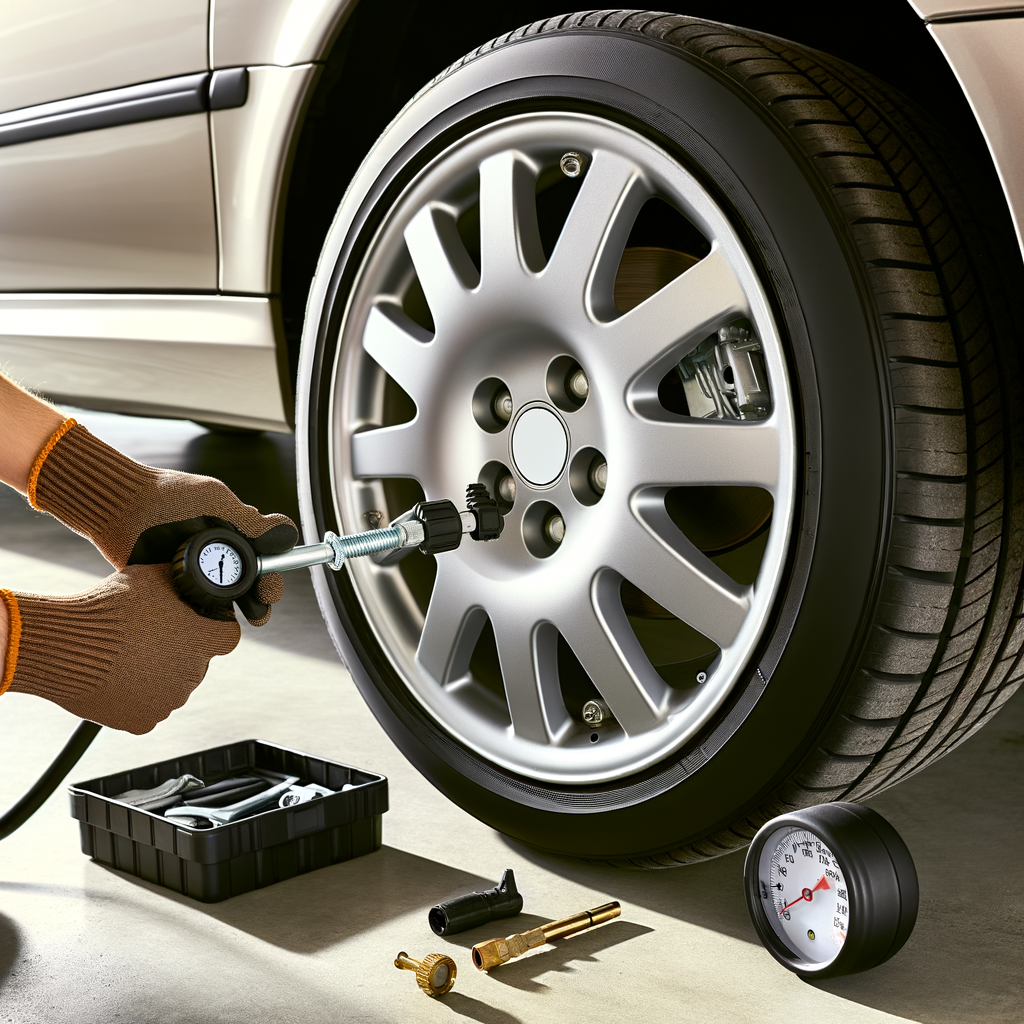
Remove the valve stem cap. Press the gauge straight onto the valve stem. You should hear a quick hiss, then it seals. Read the PSI.
Write down the result for each tire. Check all four, even if the TPMS light points to one corner. Tires can be off by a few PSI without triggering a warning.
5. Compare your readings to the door sticker
If a tire is low, add air. If it is high, let out a small amount and recheck. Do small changes. It is easy to remove too much air by mistake.
A quick rule that helps beginners: A 5 to 10°F temperature drop can lower pressure by about 1 PSI. That is why TPMS lights often show up on cold mornings.
6. Add air the right way
Put the inflator on the valve stem. Add air in short bursts. Then recheck with your gauge. Repeat until you hit the correct PSI.
Check front and rear tires separately if your car uses different numbers. Many people set all four tires to the same PSI and then wonder why the ride feels off.
7. Reinstall valve caps and do a second quick check
Put the valve caps back on snug, not overly tight. Caps help keep dirt and water out of the valve core. This reduces slow leaks over time.
Now recheck one or two tires to confirm your gauge method is consistent. If the readings jump around a lot, your gauge may be worn out.
8. Reset or relearn TPMS if needed
Some cars turn the TPMS light off by themselves after you drive a few minutes. Other cars need a reset button or a menu setting on the dash screen. Use your owner’s manual if your light stays on after pressures are corrected.
If your car uses a “relearn” procedure (common after rotating tires or replacing sensors), the system may need a short drive and a specific sequence. If you rotated tires and now the TPMS shows the wrong location, it may just need a relearn.
After you finish, take a short drive. If the light is still on, do not ignore it. Recheck pressures once more and look for a slow leak.
9. If one tire keeps going low, check for a leak
Mix dish soap with water in a spray bottle. Spray the valve stem area and the tread area where you suspect a puncture. Watch for steady bubbles. Bubbles usually mean air is escaping.
If you find bubbles at the valve stem, the valve core may be loose or failing. If bubbles show on the tread area, you may have a nail or screw. If bubbles appear at the wheel edge, the bead may be leaking, which often needs a tire shop.
Common mistakes beginners make
- Using the tire sidewall PSI: Always use the door jamb sticker PSI.
- Checking right after driving: Hot tires give higher readings.
- Trusting TPMS as a pressure gauge: Many systems warn late, not early.
- Only checking the tire that triggered the light: Check all four tires every time.
- Forgetting the rear tires: Rear tires can be low with no obvious feel in the steering.
- Not tightening the gauge straight: If it is angled, you can lose air and get a false low reading.
- Skipping valve caps: Missing caps can lead to slow leaks and clogged valve cores.
Maintenance tips
TPMS works best when you build a simple routine.
- Check monthly: Pick a date you will remember.
- Check before road trips: Correct pressure helps handling and braking.
- Check when seasons change: Cold weather drops PSI and triggers TPMS lights.
- After tire rotation: Recheck pressures and confirm the TPMS display makes sense.
- Keep your own gauge in the car: Gas station gauges are often inaccurate.
Also keep an eye on tire wear. If the car feels like it drifts or needs constant steering correction, tire pressure is one of the first things to verify. If pressure is correct and it still pulls, use this guide on car pulls right causes to continue your checks.
If you like simple cabin comfort DIY jobs while you build confidence, DIY car floor mat replacement is another easy win that takes almost no tools.
Is it worth it?
Yes. Checking tire pressure at home is one of the best beginner DIY habits. It is cheap, fast, and it can prevent uneven tire wear. It also helps you catch a slow leak before it becomes a flat on the road.
TPMS is helpful, but it is not a full replacement for a gauge. A manual check gives you real PSI numbers, and it helps you spot small problems early.
If you are building a simple maintenance routine for a changed or upgraded daily driver, Modified car maintenance for beginners is a good mindset guide, even if your car is mostly stock.
Conclusion
A TPMS light is a warning, not a diagnosis. The real fix starts with checking PSI at home with a tire gauge when the tires are cold. Use the driver door sticker for the correct numbers. Adjust all four tires, reinstall valve caps, and test drive. If one tire keeps losing air, do a quick soapy water check and repair the leak before it gets worse.


