




This post may contain affiliate links. Please read our disclosure and privacy policy for more information.
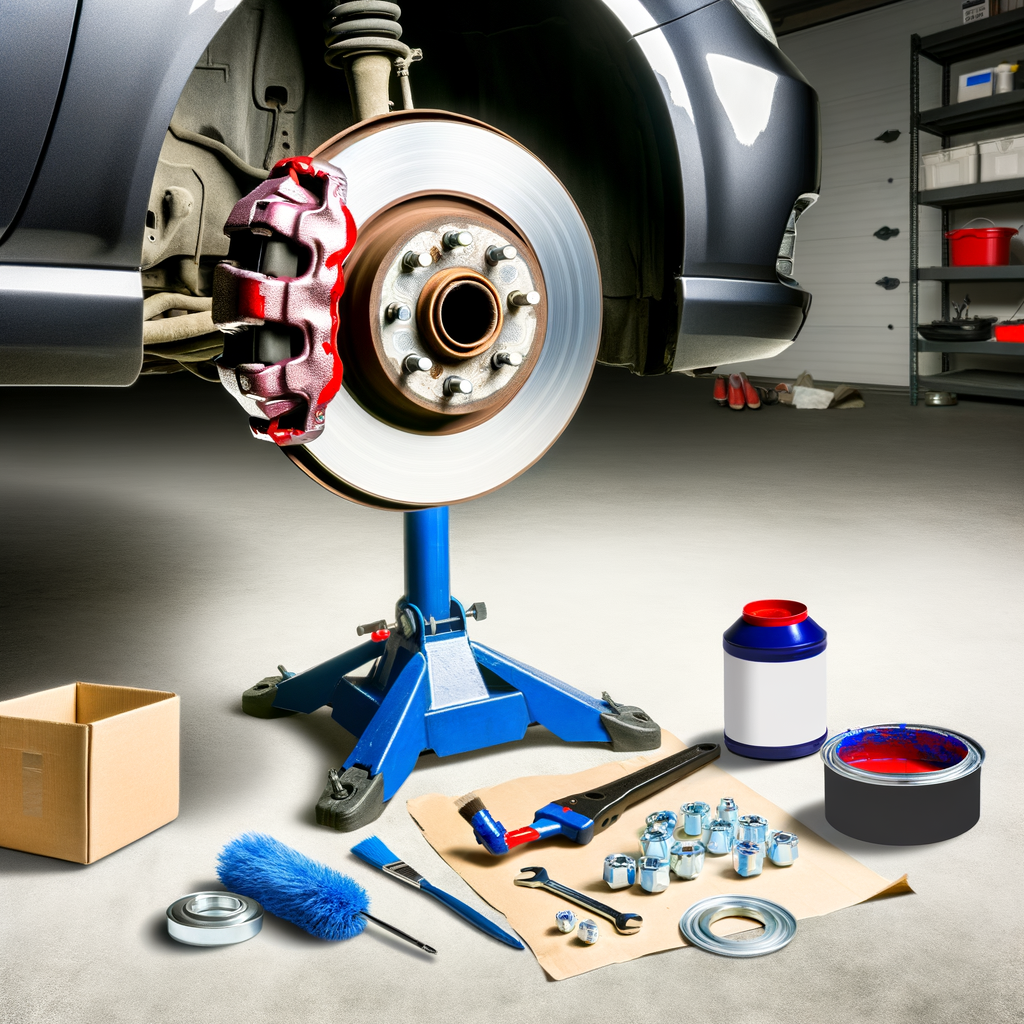
Painted brake calipers are a simple way to give your car a sporty look. You do not need to remove the calipers for a basic home job. You just need time, patience, and clean prep work. If you rush the cleaning part, the paint will peel fast.
Tools and items needed
- Brake caliper paint kit or high-temp caliper paint (brush-on is easiest for beginners)
- Brake cleaner spray
- Wire brush and a small nylon brush
- Sandpaper: 120 to 220 grit, plus 400 grit (optional for smoothing)
- Masking tape (painter’s tape) and plastic bags or plastic sheeting
- Jack and jack stands (or ramps if you have good access)
- Wheel chocks
- Lug wrench or impact (if you have one)
- Nitrile gloves, safety glasses, and a dust mask
- Clean rags or shop towels
- Small paint brush (if your kit does not include one)
- Optional: High-temp clear coat made for calipers
Safety or legal notes
Work on a flat surface. Use wheel chocks. Support the car with jack stands. Never rely on a jack alone.
Brake dust is not something you want to breathe. Wear a mask and do not use compressed air to blow brake parts clean.
Do not paint any friction surface. That means: No paint on the rotor face, brake pads, or the inside pad tracks where pads slide. Paint in the wrong place can cause noise, uneven braking, or dragging.
Some areas have rules about modifying brake components for road use. This is usually fine for looks, but you are responsible for doing it safely.
Numbered installation steps
1) Let everything cool down
Paint does not like hot metal. If you just drove the car, wait at least an hour. The calipers and rotors should feel cool to the touch.
2) Loosen lug nuts and lift the car
Break the lug nuts loose before lifting. Then jack up the car and place it securely on jack stands. Chock the wheels that stay on the ground.
Remove the wheel and set it aside.
3) Do a quick inspection first
Look for brake fluid leaks, torn dust boots, or a sticking caliper. Painting is not a fix. If you see wet fluid or heavy damage, stop and repair first.
4) Clean the caliper like you mean it
This is the most important part.
- Spray the caliper with brake cleaner.
- Scrub the outside with a wire brush for rust and heavy grime.
- Use a nylon brush for tighter spots and around rubber boots.
- Wipe everything dry with a clean rag.
Repeat until the rag stops turning dark. If you cannot get it clean, the paint will not stick well.
5) Scuff the surface
Use 120 to 220 grit sandpaper to scuff the metal. You are not trying to remove all the old finish. You just want a dull, scratched surface so the paint can grip.
Stay away from rubber seals and boots. If you sand them, they can tear.
After sanding, spray brake cleaner again and wipe the caliper dry.
6) Mask off the “no paint” zones
Take your time here. Good masking makes the final look clean.
- Mask the rotor, especially the face.
- Mask the brake line fitting area and bleeder screw opening. You can paint the bleeder screw head lightly, but do not clog it.
- Mask rubber boots, slide pin boots, and any exposed rubber parts.
- Cover the suspension and fender liner behind the caliper with plastic.
If you want a simple visual upgrade at the same time, clean and refresh your wheels too. It also helps to know how to choose car tires because wider sidewalls and open spoke designs can change how much the calipers show.
7) Mix the paint (if needed) and do a test stroke
Some kits use a two-part paint that must be mixed. Follow the label for mixing and working time. Then do a quick test stroke on cardboard to see how thick it paints.
8) Apply the first coat
Brush-on paint is beginner friendly. Use thin coats. A thick coat looks good at first, but it can run and trap solvents.
- Start on hard-to-reach areas first.
- Finish on the outer face where it is most visible.
- Keep your brush strokes smooth and in one direction when possible.
9) Add more coats
Most caliper paints need 2 to 4 coats. Follow the dry time on the can or kit. If you recoat too soon, you can drag tacky paint and get bumps. If you wait too long, the next coat may not bond as well.
10) Optional: Add decals and clear coat
If you use caliper decals, apply them after the base color is dry to the touch but before full cure, unless the decal instructions say otherwise.
A high-temp clear coat can make cleaning easier later. If you add clear, use light coats so it does not run.
11) Let the paint cure
Most caliper paint gets harder over time. Dry is not the same as cured. If you can, let the car sit overnight before driving.
Some paints “heat cure” with gentle driving and light braking. Do not do hard stops right away. Let the brakes warm up slowly for the first drive.
12) Reinstall the wheel and torque lug nuts
Remove masking carefully. Put the wheel back on. Hand-thread the lug nuts first. Lower the car, then torque the lugs to your car’s spec.
When you are finished, take a moment to check the overall look. If you are building a clean style theme, OEM+ style explained is a good mindset for choosing colors that do not look overdone.
Common mistakes
- Skipping deep cleaning: Paint sticks to clean metal, not brake dust and oily grime.
- Painting moving or friction areas: Do not paint pad slides, pad faces, or rotor surfaces.
- Using thick coats: Thick paint runs and can bubble when it heats up.
- Not masking rubber parts: Paint can harden rubber boots and make them crack sooner.
- Driving too soon: Soft paint chips easily when gravel hits it or when you wash wheels.
- Picking the wrong color for your wheels: Bright colors can look great, but only if they match your wheel and body style.
Maintenance tips
Painted calipers are easy to keep looking good if you clean them the right way.
- Wait at least a week before using strong wheel cleaners.
- Wash with mild car soap and water. Use a soft brush.
- Do not blast the calipers with a pressure washer from one inch away. Keep some distance.
- Touch up chips early. Small chips spread when moisture gets under the paint.
If you like small DIY upgrades that make your car feel more “finished,” Performance vs style mods can help you pick projects that match your goal.
Is it worth it?
For most beginners, yes. Caliper painting is low cost and high impact. It can make basic wheels look more sporty. It also teaches good habits like cleaning, masking, and taking your time.
It is not worth it if your calipers are leaking, sticking, or heavily rusted. Fix the brakes first. It is also not worth it if you want a perfect show finish, because brush-on painting with the calipers on the car will always have some limits.
If you are building your first mod path, start simple and stack small wins. A helpful overview is this Car modding roadmap guide.
Conclusion
DIY brake caliper painting at home is a beginner-friendly way to add a sporty look. Focus on cleaning, light sanding, careful masking, and thin coats. Let the paint cure before hard driving. Done right, it looks great and stays looking good for a long time.


