




This post may contain affiliate links. Please read our disclosure and privacy policy for more information.
A fuel smell inside the car right after filling up is common, but it should never be ignored. Sometimes it is something simple, like a cap not sealing. Other times it points to a fuel vapor leak that can become a fire risk. The good news is you can do a few safe checks right away and know when it is time to stop driving and get help.
What This Problem Feels Like
You usually notice it within minutes of leaving the gas station. The smell can be strongest at a stoplight, in a parking lot, or when you first get back into the car after a short stop.
Common patterns drivers report:
- Strong raw gas smell in the cabin, often near the rear seats or cargo area
- Smell is worse with windows up and the fan on low
- Smell fades after a few miles, then comes back at the next fill-up
- Sometimes a faint smell outside the car near the fuel door
Some cars will also turn on the check engine light if the fuel vapor system detects a leak. If that happens, it often ties in with check engine light common causes, but the smell itself is still the main warning sign to take seriously.
Is It Safe to Drive?
Sometimes it is safe for a short drive home, but only if the smell is mild and goes away quickly. A strong fuel smell means fuel vapor is getting where it should not be, and vapors can ignite.
Do not drive and do not start the engine if:
- The smell is very strong and does not fade after a few minutes
- You see wet spots or dripping under the car near the fuel tank area
- You smell fuel while the car is parked and turned off
- You feel lightheaded or get a headache inside the cabin
If you must move the car a short distance for safety, open the windows, turn off the HVAC fan, and avoid parking near heat sources. Then have the issue checked as soon as possible.
Common Causes
These are the most common reasons you smell fuel inside the car after filling up, listed from more common to less common.
Loose, damaged, or missing gas cap seal
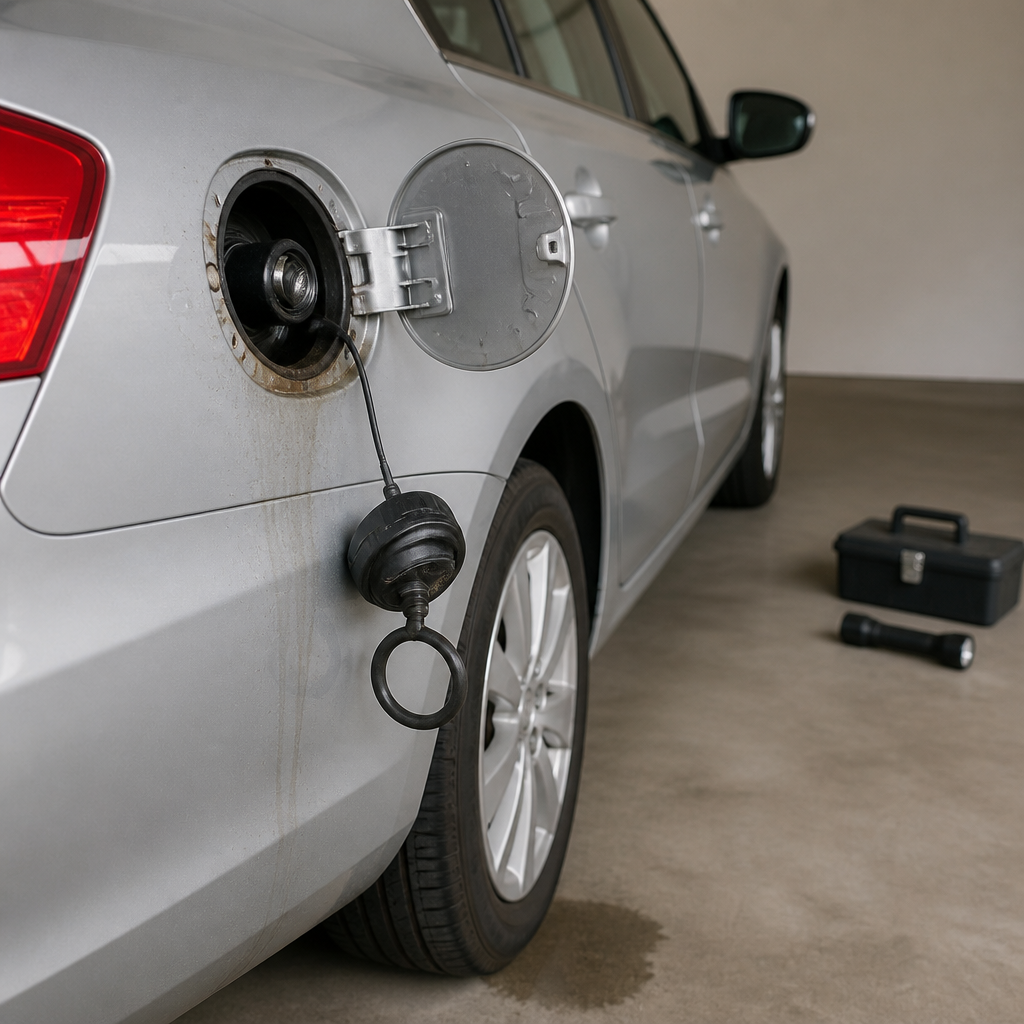
This is the first thing to suspect. A cap that is not tight, a cracked cap, or a flattened rubber seal can let fuel vapors escape. Those vapors can get pulled into the cabin through body vents, especially when driving.
Many drivers run into this without realizing it. It is also one of the most common triggers for an EVAP leak code, which often comes up with a Loose gas cap issue.
Overfilling the tank (topping off after the pump clicks)
If you keep squeezing the handle after the pump shuts off, liquid fuel can enter parts of the vapor control system that are meant to handle vapor only. That can cause a fuel smell right after filling up, and it can also damage EVAP components over time.
Why it shows up after filling: The system is suddenly loaded with a lot of vapor and possibly liquid fuel, so it vents more than normal until things settle down.
EVAP system leak near the fuel tank or filler neck
Your car has hoses and seals that route fuel vapors from the tank to a charcoal canister, then into the engine to burn later. If a hose is split, a clamp is loose, or a seal is failing near the tank, vapors can escape strongly right after a fill-up because the tank and lines are saturated with fresh vapor pressure.
This type of leak often smells strongest near the rear of the car. It can come and go depending on temperature and how full the tank is.
Cracked or rusted filler neck (or a bad connection at the filler neck)
The filler neck is the pipe between the fuel door and the tank. In some vehicles it can rust, crack, or develop a poor seal where it meets the tank. When you fill up, fuel splashes inside that area. If there is a crack or a loose connection, fuel vapor, and sometimes fuel itself, can escape.
This is more common in older vehicles and in places where road salt is used.
Fuel capless system sealing problem (capless filler)
Some cars have a capless filler with an internal flap and seal. If that seal is dirty, worn, or the flap does not close fully, vapor can leak after filling. Sometimes the smell is mild but noticeable inside the cabin at stops.
Charcoal canister saturated or damaged
The charcoal canister stores fuel vapors. Repeated topping off can soak it with liquid fuel and reduce its ability to hold vapors. A saturated canister can cause fuel odor after fill-ups because it cannot contain vapors like it should and may vent more.
Quick Checks You Can Do at Home
These checks are safe and do not require tools. Do them outside, away from open flames, and do not smoke nearby.
- Check the gas cap: Remove it, look for cracks, and inspect the rubber seal. Put it back on and tighten until it clicks. If it never clicks or feels sloppy, the cap may not be sealing.
- Stop topping off: If you usually add extra fuel after the pump clicks, stop doing that. Use the first click as “full.” The smell may improve after a few normal fill-ups.
- Smell test around the fuel door: With the engine off, lightly sniff near the fuel door area. A strong odor there points toward the cap, capless seal, or filler neck area.
- Look under the rear of the car: Check for wetness or dark stains near the tank area. Do not crawl under a hot car, and do not touch wet spots if you suspect fuel.
- Note when the smell happens: Is it only when the tank is full? Only right after filling? Does it get worse in hot weather? These details help a technician find the leak faster.
If the check engine light is on, avoid clearing codes before service. The stored data can point directly to the leak area and shorten diagnosis time.
When This Becomes Serious
A fuel smell after filling up is already a warning sign, but these signs push it into “stop driving” territory:
- Fuel smell is strong enough that passengers complain quickly
- Odor is present even when the car has been parked for hours
- You see fuel dripping, a growing wet spot, or a rainbow sheen on water under the car
- The smell is strongest inside the cabin with the fan running, suggesting vapors are being pulled into the ventilation path
- You hear a hissing sound near the fuel tank area after filling (possible vapor leak)
Fuel vapor travels and can ignite from many sources, including hot exhaust parts and electrical sparks. If you suspect an active leak, park the car outside, away from buildings if possible, and have it towed.
How a Mechanic Fixes It
A shop will usually treat this as a fuel or EVAP vapor leak diagnosis. They will confirm the source before replacing parts.
Common professional steps (high level):
- Visual inspection: Check the gas cap, capless filler seal, filler neck, and EVAP hoses near the tank.
- EVAP leak testing: Use a smoke machine to fill the vapor system with smoke and watch where it escapes. This is one of the fastest ways to find small leaks.
- Seal and pressure checks: Test the cap sealing ability and inspect sealing surfaces.
- Component testing: If needed, test EVAP valves and the charcoal canister for proper flow and signs of fuel saturation.
Fixes typically involve replacing a faulty gas cap, repairing or replacing cracked hoses, resealing filler neck connections, replacing a damaged filler neck, or replacing a fuel-soaked charcoal canister. After repair, the shop re-tests for leaks and confirms the odor is gone.
Common Mistakes to Avoid
- Do not keep driving “to see if it goes away” when the smell is strong. Vapor leaks can turn into fire hazards.
- Do not top off the tank after the first click. This is a common cause of repeat fuel odors after fill-ups.
- Do not mask the smell with air fresheners. It can delay you from noticing the odor getting worse.
- Do not replace random parts first. EVAP issues can look similar, so testing saves time and avoids wasted money.
- Do not ignore a loose cap warning or EVAP-related check engine light. A small leak can become a bigger one.
Related Problems to Watch For
These are not separate diagnoses, but they can show up along with a fuel smell after filling:
- Check engine light from an EVAP leak: Often happens alongside a loose cap or a small vapor leak.
- Poor fuel mileage: A vapor leak can waste fuel through evaporation, especially in hot weather.
- Hard starting after fueling: Sometimes happens if liquid fuel gets into the EVAP system from topping off.
If the car runs poorly in a way that feels like ignition trouble, that is a different symptom with different causes. For example, spark plug failures explained is a separate issue and would not normally cause a raw fuel smell only after filling up.
Final Thoughts
If you smell fuel inside the car after filling up, start with the simple stuff: Tighten the cap, inspect its seal, and stop topping off. If the smell is strong, lasts more than a short drive, or you see any signs of a leak, do not keep driving. Park the car safely outdoors and have a shop test the EVAP and fuel system for leaks. Fuel odors are one of those problems where quick action matters for safety.


