




This post may contain affiliate links. Please read our disclosure and privacy policy for more information.
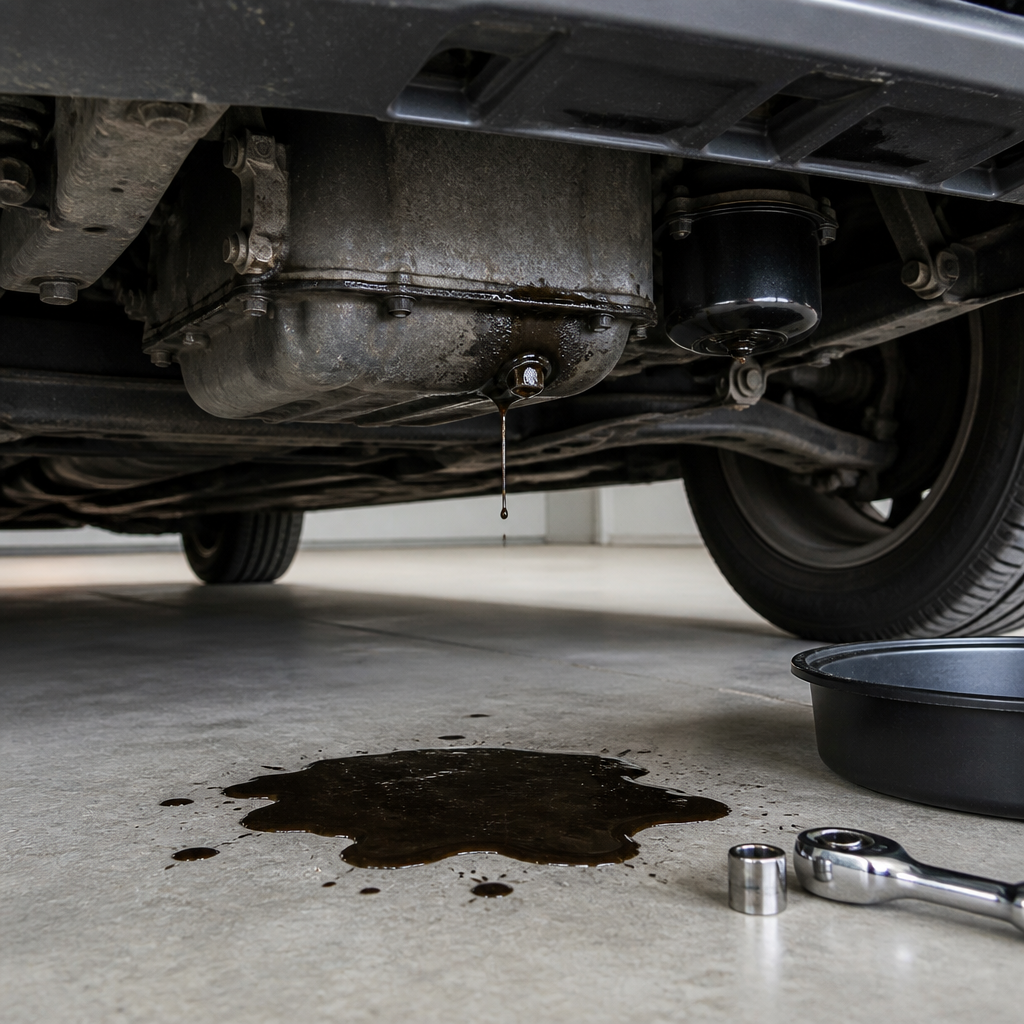
Seeing fresh oil under the car in the morning can be alarming. When it happens after the car sits overnight, it often means oil is slowly seeping out and dripping down while everything cools and contracts.
What This Problem Feels Like
The most common sign is a dark brown or black spot on the driveway or garage floor where the engine sits. The spot may be small at first, then slowly grows over a few days.
You might also notice a faint burnt-oil smell when you start the car, especially if oil is dripping onto a hot exhaust part. In some cases, there is light smoke from under the hood for a minute or two after startup.
Many drivers do not feel anything different while driving at first. The engine may sound normal and run fine. That is why puddles after parking overnight often catch people off guard.
If the leak gets worse, the oil level can drop between oil changes. If you have been topping off oil more than normal, it may point to a bigger oil loss problem like Oil loss between changes, but a puddle on the ground is usually an external leak.
Is It Safe to Drive?
It depends on how much oil is leaking and where it is landing. A slow seep that leaves a few drops overnight may not be an emergency today, but it still needs attention soon.
Do not drive the car if any of these are true:
- The oil light is on, or the low oil warning comes on.
- The dipstick shows the oil level at or below the low mark.
- You see a steady drip that quickly makes a puddle.
- There is heavy oil smoke or a strong burnt-oil smell that does not go away.
- Oil is clearly dripping on the exhaust or running down near the catalytic converter.
If the leak is small and the oil level is still in the safe range, you can usually drive a short distance to a repair shop. Still, check the oil level before every drive until it is fixed.
Common Causes
Oil leaks after the car sits overnight usually come from seals or gaskets that let oil seep out slowly. When the engine cools, parts contract and oil drains back into the pan. That change in pressure and oil level can make a weak seal leak more noticeably.
Valve cover gasket leak
This is one of the most common causes. The valve cover sits on top of the engine and seals in oil that lubricates the valvetrain. If the gasket gets hard and brittle with age, oil can seep out and run down the engine.
Because the oil starts high up, it can drip to a different spot than the real source. It may also land on the exhaust manifold or heat shields and smell like burning oil after startup.
Oil pan gasket or oil pan sealant leak
The oil pan is at the bottom of the engine, so leaks here often leave a clean puddle under the engine area. Road debris, a dented pan, or old gasket material can lead to seepage. Many modern engines use sealant instead of a traditional gasket, and that sealant can fail over time.
Oil filter or drain plug sealing issue
If the leak started right after an oil change, suspect the oil filter seal or drain plug. A double-gasketed oil filter, a loose filter, a damaged drain plug washer, or stripped threads can cause drips that show up most after the car sits.
This is one of the few causes that can turn into a fast leak quickly, so take it seriously if the timing matches a recent service.
Front or rear crankshaft seal leak
These seals keep oil inside where the crankshaft exits the engine. When they wear out, oil can leak from the front (behind the crank pulley) or the rear (between the engine and transmission).
Rear main seal leaks often drip near the transmission bell housing area, which can make the puddle look like it is coming from the middle of the car.
Oil cooler lines or oil filter housing leak (if equipped)
Some engines have an oil cooler, oil filter housing assembly, or oil lines that route oil through a cooler. The seals in these assemblies can leak and drip down. These leaks can be tricky because oil spreads across engine covers and brackets before it hits the ground.
Quick Checks You Can Do at Home
You can learn a lot without taking anything apart. Focus on confirming it is engine oil and getting a general idea of how serious the leak is.
Confirm the fluid is engine oil
- Color: Engine oil is usually brown to black. Fresh oil can look amber.
- Feel: It feels slick and oily between your fingers.
- Smell: It has an oily, slightly burnt smell compared to fuel or coolant.
If the fluid is red or has a sweet smell, it may be something else, but do not assume. Mixed road grime can change how fluids look.
Check the oil level on the dipstick
Check it with the engine off and the car on level ground. If the level is near the low mark or below it, do not drive until you add oil or have the car towed. Low oil can destroy an engine quickly.
Look at the pattern of the puddle
Put a piece of clean cardboard under the engine area overnight. In the morning, note where the drops land. This helps you show a mechanic the general location.
If you see multiple spots, oil may be running along an engine splash shield and dripping from different edges.
Use a flashlight to look for wet areas
With the engine cool, look down around the valve cover area and along the sides of the engine. Then look from underneath around the oil pan lip. You are looking for fresh wet oil, not just old grime.
Do not crawl under a car supported only by a jack. If you need a better view, use ramps or jack stands on solid ground, or leave it to a shop.
Think about recent work
If the leak appeared right after an oil change or recent engine work, tell the shop. A sealing issue at the filter or drain plug is common and can often be corrected quickly.
When This Becomes Serious
An overnight oil leak becomes urgent when it threatens oil pressure, creates a fire risk, or starts contaminating other parts.
- Fast oil loss: If you need to add oil frequently, the engine can run low without warning.
- Oil warning light: Treat this as a stop-now warning. Shut the engine off as soon as it is safe.
- Oil on the exhaust: This can create smoke and, in rare cases, a fire.
- Oil on rubber parts: Oil can swell and damage belts, hoses, and mounts over time.
- Oil dripping onto the ground in public areas: Besides the mess, it can be a hazard for motorcycles and pedestrians.
If the engine ever starts to tick loudly, knock, or sound dry after you notice leaks, do not keep driving. Those sounds can mean low oil pressure or low oil level.
How a Mechanic Fixes It
A professional fix starts with finding the true source. Oil travels, so a good shop will not guess based only on where the puddle is.
Common professional steps include:
- Cleaning the area: Degreasing the engine so fresh oil shows clearly.
- Tracing the leak: Checking from the top down to find the highest wet point. Some shops use UV dye to make the leak path easy to see.
- Confirming crankcase pressure: A clogged PCV system can raise pressure and push oil past seals, so they may test that if leaks keep returning.
- Replacing the failed gasket or seal: Valve cover gasket, oil pan reseal, filter housing seal, or crank seal depending on the source.
- Verifying the repair: Running the engine and rechecking for leaks, then confirming the oil level.
If the rear main seal is leaking, the repair is more involved because the transmission often must be moved to access it. A shop will confirm the source carefully before recommending that kind of work.
Common Mistakes to Avoid
- Ignoring the oil level: A small-looking puddle can still mean significant oil loss over time.
- Assuming the puddle location is the leak source: Oil can drip from a shield or frame rail far from the actual leak.
- Over-tightening the oil filter or drain plug: This can damage threads or crush sealing surfaces and make the leak worse.
- Using stop-leak products as a main fix: Some products can swell seals temporarily, but they can also cause other issues and make proper diagnosis harder.
- Waiting until the oil light comes on: That light may come on after oil pressure has already dropped to an unsafe level.
Related Problems to Watch For
These do not diagnose the leak by themselves, but they are good warning signs that the situation is getting worse:
- Burning oil smell after driving: Often happens when oil lands on hot exhaust parts.
- Smoke from under the hood: Light smoke at startup can happen with leaks high on the engine.
- Low oil level without obvious puddles: Oil can leak while driving and blow backward under the car. It can also be used internally by the engine. If you are losing oil without clear drips, Oil consumption causes and fixes may help you understand the difference.
- Warning lights: A low oil level can sometimes trigger other issues, and unrelated problems can show up at the same time. If the check engine light turns on, it helps to understand check engine light explained, but do not assume it is caused by the oil leak.
Final Thoughts
If you find engine oil leaking under the car after parking overnight, start with two things: Check the oil level and watch how fast the leak is happening. If the oil level is low, the oil light is on, or oil is smoking off the exhaust, stop driving and get the car towed.
If the leak is small and the oil level is still safe, place cardboard under the engine to track the drip, top off only if needed, and schedule a repair soon. Catching an oil leak early usually prevents bigger engine damage and keeps a simple gasket or seal from turning into a major cleanup.


