




This post may contain affiliate links. Please read our disclosure and privacy policy for more information.
Spark plugs look small, but they do a big job. When a spark plug fails, the engine may run rough, lose power, waste fuel, or not start at all. Many spark plug problems build up slowly, so the first signs are easy to miss. Knowing what causes failures helps you fix the real issue, not just the symptom.
What the concept is
A spark plug is a part that creates a tiny electric spark inside the engine. That spark lights the air and fuel mix in the cylinder. Each time the cylinder fires, the spark plug must fire at the right moment, with the right strength.
A “spark plug failure” means the plug cannot make a strong, clean spark. Sometimes the plug is worn out. Other times the plug is fine, but something around it causes it to foul, overheat, or stop firing.
Most modern engines use one spark plug per cylinder. Some engines use two plugs per cylinder. Spark plugs work with ignition coils, wires or boots, and the engine computer.
Why people do it
People usually pay attention to spark plugs for two reasons: Fixing problems and doing maintenance.
- Stop misfires and rough running: A weak spark can cause incomplete combustion. That feels like shaking, hesitation, or a “skip” at idle.
- Restore power and fuel economy: Worn or fouled plugs can make the engine feel lazy and use more fuel.
- Prevent bigger issues: Long-term misfires can damage the catalytic converter.
- Turn off warning lights: Many ignition problems trigger a check engine light, and spark plugs are a common starting point. If a warning light is on, it helps to understand check engine light common causes.
Things to know before starting
Before blaming the spark plugs, it helps to understand what “normal” looks like and what can mimic a plug failure.
Spark plugs are wear items
Even the best plugs wear down. The center and ground electrodes slowly erode. The gap gets bigger. A bigger gap needs more voltage to jump, which can stress coils and cause misfires under load.
Wrong plug choice can create problems
Engines need the correct plug type and “heat range.” A plug that runs too hot can cause pre-ignition or detonation. A plug that runs too cold can foul with carbon. Also, the wrong reach (thread length) can damage the engine or the plug.
Many “spark plug problems” are not the plug
A misfire can come from coils, plug wires, fuel injectors, vacuum leaks, low compression, or oil leaking into the plug tubes. The symptoms may feel the same. If the engine stumbles badly during acceleration, it can help to compare symptoms with Common causes of engine misfires.
Reading a spark plug is a useful skill
The tip of the plug tells a story. Dry black soot, wet oil, white blistering, or heavy deposits all point to different causes. Do not clean and re-use many modern plugs. If a plug is fouled, find the cause and replace the plug.
Step-by-step explanation
These steps explain the most common spark plug failure causes and how to narrow them down. You can do basic checks at home, but deeper engine problems may need a shop.
1. Confirm the symptoms
- Hard starting, long cranking, or no start
- Rough idle, shaking at stops, or stalling
- Hesitation, bucking, or misfire under load
- Poor fuel economy and fuel smell
If the engine dies at idle or while driving, ignition issues can be part of it. It also helps to understand other causes of stalling like engine shuts off at stops.
2. Check maintenance history and mileage
If plugs are past their service interval, wear is a top suspect. Some plugs last 30,000 miles, others can go 100,000 miles or more. Driving style, short trips, and engine condition can shorten life.
3. Pull one or two spark plugs and inspect them
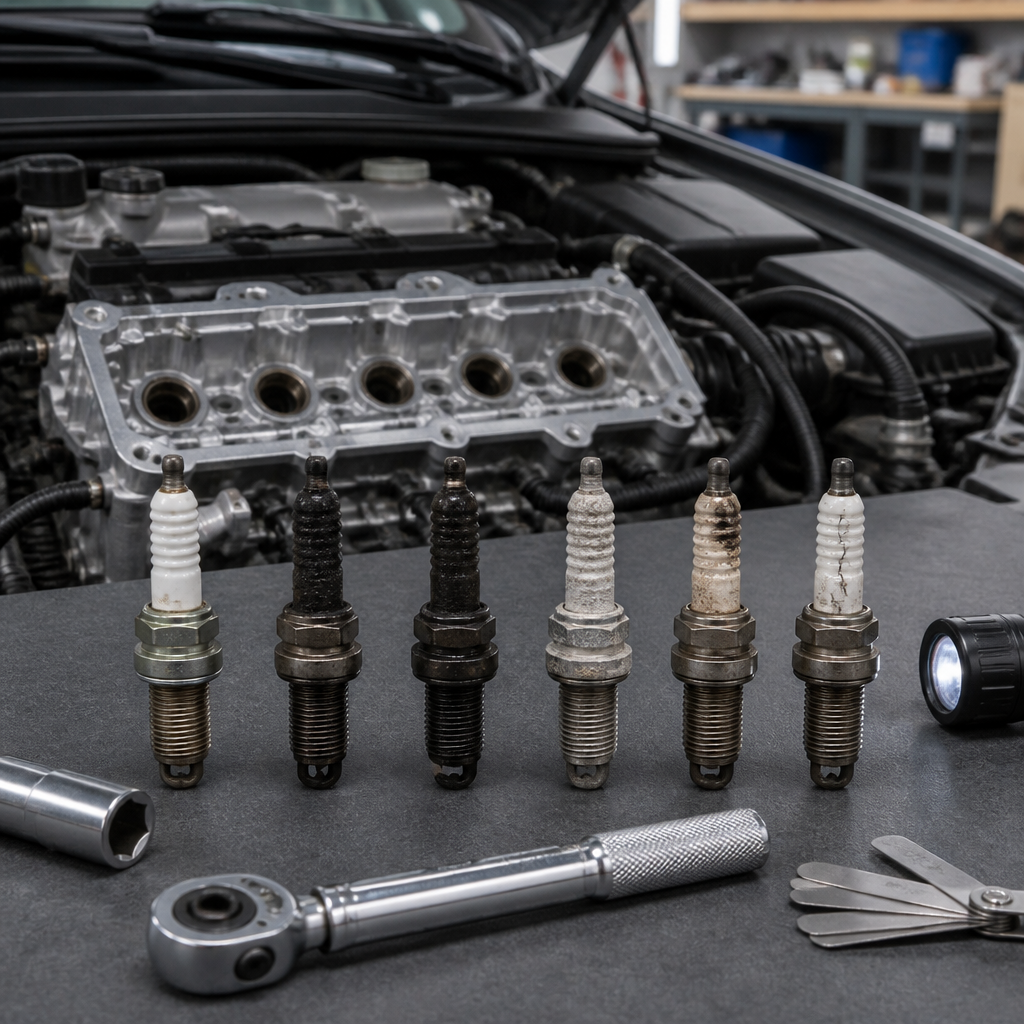
Remove a plug from an easy-to-reach cylinder. Look at the electrode, insulator tip, threads, and the plug gap. Compare cylinders if you can. Common plug “looks” and what they mean:
- Normal tan or light gray: Combustion looks healthy.
- Dry black soot: Rich fuel mix, weak spark, lots of idling, clogged air filter, or short trips.
- Wet fuel: No spark on that cylinder, often a bad coil or ignition control issue.
- Wet oil: Oil is entering the cylinder or plug well. Possible worn rings, valve seals, or PCV issues.
- White and blistered: Overheating, lean mix, wrong heat range, or cooling system problems.
- Heavy deposits (ashy, crusty): Oil burning, fuel additives, or coolant entering the chamber.
4. Match the failure to the root cause
Use the plug condition to focus on the real cause.
- Worn electrodes and large gap: Normal wear, overdue service, or high mileage.
- Repeated carbon fouling: Too rich, too much idling, weak ignition, or a plug that runs too cold.
- Oil fouling: Internal engine wear or oil control problems. If oil is going missing between services, compare signs with Oil loss between changes.
- Overheating damage: Cooling system problems, lean running, vacuum leak, wrong plug heat range, or over-advanced timing (on older engines).
- Physical damage: Dropped plug, wrong reach, debris in cylinder, or detonation breaking the insulator.
5. Check related ignition parts
A new set of plugs will not fix a bad coil or a damaged boot. Look for these common issues:
- Ignition coil failure: A weak coil may only misfire under load, like climbing a hill.
- Cracked boots or oil in plug wells: Oil can cause the spark to track to ground instead of jumping the gap.
- Loose electrical connectors: Intermittent misfires can come and go.
6. Install correctly if you replace them
Correct installation prevents future failures.
- Use the exact plug specification for your engine.
- Check the gap only if the plug type allows it. Many iridium and platinum plugs should not be re-gapped aggressively.
- Thread the plug in by hand first to avoid cross-threading.
- Tighten to the correct torque. Too loose can leak compression. Too tight can strip threads or crack the plug.
- Reinstall coils or wires fully seated to avoid moisture and arcing.
Common mistakes to avoid
- Replacing plugs without finding the cause of fouling: If oil or coolant is the real problem, new plugs will foul again.
- Using the wrong heat range: This can create repeated fouling or overheating.
- Over-tightening spark plugs: This can damage cylinder head threads, especially on aluminum heads.
- Under-tightening spark plugs: This can cause misfires, a ticking noise, or a blown-out plug in severe cases.
- Mixing plug types across cylinders: Different plugs can change how each cylinder burns fuel and can confuse diagnostics.
- Ignoring coil boots and plug wells: Oil or water in the wells can cause misfires even with new plugs.
- Chasing performance from “hotter” plugs: Heat range is not a power upgrade. It is a match to engine design and operating heat.
Safety and legal considerations
Working around the ignition system is generally safe, but a few basics matter.
- Let the engine cool: Spark plugs sit in hot metal. Removing them hot can damage threads and burn you.
- Disconnect the battery if needed: If you are unplugging coils and working near wiring, it reduces the chance of short circuits.
- Keep dirt out of the cylinders: Blow out debris around the plug hole before removal.
- Emission rules: Misfires can raise emissions and damage the catalytic converter. If the check engine light is flashing, avoid driving and fix the cause quickly.
Final practical advice
When spark plugs fail, treat them like evidence. A worn plug points to normal service needs. A fouled or damaged plug points to a problem that needs attention. Start with simple checks: Mileage, plug condition, and related ignition parts.
If you find oil on the plug, also look for oil leaks around the valve cover and plug tubes, and keep an eye on oil level. If you find white blistering, do not keep driving hard. Check for overheating and lean running causes first.
For beginners, the best approach is to replace plugs at the correct interval, use the correct specification, and inspect one old plug before you replace the whole set. That one plug can save hours of guesswork.


