




This post may contain affiliate links. Please read our disclosure and privacy policy for more information.
Lexus did not start as a small luxury experiment. It started as a corporate decision by Toyota to solve a large problem: How to compete with the world’s best luxury cars in their most important market, the United States, without the baggage of Toyota’s economy-car image. What followed became one of the most carefully planned brand launches in modern automotive history, and it reshaped what many buyers expected from a premium car.
The Origins
By the early 1980s, Toyota had already proven it could build reliable, efficient cars at massive scale. It had also learned that “reliable” and “affordable” did not automatically translate into “prestigious.” In the U.S., the luxury market was dominated by Mercedes-Benz and BMW, with Cadillac and Lincoln holding strong home-field positions. Japanese brands were rising, but mainly as smart transportation.
Toyota’s leadership saw an opening. American buyers were becoming more willing to consider Japanese engineering, and fuel economy concerns from the 1970s still shaped shopping habits. At the same time, luxury customers wanted quiet cabins, strong highway performance, and a dealership experience that felt premium. Toyota could do the engineering part. The harder question was image.
In 1983, Toyota chairman Eiji Toyoda approved a top-secret effort often referred to as the “F1” project, short for “Flagship One.” The objective was not a sports car. It was a world-class luxury sedan that could match or beat the established leaders in refinement, performance, and build quality. Just as important, it needed to be profitable at a price Americans would accept.
Early Development
The F1 program became a huge internal test of what Toyota could do when cost and time were not the main limits. Large teams worked on aerodynamics, noise and vibration control, engine smoothness, and long-term durability. Toyota also studied the American market closely, including customer expectations around features and ownership experience.
This development phase mattered because Toyota was not merely copying European formulas. It was looking for a different value equation: Lexus would offer the calm and precision associated with German sedans, but with fewer ownership headaches and a friendlier buying process. That combination would become the brand’s signature.
Technology enabled the strategy. Computer-aided design and more advanced manufacturing control helped Toyota chase tighter tolerances. Supplier quality systems were pushed harder. The company treated small improvements in panel fit, switch feel, and cabin silence as major engineering targets, not “nice-to-haves.”
The First Generation
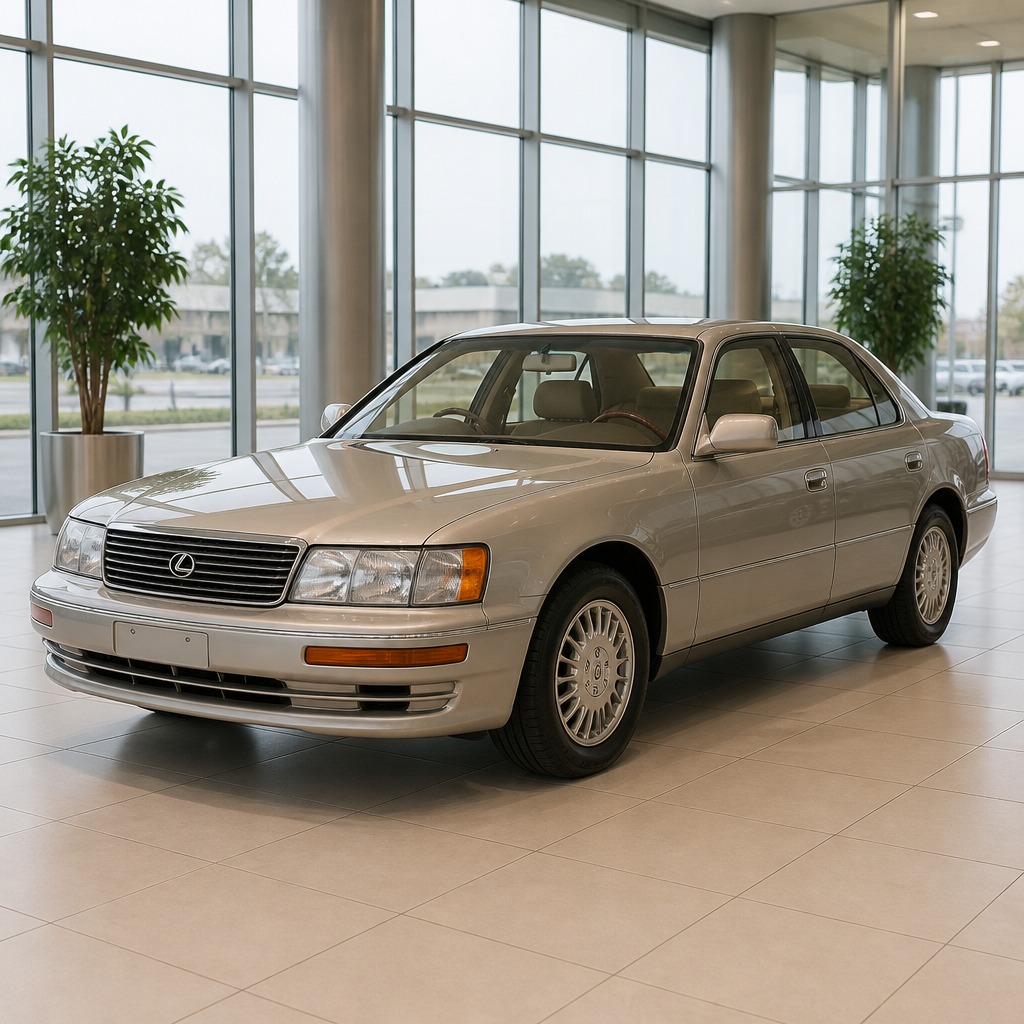
Lexus launched in the U.S. in 1989 with two cars: The LS 400 and the ES 250. The LS 400 was the flagship and the real statement. It used a new 4.0-liter V8 (the 1UZ-FE) and emphasized quietness, smooth high-speed cruising, and a carefully controlled ride. The ES 250, based on a Toyota platform, gave dealers a second, more affordable entry point, even if it was not as distinctive as the LS.
The market conditions were favorable. Many luxury buyers wanted modern quality and technology, but were also frustrated by high operating costs and inconsistent service experiences at some established brands. Lexus built its dealer network around customer treatment, fast problem resolution, and a consistent showroom experience. That approach was not an accident: Toyota understood that a luxury brand lives or dies by how it treats people after the sale.
Consumer response to the LS 400 was immediate. Reviews focused on refinement and value, and early owners often talked about how “normal” it felt to live with compared with traditional luxury cars. Competitors noticed. Mercedes-Benz and BMW did not lose their core identity overnight, but the idea that Japanese brands could play at the top was no longer theoretical.
The first big test came quickly. In late 1989 and 1990, Lexus faced a recall related to LS 400 cruise control and brake light wiring concerns. The recall itself was not unique in the industry. The response was. Lexus dealers and corporate staff were known for picking up cars from customers, providing loaners, and returning vehicles quickly. That helped define Lexus as a service-first brand, and it built trust when the name was still new.
Major Turning Points
Expanding the lineup in the 1990s
After establishing the LS, Lexus had to become more than a one-hit wonder. The 1990s brought steady expansion. The SC coupe arrived for 1992, adding style and performance without abandoning refinement. The second-generation ES (also for 1992) moved Lexus closer to a standalone identity, even though the basic architecture still traced back to Toyota roots.
In 1993, Lexus introduced the GS, developed with significant input from Toyota’s collaboration with Italdesign and Giorgetto Giugiaro on the earlier Aristo. The GS gave Lexus a more overtly sporty sedan to sit below the LS but above the ES. This was a response to a clear competitive pressure: Buyers who liked the LS’s quality sometimes still wanted sharper steering and a more European driving feel.
Then came one of Lexus’s most influential vehicles: The LX 450 in 1996, based on the Toyota Land Cruiser. The timing was important. American families were migrating from sedans to SUVs, and many wanted high seating positions and all-weather capability without giving up luxury features. Lexus treated SUVs not as a side project, but as a premium category that could define the brand’s future.
In 1998, the RX 300 arrived. It did not look like a truck-based SUV, and it did not drive like one either. The RX effectively helped create the modern “luxury crossover” template: Tall, comfortable, easy to drive, and more car-like. The long-term impact was huge. Luxury crossovers would become the center of gravity for premium brands, and Lexus was early and successful.
Performance credibility and the late 1990s shift
Through much of the 1990s, Lexus was respected for quiet competence, but not always for passion. The brand responded with more powerful variants and sportier tuning, including V8-powered GS models and later performance-focused trims. Lexus did not try to become a BMW clone. Instead, it aimed for effortless speed and smoothness, reflecting what its buyers were actually asking for.
Technology Evolution
Lexus’s technology story is less about being first to every gadget and more about making complex systems feel seamless. In the early years, this meant obsessive work on NVH control, engine smoothness, and automatic transmission calibration. The company understood that in a luxury car, a “good” powertrain can still feel wrong if shifts are abrupt or if driveline vibrations show up at the steering wheel.
One of the biggest technology turning points came with hybrids. In 2005, Lexus introduced the RX 400h, one of the first hybrid luxury SUVs. This was not just an efficiency move. It addressed a luxury problem: Hybrids could deliver quick, quiet low-speed response, making city driving smoother. Market conditions mattered here too. Fuel prices and emissions concerns were rising, and premium buyers increasingly wanted “responsible” technology without sacrificing comfort.
Over time, Lexus expanded hybrid availability across sedans and SUVs, making electrification a defining part of the lineup. Competitors responded in different ways. European brands leaned heavily into diesel in the 2000s, then pivoted toward hybrids and EVs later. Lexus’s early hybrid focus gave it a long runway to refine battery packaging, control software, and real-world reliability.
As cars became more software-driven, Lexus also had to keep pace with infotainment and driver assistance. The challenge was that luxury buyers expected technology to reduce stress, not add it. Lexus improved safety systems and introduced newer interfaces over time, though the brand also faced criticism in some years for infotainment controls that were less intuitive than rivals. That feedback loop mattered, because it showed how luxury expectations were shifting from mechanical excellence to digital experience.
Design Evolution
Early Lexus design was deliberately conservative. That was a strategic choice. In the late 1980s and early 1990s, Toyota needed buyers to focus on the product’s quality, not question the styling. A clean, understated look supported the message: This was engineered to be quietly excellent.
As Lexus became established, it took more design risks. By the 2000s and especially the 2010s, Lexus styling became sharper and more distinctive, led by the “spindle grille” family face. This shift happened for a reason. In a crowded luxury market, quiet competence was no longer enough to stand out in a parking lot. Buyers increasingly wanted a car that looked expensive and modern at a glance.
Consumer reactions were mixed, and that was expected. Bold design often splits opinion. But the long-term goal was clear: Lexus wanted instant recognition, the kind of brand identity European rivals had built over decades.
Challenges and Competition
Lexus entered a segment where trust is earned slowly. German brands had deep histories, strong resale values, and performance credibility. American luxury brands had local pride and large dealer networks. Lexus’s solution was consistency: Consistent build quality, consistent ownership experience, and consistent value.
That strategy also created a challenge. When a brand becomes known for being smooth and reliable, some enthusiasts assume it is not exciting. Lexus had to balance comfort with sharper driving dynamics, especially as BMW and Mercedes expanded their sport-oriented offerings and as Audi gained traction with all-wheel drive and modern interiors.
Another challenge was global identity. Lexus was created largely for the U.S., but it eventually became a global brand. Different markets value different things. American buyers leaned into SUVs and quiet power, while some European buyers focused more on handling precision and brand heritage. Lexus’s gradual move toward more aggressive styling and performance sub-brands was partly an answer to that global variety of expectations.
Consumer Reception
From the beginning, Lexus earned a reputation for high customer satisfaction. That did not happen just because the cars rarely broke. It happened because Lexus treated service as part of the product. A luxury buyer paying premium money expects problems to be handled with minimal hassle. Lexus built processes around that idea, from dealer training to warranty handling.
In the used market, Lexus also gained a special kind of respect. Many owners discovered that a well-kept Lexus could feel “new” for a long time. That boosted resale values and made leasing attractive, which in turn helped Lexus maintain sales volume and dealer stability.
Owners’ attention to long-term durability also changed what shoppers expected from luxury cars. Today, it is normal for buyers to demand premium materials and advanced features while still expecting daily-driver reliability. Lexus helped make that expectation mainstream.
That focus on longevity is one reason maintenance culture around premium cars has evolved. More people keep vehicles longer, track repairs more closely, and sometimes take on basic work themselves. Broader shifts in ownership behavior show up in resources like Americans’ car maintenance trends, even if luxury owners still tend to rely heavily on dealer service.
Cultural Impact
Lexus changed the cultural meaning of Japanese cars in the U.S. Before Lexus, Japan was associated mainly with efficiency and practicality. After Lexus, Japan was also associated with precision luxury. That had a ripple effect. Acura and Infiniti gained more credibility by association, even though all three brands took different paths.
Lexus also popularized a specific kind of luxury: Calm, quiet, and stress-reducing. For many buyers, that mattered more than traditional “status” signals. The idea of “owning a luxury car that does not ask much of you” became a legitimate selling point across the industry.
As customization culture grew, Lexus models appeared in different scenes, from VIP-style builds to sport sedan communities. Not every Lexus was bought to be modified, but the brand’s solid engineering foundation made it a common platform for owners who wanted to personalize a refined car rather than start with something rough. That wider trend intersects with broader DIY vs pro customization costs decisions that many modern owners weigh.
Influence on the Industry
Lexus forced competitors to pay closer attention to quality control and the ownership experience. Better dealership facilities, longer warranties, and stronger customer-care programs did not appear only because of Lexus, but Lexus accelerated the pressure to improve.
The brand also helped reshape the luxury vehicle mix. When the RX proved that many customers wanted a premium vehicle that was easy to drive and easy to live with, competitors followed with their own crossovers. Over time, this trend changed product planning across the entire industry. Luxury brands that once depended on sedans and coupes shifted investment toward SUVs and crossovers, partly because that is where buyer demand moved.
On the powertrain side, Lexus hybrids showed that electrification could fit luxury. The hybrid system did not just save fuel. It made the driving experience smoother in common situations like stop-and-go traffic. That “refinement benefit” argument helped electrified powertrains gain acceptance in premium segments before EVs became mainstream.
Modern Evolution
In the 2010s and 2020s, Lexus faced a new set of problems. Luxury buyers wanted advanced safety tech, better connectivity, and more distinctive design. Regulations pushed higher efficiency and lower emissions. Meanwhile, Tesla changed consumer expectations around electrification and software, and German brands expanded EV lineups quickly.
Lexus responded with broader hybrid availability, new platforms, and more performance-oriented variants, including “F” and “F Sport” models that emphasized stronger brakes, firmer suspension tuning, and more aggressive styling. The challenge was to add excitement without losing what made Lexus successful: Low noise, smooth drivetrains, and long-term dependability.
Electrification became more visible, including battery-electric models and renewed focus on next-generation powertrains. The transition has not been simple for any legacy automaker. Toyota and Lexus have historically been cautious, preferring proven systems and long durability cycles. That can look slow next to newer EV-only companies, but it also reflects the brand’s identity: New technology has to feel finished before it becomes the face of the lineup.
Even in the era of software and screens, Lexus’s original promise still shapes the product. A luxury car is not only about speed or features. It is about how little stress the car adds to your day. When modern owners evaluate vehicle feel and safety, they also pay attention to fundamentals like braking performance and confidence, ideas that connect with a Pads vs rotors comparison mentality even if most Lexus buyers never modify their cars.
Legacy and Lasting Influence
Lexus remains important because it proved a new luxury formula could work at global scale. It showed that premium buyers would switch brands for better quality, better service, and a calmer ownership experience. That lesson still shapes how luxury brands compete today.
It also showed how carefully a brand can be created. Lexus was not built from decades of racing history or old-money prestige. It was built by identifying what luxury customers disliked about their current choices and then engineering the irritations out of the experience.
Today, the luxury market is full of advanced powertrains, complex electronics, and fast-changing consumer taste. Through all that change, Lexus’s core idea has stayed surprisingly consistent: Make the car easy to live with, make it feel solid for years, and treat the customer relationship as part of the machine. That is how Toyota turned a new name into a global luxury icon, and why the Lexus story still matters in the modern car industry.


