




This post may contain affiliate links. Please read our disclosure and privacy policy for more information.
- The Origins
- Early Development
- From Big Power to Muscle Identity (1960s)
- Major Turning Points: 1970s Reality Check
- The Front-Wheel-Drive Era and a Different Kind of Performance (1980s)
- Technology Evolution: From Carburetors to Computers
- Modern Muscle Returns: Viper, Hemi, and SRT (1990s to 2000s)
- Challenges and Competition in the 2000s
- Consumer Reception: Why Dodge Stayed Visible
- The Hellcat Era and the Redefinition of Factory Power (2015 to early 2020s)
- Motorsport Influence
- Cultural Impact
- Modern Evolution: Toward Electrification and New Definitions of Performance
- Legacy and Lasting Influence
Dodge’s story is often told through loud engines and bold badges, but its real evolution is about adaptation. Over more than a century, Dodge moved from building sturdy mechanical parts to shaping American performance culture, then surviving emissions laws, fuel shocks, corporate reshuffles, and changing buyer tastes. What stayed consistent was a simple idea: Dodge should feel strong, direct, and a little rebellious, even as the definition of “performance” kept changing.
The Origins
Brothers John and Horace Dodge were skilled machinists in Detroit in the late 1890s. Before the Dodge brand existed, their reputation was built on precision manufacturing. They supplied parts to early automakers, most famously Ford, helping solve one of the biggest problems of the young car industry: How to make components reliable and repeatable at scale.
That supplier role mattered. It taught the Dodges the value of production efficiency and durability, and it put them close to the fast-moving technical debates of the era. By 1914, they were ready to build complete cars under their own name. Dodge positioned itself above the cheapest transportation and focused on robust engineering, a choice that attracted buyers who wanted a car that could handle rough roads and inconsistent maintenance.
Early Development
Dodge grew quickly in the 1910s and 1920s, but the company’s direction changed after the deaths of both brothers in 1920. The brand went through ownership changes before becoming part of Chrysler Corporation in 1928. For Chrysler, Dodge filled a strategic slot: It could offer more mainstream affordability than Chrysler’s premium models while still feeling more substantial than the lowest-cost options.
Through the 1930s and 1940s, Dodge balanced passenger cars with a growing identity in trucks. World War II production emphasized industrial discipline and mechanical simplicity, and many postwar buyers valued those same traits in civilian vehicles. In the 1950s, rising prosperity pushed American brands toward bigger engines and flashier styling, and Dodge leaned in with V8 power and dramatic design themes that helped set the stage for its muscle-era image.
From Big Power to Muscle Identity (1960s)
By the early 1960s, the market had changed again. Younger buyers wanted speed that felt attainable. Insurance and fuel were still relatively cheap, and Detroit’s internal competition rewarded big horsepower numbers. Dodge responded with performance options across its lineup, not just in halo models.
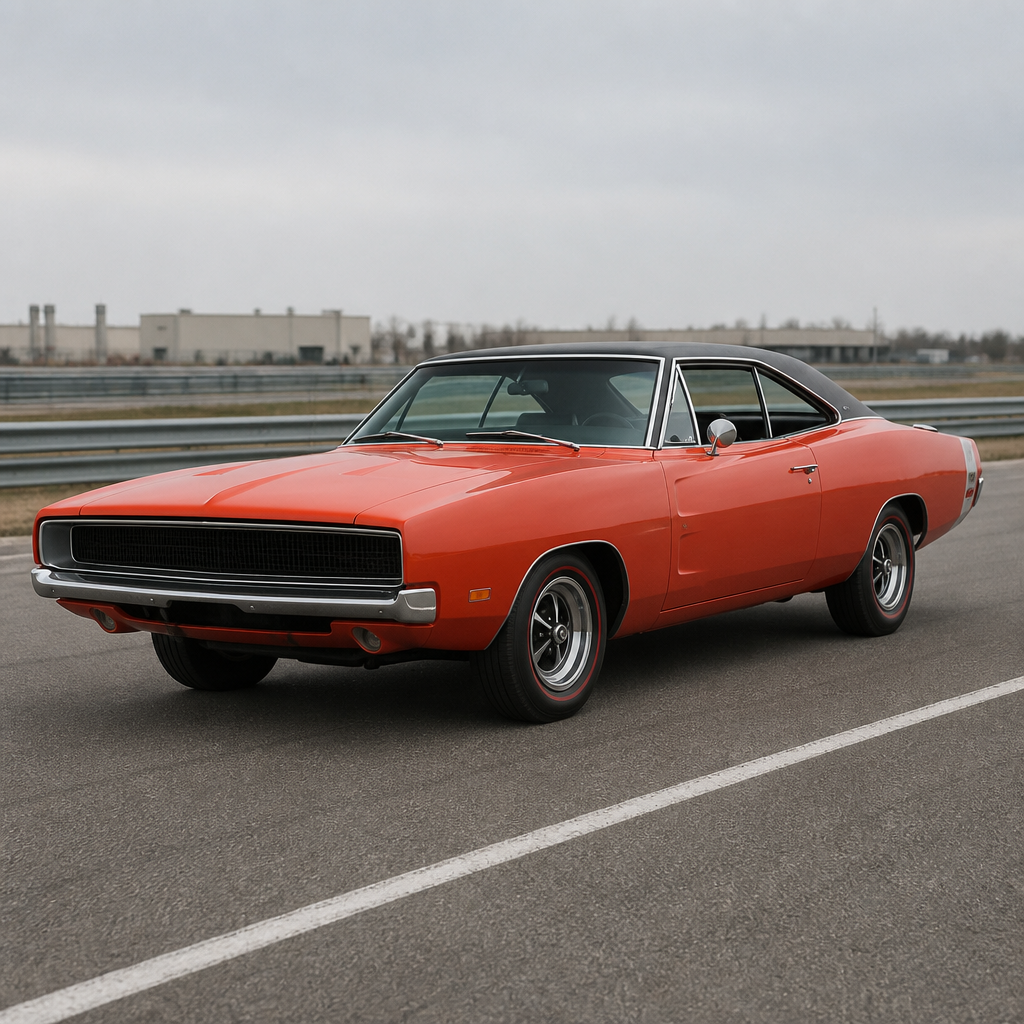
The 1966 Charger arrived as a fastback-styled intermediate built to sell the idea of personal performance. It was less about racing regulations and more about image and presence, and it showed how Dodge could use design to make a car feel quicker than its spec sheet. Then came one of Dodge’s most influential moves: The 1968 Dart-based Super Stock packages and the broader expansion of 440 and 426 Hemi availability into more models. These engines were expensive and often overkill for commuting, but they proved a point in a horsepower-driven era.
The late 1960s also brought more formalized street and strip competition. Dodge’s presence in drag racing and stock car culture did not just sell cars. It created a feedback loop where durable drivetrains, stronger rear axles, and better cooling were not “nice to have,” they were credibility.
Major Turning Points: 1970s Reality Check
The early 1970s hit every performance brand with a stack of problems at once. Emissions rules tightened, fuel quality changed, and insurance companies started pricing high-horsepower cars like high-risk behavior. Then the 1973 oil crisis made fuel economy a household concern overnight. Dodge, like its rivals, had to rebuild performance around constraints instead of abundance.
This is where many muscle car myths begin: The idea that performance “died” completely. In reality, it was forced to evolve. Compression ratios dropped, cam profiles softened, and power ratings changed as the industry moved from gross to net horsepower measurements. Consumers noticed. Some stayed loyal for styling and brand identity, but many shifted to smaller cars or imported alternatives that felt modern and efficient.
Dodge’s long-term challenge in the 1970s was not only engineering. It was also trust. When buyers experienced big-name V8 badges attached to slower cars, skepticism grew. Competitors faced the same issue, but for Dodge, whose identity leaned on strength, the hit was sharper.
The Front-Wheel-Drive Era and a Different Kind of Performance (1980s)
Chrysler’s financial crisis in the late 1970s reshaped Dodge in the 1980s. Survival demanded efficiency, tighter packaging, and faster product cycles. Front-wheel drive and platform sharing became core strategies, solving cost and fuel economy problems while meeting stricter emissions standards.
Dodge still searched for performance, just in a new format. The 1984-1986 Omni GLH and GLH-S, tied closely to Carroll Shelby’s involvement, showed how turbocharging and suspension tuning could make a small car feel responsibly fast. Turbo engines, intercooling, and electronic controls helped Dodge deliver usable torque without relying on large displacement. This was an early preview of the modern performance formula: Smaller engines made strong through forced induction and smarter calibration.
The 1989 Dodge Viper concept, revealed near the end of the decade, was also a signal. Dodge understood that its reputation needed a visible, unmistakable performance flagship again, not just quick economy-based cars.
Technology Evolution: From Carburetors to Computers
Dodge performance changed as the industry’s tools changed. In the muscle era, power was largely mechanical: Carburetors, distributor ignition, and displacement. As regulations tightened, electronics became essential. Closed-loop fuel control, catalytic converters, and onboard diagnostics changed how engines were designed and serviced.
Through the 1990s and 2000s, Dodge’s performance identity increasingly depended on calibration, airflow management, and traction. Multiport fuel injection replaced carburetors across the lineup. Engine management grew more precise, allowing higher output with better drivability and lower tailpipe emissions than older performance cars could manage.
Today, enthusiasts often start modifications with intake and exhaust changes, but gains are constrained by factory tuning and emissions systems in a way that did not exist in 1969. That is why topics like realistic exhaust power gains matter more now than they did in the carburetor era. Modern engines can be less responsive to simple bolt-ons unless the full system, including software, is considered.
Modern Muscle Returns: Viper, Hemi, and SRT (1990s to 2000s)
The Dodge Viper entered production for 1992, and its message was blunt: Big displacement, rear-wheel drive, minimal insulation between the driver and the machine. It was not built to be broadly practical. It was built to restore emotional credibility. In an era where many performance cars were becoming more refined and complex, the Viper was intentionally raw, and buyers responded to that honesty.
At the same time, Dodge developed a different kind of performance halo: Trucks. The 1990s Ram helped reframe pickups as personal vehicles, and big torque became a selling point beyond work use. This shift matched broader American consumer trends toward trucks and SUVs, a trend that would shape product planning for decades.
The 2003 model year brought the modern 5.7-liter Hemi V8, a return to a historic name with contemporary engineering. The “Hemi” label was cultural shorthand, but the engine’s real job was practical: Provide strong torque and competitive power while meeting modern durability and emissions expectations. Dodge used it widely, spreading performance identity across cars and trucks rather than keeping it locked in one niche model.
As performance branding became more structured, SRT (Street and Racing Technology) emerged as Chrysler’s in-house performance group. It helped give Dodge a factory-backed way to compete with Ford SVT and GM performance divisions, using upgraded brakes, cooling, suspensions, and powertrains that went beyond appearance packages.
Challenges and Competition in the 2000s
Dodge’s rivals were fighting the same battle: How to offer emotional performance inside a world of rising safety standards, stricter emissions compliance, and global competition. Ford leaned into the Mustang’s heritage and continuous production line. GM split attention across multiple brands. Imports pushed refinement and efficiency. Dodge’s answer was to bet on character, typically expressed through large engines and bold styling.
But character had tradeoffs. Heavier vehicles and big engines meant fuel economy penalties and, at times, higher ownership costs. As electronics spread, owners also faced a new reality: When something did not feel right, it could be a sensor issue as easily as a mechanical failure. That shift changed how enthusiasts maintained cars. Even basic warning lights became part of performance ownership, which is why ideas like check engine light common causes became everyday knowledge instead of dealership-only information.
Consumer Reception: Why Dodge Stayed Visible
Dodge tended to do well when it offered clear identity at a clear price. Buyers who chose the brand often wanted a car that felt different from the most polished alternatives. That did not always mean the fastest lap time or the quietest commute. It meant theater, sound, and simple rear-drive proportions when the market still offered them.
The 2008 Challenger’s return captured that idea. Dodge used retro-inspired design without trying to recreate the past mechanically. Underneath, the car relied on modern crash structures, stability control, and contemporary transmissions. The goal was to make a large coupe that could exist in the modern regulatory world while still delivering the long-hood, short-deck feel people associated with classic American muscle.
Importantly, the Challenger also met the market where it was. Not everyone wanted the lightest, sharpest sports car. Many buyers wanted a comfortable performance coupe that looked and sounded like a statement. Competitors responded by strengthening their own heritage models, and the modern pony and muscle segment became a three-way cultural contest as much as a technical one.
The Hellcat Era and the Redefinition of Factory Power (2015 to early 2020s)
In 2015, Dodge introduced supercharged Hellcat versions of the Challenger and Charger, using a 6.2-liter Hemi V8. The numbers were extreme for a mass-produced American sedan and coupe, but the deeper story was industry timing. By the mid-2010s, engine management, cooling design, and component strength had advanced enough to make very high output usable with factory warranty expectations. Wide availability of high-octane fuel, strong automatic transmissions, and modern traction control systems also made the power less intimidating for ordinary drivers.
Dodge’s decision solved a branding problem too. In a market where crossovers dominated attention, Hellcat models pulled headlines back toward cars. Consumers reacted with strong demand and cultural fascination, even among people who never planned to buy one. Competitors responded with their own horsepower escalations, but Dodge had claimed a specific space: Big, supercharged power rooted in traditional American muscle cues.
At the same time, the industry’s direction was clearly shifting. Emissions compliance and fleet fuel economy pressure made it harder to justify large-displacement performance as a centerpiece strategy forever. Dodge could sell high-output variants, but it also had to prepare for a tighter future.
Motorsport Influence
Dodge’s motorsport story has taken many forms, from early NASCAR-era involvement under Chrysler to heavy presence in NHRA drag racing through various periods. The value of motorsport was not only trophies. It was product development and brand meaning.
Drag racing, especially, fit Dodge’s strengths. It emphasized straight-line acceleration, drivetrain durability, and repeatable power. Those priorities influence street cars more than many people realize: Cooling capacity, rear axle strength, transmission calibration, and even tire strategy all benefit from lessons learned in competition.
Motorsport also shaped buyer expectations. Once a brand becomes associated with a type of speed, customers judge every new performance model against that reputation. That pressure can be limiting, but it can also keep engineering teams focused on outcomes that real drivers feel.
Cultural Impact
Dodge muscle cars became symbols, not just transportation. In the late 1960s and early 1970s, they represented accessible rebellion and the idea that ordinary people could buy serious power. Later, as the original muscle era faded, Dodge performance models became nostalgia objects, anchoring memories of a freer-feeling automotive time.
In the modern era, Dodge’s loudest cars became social-media fixtures and community centers at local meets. That visibility has upsides and downsides. It keeps enthusiasm alive, but it also attracts regulatory scrutiny and public debate about noise and street behavior. The brand’s cultural footprint is partly why things like tire choice, suspension setup, and drivability matter so much to owners who actually use the cars on real roads. Even basic decisions, like grip with wider tires, shape whether high horsepower feels confident or frustrating.
Modern Evolution: Toward Electrification and New Definitions of Performance
By the early 2020s, the performance world faced a new shift as electrification moved from experiment to plan. For Dodge, the challenge was identity. If the brand was built on V8 sound and mechanical drama, what happens when regulations and market forces push toward electric power?
Dodge’s public messaging has pointed to electric performance that still feels aggressive and distinctive, but the technical reality is more complex. Electric motors deliver instant torque, which can make even heavy vehicles feel quick. The harder part is sustaining performance under heat, managing battery weight, and creating feedback that feels engaging rather than video-game smooth.
This shift also changes owner behavior. Modern performance cars, gas or electric, are increasingly software-defined. Diagnostics, updates, and sensor health shape the experience, and reliability concerns look different than they did in the carburetor era. When modern engines do misbehave, symptoms can be confusing. A rough pull under load might point to ignition, fueling, or control issues, not just a “bad tune,” which is why topics like engine misfires during acceleration are part of today’s enthusiast literacy.
Legacy and Lasting Influence
Dodge’s evolution from early manufacturing strength to muscle-car icon to modern performance brand shows how the industry forces change even the most tradition-heavy names. When horsepower was easy, Dodge sold big engines. When rules and fuel made that harder, it experimented with turbocharged small cars and later rebuilt its image with halo models like Viper. When technology made extreme output manageable again, it leaned into supercharging and factory-built spectacle.
The lasting influence is not only in specific models. It is in how Dodge repeatedly used performance as a language to stay relevant during major transitions. That matters today because the industry is entering another transition, shaped by electrification, software, and regulation. Dodge’s past suggests the brand’s future will depend on the same skill that carried it through previous eras: Translating new technology into a performance identity that people can recognize and argue about, generation after generation.


