


This post may contain affiliate links. Please read our disclosure and privacy policy for more information.
Jaguar’s story is often told as a swing between two identities: A hard-edged racing company that proved itself at the world’s toughest circuits, and a luxury car maker that sold speed with polish. That tension was not a branding trick. It was the result of real pressures, from British tax rules to postwar export demands, shifting ownership, and changing ideas of what buyers wanted from a premium car.
The Origins
The company began in 1922 as the Swallow Sidecar Company, founded by William Lyons and William Walmsley. Sidecars were a practical business in an era when motorcycles were cheaper than cars. Lyons quickly showed an instinct for style and value, and the firm moved into coachbuilding bodies for small cars, then into complete cars under the SS name in the 1930s.
Early on, Lyons treated appearance as a competitive advantage. In a market where many cars looked upright and utilitarian, Swallow bodies aimed to look expensive at a lower price. That approach mattered because Britain’s interwar car market was price sensitive, but buyers still wanted something that felt aspirational. Jaguar’s later reputation for “grace, pace” came from this mindset long before it became a slogan.
The Jaguar name first appeared in 1935 on the SS Jaguar saloons. After World War II, the company dropped the SS name for obvious reasons and became Jaguar Cars in 1945. It was a decisive reset: British industry was rebuilding, international exports were vital, and any link to the SS initials was commercially impossible.
Early Development
Jaguar’s first truly defining technical step after the war was engine development. In 1948, it introduced the XK engine, a 3.4-liter inline-six with dual overhead camshafts. For a company that had not been seen as an engineering powerhouse, the XK transformed credibility overnight.
The point was not exotic complexity for its own sake. Jaguar needed an engine that could be produced in volume, run reliably on the road, and still compete in motorsport. Britain’s postwar economy demanded exports, and exports demanded a product that looked modern next to American power and European sophistication. The XK engine gave Jaguar a long-lived platform that powered sports cars and saloons through the 1950s and 1960s.
The XK120 arrived in 1948 as both a statement and a sales tool. Official top-speed numbers varied by configuration and testing method, but the car gained a reputation as one of the fastest production cars of its era. More importantly, it looked dramatic and used a strong technical foundation. Buyers responded because the XK120 delivered glamour and performance without the price of the most exclusive Italian rivals.
Motorsport Influence
Jaguar’s racing push in the early 1950s was not separate from product planning. It was used to prove the XK engine, refine aerodynamics, and promote durability. The C-Type (XK120C) won the 24 Hours of Le Mans in 1951 and 1953. The 1953 win is remembered for another reason: Jaguar’s early adoption of disc brakes.
Disc brakes were a practical solution to a racing problem. Drum brakes could fade badly under long, high-speed use. As engine power and average speeds increased, stopping power became a limiting factor. Jaguar’s use of disc brakes at Le Mans helped validate the technology for broader adoption, influencing performance road cars across the industry. Competitors had to respond quickly, because brakes were becoming a headline performance metric, not just a safety detail.
The D-Type took the relationship between racing and engineering even further. It introduced a monocoque-style center section and advanced aerodynamics for the time, and it won Le Mans in 1955, 1956, and 1957. The 1955 race was overshadowed by the tragic accident involving another team, but Jaguar’s engineering direction remained clear: Efficiency and stability at speed mattered as much as raw horsepower.
These wins created a lasting cultural association. Jaguar was not only a maker of elegant road cars. It had real endurance-racing credentials, which made its luxury positioning believable to buyers who wanted prestige with substance.
Major Turning Points
In the 1960s, Jaguar faced a familiar problem for successful independent car makers: Growth required more capital, broader manufacturing scale, and protection against market shocks. In 1966, Jaguar merged with the British Motor Corporation to form British Motor Holdings, which soon became part of British Leyland after further consolidation in 1968.
This period is crucial to understanding Jaguar’s later reputation swings. The British government and industry leaders believed consolidation would protect jobs and create scale to compete globally. In practice, British Leyland struggled with labor disputes, inconsistent quality, and complex management. Jaguar’s brand image stayed strong, but production realities often did not match buyer expectations, especially as German makers improved manufacturing discipline and product consistency in the 1970s and 1980s.
Still, Jaguar launched important cars during this era. The XJ6 sedan debuted in 1968 and established a long-running design theme: Low, sleek, and more sporting in stance than many luxury rivals. The XJ became the core of Jaguar’s business for decades because it made the brand’s promise tangible for sedan buyers, not only sports car fans.
Design Evolution
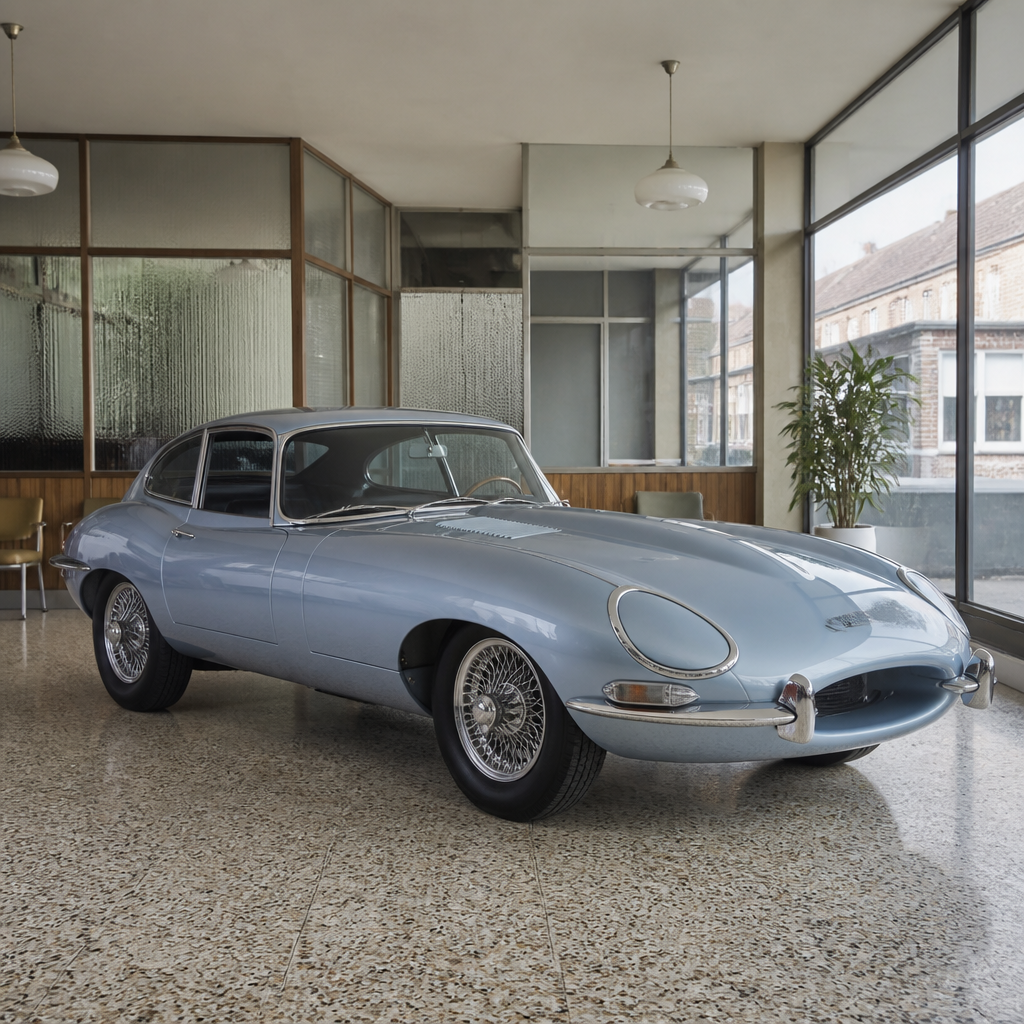
If one Jaguar design explains the company’s public image, it is the E-Type (XK-E), introduced in 1961. It looked futuristic, but it was also shaped by real constraints: Aerodynamics, packaging a long inline-six, and making a sports car that could be produced in meaningful numbers. Over time it evolved from six-cylinder to V12 power, and from early lightweight simplicity to more comfort and refinement.
Consumer response was immediate and global. The E-Type became a cultural object, not just a product, because it made exotic-car proportions accessible. But it also demonstrated a risk that would follow Jaguar: When a design becomes iconic, every successor is judged against it, even when regulations and customer expectations make a direct remake impossible.
By the 1970s, safety and emissions rules tightened in the United States, an essential export market. Bumpers grew larger, engines were detuned, and the industry began shifting priorities toward compliance and reliability. Jaguar’s styling remained elegant, but the company had to spend more engineering effort meeting regulations, often with fewer resources than larger rivals.
Technology Evolution
Jaguar’s engineering story is sometimes simplified to “old-world charm,” but the company repeatedly adopted advanced ideas when it had the means. After the XK era, Jaguar leaned into V12 engines, electronic fuel injection in later years, and a steady move toward more complex electronics as luxury expectations changed.
By the late 1980s and 1990s, buyers expected premium cars to be not only fast and comfortable, but also consistently reliable, quiet, and easy to own. Electronics were increasingly central to that expectation: Engine management for emissions, anti-lock brakes, and later traction and stability systems. This forced Jaguar to compete on software and supplier quality, not just mechanical refinement.
When enthusiasts talk about making cars feel quicker, they often focus on add-on power. The modern reality is that performance is a system: Power, cooling, braking, and calibration have to work together. That is why discussions like data-driven horsepower from mods matter today, even if Jaguar’s historic approach was more about integrated engineering than quick changes.
Challenges and Competition
Jaguar entered the 1980s with a strong name but a difficult quality reputation. The XJ-S, launched in 1975, offered long-distance refinement and V12 smoothness, but it arrived when fuel crises and changing tastes made large engines a harder sell. Meanwhile, Mercedes-Benz and BMW increased their presence in markets where Jaguar once enjoyed a clearer image advantage.
Competition was also changing in a deeper way. German luxury makers built identity around engineering precision and manufacturing consistency. Jaguar’s identity was more emotional: Style, ride comfort, and performance character. When quality issues interrupted ownership satisfaction, that emotional advantage could fade quickly, because premium buyers had alternatives that felt less risky.
In the late 1980s Jaguar had a brief motorsport resurgence in sports car racing, including wins at Le Mans in 1988 and 1990 with the XJR prototypes. These victories helped remind the world of Jaguar’s engineering instincts, but they could not by themselves restructure manufacturing or solve quality perception in the showroom.
Modern Evolution
Ford bought Jaguar in 1989. The goal was straightforward: Give Jaguar access to investment, manufacturing discipline, and global distribution. For Jaguar, the problem to solve was not only product development funding, but also the ability to meet modern expectations for fit, finish, and durability.
Ford-era Jaguars such as the XK8 (1996) and S-Type (1999) reflected a balancing act. Jaguar leaned into retro cues to reconnect with heritage, while also adopting newer platforms, electronics, and safety structures. Consumer reactions were mixed. Many appreciated the return to more consistent build quality and the comfort-luxury focus. Others felt some models were too tied to corporate parts sharing, which could blur brand distinctiveness.
In 2008, Tata Motors acquired Jaguar and Land Rover from Ford. That change mattered because it paired Jaguar with a stable home focused on long-term product cycles, while letting engineering and design identity become more distinct again. The 2010s brought a visible shift toward aluminum-intensive structures, modern infotainment, and new engines, including the Ingenium family. Jaguar also expanded into segments it had not historically dominated, like compact executive sedans and SUVs.
Those moves were shaped by market reality. Premium buyers were migrating to crossovers, and emissions rules were tightening worldwide. If Jaguar stayed only a sedan and sports car maker, it risked shrinking into a niche. Expanding the lineup was less about chasing trends and more about keeping the business viable in a changed market.
The company’s transition planning toward electrification in the 2020s came as the entire luxury industry faced regulatory pressure and shifting consumer expectations. Some details of long-term product timing have changed over time, and public plans have been updated more than once. What is consistent is the direction: Luxury brands increasingly have to compete on silent performance, software experience, and charging ecosystem compatibility, not just engine character.
Consumer Reception
Jaguar ownership has long been tied to a certain promise: A car that feels special at everyday speeds, not only at the limit. For decades, reviewers and owners highlighted ride quality, steering feel, and cabin atmosphere. Even when absolute performance was not class-leading, the total experience could be.
At the same time, Jaguar’s reputation has been sensitive to reliability perceptions, especially in markets where buyers expect premium cars to be low-drama daily transportation. Modern customers are also more data-driven and cost-aware than earlier generations. The rise of at-home maintenance and cost transparency, reflected in resources like Americans’ car maintenance trends, helps explain why durability and service simplicity can shape brand loyalty as much as styling or acceleration.
There is also a practical ownership side to luxury that often gets overlooked in history stories. Comfort features, from climate systems to cabin filtration, changed what buyers considered “premium.” Even small upkeep tasks affect how a car ages in the real world, which is why everyday topics like Clean car AC vents fit into the modern understanding of what it means to live with a luxury car, not just admire it.
Cultural Impact
Jaguar became a symbol in film, advertising, and popular culture because it communicated success in a distinctly British way: Understated confidence mixed with visual drama. The long hood, low roofline, and feline badges created instant recognition.
Its cultural role also reflects how luxury definitions changed. In the 1950s and 1960s, luxury was often about craftsmanship and performance. By the late 1990s and 2000s, luxury increasingly meant convenience technology, safety systems, and consistency. Jaguar had to translate its older values into new expectations, a challenge shared by many heritage brands.
Comparisons with newer luxury success stories can be revealing. The way mainstream manufacturers built premium divisions later on, covered in How Toyota built Lexus, highlights the shift toward process-led quality and customer experience. Jaguar’s heritage path was the opposite: Its image was created first, and manufacturing and ownership experience had to catch up at different points.
Legacy and Lasting Influence
Jaguar’s long-term influence is strongest where racing credibility meets road-car identity. The company helped normalize the idea that a luxury car could be sleek, fast, and emotionally engaging, not only formal. Its early disc brake success accelerated wider adoption of a technology that became essential as cars got quicker and heavier.
The brand’s history also shows how fragile reputation can be when market expectations change faster than an automaker’s resources. Jaguar’s peaks were built on smart engineering leaps like the XK engine and on motorsport proof at Le Mans. Its valleys often came from industrial realities and the difficulty of maintaining quality at scale.
Today, Jaguar’s name still carries those contradictions, and that is part of the legacy. It reminds the industry that performance, design, and luxury are not separate lanes. They are a single promise that has to be supported by engineering, manufacturing, and long-term ownership experience, decade after decade.


