




This post may contain affiliate links. Please read our disclosure and privacy policy for more information.
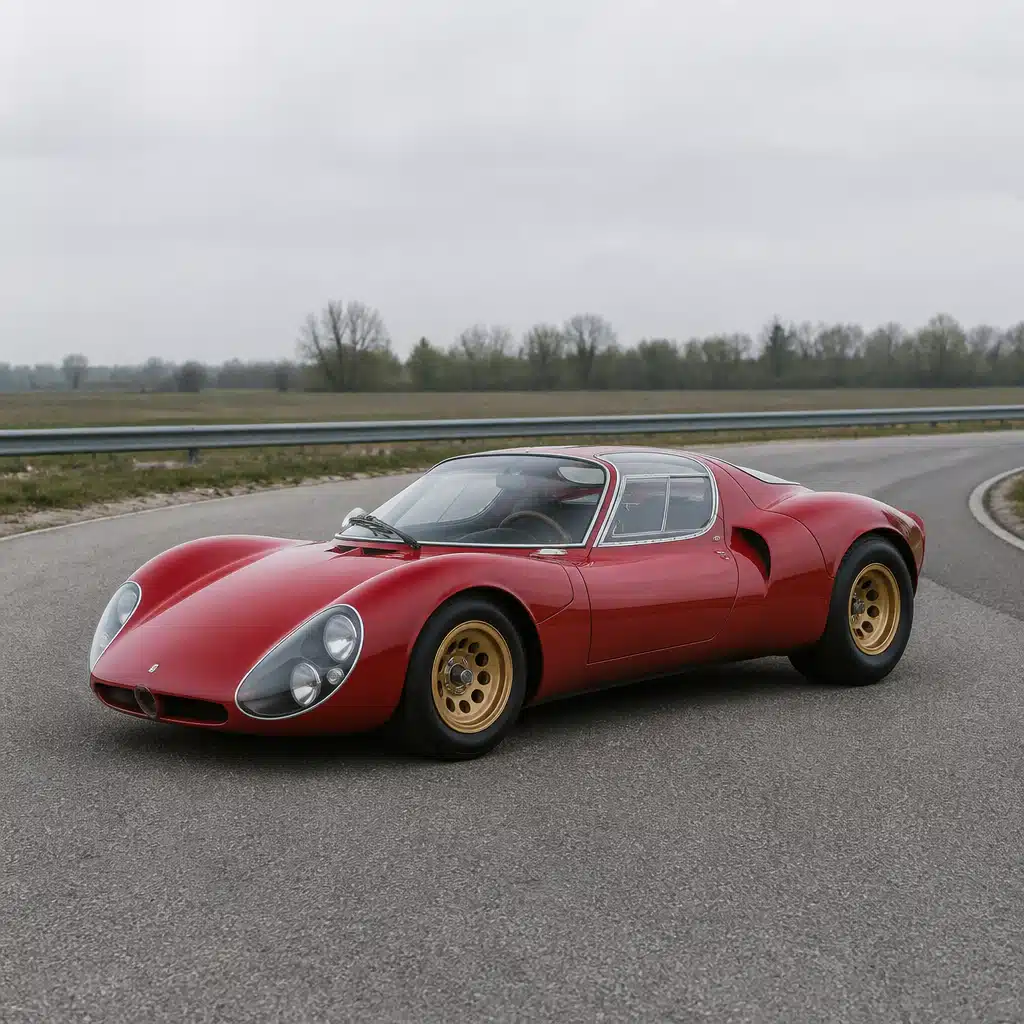
Alfa Romeo’s history is a long conversation between two worlds: The practical business of building cars for the road, and the emotional pull of design and racing. From its early days in Milan to its modern role inside a global automotive group, Alfa Romeo has repeatedly used motorsport as a test lab and design as a signature. The result is a legacy that keeps resurfacing, even when market realities force the brand to change course.
The Origins
Alfa Romeo began in 1910 as A.L.F.A., short for “Anonima Lombarda Fabbrica Automobili.” The company was founded in Milan after investors took over the Italian operations of a French firm, Darracq, which had struggled to sell cars suited to Italian roads and tastes. This mattered early on: Alfa’s first steps were shaped by a clear problem to solve, which was building cars that matched local conditions and buyer expectations.
In 1915, industrialist Nicola Romeo took control during the First World War, shifting production toward military needs. After the war, car building resumed and the company name became “Alfa Romeo.” Like many European manufacturers after 1918, Alfa had to rebuild civilian demand while dealing with economic instability and limited capital. Motorsports, already popular in Italy, offered something money could not easily buy: Reputation.
Early Development
In the 1920s, Alfa Romeo increasingly tied its identity to competition. Racing at the time was not only spectacle but engineering development. Endurance events and road races exposed weak components quickly, and victories were used to justify premium pricing to a small but influential customer base.
One turning point was the hiring of Vittorio Jano from Fiat in 1923. Jano’s engineering helped shape Alfa’s early performance image, producing cars that combined relatively advanced engine design with balanced chassis work. The most famous result was the P2 Grand Prix car, which won the inaugural World Manufacturers’ Championship in 1925. The importance was less about a trophy and more about proof: Alfa could compete with the best European teams, and that credibility carried across the road car range.
At the same time, Italy’s economy rewarded brands that could symbolize modernity. Alfa’s cars became aspirational for professionals and enthusiasts, even when production volumes were modest. This early link between engineering seriousness and emotional appeal became a pattern repeated throughout the company’s life.
Major Turning Points
The 1930s brought a complicated reality. Alfa Romeo became state-controlled through IRI (Istituto per la Ricostruzione Industriale) after financial strain. This government influence helped keep the company alive, but it also changed priorities. Alfa became a national industrial asset, expected to build capabilities that went beyond selling sports cars.
Racing continued, but it shifted in form. The Scuderia Ferrari, founded in 1929, initially operated as Alfa Romeo’s racing partner, running Alfa cars with factory support. The relationship later evolved and eventually split, but the connection left a lasting mark on Italian motorsport culture. Alfa’s racing technology and talent pipeline, directly and indirectly, helped form the ecosystem that later fed Formula 1.
After the Second World War, Alfa faced another reset. Its factories were damaged, Italy was rebuilding, and the market demanded more affordable transportation. The core question became: Could Alfa remain Alfa while moving from small-volume prestige cars into higher production?
Technology Evolution
The postwar answer arrived with the 1950 Alfa Romeo 1900, the company’s first car built on a production line. Moving to series production was not just a manufacturing change. It was a survival strategy in a Europe that needed reliable cars at realistic prices. The 1900 also showed how Alfa tried to stay distinctive: It combined practical body styles with strong performance for its class, helping it appeal to both families and enthusiasts.
That approach matured with the 1954 Giulietta. This model mattered because it gave Alfa a scalable formula: A compact platform, lively engines, and several body types, including sporty coupes and spiders. It also helped Alfa compete in a growing segment where rivals were getting stronger each year. Consumers responded well, seeing Giulietta as a car that made everyday driving feel special without requiring exotic-car budgets.
In the 1960s, Alfa expanded the concept with the Giulia, introduced in 1962. The Giulia’s engineering story often gets simplified to “sporty sedan,” but the deeper point is how Alfa balanced competing demands. Buyers wanted speed, but also room, safety improvements, and better high-speed stability on new highways. Aerodynamics and chassis tuning became more important, and Alfa leaned into the idea that a family car could be engaging without being fragile.
Over time, regulations also reshaped the engineering. Emissions controls, noise rules, and safety requirements became stricter from the 1970s onward. Meeting those standards while keeping character was difficult for many European brands. Alfa’s twin-cam engines and later fuel-injected systems showed technical ambition, but the company often struggled with the cost and complexity of keeping pace during tight financial periods.
Design Evolution
Alfa Romeo design has rarely been about following conservative trends. From early on, the company treated the body as part of the car’s identity, not just a shell around the mechanicals. Italy’s coachbuilding culture supported this, and Alfa often collaborated with major design houses. The long-term effect is that many Alfa shapes became cultural reference points even when sales were limited.
In the 1950s and 1960s, Alfa’s best designs tended to mix simple proportions with purposeful details. Coupes like the Giulietta Sprint and later the Giulia Sprint GT family showed a style that looked light and athletic, reflecting the performance narrative without needing extreme ornamentation.
The 1966 Spider, often associated with a clean, elegant silhouette, became an enduring image of Italian open-top motoring. It stayed in production in evolved forms for decades, which speaks to both the strength of the original design and Alfa’s limited resources to replace it quickly. This was a common industry pattern: When budgets tighten, brands keep winners longer.
The wedge era of the 1970s and 1980s brought new visual language. The 1974 Alfetta and later models carried a more modern, angular look, and the company experimented with packaging and driver-focused interiors. The motivations were practical: Better space use, modern manufacturing methods, and designs that could compete against German brands becoming dominant in the premium market.
Motorsport Influence
Motorsport is central to Alfa’s story, but the most important part is how racing influenced road cars and brand decisions. In the early decades, racing validated the engineering. After the war, racing success helped keep the brand desirable as it moved into higher volumes.
Alfa won the first Formula 1 World Championship for Drivers in 1950 with Giuseppe Farina, and again in 1951 with Juan Manuel Fangio. Those titles mattered because F1 was becoming a global showcase. For Alfa, it reinforced the idea that the company’s engineering methods were not just romantic, but competitive at the top level.
In touring cars and later series, Alfa’s successes helped connect the badge to everyday shapes. That link is powerful: A sedan in a showroom feels different when people have watched similar cars fight for position on track. It is one reason many manufacturers invested heavily in touring car programs, and why fans often remember the racing versions as clearly as the street models.
Motorsport also drove specific engineering priorities. Strong braking, stable high-speed handling, and responsive engines translate directly from track to road. Even when road cars were designed for comfort, Alfa’s reputation pressured engineers to defend steering feel and chassis balance. That internal pressure, from history as much as from customers, shaped product choices for decades.
Challenges and Competition
By the late 1960s and 1970s, Alfa increased production and expanded its model range, but the environment was getting tougher. The oil crises of 1973 and 1979 changed consumer priorities toward efficiency and running costs. At the same time, Japanese makers were raising quality expectations, and German brands were building strong reputations for durability and premium fit and finish.
Alfa’s challenge was not a lack of ideas. It was the difficulty of funding consistent development while maintaining quality across higher volumes. Industrial relations in Italy were also strained in some periods, disrupting production. Consumers who loved Alfa’s driving character could be frustrated by rust issues and inconsistent build quality on certain models, problems that hurt resale values and made conquest sales harder.
Competitors responded by tightening their product planning and manufacturing systems. The shift toward more reliable, standardized production did not remove emotion from cars, but it raised the baseline. Alfa had to compete not only on passion and performance, but on day-to-day ownership reality. For many buyers, the practical side wins, especially as cars became more expensive and households kept them longer. In modern terms, buyers increasingly compare brands with car ownership costs data in mind, and that change in consumer behavior is part of why consistency became so critical.
Consumer Reception
Alfa Romeo has often inspired intense loyalty, but its relationship with the mass market has been uneven. When the product matched the promise, the response was strong. The Giulietta and Giulia lines built a following by offering performance and style without entering true luxury pricing. Later, cars like the 1987 164 showed Alfa aiming at executive-class buyers with a modern front-drive platform and a cleaner, more contemporary design language.
But consumer confidence is fragile. In markets where reliability perceptions turned negative, even great driving dynamics could not fully compensate. Buyers who consider a used Alfa often approach it differently than, say, a mainstream hatchback. They pay more attention to service history, corrosion, and warning signs of neglect. That mindset fits the broader used-car market where Signs of poor maintenance can determine whether a car is a smart purchase or an expensive lesson.
Alfa’s fan base, however, has always added an important twist. Unlike many brands, Alfa enthusiasts frequently accept quirks as part of the deal, as long as the car delivers a distinctive driving experience. That cultural tolerance helped Alfa survive periods when the product plan was inconsistent.
Cultural Impact
Alfa Romeo’s cultural influence extends beyond sales charts. The brand became a symbol of Italian style and mechanical character in film, advertising, and enthusiast communities. It also shaped how people talk about cars. Phrases like “driving feel,” “steering communication,” and “engine character” are now common in reviews of many brands, but Alfa was one of the companies that made those attributes central to its identity early on.
The company’s visual motifs, such as the shield grille and the Milanese badge elements, created continuity even as designs changed. That continuity matters because it helps a brand feel like a lineage rather than a series of disconnected products. Many manufacturers try to build that kind of recognition, but Alfa’s best examples feel organic because the design cues developed over decades, not by committee in a single product cycle.
Modern Evolution
Fiat acquired Alfa Romeo in 1986, a turning point that reflected a broader industry trend: Consolidation as development costs rose. Under Fiat, Alfa shared more components with other models, which lowered costs but risked diluting the brand’s unique engineering approach. This is a classic trade-off in the car industry. Shared platforms can improve quality and profitability, but they make it harder to deliver a distinct driving experience unless the chassis and powertrain are carefully tuned.
The 1990s and 2000s brought moments of strength and uncertainty. Models like the 156 (introduced in 1997) restored some design and driving credibility, winning major awards and attracting buyers who wanted something different from German competitors. Yet profitability, global reach, and consistent product cadence remained difficult.
In the 2010s, Alfa made a major engineering and brand statement with the rear-wheel-drive Giulia (2015) and the Stelvio (2016). The decision to return to a rear-drive architecture for key models was not nostalgia. It was a direct response to competitive pressure in the premium segment, where dynamics and platform layout influence perception. It also showed how technology and simulation tools had evolved. Modern chassis development, electronic control systems, and manufacturing methods made it more achievable to target high performance while meeting safety and emissions standards.
Even so, modern cars carry new complexities that affect the ownership experience, from advanced transmissions to electronics. When enthusiasts debate whether a performance sedan or SUV is “worth it,” they often factor in maintenance realities. That broader conversation, seen across brands, is why Mechanic vs DIY maintenance costs has become a common point of comparison for owners trying to balance passion with practicality.
Legacy and Lasting Influence
Alfa Romeo’s lasting influence is not a single invention or one era of dominance. It is the way the brand repeatedly tied three things together: Racing credibility, accessible performance, and design that communicates motion even when the car is parked.
In engineering terms, Alfa helped normalize the idea that everyday cars could be tuned for driver enjoyment, not just transportation. In design terms, it reinforced Italy’s role as a global reference for proportion and visual identity. In motorsport, it demonstrated how racing could shape public perception, and how victories could carry meaning long after the trophies stopped coming.
Alfa’s story also shows the harder lesson of the modern car industry. Heritage alone cannot pay for development, quality systems, and regulatory compliance. The brands that thrive for decades find a way to translate identity into repeatable, dependable products. Alfa has not always managed that balance, but its best moments have influenced competitors and set expectations for what a sports sedan or a stylish coupe can feel like.
Today, when manufacturers talk about “character” in a world moving toward electrification and digital driving aids, Alfa Romeo’s history remains a useful reference point. It reminds the industry that design and motorsport are not just decoration. They can shape engineering priorities, consumer loyalty, and the long-term meaning of a badge.


