




This post may contain affiliate links. Please read our disclosure and privacy policy for more information.
A steering wheel that starts shaking over about 60 MPH is usually a vibration coming from the front tires, wheels, or steering and suspension parts. It often feels minor at first, but it can get worse fast and it can shorten tire life. The good news is: Many of the common causes are fixable without major work.
What This Problem Feels Like
Most drivers notice the steering wheel starts to shake at highway speed, often in a narrow speed range like 60 to 75 MPH. Below that, the car may feel normal.
The shaking may feel like:
- A fast side-to-side tremble in the wheel
- A light buzz that gets stronger as speed rises
- A pulsing or wobble that comes and goes depending on the road
It often gets worse when you hit a rough patch of pavement. Sometimes it improves when you slow down, then returns when you speed back up.
If the shake mainly happens while braking, that points more toward brake rotor issues instead of the wheel and tire causes covered here. It is still a steering shake, but it is a different pattern.
Is It Safe to Drive?
Light shaking that only starts over 60 MPH is sometimes safe for a short, careful drive to a shop, but it is not something to ignore. Vibration can be a warning that a tire, wheel, or steering part is no longer running true.
Drive is unsafe if any of these are true:
- The steering wheel shake suddenly gets much worse
- The car pulls hard to one side
- You feel shaking in the seat and floor along with the steering wheel
- You hear thumping, grinding, or a repeating knock that matches wheel speed
- The steering feels loose, vague, or like it wants to wander
- A tire looks low, damaged, or has a bulge
If you are unsure, treat it like a safety problem. Slow down, increase following distance, avoid sharp lane changes, and head to a safe place to inspect the tires.
For a general safety mindset on whether to keep going, Safe to Keep Driving covers the types of symptoms that should make you stop instead of pushing on.
Common Causes
These are listed from most common to less common for a steering wheel shake that shows up at highway speed.
Wheel and tire imbalance
This is the most common cause. A tire and wheel assembly that is not balanced will wobble at speed. The faster you go, the more the vibration builds, until it is noticeable in the steering wheel.
It often starts after tire replacement, a wheel weight falls off, or mud and debris collect inside a wheel.
A bent wheel or out-of-round tire
Hitting a pothole or curb can bend a rim slightly. A tire can also develop an out-of-round condition from impact, internal belt issues, or uneven wear. Either one can create a shake that balancing alone will not fully fix.
This kind of vibration may feel more like a wobble than a buzz, and it can be present even if the wheel balances “fine” on a machine.
Tire problems: Cupping, separated belts, or uneven wear
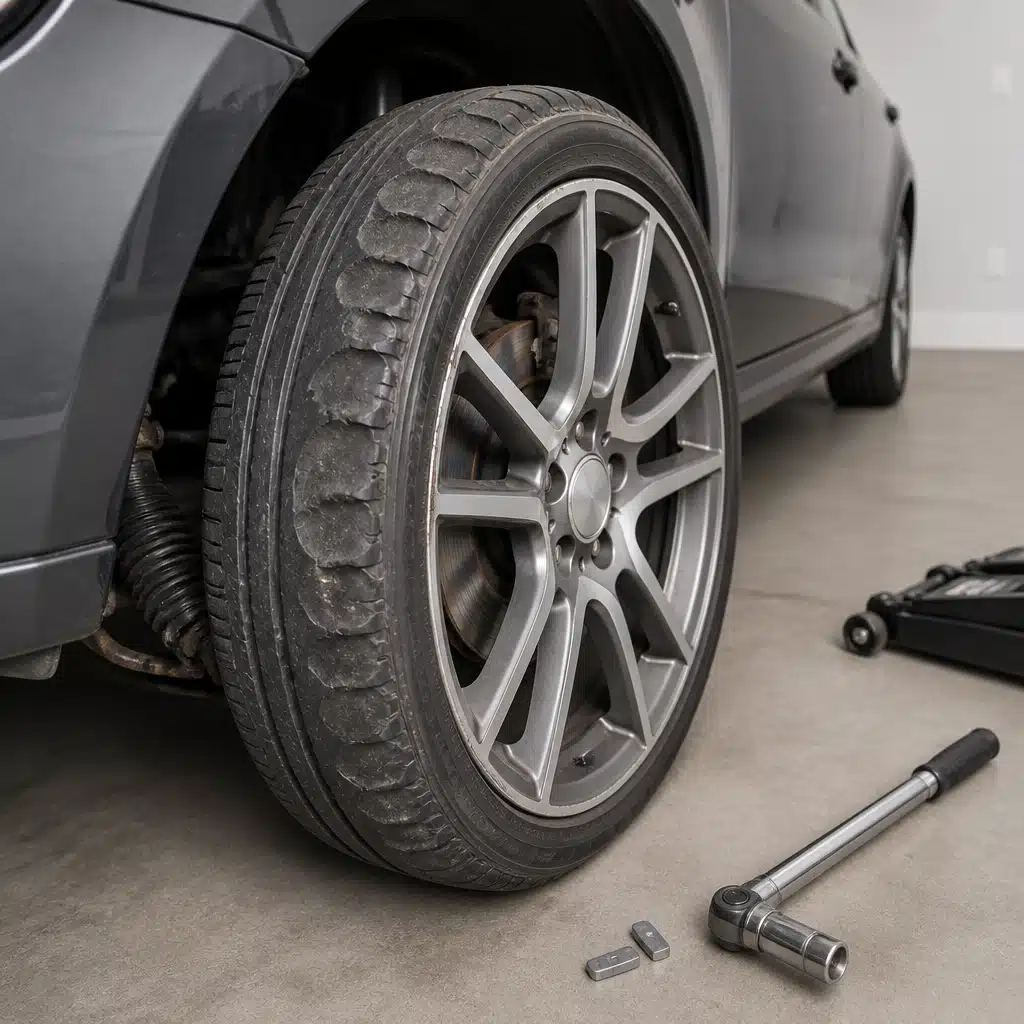
Some tire wear patterns create a repeating vibration, especially as speed increases. Cupping can happen when shocks or struts are weak, or when tires have been run underinflated. A belt separation is more serious and may show as a bulge, a raised section, or a tire that looks slightly lumpy as it rolls.
Improper lug nut torque or wheel not seated correctly
If lug nuts are not tightened evenly, the wheel may not sit flush against the hub. That can cause a shake and can also damage the wheel and hub over time. This most often happens after a tire rotation or a wheel swap.
This is also a safety issue. A wheel that is not secured correctly can loosen further as you drive.
Worn front suspension or steering parts
Loose or worn parts can allow the front wheels to flutter and shake at speed. Common wear items include:
- Tie rod ends
- Ball joints
- Control arm bushings
- Wheel bearings
These problems may start as a mild shake and slowly get worse. You might also notice clunks over bumps or a wandering feeling in the steering.
Alignment that is off (often after an impact)
Misalignment usually shows up as pulling or uneven tire wear more than a pure shake, but a bad alignment can make a vibration feel worse, especially if it allowed a tire to wear unevenly.
Brake-related runout (less common for a shake that is only above 60 MPH)
If the steering wheel shake changes a lot when you lightly apply the brakes at highway speed, brake rotor runout can be part of the issue. If it only shakes when braking, that is a different symptom than a speed-only shake.
Quick Checks You Can Do at Home
You can do a few safe checks without tools beyond a tire gauge and a good light. Do these on a flat surface with the car in park and the parking brake set.
Check tire pressure and look for obvious damage
Verify all tires are set to the pressure on the driver’s door jamb sticker, not the max pressure on the tire sidewall. Then look closely for:
- Bulges on the sidewall
- Cracks, cuts, or exposed cords
- Nails or screws
- Uneven wear, especially scalloped or “cupped” tread
If you see a bulge or exposed cords, do not drive at highway speed. That tire can fail without much warning.
Look for missing wheel weights
On many wheels you can see small clip-on or stick-on weights. If a weight is missing, you may see a clean rectangle where adhesive used to be, or a shiny spot where a clip weight sat.
A wheel can be out of balance even with weights present, but a missing weight is a strong clue.
Check the wheels for bends
Turn the steering wheel fully left and fully right to see more of the inside wheel lips. Look for flat spots or dents on the rim edge. Even a small bend can cause a highway-speed shake.
Confirm the lug nuts look right
Look for lug nuts that are visibly uneven, missing, or sitting at an angle. If you recently had tires installed and the shake started right after, it is worth having the lug torque checked right away.
Pay attention to what changes the vibration
On your next short test drive in a safe area, note these details:
- Does it start at a specific speed?
- Does it change when you gently speed up or slow down?
- Does it get worse in certain lanes or road surfaces?
- Does a light brake touch change it a lot?
These notes help a shop focus on wheels and tires first, or move toward suspension checks sooner.
When This Becomes Serious
A steering shake is more than an annoyance when it points to a tire or steering part that could fail.
Take it seriously if:
- The vibration is strong enough that your hands visibly shake on the wheel
- The car feels unstable in curves or during lane changes
- You hear a growl or hum that rises with speed (possible wheel bearing)
- You feel a repetitive thud, like something is out of round
- The shake started immediately after a pothole hit
Also watch the tire tread. If the shake is from wear problems like cupping, the tire can get noisy and rough quickly. Driving on it longer can make the wear pattern permanent even after the root cause is fixed.
How a Mechanic Fixes It
A shop will usually start with the simplest, most common causes and work toward the less common ones.
Test drive and vibration check
They will drive the car at the speed where the shake happens and confirm whether it is mainly in the steering wheel (front end) or felt through the seat and floor (often rear wheels too).
Wheel and tire balance
They will remove the wheels and balance them on a machine. If a wheel needs a large amount of weight, that can point to a bent rim or tire issue. Some shops also do road-force balancing, which can find tires that look fine but do not roll smoothly under load.
Inspect tires and wheels for runout
If balancing does not solve it, they may measure wheel or tire runout and look for a bent rim, a shifted belt, or a tire that is not seated correctly on the bead. A damaged tire is replaced. A bent wheel may be repaired or replaced depending on the type and severity.
Check front-end components for looseness
With the vehicle lifted, they will check for play in tie rods, ball joints, control arm bushings, and wheel bearings. If a part is loose, it is replaced and the alignment is checked afterward.
Alignment and final verification
After tire, wheel, or suspension work, they will set alignment as needed and do a final road test to confirm the shake is gone.
Common Mistakes to Avoid
-
Balancing the tires over and over without inspecting for a bent wheel or damaged tire: An out-of-round tire may “balance” but still shake.
-
Ignoring a bulge or bubble in the sidewall: That tire is unsafe at highway speeds.
-
Assuming it is always an alignment problem: Alignment can make handling worse, but it is not the top cause of a shake that only happens over 60 MPH.
-
Continuing to drive fast because the car feels fine at 45 MPH: Highway speed puts much more load on a weak tire or loose front-end part.
-
Overlooking recent work: If the shake started right after new tires, wheel installation problems or missing weights should be checked first.
Related Problems to Watch For
These symptoms do not change the main diagnosis, but they help point to what area needs attention.
-
Steering wheel shake mainly while braking: Could be brake rotor runout or a brake-related issue.
-
Car pulls left or right at speed: Can happen with tire problems or alignment issues.
-
Clunking over bumps with the shake: More likely worn steering or suspension joints.
-
Steering feels heavy or inconsistent at low speeds: That is a different problem pattern, often linked to the power steering system, like power steering feels hard.
Final Thoughts
If your steering wheel shakes over 60 MPH, start by treating it as a wheel and tire problem until proven otherwise. Check tire pressure, look for tire damage and missing wheel weights, and avoid high speeds until it is inspected.
If the vibration is strong, started after a pothole hit, or comes with pulling, noise, or a visible tire issue, stop driving at highway speed and have it checked right away. A proper balance and inspection fixes many cases, and if it is a worn steering or suspension part, catching it early helps prevent bigger safety risks.


