


This post may contain affiliate links. Please read our disclosure and privacy policy for more information.
When a car pulls fine cold, then starts to feel weak once it is warmed up, it usually points to a problem that shows up only after heat builds under the hood. The engine may still run, but it cannot make power when you ask for it.
What This Problem Feels Like
Most drivers notice it after 10 to 30 minutes of driving. You press the gas to merge or pass, and the car does not respond like it should.
Common descriptions include:
- Acceleration feels flat or lazy, especially from 30 to 60 mph
- The car picks up speed slowly even with the pedal down
- Power comes and goes, like it is being held back
- It may be worse on hot days or after sitting in traffic
Sometimes the engine feels normal at light throttle, but falls on its face when you try to accelerate harder. A check engine light may come on, but it is also common for there to be no warning light at all.
Is It Safe to Drive?
It depends on how severe the loss of power is and when it happens.
Usually safe for a short, careful drive if it only feels slightly weak and you can still keep up with traffic. Avoid hard acceleration, steep hills, and heavy loads.
Not safe to keep driving if:
- The car cannot accelerate to merge or cross traffic
- Power drops suddenly and repeatedly
- The engine is misfiring (shaking, popping, strong pulsing)
- The check engine light is flashing
- You smell raw fuel, burning smells, or see smoke
If it is unsafe, pull off where you can do so calmly. Turning the engine off for a few minutes sometimes temporarily restores power, but that does not fix the cause.
Common Causes
These are listed from more common to less common. Most of them are problems that get worse when parts heat up, when fuel demand rises, or when the computer switches from warm-up strategy to normal operation.
Weak ignition coil or spark plugs that break down when hot
Ignition coils and spark plugs can work when cold, then fail under heat and load. When you accelerate, cylinder pressure rises. That makes it harder for the spark to jump the plug gap. A weak coil or worn plug may not fire consistently, so the engine loses power.
Clues include a slight shake under load, a subtle “stutter” during acceleration, or a misfire code stored in the computer even if the light is off.
Failing fuel pump or restricted fuel filter
A fuel pump can get weak as it warms up. It may still supply enough fuel for cruising, but not enough for acceleration. A restricted fuel filter (on cars that still use an external filter) can cause the same thing. When fuel pressure drops, the engine goes lean under load and power fades.
This often feels like the engine is being starved. In some cases, it will surge or hesitate as you try to accelerate. If your symptoms happen mainly while climbing grades, this overlaps with power loss climbing hills.
Dirty or failing mass airflow sensor (MAF)
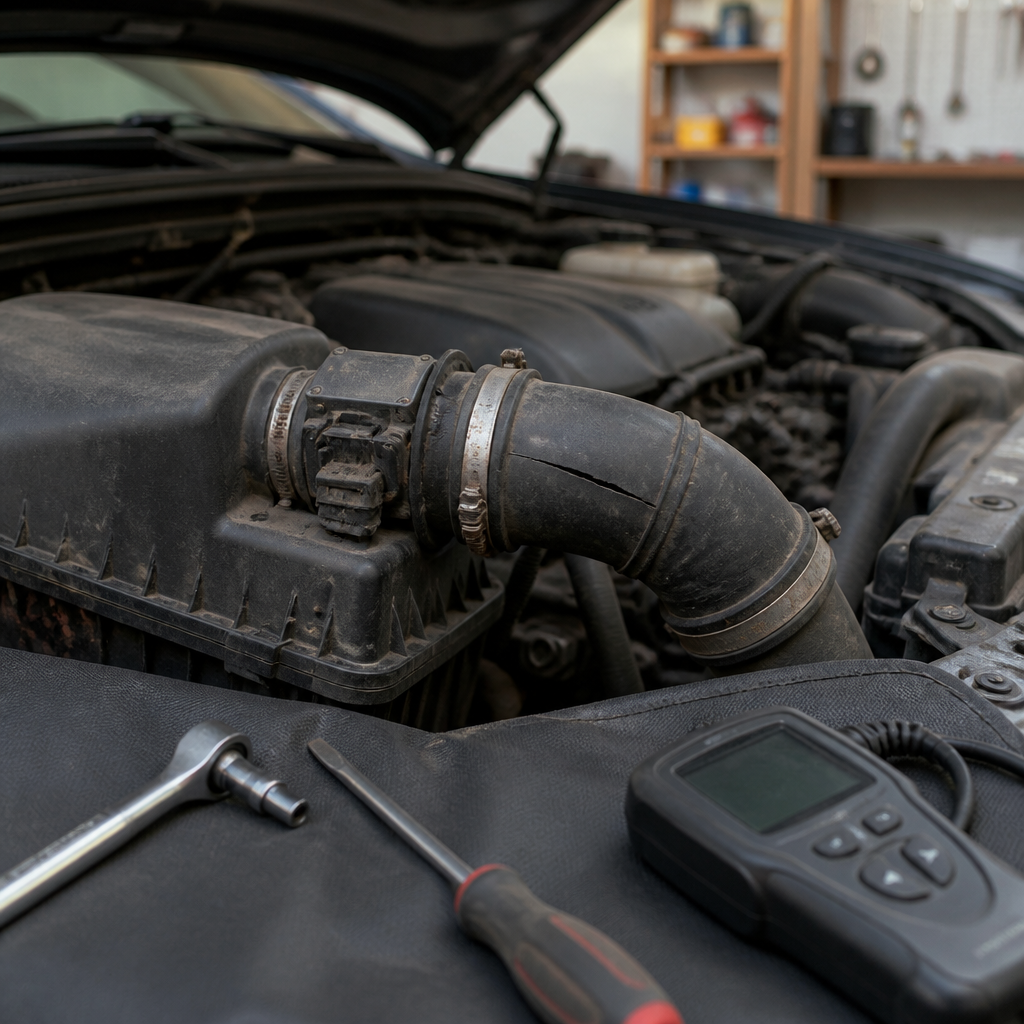
The MAF tells the engine computer how much air is entering the engine. If it reads wrong, the computer commands the wrong amount of fuel. Some MAF problems get worse once the engine bay is heat soaked. Under acceleration, the incorrect reading becomes more obvious and the car feels weak.
You may also notice rough idle, weird shifting on automatics, or hesitation when you first press the pedal.
Restricted exhaust (partly clogged catalytic converter)
A catalytic converter can start to plug internally. When the exhaust cannot get out, the engine cannot breathe in. Power loss is often worse after warm-up because the converter heats up and restriction effects become stronger.
Clues include a steady loss of power at higher rpm, a hot or “sulfur” smell from the exhaust, or the car feeling like it hits an invisible wall when you try to accelerate.
Sticking electronic throttle body or throttle position issues
On many modern cars, the pedal does not directly open the throttle. The computer commands an electric motor. If the throttle body is dirty or sticking, or the position signals disagree, the computer may limit throttle opening to prevent runaway acceleration. That feels like weak power even though the engine is running.
This may come with a warning light and a reduced power mode message on some vehicles.
Vacuum leak that becomes worse with heat
Rubber hoses and plastic intake parts expand and shift with temperature. A small split or a loose gasket may not leak much when cold, but can leak more when warm. That extra unmetered air can lean out the mixture and cause hesitation and low power.
This is more likely if the idle changes, there is a hissing sound, or fuel trims are high in scan data.
Quick Checks You Can Do at Home
These checks are meant to be safe and basic. If anything requires getting under the car, working near a hot exhaust, or handling fuel, stop and leave it to a shop.
Look for warning lights and note the pattern
If the check engine light is flashing, treat it as urgent. A steady light means a stored fault that still needs attention but may not be immediately damaging. Write down when the power loss happens: After idling, after highway driving, only when hot outside, or only when the AC is on.
Do a simple under-hood inspection (engine off, cooled down)
- Check that the air intake tube is clamped and not collapsed
- Look for cracked vacuum hoses or anything obviously disconnected
- Check for loose electrical connectors at the ignition coils and sensors
- Look for oil in spark plug wells on coil-on-plug engines (a valve cover leak can soak coils)
Listen for misfire signs during a short test drive
On a safe road, lightly roll into the throttle from 25 to 45 mph. If you feel a rhythmic shudder or “bucking,” that points more toward ignition misfire than a general lack of power.
If it feels like a smooth but weak pull with no shaking, fuel delivery, exhaust restriction, or airflow measurement problems move higher on the list.
Check for patterns after refueling
If the problem started right after filling the tank, or is worse right after refueling, evaporation system issues can cause odd driveability problems. This is less common for a “only after warming up” complaint, but it is worth noting. If that timing matches your situation, Post-refuel car power loss covers what tends to go wrong.
Basic battery and charging health (if you also notice odd electrical behavior)
Low system voltage can cause throttles, coils, and sensors to act up more when hot. If you also have slow cranking, flickering lights, or random warning messages, start with electrical basics using test car battery with multimeter. This will not diagnose the whole problem, but it can rule out a weak battery that is dragging voltage down.
When This Becomes Serious
This problem becomes serious when the car cannot accelerate in a predictable way. That is a safety issue first, and a repair issue second.
Get the car checked soon, and avoid driving, if you notice:
- Flashing check engine light
- Strong fuel smell from the exhaust or under the hood
- Engine temperature running hotter than normal
- Power loss that is getting worse day by day
- Transmission starts to shift harshly because the engine is not making steady torque
A clogged catalytic converter and severe misfire are two cases where continued driving can lead to expensive damage. Misfires can overheat the converter. A plugged converter can overheat the engine bay and nearby parts.
How a Mechanic Fixes It
A shop will usually verify the symptom hot, because many cars behave normally when cold. The repair depends on what the testing proves.
Common professional steps include:
- Scan for codes and review freeze frame data from when the fault happened
- Check live data for airflow, fuel trims, throttle command, and misfire counters
- Load-test the ignition system (coils and plugs) and replace weak parts as needed
- Test fuel pressure and volume hot, and verify pressure under acceleration demand
- Inspect and test sensors like the MAF for drift or dropouts
- Test exhaust backpressure or use temperature readings to confirm converter restriction
- Clean and re-learn the throttle body if it is sticking or adaptation values are out of range
If your main symptom is a stumble or flat spot when you tip into the throttle, the same diagnostic approach is used for Slow acceleration checks, but the “only after warming up” detail helps the mechanic focus on heat-related failures.
Common Mistakes to Avoid
- Replacing parts based only on guesses. Warm-only power loss can be caused by ignition, fuel, air metering, or exhaust restriction. Swapping random parts often wastes money and time.
- Ignoring a flashing check engine light. That usually means active misfire that can damage the catalytic converter.
- Overcleaning sensors with the wrong chemicals. Some sensors are delicate. The wrong spray can ruin them.
- Continuing to do hard acceleration tests. Repeated wide-open throttle when the engine is misfiring or restricted can make damage worse.
- Assuming it is “just bad gas.” Fuel quality can matter, but warm-only symptoms commonly point to a component failing under heat and load.
Related Problems to Watch For
These do not mean you have a different problem, but they can show up alongside warm-only power loss and help narrow the cause:
- Surging at a steady speed. This can point to fuel delivery or airflow signal problems. If you notice that pattern too, car surges at steady speed matches it.
- Hesitation when accelerating uphill. Load makes weak ignition and low fuel pressure show up faster. A similar feel is covered in uphill engine hesitation causes.
- Occasional engine shake under load. That leans toward misfire from plugs or coils rather than a smooth loss of power.
Final Thoughts
Power loss during acceleration after the car warms up is a sign the engine cannot meet fuel, spark, or airflow demands once heat and load rise. Treat it as a safety problem if merging or passing becomes uncertain.
Your best next move is to note exactly when it happens, avoid hard acceleration, and schedule diagnosis soon. If the check engine light is flashing, the engine is shaking, or power drops suddenly, stop driving and have it towed to prevent damage and avoid getting stuck in traffic with no acceleration.


