




This post may contain affiliate links. Please read our disclosure and privacy policy for more information.
Seeing white smoke from the exhaust right after you start the engine can be unsettling. Sometimes it is normal water vapor that goes away fast. Other times it points to a fluid getting into the wrong place. The key is how long it lasts, how it smells, and whether the car is losing coolant.
What This Problem Feels Like
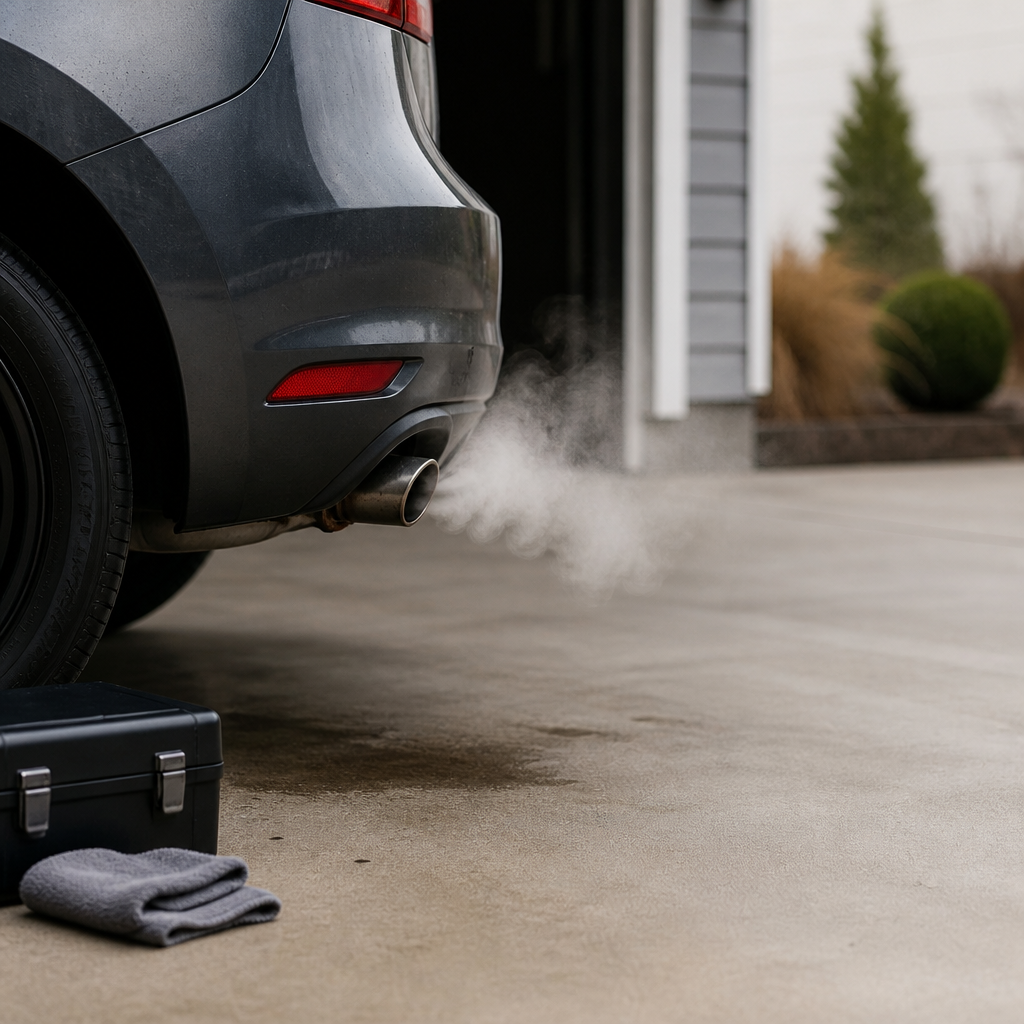
You start the car and notice a cloud of white smoke from the tailpipe. It is usually most noticeable in the first few seconds to a couple of minutes. In mild cases it fades as the engine warms up. In more concerning cases it keeps coming and may get thicker when you rev the engine.
White smoke at startup often comes with one or more of these small clues:
- A sweet smell from the exhaust
- Rough idle for the first minute
- Condensation dripping from the tailpipe
- A coolant level that slowly drops over days
Note: A small puff on a cold morning that disappears quickly is very common and is not always a fault.
Is It Safe to Drive?
It depends on what the smoke actually is.
If the white smoke is thin, looks more like mist, and stops within a minute or two, it is usually water vapor and is generally safe. This is extra common in cold or humid weather, or when the car has sat overnight.
If the smoke is thick, hangs in the air, smells sweet, or continues after the engine is warm, treat it as unsafe until proven otherwise. That can mean coolant is getting into the cylinders. Driving like that can overheat the engine and can also damage the catalytic converter.
Do not drive the car and shut it off if you notice:
- The temperature gauge climbing higher than normal
- The low coolant warning light
- Misfiring, shaking, or stumbling that does not clear up
- White smoke that gets worse as the engine warms
If you are unsure, follow a conservative approach and use a Keep Driving Safety Guide mindset: Short trips only if it clears quickly and there are no warning signs. Otherwise, park it and get it checked.
Common Causes
These are listed from most common to less common.
Normal condensation (water vapor)
Every engine produces water as part of combustion. When the exhaust system is cold, that water condenses inside the pipes and muffler. On startup it can leave as visible white vapor.
This is most likely if:
- The smoke is light and disappears quickly
- It happens more on cold mornings
- You see water droplets at the tailpipe
Coolant getting into the combustion chamber (minor to major)
Thick, steady white smoke can be steam from coolant burning in the cylinder. That usually means a leak between the cooling system and the combustion chamber.
Common leak points include:
- Head gasket beginning to fail
- Cracked cylinder head (less common)
- Cracked engine block (rare, but possible)
Why it happens: Overheating, age, poor coolant maintenance, or repeated short trips that build deposits can all contribute. Once a small leak starts, it tends to get worse over time.
Intake gasket leak (some engines)
On certain engines, the intake manifold gasket or related seals can allow coolant to seep into intake runners. That coolant can enter one or more cylinders, causing white smoke most noticeable at startup.
This can be tricky because the car may run fairly normal once warmed up, and the only early sign is slow coolant loss and a brief white cloud.
Water contamination in fuel (uncommon)
Water in the fuel can create poor combustion and a white-ish exhaust haze, often with rough running. This is not the most likely cause, but it can happen after bad fuel or if a vehicle has been sitting for a long time with a near-empty tank.
If the smoke is more like a haze and the engine runs poorly, this may be considered, but coolant-related checks still come first because they are higher risk.
Quick Checks You Can Do at Home
These checks are safe for most owners and do not involve taking anything apart. Always work on a cool engine when checking coolant. Never open a hot radiator cap.
Watch the smoke pattern
Start the engine and observe from a safe distance.
- If it fades quickly: Likely condensation.
- If it keeps smoking after 5 to 10 minutes: It is not normal.
- If it gets thicker with light revving: More concerning for coolant intrusion.
Smell the exhaust carefully
Do not breathe it in deeply. A sweet smell often points to coolant. Normal condensation has little to no smell, other than typical exhaust.
Check coolant level over a few days
With the engine cold, check the coolant reservoir level and note where it sits. Recheck the next morning. A steady drop without an obvious external leak is a strong clue.
If you have to add coolant repeatedly, do not keep driving without diagnosis. Adding coolant can hide a bigger issue until the engine overheats.
Look for signs of coolant mixing with oil
Pull the dipstick when the engine is off.
- Normal oil looks amber to dark brown/black.
- Milky, creamy, or coffee-with-cream oil can mean coolant contamination.
Also look under the oil filler cap for milky residue. A small amount of light tan sludge can sometimes be from condensation on short trips, but combined with white smoke and coolant loss it becomes more meaningful.
Check for external coolant leaks
Look under the car after it has sat overnight. Check for wet spots near:
- Radiator area
- Upper and lower radiator hoses
- Water pump area
- Heater hose connections
An external coolant leak can lower coolant level and lead to overheating, which can then cause head gasket problems. Fixing a simple leak early can prevent major engine damage.
When This Becomes Serious
White smoke becomes a serious problem when it is caused by coolant entering the engine. Coolant does not compress like air and fuel. If enough coolant gets into a cylinder, it can cause a hard start, a misfire, or in worst cases hydrolock, which can bend internal parts.
Take it seriously right away if you see any of the following:
- Temperature gauge rising or fluctuating
- Coolant reservoir bubbling after startup
- Continuous thick white smoke after warm-up
- Engine shaking with a flashing check engine light
- Coolant level dropping quickly
If the engine is overheating, shut it down. Driving while overheating is one of the fastest ways to turn a small leak into a major repair.
How a Mechanic Fixes It
A shop will usually start by confirming whether the white smoke is normal vapor or coolant steam. They will not guess. They will test.
Typical professional checks
- Cooling system pressure test to see if it loses pressure and where
- Combustion gas test in the coolant to check for head gasket leakage
- Scan tool check for misfire data and coolant temperature behavior
- Spark plug inspection to look for a “steam-cleaned” plug in one cylinder
- Compression and/or leak-down test if needed
Common repair paths
If it is condensation, no repair is needed.
If it is an external coolant leak, the fix may be a hose, clamp, radiator, thermostat housing, or water pump repair, followed by correct bleeding of the cooling system.
If tests confirm an internal coolant leak, the repair depends on the root cause:
- Head gasket replacement with proper surface checks
- Cylinder head inspection for warping or cracks
- Less commonly, engine replacement or major engine work if the block is damaged
A careful shop will also address the cause of the failure, such as a cooling fan issue or a stuck thermostat, so the problem does not return.
Common Mistakes to Avoid
- Ignoring ongoing white smoke because the car “runs fine”: Internal coolant leaks can get worse quickly.
- Opening the radiator cap on a hot engine: This can cause severe burns.
- Relying on stop-leak products as a plan: They can clog small passages in heaters and radiators and may complicate proper repairs.
- Only topping up coolant without finding the leak: Low coolant can trigger overheating and engine damage.
- Assuming all white smoke is the same: Thin vapor that disappears fast is different from thick smoke that lingers.
Related Problems to Watch For
These do not change the main diagnosis, but they often show up along with the same root issue:
- Sweet smell inside the cabin, sometimes from a heater core leak
- Misfires on cold start, sometimes with a flashing check engine light
- Overheating in traffic or on hills
- Oil level rising (possible coolant mixing with oil)
If you also notice a sharp fuel odor around the time this started, that is a separate issue to handle on its own. In that case, see fuel smell after filling up symptoms and take extra care, since fuel leaks add fire risk.
Final Thoughts
White smoke from the exhaust at startup is often harmless condensation, especially if it is light and disappears fast. If it is thick, sweet-smelling, or continues after warm-up, treat it as a coolant-in-engine warning until testing proves otherwise.
Your best next move is simple: Watch how long the smoke lasts, check coolant level only when the engine is cold, and stop driving if the temperature rises or the smoke does not clear. If the signs point to coolant loss or overheating, have a shop pressure-test the cooling system and check for combustion gases in the coolant before more driving.


