




This post may contain affiliate links. Please read our disclosure and privacy policy for more information.
Doing your own oil change at home is one of the best beginner DIY jobs. It saves money, it is fast once you learn it, and it helps your engine live longer. You do not need special skills. You just need the right tools and a calm, safe setup.
This guide walks you through a basic oil and filter change on most gas cars. Your exact steps may vary a little, so always follow your owner’s manual for oil type, oil capacity, and jack points.
Tools and items needed
- Correct engine oil (check your manual for viscosity like 0W-20, 5W-30, and amount)
- New oil filter (correct part number for your engine)
- New drain plug crush washer (if your car uses one)
- Oil drain pan (at least 6 quarts)
- Socket or wrench for the drain plug (common sizes: 14mm, 15mm, 17mm)
- Oil filter wrench (cap type, strap type, or pliers style)
- Funnel
- Rags or paper towels
- Nitrile gloves (nice to have)
- Jack and jack stands, or ramps (never rely on a jack alone)
- Wheel chocks (or a block of wood)
- Torque wrench (optional but helpful)
If you are building a small “DIY kit” for home jobs, this pairs well with a Change engine air filter since both are quick and low stress.
Safety and legal notes
- Work on a flat surface. No slopes.
- Let the engine cool for 10 to 20 minutes. Warm oil drains better, but hot oil can burn you.
- Use jack stands or ramps. Do not get under a car held up only by a jack.
- Wear eye protection if you have it. Oil can drip or splash.
- Used oil is hazardous waste. Store it in a sealed container and take it to an approved recycling drop-off.
Step-by-step: DIY oil change at home
1) Warm the engine slightly
Start the car and let it idle for 1 to 3 minutes. Then shut it off. This helps the oil flow, but keeps it from being too hot.
2) Park and set the car up safely
Put the car in Park (or in gear for a manual). Set the parking brake. Chock the rear wheels if you are lifting the front.
Drive onto ramps, or lift the front and place jack stands at the proper points. Give the car a gentle shake. If it moves, reset it.
3) Open the hood and remove the oil fill cap
Remove the oil fill cap on top of the engine. This lets air in, so oil drains faster. Pull the dipstick out a bit too if you want.
4) Place the drain pan under the oil pan
Slide the drain pan under the engine. Find the oil drain plug on the bottom of the oil pan. Move the pan slightly back from the plug. Oil usually shoots out a little at first.
5) Remove the drain plug and drain the old oil
Use the correct socket or wrench. Turn the drain plug counter-clockwise. As it loosens, keep pressure on it with your fingers so it does not fall into the pan. Then pull it away quickly.
Let the oil drain until it slows to a drip. This usually takes 5 to 10 minutes.
6) Inspect the drain plug and replace the washer (if used)
Wipe the drain plug clean. If your car uses a crush washer, replace it. A worn washer is a common cause of slow leaks.
7) Reinstall the drain plug
Thread the plug in by hand first. This helps avoid cross-threading. Then tighten it with your wrench. If you have a torque spec, use it. If not, snug it firmly, but do not over-tighten. Over-tightening can strip the oil pan threads, which is a big repair.
8) Remove the old oil filter
Move the drain pan under the oil filter area. Oil will spill when the filter comes off.
Loosen the filter by hand if you can. If it is too tight, use an oil filter wrench. Turn it counter-clockwise. Once it breaks loose, spin it off slowly and keep it upright.
9) Prep and install the new oil filter
Check that the old rubber gasket did not stick to the engine. If the old gasket stays on, remove it. A double gasket can cause a big leak.
Put a thin film of fresh oil on the new filter gasket with your finger. Then thread the new filter on by hand until the gasket touches. Tighten it about 3/4 turn more by hand. Most filters do not need a wrench to tighten.
10) Add new oil
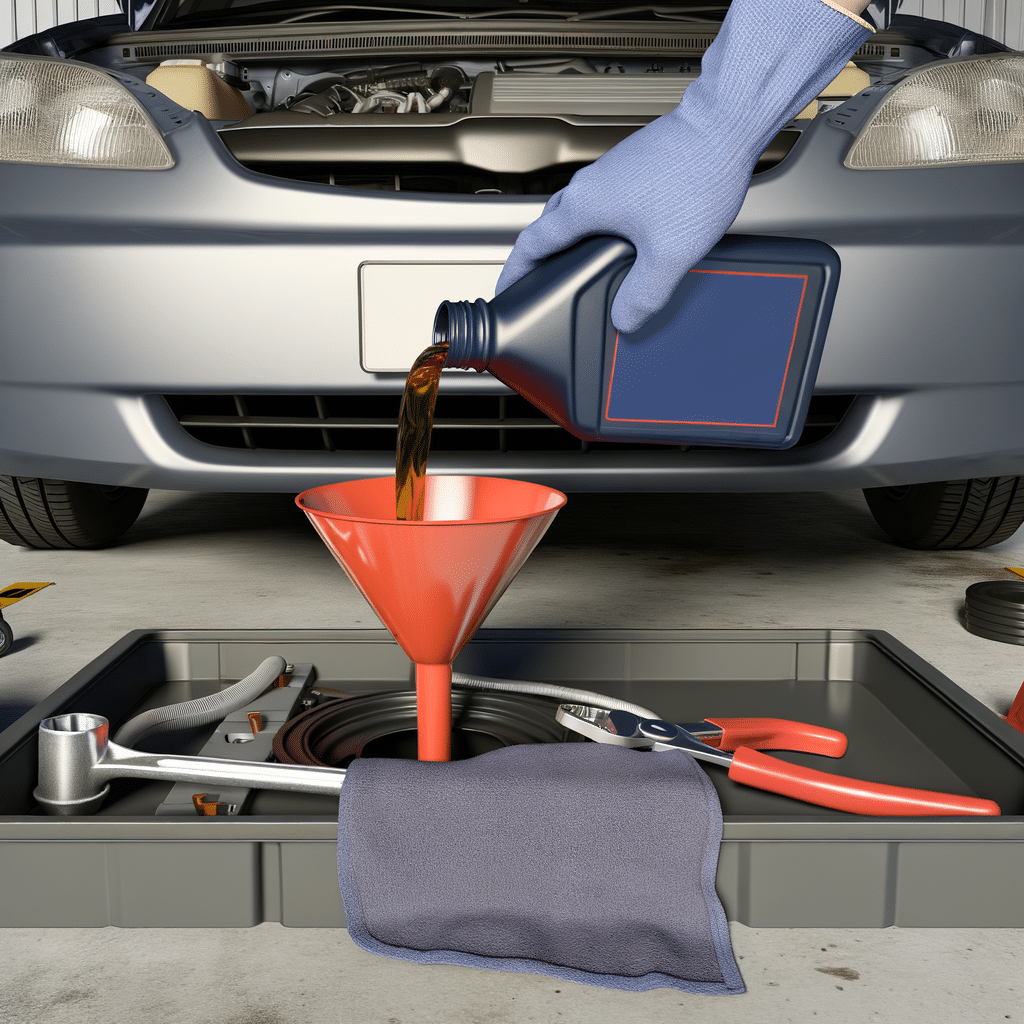
Place a funnel in the oil fill hole. Pour in most of the oil capacity first, not all at once. For example, if your engine takes 5 quarts, add about 4.5 quarts to start.
Reinstall the oil fill cap.
11) Start the engine and check for leaks
Start the car and let it idle for 30 to 60 seconds. Watch under the car. Look around the drain plug and oil filter area. If you see a drip, shut the engine off and fix it.
The oil pressure light should turn off quickly. If it stays on for more than a few seconds, shut the engine off and recheck your oil level and filter install.
12) Check the oil level on the dipstick
Shut the engine off and wait 3 to 5 minutes. Pull the dipstick, wipe it, reinsert it, then pull it again. Top off oil in small amounts until it reaches the full mark.
13) Reset the oil life reminder (if your car has one)
Many cars have an oil life or maintenance light. Reset it using your dash controls. The steps vary by model, so check your manual.
14) Clean up and recycle the used oil
Pour the used oil into the empty oil bottles or a sealed jug. Put the old filter in a bag. Most recycling places accept both used oil and the filter.
Common mistakes beginners make
- Forgetting the drain plug. If you start pouring new oil before the plug is back in, it will all drain out fast.
- Over-tightening the drain plug. This can strip threads or crack the oil pan.
- Double-gasketing the filter. Old gasket stuck to the engine plus the new gasket can cause a sudden leak.
- Using the wrong oil type. Viscosity and oil spec matter. Use what the manual calls for.
- Checking oil level too soon. After shutting the engine off, wait a few minutes so oil drains back to the pan.
- Spills on hot parts. Oil on an exhaust can smell and smoke. Wipe spills right away.
Maintenance tips
- Write the mileage and date on a note in your phone, or on a small tag under the hood.
- Most cars need oil changes every 5,000 to 10,000 miles, depending on the oil type and driving. Follow the manual and your oil life monitor if you have one.
- If you do lots of short trips, heavy traffic, or towing, change oil more often.
- Check your oil level once a month. Some engines burn oil, even if they run fine.
If you like simple weekend projects, you can stack this job with other easy upgrades from simple car upgrades you can do without taking the car apart.
Is it worth it?
For most beginners, yes. An at-home oil change usually costs less than a shop visit, and you control the oil and filter quality. It also helps you spot early issues like small leaks, torn splash shields, or loose fasteners.
It may not be worth it if you live in an apartment with no safe place to lift the car, or if your vehicle has a hard-to-reach filter and needs special tools. In that case, doing easier tasks at home still makes sense, like an installing a dash cam at home or other small add-ons.
Conclusion
A DIY oil change is a perfect starter skill. Take your time, work safely, and keep things clean. Once you do it once, the next one feels easy. The main goal is simple: correct oil, correct level, no leaks, and used oil recycled properly.


