




This post may contain affiliate links. Please read our disclosure and privacy policy for more information.
If you have to add oil often between oil changes, your engine is using oil too fast. A small amount of oil use can be normal on some engines, but frequent top-offs usually mean oil is leaking out, getting burned inside the engine, or both. The key is figuring out which one is happening before it turns into real engine damage.
What This Problem Feels Like
Most drivers first notice the oil level dropping on the dipstick sooner than expected. You might add a quart, then a couple weeks later it is low again.
Other common clues show up along the way:
- The oil light flickers on turns or hard braking (oil level is already low).
- A burning-oil smell after driving or at stoplights.
- Blue or bluish-gray smoke from the tailpipe, особенно on startup or when accelerating.
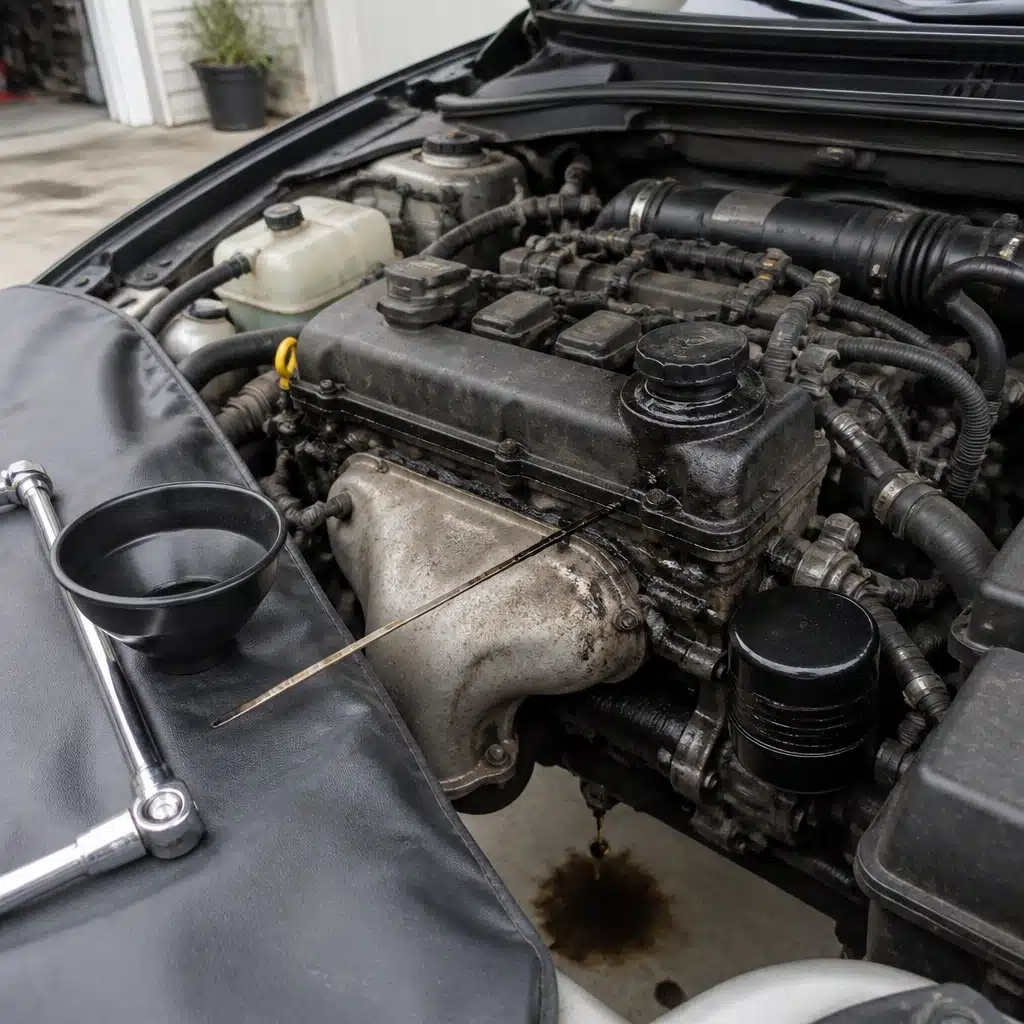
- Oil spots on the driveway, or oily dampness under the engine.
- The engine sounds a bit louder or “tappier” when the oil is low.
Some engines burn oil with almost no smoke you can see. That is why dipstick checks matter if you suspect fast oil use.
Is It Safe to Drive?
Driving with high oil consumption can be safe only if the oil level is kept in the safe range and the cause is not severe. The real danger is letting the level drop too far. Low oil can damage bearings, timing components, and turbochargers quickly.
Do not drive (or drive only to a safe place) if any of these happen:
- The oil pressure warning light comes on and stays on.
- You hear loud knocking, heavy ticking, or grinding that was not there before.
- You see heavy blue smoke behind you.
- The dipstick shows no oil or barely any oil.
If you must drive, top off to the correct level first and avoid high RPM, heavy loads, and long highway pulls until it is checked.
Common Causes
These are the most common reasons an engine uses oil too fast, from more common to less common.
External oil leaks
Oil leaks are often the top cause because they can lose a lot of oil without changing how the engine runs. Common leak points include the valve cover gasket, oil pan gasket, drain plug or filter seal, front or rear crank seal, and timing cover seals.
Why it happens: Gaskets harden with age and heat, seals wear, and past service mistakes like a double-gasketed oil filter can cause fast loss.
Worn piston rings or cylinder wall wear
Piston rings seal the combustion chamber and control oil on the cylinder walls. When rings wear or get stuck, oil gets pulled into the cylinders and burns.
Why it happens: High mileage, long oil change intervals, overheating history, or poor maintenance can lead to ring wear or carboned-up rings that do not move freely.
Valve stem seal wear
Valve stem seals keep oil from running down the valve guides into the combustion chamber. When they harden or crack, oil slips past and burns, often showing as a puff of blue smoke on cold start or after idling.
Why it happens: Age and heat cycles. Some engines are known for this as they rack up miles.
PCV system problems
The PCV (positive crankcase ventilation) system controls crankcase vapors and pressure. A stuck PCV valve or restricted breather can pull oil mist into the intake or build pressure that pushes oil past seals.
Why it happens: Sludge buildup, cheap or incorrect PCV parts, blocked hoses, or a failing oil separator in engines that use one.
Turbocharger oil seal leakage (if turbocharged)
A turbo is fed pressurized oil. If the turbo’s seals wear or the drain path is restricted, oil can leak into the intake or exhaust and burn.
Why it happens: High heat, extended oil intervals, coked oil in the turbo, or crankcase pressure issues that slow oil draining.
Wrong oil viscosity or oil type for the engine’s condition
Oil that is too thin for a worn engine can slip past rings and seals more easily. Oil that does not meet the required spec can also increase consumption on some engines.
Why it happens: Using the wrong weight, switching to a lower-viscosity oil, or using an oil that does not meet the manufacturer’s standard.
Quick Checks You Can Do at Home
These checks are safe and do not require disassembly. They help you tell “leaking” from “burning,” and they give a mechanic useful details.
Track oil use the right way
Check the dipstick on level ground with the engine off for a few minutes. Top off to the full mark, then record the mileage. Recheck every 200 to 300 miles for a week or two. This turns a guess into a real pattern.
Look for obvious leaks
With the engine off and cool, use a flashlight and look around:
- Valve cover edges (oil on the head or down the back of the engine)
- Oil filter area and drain plug area
- Oil pan seam
- Lower engine and splash shield dampness
If the underside is coated, it can be hard to tell where it starts. Fresh oil near the top of the engine often means it is coming from above and running down.
Check for oil in the intake path
If you can access it easily, inspect the air intake tube near the throttle body. A light oily film can be normal. Pooled oil or heavy wetness can point to a PCV issue or turbo seal problem.
Watch the exhaust briefly
Have someone start the engine while you watch the tailpipe. A quick puff of blue smoke at startup often points to valve stem seals. Blue smoke under acceleration can point more toward rings or turbo issues. Condensation steam is normal and looks white, not blue.
Pay attention to the oil you are adding
Always add the correct viscosity listed on the oil cap or owner’s manual. If you changed oil brands or weights right before the problem started, note that for your mechanic.
When This Becomes Serious
Fast oil use becomes serious when it risks oil starvation, damages emissions components, or points to internal wear that is getting worse.
Get it checked soon if:
- You are adding more than about a quart every 1,000 miles (or sooner on many engines).
- The oil light flickers even once after topping off correctly.
- The engine uses oil and runs rough, or you also have power loss.
- You smell burning oil inside the cabin or see smoke from under the hood.
Burning oil can also damage the catalytic converter over time and foul spark plugs. If the engine starts to misfire, that is a separate symptom that needs attention. For reference, Common causes of engine misfires can overlap when oil fouls ignition parts.
If you also notice the engine running hotter than normal or coolant level dropping, do not ignore it. Oil consumption is one issue, but overheating can accelerate wear quickly. If that other symptom is present, coolant level keeps dropping is a warning sign to address right away.
How a Mechanic Fixes It
A professional approach starts with confirming the oil consumption rate and finding where the oil is going.
They verify leaks first
Many shops start by cleaning the engine and adding UV dye to the oil. After driving, they use a UV light to pinpoint leaks. Leak repairs may include replacing gaskets or seals, correcting an oil filter sealing issue, or resealing a component.
They check crankcase ventilation
The PCV valve and hoses are inspected for blockage, incorrect parts, or stuck valves. On engines with oil separators, they may test or replace the separating unit. Fixing a PCV problem can reduce oil use and also prevent new leaks caused by excess crankcase pressure.
They test engine condition if oil is being burned
If there is no meaningful external leak, the next step is usually engine testing:
- Compression test for cylinder sealing
- Leak-down test to locate where pressure is escaping
- Borescope inspection for oil-wet cylinders or heavy carbon
Results help separate ring wear from valve seal issues. A turbocharged vehicle may also get turbo inspection for shaft play, oil residue in charge pipes, and drain restrictions.
Repair direction depends on the root cause
Fixes can range from replacing valve stem seals or PCV parts to addressing turbo oil sealing issues. If rings and cylinders are worn, the professional fix is internal engine work or replacement, because additives and thicker oil only mask symptoms for a short time.
Common Mistakes to Avoid
- Ignoring the dipstick and relying only on the oil light: The oil light often comes on after pressure drops, which can be too late.
- Overfilling: Too much oil can cause foaming and can increase oil pulled through the PCV system.
- Switching to a much thicker oil without advice: It can hide symptoms and may not meet the engine’s required spec.
- Assuming all oil use is “normal”: Some engines do use some oil, but frequent top-offs deserve a real check.
- Cleaning the engine right before a shop visit: If a leak is active, wiping everything can remove clues unless dye testing is planned.
Related Problems to Watch For
Oil consumption can come with a few related signs. They do not change the main problem, but they help you catch it early:
- Oil smell or light smoke from the engine bay: Often oil dripping onto the exhaust.
- Rough idle or misfires: Possible oil-fouled spark plugs.
- Extra exhaust smoke under load: More likely when oil is being burned.
- Engine power feels weaker: Sometimes happens with heavy oil burning or a failing turbo. If that specific symptom shows up at steady speed, Engine power loss highway speeds covers what to watch for.
- Cooling fan running more than usual after shutdown: Not caused by oil use alone, but if the engine is running hot, it matters. fan runs after shutoff is a sign to take seriously if it becomes frequent.
Final Thoughts
If your engine uses oil too fast between changes, start by checking the level regularly and keeping it at the full mark. Look for simple leaks and note any smoke, smells, or patterns like startup puffing.
If you are adding oil often, or the oil light flickers even once, schedule a diagnosis soon. Oil problems rarely get better on their own, and the safest path is finding out whether the oil is leaking externally or being burned inside the engine before low oil causes permanent damage.


