




This post may contain affiliate links. Please read our disclosure and privacy policy for more information.
Buying a used car can save money, but only if the car was cared for. Poor maintenance is not always obvious in photos or a quick walkaround. The good news is that many warning signs are easy to spot if you know where to look and what questions to ask.
What the modification or concept is
Used car warning signs of poor maintenance are clues that basic service was skipped or done incorrectly. This can include late oil changes, ignored leaks, worn brakes, neglected tires, old fluids, and broken small parts that owners never fixed.
These signs show up in three main places: The paperwork, the way the car looks and smells, and the way it drives. One sign alone may not mean the car is bad, but several signs together usually point to a pattern of neglect.
Why people do it
People look for maintenance warning signs to avoid expensive surprises after purchase. A car can look clean but still have worn fluids, overdue service, or hidden issues caused by long-term neglect.
Spotting poor maintenance also helps during negotiation and decision-making. If the car shows signs of neglect, it may still be usable, but it needs a bigger repair budget and a careful inspection before you commit.
Things to know before starting
Bring a few basic items: A small flashlight, a paper towel, and a simple tire pressure gauge if you have one. Plan to check the car in daylight and ask for a cold start. A warm engine can hide hard-start issues, smoke, and some noises.
Also know the difference between damage and neglect. A scratch or door ding is cosmetic. Poor maintenance is about the mechanical health and basic care items that keep the car safe and reliable.
If mileage looks unusually low for the car’s age, treat it as a prompt to verify records and the cluster history. For deeper tips on mileage manipulation, see Spot used car odometer fraud.
Step-by-step explanation
1) Start with paperwork and simple questions
Ask for service records, even if they are incomplete. Look for patterns, not perfection.
- Oil change history: Regular intervals matter more than the shop name.
- Major services: Timing belt or chain service, transmission fluid service, coolant service, brake fluid service.
- Recent repairs: A stack of very recent fixes can mean the seller is catching up right before selling.
- Warning lights: Ask if any lights come and go.
If the seller cannot explain basic service, that is a maintenance warning sign by itself.
2) Walk around the outside and check tires
Tires tell the truth about care and alignment.
- Uneven wear: Inside-edge wear can point to bad alignment or worn suspension parts.
- Mismatched tires: Different brands and sizes can mean the owner replaced only one tire at a time.
- Very low tread: Shows the car was driven past basic safety limits.
- Cracks in the sidewall: Often from age and sun, and can mean the car sat for long periods.
Also look at the brake rotors through the wheel. Deep grooves or heavy rust rings can point to worn pads or long storage.
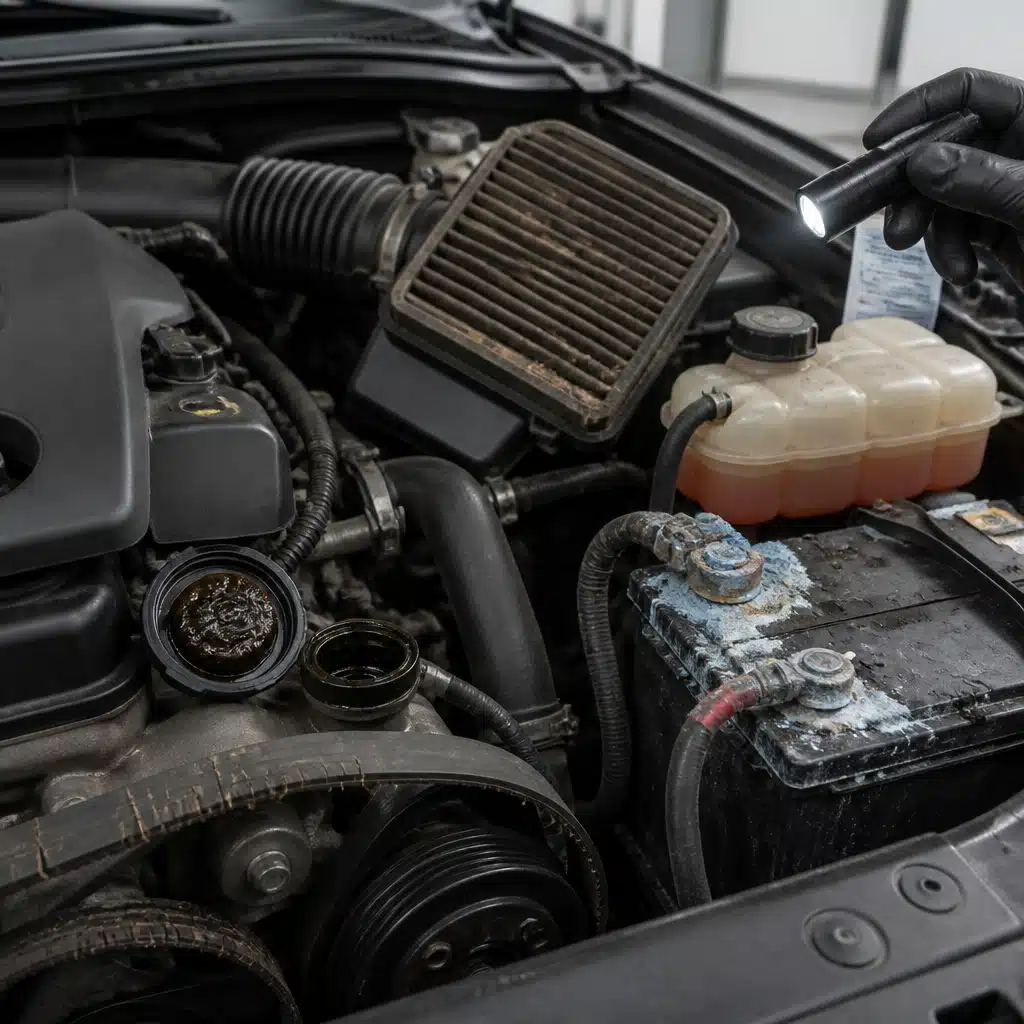
3) Check under the hood for fluids, leaks, and quick cover-ups
Open the hood and use a flashlight. You are looking for neglect patterns, not just one dirty spot.
- Oil level and color: Very low oil level is a serious red flag. Thick black sludge under the oil cap can mean long oil intervals.
- Coolant condition: Very low coolant or rusty-looking coolant can point to overdue service or leaks.
- Belts and hoses: Cracks, swelling, or shiny glazed belts suggest age and skipped replacement.
- Battery area: Heavy corrosion can mean it was ignored.
- Fluid leaks: Wet oil around valve covers, power steering lines, or under the engine may mean long-term seepage.
Be cautious when the engine bay looks freshly sprayed clean. A spotless engine bay can be normal, but it can also hide leaks. If you want to learn what a normal cleaned bay looks like and what is suspicious, compare with engine bay cleaning for beginners.
4) Look inside for wear, smells, and warning lights
The cabin shows how the car was treated daily.
- Strong damp or musty smell: Can point to water leaks or past flooding. For deeper checks, see signs of a flood-damaged car.
- Heavy smoke smell: Often sticks in the headliner and vents and can take real work to remove.
- Sticky buttons and shiny worn steering wheel: Can suggest hard use and low cleaning.
- Dashboard lights: Turn the key on and make sure warning lights come on briefly, then go off after start. Missing lights can mean the cluster was altered.
Run the AC and heat. Weak airflow can mean a clogged cabin filter or bigger HVAC problems. A bad smell from vents can point to mold or neglect in the ventilation system.
5) Do a cold start and watch the exhaust
Ask the seller not to start the car before you arrive. Then start it yourself.
- Rough idle: Can come from old spark plugs, vacuum leaks, or dirty intake parts.
- Ticking or knocking: Some light ticking can be normal on certain engines, but loud knocking is a serious concern. If you hear it, compare symptoms with engine knocking noise at idle.
- Smoke at startup: A brief puff can be normal on some cars, but steady white smoke or sweet smell can be coolant-related. For symptom details, see exhaust smoke at startup.
6) Test drive for shifting, braking, steering, and overheating signs
Drive on local roads and, if possible, at steady highway speed. Turn off the radio and listen.
- Transmission behavior: Harsh shifts, delayed engagement, or slipping can point to ignored fluid service or internal wear.
- Brakes: Pulsation, squealing, or a low pedal can mean worn parts or old brake fluid.
- Steering feel: Pulling, vibration, or shaking at speed can suggest tire balance issues, worn suspension, or alignment problems.
- Temperature gauge: It should climb to normal and stay steady. Any climbing in traffic is a concern.
After the drive, park and let the car idle for a minute. Look under the car for new drips and smell for hot oil or coolant odors.
Common mistakes to avoid
- Judging only by a clean exterior: A detailed wash can hide neglect.
- Skipping the cold start: Many issues show up only when the engine is cold.
- Ignoring small leaks: Small leaks often become big leaks, and they can damage other parts.
- Trusting new parts without context: A new battery or new tires do not cancel out years of skipped fluid service.
- Not checking all features: Power windows, locks, lights, wipers, and the spare tire area can reveal neglect.
Safety and legal considerations
Any car with weak brakes, severe tire wear, steering looseness, or overheating risk can be unsafe to drive home. If the test drive shows serious problems, stop the drive and reassess. A pre-purchase inspection by a qualified mechanic can help confirm what you see.
Also confirm the VIN matches on the dashboard, door jamb, and title paperwork. If the seller avoids paperwork questions, or the car’s history feels unclear, do not rush the decision.
Final practical advice
When you find multiple maintenance warning signs, treat the car as a project, not a simple daily driver. Focus on the basics first: Fluids, tires, brakes, and cooling system condition. If records are missing, assume key services are overdue and budget time and money for a full baseline service.
A well-maintained used car usually shows consistency: Matching tire set, steady fluid levels, normal smells, smooth cold start, and a calm test drive. If the car cannot meet those simple checks, it is often smarter to keep shopping than to gamble on years of missed care.


