




This post may contain affiliate links. Please read our disclosure and privacy policy for more information.
Ceramic spray coating is one of the easiest ways to make your paint look cleaner and feel smoother. It adds a thin protective layer that helps water bead and helps dirt release faster. It is not the same as a professional ceramic coating. But for beginners at home, it is a great first step.
This guide walks you through the full job. You will clean the paint, prep it, apply the spray, and buff it off. Take your time. Good prep is what makes it look good and last longer.
Tools and items needed
- Ceramic spray coating product (spray-on, wipe-off type)
- Car wash soap (pH neutral is best)
- Two buckets and a wash mitt
- Wheel cleaner and a wheel brush (optional but helpful)
- Microfiber drying towel
- 6 to 10 clean microfiber towels (short pile for leveling, plus a few extras)
- Clay bar kit or clay mitt (recommended)
- Iron remover (optional, but helpful on rough paint)
- Panel wipe or 10% to 20% isopropyl alcohol mix in a spray bottle
- Nitrile gloves
- Good lighting (work light or bright garage lights)
If your paint feels gritty after washing, do a clay step first. If you have never clayed a car, start with clay bar for beginners.
Safety or legal notes
- Work in a shaded area. Avoid hot panels and direct sun.
- Wear gloves. Many sprays contain solvents that dry your skin.
- Use ventilation if you are in a garage. Open the door and use a fan if possible.
- Keep products away from children and pets.
- Do not spray onto brakes or tire tread. It can reduce grip.
Numbered installation steps
1) Pick the right time and place
Choose a cool surface. Morning or late afternoon is best. A garage is great if it is not dusty. Ideal panel temperature is usually warm to the touch, not hot.
2) Do a proper wash first
Wash the car like you are preparing it for photos. Ceramic spray bonds best to clean paint.
- Rinse loose dirt first.
- Use the two-bucket method to reduce swirls.
- Wash top to bottom. Save the lower panels for last.
- Rinse well so no soap remains.
3) Decontaminate the paint (recommended)
This is the step many beginners skip. It matters because contamination blocks the coating from bonding.
- If you have iron remover: Spray it on cool paint, let it react, then rinse well.
- Clay the paint to remove stuck-on grit. Use plenty of clay lubricant. Work in small areas.
After claying, rinse again or do a quick wash. Then move on to drying.
4) Dry the car fully
Dry with a clean microfiber drying towel. Water spots can get trapped under the coating. Open doors and dry the edges if you can. Blow out mirrors and trim with a small blower if you have one.
5) Wipe the paint with a panel wipe
Spray your panel wipe or alcohol mix on one small area. Wipe with a clean microfiber towel. Then flip the towel and wipe again.
This removes leftover oils from soap, clay lube, and previous wax. It also helps the ceramic spray spread more evenly.
6) Mask off if you are worried about trim
Most ceramic sprays are safe on glossy trim. But some can leave light streaks on textured plastic. If your car has a lot of rough black trim, masking tape can help. Another option is to restore the trim first so it looks even. If needed, see restore faded plastic parts.
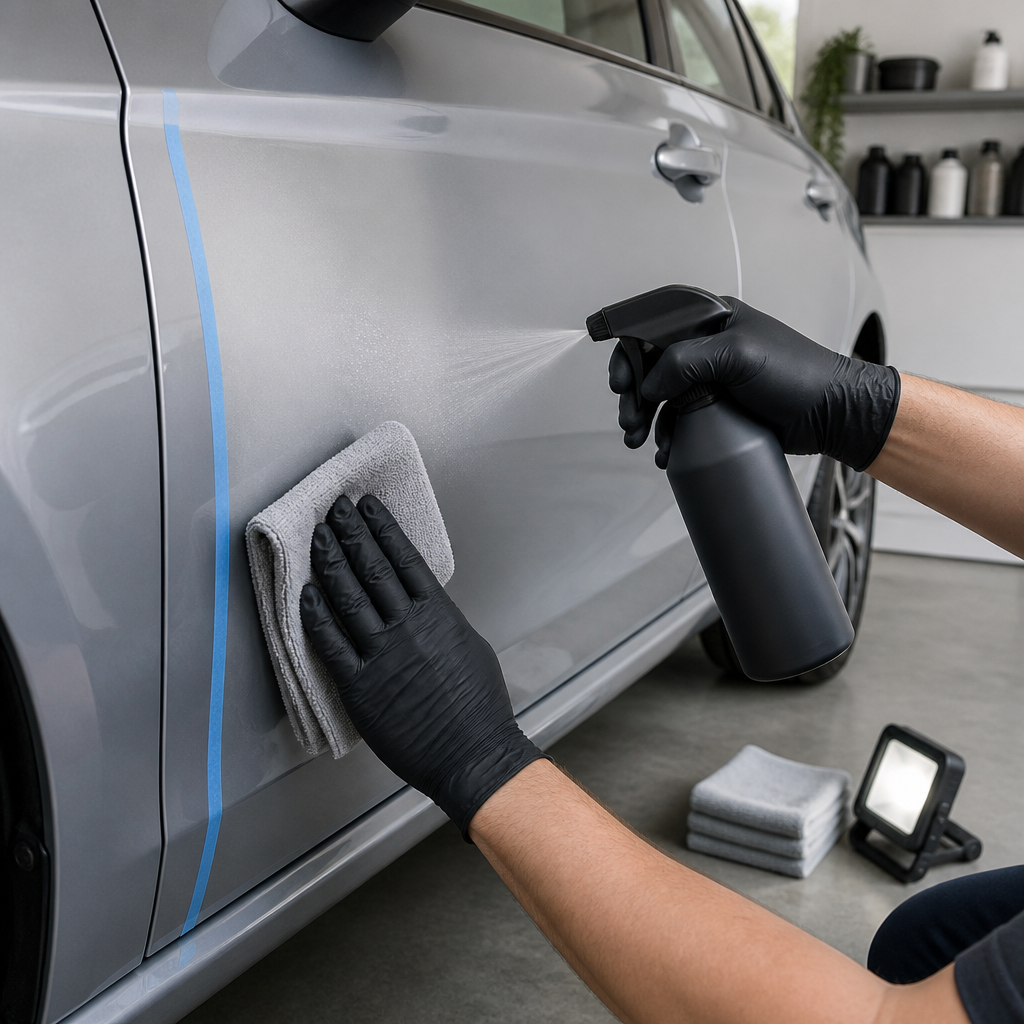
7) Apply ceramic spray one panel at a time
Shake the bottle. Use two microfiber towels. One towel spreads and levels. The second towel buffs clean.
- Start with a small area like half a hood or one door.
- Spray 1 to 3 light sprays onto your towel, not directly on the paint (this helps avoid overspray).
- Wipe in straight lines. Cover the whole section with a thin, even film.
- Let it flash for the time listed on your product. Many sprays need about 30 seconds to 2 minutes. In high humidity it can flash slower.
- Buff off with the second towel until the panel looks clear and slick.
Keep your coats thin. More product does not mean more protection. It usually means more streaks.
8) Check your work under good light
Use a light and look from different angles. If you see a high spot or streak, buff it right away with a clean towel. If it will not come off, lightly mist your towel with more product and wipe again. Then buff.
9) Do a second coat only if the product calls for it
Some ceramic sprays allow a second coat for longer life. Others do not need it. If you do apply two coats, wait the recommended time between coats. Many products suggest 1 to 4 hours. Some want longer.
10) Let it cure
Avoid water for at least 12 hours if possible. 24 hours is better. Do not wash with soap for about a week, unless the product label says otherwise.
If you need to drive, that is fine. Just avoid rain and sprinklers if you can. If the car gets wet during cure, gently dry it and do not rub hard.
Common mistakes
- Applying in direct sun: The spray flashes too fast and leaves streaks.
- Using too much product: This causes smearing and “rainbow” haze.
- Skipping decontamination: The coating sits on dirt, not paint, and fails early.
- Using dirty towels: Old microfiber can hold wax, dirt, or grit and scratch the paint.
- Not leveling and buffing: Ceramic spray needs a final wipe to look clear.
- Spraying onto glass without buffing: It can haze and cause wiper chatter.
Maintenance tips
- Wash gently every 1 to 3 weeks. Use a slick car shampoo and clean mitt.
- Do not use strong degreasers unless you are stripping and reapplying.
- Dry after washing. Ceramic helps reduce water spots, but it does not stop them.
- Use a dedicated spray topper only if you want extra gloss. Keep it simple.
- If the beading drops, do a decon wash and add one fresh coat.
If you like doing your own car care, you are not alone. More people are getting into at-home work each year, including detailing and simple repairs. You can see the broader picture in DIY car maintenance statistics.
Is it worth it?
For most beginners, yes. Ceramic spray coating is low risk and gives quick results. The paint looks glossier and feels smoother. Bugs and light dirt come off easier. Washing can take less time.
It is worth it if you:
- Want easier washes and better water beading
- Do not want to machine polish or apply a full ceramic kit
- Are okay reapplying every few months (product dependent)
It may not be worth it if you:
- Hate prep work and want a one-step job
- Expect multi-year durability like pro coatings
- Have failing clear coat (no spray can fix that)
Conclusion
DIY ceramic spray coating is a simple weekend project that can make your car easier to clean and nicer to look at. Focus on prep: Wash, decontaminate, dry, and wipe down. Apply thin layers, buff well, and let it cure. If you follow the steps, you will get a clean finish without stress.


