




This post may contain affiliate links. Please read our disclosure and privacy policy for more information.
Old window tint can look bad fast. It can turn purple, bubble up, or peel at the edges. Sometimes it makes night driving harder, too. The good news: You can remove window tint at home without scratching the glass if you use the right method and take your time.
This guide focuses on safe removal. It also helps you avoid the most common problem: Sticky glue that refuses to come off.
Tools and items needed
- Plastic razor blades or a plastic scraper
- Spray bottle
- Ammonia (plain household ammonia)
- Dish soap
- Warm water
- Paper towels or microfiber towels
- Black trash bags (two or more)
- Painter’s tape
- Glass cleaner (non-ammonia is best for final wipe)
- Rubbing alcohol (optional)
- Adhesive remover safe for automotive glass (optional)
- Nitrile gloves
- Safety glasses
- Mask (strongly recommended when using ammonia)
Safety or legal notes
Work in a well-ventilated area. Ammonia fumes are strong. Keep doors open. If possible, work outside in the shade.
Protect your interior. Ammonia can stain some plastics and fabrics. Cover the rear deck, door panels, and seats with towels or plastic. For rear windows, be careful around the defroster lines. Scraping them can damage them.
Before you remove tint, check your local tint laws. Some drivers remove tint because it is too dark for their area. If you plan to retint later, you may want to review Window tint for beginners.
Numbered removal steps
1. Pick the right method for your situation
There are two beginner-friendly ways to remove tint at home:
- Ammonia + trash bag method: Great for old tint and heavy glue. Works well on side and rear glass.
- Soap + warm water method: Gentler smell. Often takes longer on stubborn adhesive.
If your tint is brittle, purple, or cracking, use the ammonia method. It usually lifts the film and softens the glue at the same time.
2. Prep the car and protect surfaces
Park in a warm spot, but not direct hot sun if you can avoid it. Warmth helps the adhesive soften. Shade is easier to work in.
- Roll the window down about 1 inch for side windows. This exposes the top edge of the film.
- Lay towels along the bottom of the glass and the door panel.
- For the rear window, cover the rear deck and speakers.
3. Make a simple ammonia spray
In a spray bottle, mix:
- 1 part ammonia
- 1 part water
- A few drops of dish soap
The soap helps the liquid spread and soak the film evenly.
4. Soak the outside, then apply a trash bag
This step is the trick that makes removal easier.
- Spray the outside of the window with plain water.
- Lay a black trash bag flat on the outside of the glass. Smooth it so it sticks.
The bag helps hold heat and makes the tint release better, especially if the sun is weak or you are working in shade.
5. Soak the inside tint heavily
Now spray the inside tint with your ammonia mix until it is fully wet. Do not be shy here. The film needs to soak.
For best results, tape another trash bag to the inside of the window directly over the wet tint. This slows evaporation and keeps the chemical working.
Wait 15 to 30 minutes. If it dries, spray again and wait a bit longer.
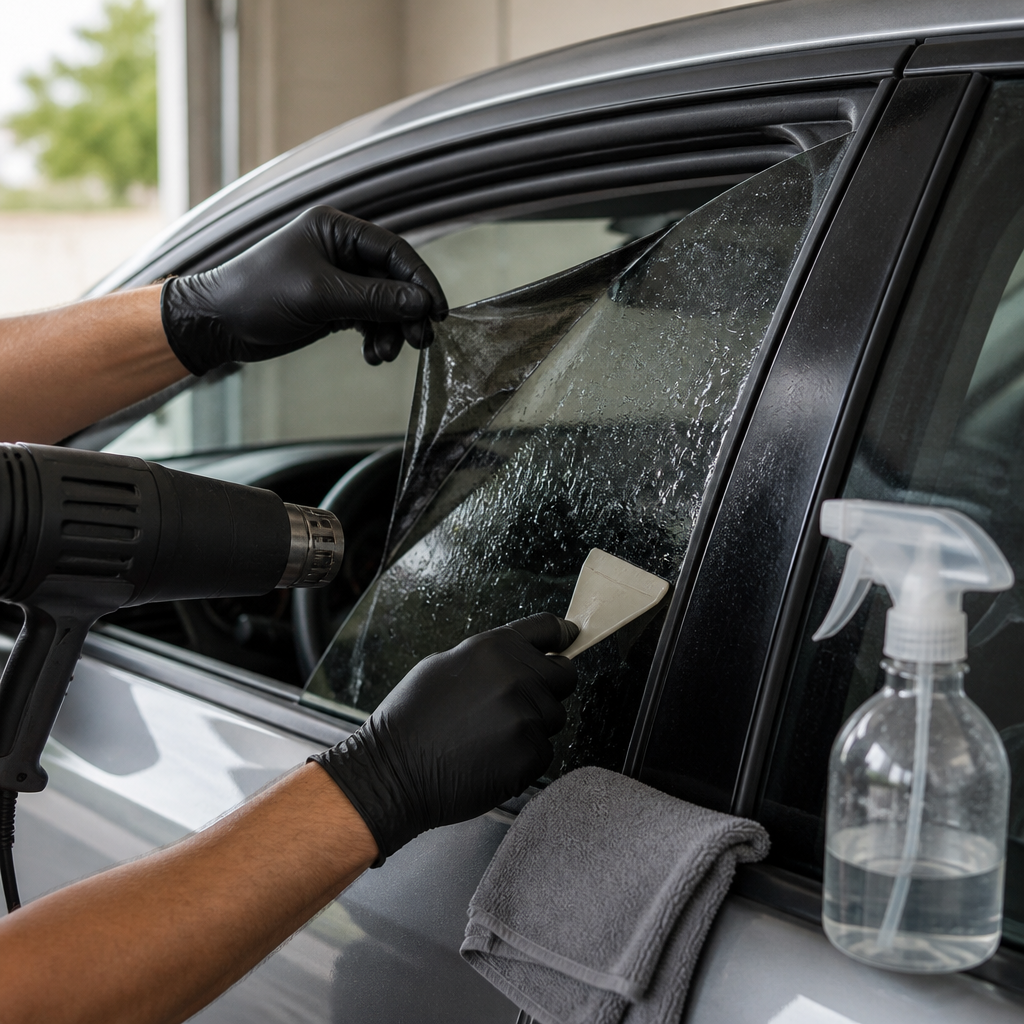
6. Start a corner and peel slowly
Use a plastic razor blade to lift a top corner. Do not stab at the glass. Slide the blade under the tint edge.
- Peel the film slowly at a low angle. Think “pull across,” not “pull outward.”
- Keep spraying under the film as it lifts.
If the film tears, lift another edge and keep going. Older tint often comes off in pieces. That is normal.
7. Remove leftover adhesive without scratching
After the film is off, you will usually see glue haze or sticky patches. This is where people scratch glass by rushing.
- Spray the glass again with the ammonia mix or warm soapy water.
- Let it sit for 2 to 5 minutes.
- Use a plastic razor blade to gently push the glue off in straight strokes.
Wipe the blade often. A dirty edge can drag grit and leave marks.
If glue is still stubborn, use rubbing alcohol on a towel. If that still does not work, use a small amount of adhesive remover that is labeled safe for automotive glass. Test it in a corner first.
8. Special care for rear windows with defroster lines
Rear defrosters are thin lines bonded to the glass. Scraping can damage them.
- Do not use a metal razor on the rear window.
- Use the ammonia soak longer so the glue softens more.
- Use a microfiber towel to rub adhesive off, not a blade.
If you must use a tool, use only a plastic scraper and use very light pressure, moving with the lines, not across them.
9. Final clean and inspection
Clean the glass with a normal glass cleaner for your final wipe. This removes haze and any oily residue. Look at the glass from different angles. Sticky spots often hide near edges and corners.
If you want a deeper guide focused only on removal basics, you can also compare methods in DIY window tint removal.
Common mistakes
- Using a metal razor on the rear window: This can cut defroster lines.
- Peeling too fast: Fast pulls tear film and leave more glue behind.
- Not soaking long enough: Dry adhesive turns into a sticky mess that takes twice the effort.
- Skipping interior protection: Ammonia overspray can stain and leave strong odor.
- Scraping dry glue: Dry scraping is how scratches happen. Keep it wet.
Maintenance tips (after removal)
- Leave windows slightly cracked for a few hours to air out any ammonia smell.
- Do not use harsh chemicals on the glass for a day or two. A mild glass cleaner is enough.
- If you plan to install new tint, clean the edges and weatherstrips well. Old glue can cause new film to lift.
If you are building up your home DIY tool kit, it is interesting how common basic tools are in DIY home garage tools.
Is it worth it?
For most owners, yes. Removing tint at home costs little and usually takes 1 to 3 hours for side windows, and longer for the rear window. The biggest value is patience. If you go slow, you can get a clean result without damage.
It may not be worth it if your rear tint is very old and glued hard near the defroster lines, or if you already see scratches in the film area. In that case, a professional shop is safer. But for most bubbling or peeling tint, DIY removal is realistic.
Conclusion
DIY window tint removal is mostly about softening the adhesive and peeling the film slowly. Use ammonia and a trash bag to speed up the job. Keep the glass wet while you work. Use plastic tools, and be extra gentle on rear defroster lines. With a careful approach, you can remove old tint at home and keep your glass clean and scratch-free.


