


This post may contain affiliate links. Please read our disclosure and privacy policy for more information.
When your RPM rises and falls at idle only after the engine warms up, it usually means the engine computer is struggling to keep a steady idle speed. The good news is that many causes are common and fixable. The key is to treat it as an engine control or air/fuel issue, not “just a quirk.”
What This Problem Feels Like
You start the car cold and it seems fine. After a few minutes, once it’s fully warm, the idle becomes unstable. On the tachometer, you may see the RPM move up and down in a repeating pattern.
Common ways drivers describe it include:
- RPM “hunting” at stoplights
- Idle surging in Park or Neutral
- Vibration in the seat or steering wheel as RPM changes
- Occasional near-stall, then the RPM catches itself
- Idle changes when you turn the A/C on, then never really settles
This problem can be light and annoying, or it can be severe enough to cause stalling. The fact that it shows up after warm up is an important clue because the engine computer switches to closed-loop operation and begins relying more on sensor feedback.
Is It Safe to Drive?
If the car only has a mild RPM fluctuation and drives normally once you’re moving, it’s usually safe for short trips. Still, it’s not something to ignore.
Do not keep driving if any of these happen: The engine stalls at stops, the RPM drops so low the oil light flickers, the check engine light is flashing, or the car feels like it may die when you come off the gas. Stalling in traffic is a safety risk.
If the idle surge comes with hesitation when you press the pedal, treat that as a different symptom and handle it separately. (For that specific symptom, see car hesitates when accelerating.)
Common Causes
Listed from most common to less common. More than one issue can be present, but usually one root cause stands out.
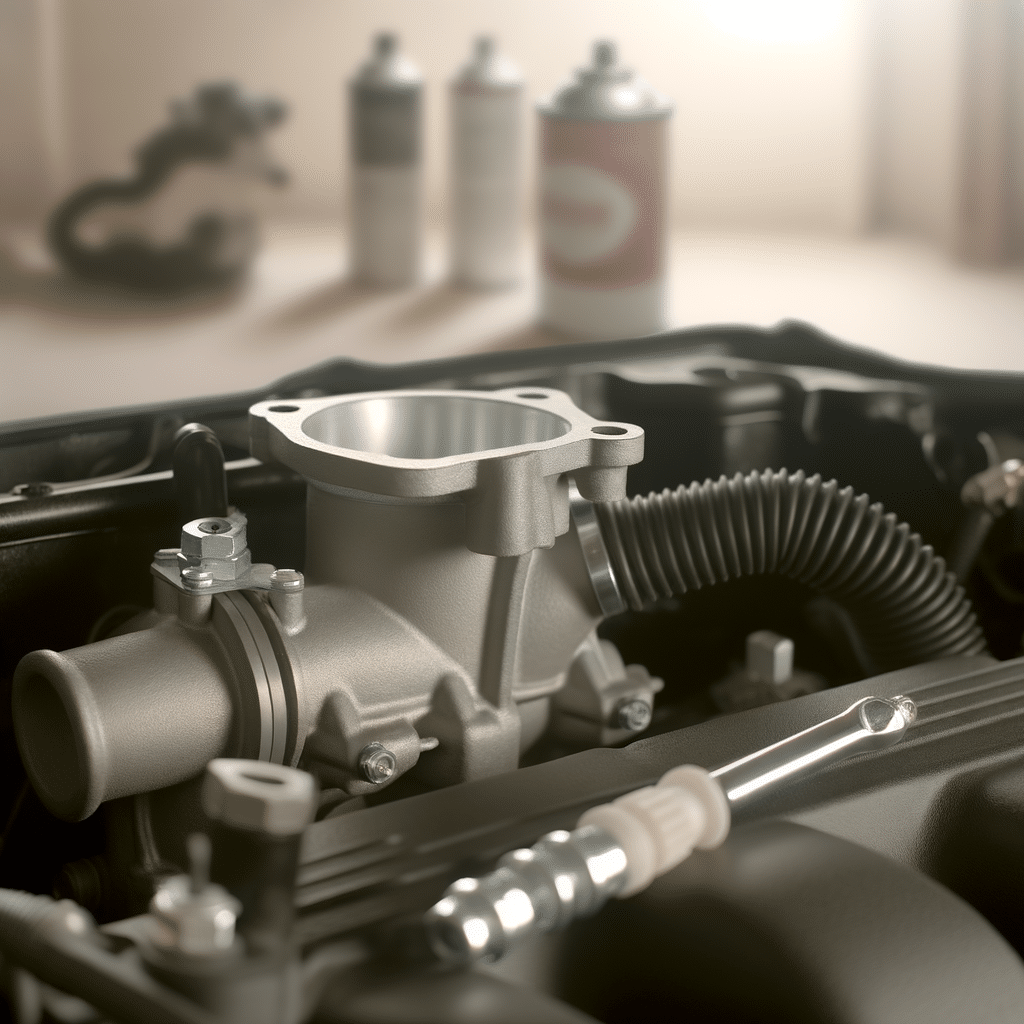
Dirty throttle body or sticky throttle plate
On many cars, the throttle plate controls how much air bypasses into the engine at idle. Over time, carbon builds up around the throttle plate. Once warm, the engine tries to pull less fuel and air at idle, and that small restriction matters more. The computer keeps correcting, causing the RPM to swing.
Vacuum leak (intake air leak)
A vacuum leak is unmetered air entering the engine after the air has already been measured. Common leak points are cracked intake boots, PCV hoses, brake booster hose connections, and intake manifold gaskets.
Warm engines often react more strongly because the computer is using oxygen sensor feedback to correct the air/fuel mixture. If extra air sneaks in, the computer adds fuel, then it over-corrects, and the idle can hunt.
Failing PCV valve or PCV system problems
The PCV system purpose is to control crankcase vapors. If the PCV valve sticks open or a hose splits, it becomes a controlled vacuum leak that is no longer controlled. That can easily cause a warm idle surge, especially at stoplights.
Idle air control valve issues (if equipped)
Some vehicles use an idle air control valve (IAC) to bypass air at idle. If it sticks, gets dirty, or responds slowly, the engine computer keeps chasing the correct idle speed. This is especially noticeable after warm up when idle control demands are more precise.
Mass airflow sensor (MAF) contamination
A MAF sensor reads incoming air. If it is dirty or skewed, the computer may miscalculate fuel delivery. At idle, small errors matter a lot. The jumps often show up more after warm up because the fueling strategy becomes more sensitive to sensor feedback.
Oxygen sensor feedback issues
Once warm, the oxygen sensors become active and the engine runs in closed-loop. A lazy sensor, an exhaust leak near the sensor, or a sensor that reads wrong can cause the computer to swing fuel trims back and forth. That can show up as RPM fluctuation at idle.
Engine coolant temperature sensor reading wrong
If the coolant temp sensor lies about engine temperature, the computer may feed the engine the wrong amount of fuel. Some sensors fail in a way that becomes obvious only when the system is hot. That can create an unstable idle and poor warm restarts.
Charging system voltage changes at idle
If alternator output is weak at idle, the engine computer and throttle control can react poorly, and idle speed can wander. A related sign is lights that brighten and dim at idle. If you see that symptom, it points you in a different direction.
EVAP purge valve stuck open
The EVAP purge valve controls fuel vapors entering the intake. If it sticks open, it can dump extra vapor at idle. Warm conditions can make it more noticeable. The idle may surge and the car can smell slightly of fuel near the front.
Quick Checks You Can Do at Home
These checks are meant to be safe and basic. If anything feels beyond your comfort level, stop and schedule service. Keep hands, clothing, and tools away from belts and fans.
Watch the RPM pattern and note what changes it
With the car warm and idling:
- Turn the A/C on and off and see if the idle stabilizes or gets worse.
- Turn the steering wheel slightly (power steering load) and note any change.
- Switch headlights on and off to add electrical load.
If added load makes the idle dip and recover smoothly, that’s normal. If it makes the RPM swing wildly, the idle control system may be struggling.
Check for obvious cracked or loose hoses
With the engine off and cooled down, look around the intake tubing and vacuum hoses for:
- Cracks, collapsed sections, or oily soft spots
- Loose clamps on the intake boot
- Disconnected small hoses near the intake manifold
- PCV hose splits near bends
A vacuum leak is one of the most common reasons for a warm idle surge, and a visual check sometimes finds it.
Listen for hissing
At warm idle, a steady hiss can hint at a vacuum leak. It is not always present, and some fuel injectors also make normal ticking sounds. A loud hiss that changes when you lightly blip the throttle can be a clue worth noting for the mechanic.
Check the gas cap condition
A loose or damaged gas cap can contribute to EVAP issues. It does not always cause idle surging, but it’s an easy check. Make sure it clicks tight and the seal is not torn. If you’ve been planning to change it anyway, DIY fuel cap replacement covers what to look for.
Scan for codes if you have a simple scan tool
You do not need a fancy scanner to get basic engine codes. Codes related to lean/rich conditions, EVAP purge, idle control, coolant temperature, or MAF can support the direction of the diagnosis. Even if the check engine light is off, pending codes can exist.
When This Becomes Serious
RPM fluctuation at idle becomes more than an annoyance when it risks stalling, overheating, or damaging components.
Get it checked soon if:
- The RPM drops low enough that the engine shakes hard
- The car stalls at stop signs or in Drive
- The check engine light comes on and returns after clearing
- You smell raw fuel, or the idle surge is paired with misfiring
- The problem gets worse quickly over a few days
A severe vacuum leak or a major sensor fault can make the engine run too lean. Running too lean for long periods can overheat parts of the exhaust system and may lead to bigger issues.
How a Mechanic Fixes It
A shop typically approaches a warm idle surge by confirming basics first, then using scan data to narrow it down.
Confirm the condition and check live data
The technician will warm the engine fully, watch RPM, and look at live data like fuel trims, MAF readings, coolant temperature, commanded idle, and oxygen sensor activity. Fuel trims that swing high at idle often point toward an air leak or airflow measurement problem.
Check for vacuum and intake leaks
Many shops use a smoke test to find tiny leaks that can’t be seen. This is one of the fastest ways to confirm whether unmetered air is getting in.
Inspect and service the throttle body and idle control system
If buildup is present, the throttle body may be cleaned and then relearned using the correct procedure for that vehicle. Some cars require a scan tool relearn after cleaning or battery disconnect. If the idle air control valve is sticking (on vehicles that have one), it may be cleaned or replaced depending on condition and design.
Test sensors and related circuits
If scan data suggests a sensor issue, the mechanic will test it rather than guess. That can include checking MAF readings at idle, confirming coolant temp is realistic, and verifying that oxygen sensors respond properly once hot.
Check EVAP purge operation
If the purge valve is suspected, it can be tested for leaking when it should be closed. A purge valve stuck open is a known cause of unstable idle on some models.
Common Mistakes to Avoid
- Replacing parts based on guesses: An idle surge can be caused by air leaks, dirty throttle body, or sensor feedback. Swapping parts without testing often wastes time and money.
- Ignoring small vacuum leaks: A minor hose crack can create a major warm idle problem because idle airflow is so low.
- Cleaning the throttle body and expecting instant perfection: Some cars need an idle relearn. The idle may be rough until the computer adapts, or it may need a proper relearn with a scan tool.
- Unplugging sensors “to test” and driving that way: That can create new problems and can hide the real cause by forcing open-loop settings.
- Over-modding intake parts without planning: Intake changes can introduce air leaks or skew MAF readings if done poorly. If modifications are involved, keep changes simple and consistent. Avoid over-modding your car covers why small changes can snowball into drivability issues.
Related Problems to Watch For
These do not change the main diagnosis, but they help you describe what’s happening and spot when the situation is getting worse:
- Stalling when coming to a stop after the engine is hot
- Rough idle only when the A/C is on
- Hard restart when warm
- Check engine light with lean or EVAP-related codes
- Idle surge paired with dimming lights at stoplights
Final Thoughts
If RPM fluctuates at idle after warm up, take it as a sign the engine is not controlling air and fuel smoothly at idle. Start with simple observations, look for obvious air leaks, and note how the idle reacts to loads like A/C and headlights. If the RPM drop is deep, if it stalls, or if warning lights show up, limit driving and schedule a diagnosis. A proper check for intake leaks and accurate sensor data usually finds the cause without guessing.


